
Leaving Flowers in a Car for 8 Hours: A Florist's Honest Answer
You can leave flowers in a car for 8 hours only when the weather is cool and stable, about 5-15 °C, the car stands in shade and the stems sit in water or a wet wrap. In summer sun or in frost, eight hours is too long for almost any bouquet: heat dries the petals within a few hours, and freezing temperatures damage them in a way that only shows once they warm up indoors.
This is one of the most common questions at our counters in Saint Petersburg, usually from someone buying flowers in the morning for an evening birthday or a train journey. The answer below is what our florists tell customers in person: how a bouquet changes hour by hour, how the seasons here affect it, how we pack flowers for a long wait, and how to avoid the problem altogether by having the bouquet delivered when it is needed.
What our customers usually ask, and the short answers
The questions at the counter are surprisingly consistent. People ask whether the boot is safer than the back seat, whether a bouquet in paper survives better than one in film, and whether a heated car in winter is a good idea. The short answers are: the boot is darker but has no airflow and can be just as hot in summer; paper breathes better than plastic film over many hours; and a warm car is fine while you drive but becomes a problem once the engine is off and the cabin cools towards the outside temperature.
Another frequent question is how long is too long. For a cut bouquet without water, our rule of thumb is up to two hours in mild weather, under an hour in heat, and only minutes in hard frost. With water at the stems and shade, a cool day can stretch that to a full working day. A potted plant follows similar limits, because its leaves overheat and freeze just like petals.
We also get asked whether a bouquet that looks fine after eight hours really is fine. Often it is, for the evening, but its vase life may be shorter by a few days, because stress in the car uses up the flower's stored sugars. For a gift that should look good for a week, a long wait in the car is worth avoiding.
Hour by hour: how a bouquet changes in a parked car
In the first hour, little is visible. In warm weather the cabin temperature rises fast, petals start losing water through their surface, and stems without water begin to form air pockets that will later block the flow. In cold weather the bouquet cools to the cabin temperature, which does no harm as long as it stays above zero.
Between two and four hours, the differences become obvious. In heat, rose heads start to soften and bend at the neck, hydrangea and freesia droop, and greenery curls at the edges. In a cool car with water at the stems, the bouquet may look exactly as it did when it was bought.
Between five and eight hours, a bouquet in heat is usually past saving: petals turn papery, edges brown, and even a cold bath brings back only part of it. In frost, ice crystals form inside petal cells, and once you bring the flowers indoors dark, glassy patches appear within an hour. Only in the cool, shaded, watered scenario does the bouquet reach the evening in good shape.
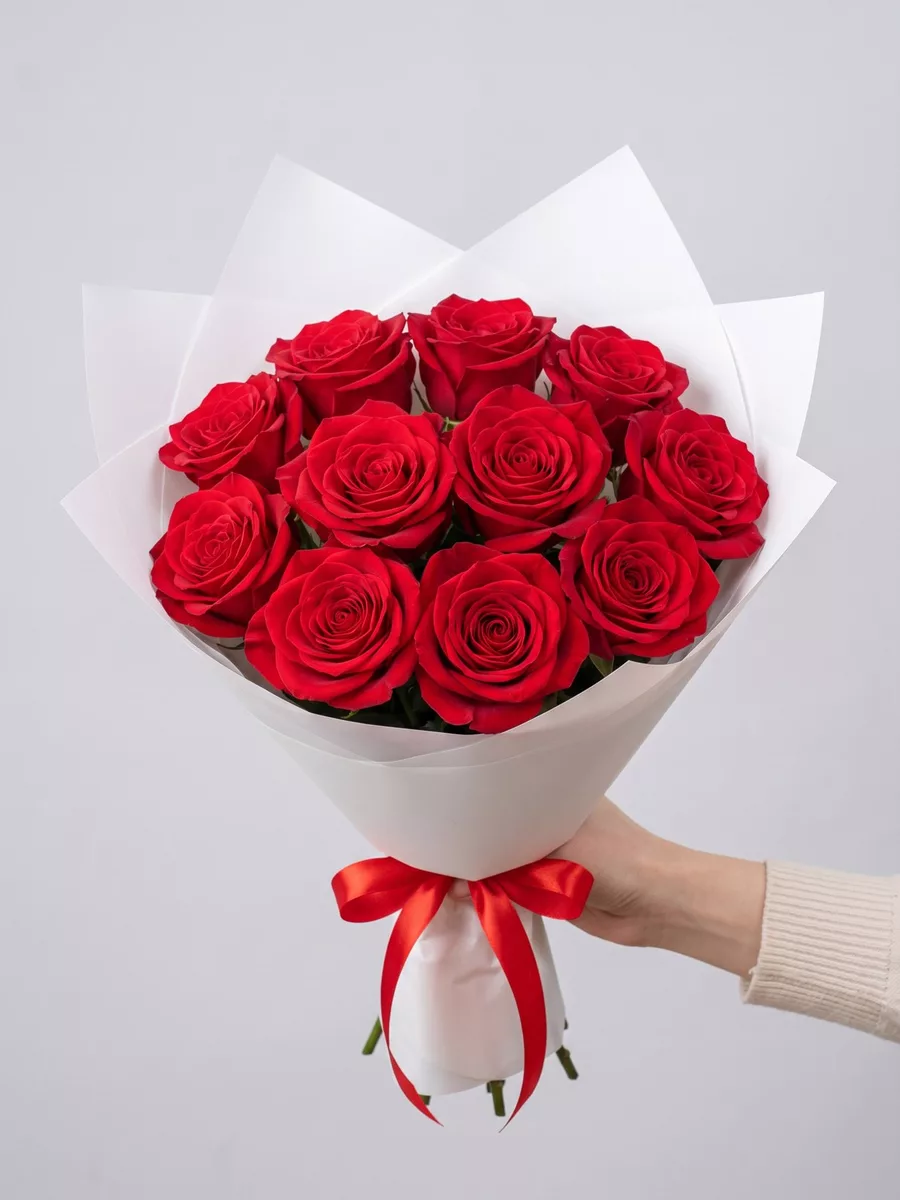
Bouquets we can deliver



Season by season, as we see it in Saint Petersburg
Spring and autumn are the friendliest seasons for a car. Days of 5-12 °C with cloud cover are close to the temperature of a florist's cold room, and a bouquet with water can wait most of the day without harm. The risk in April and October is the sudden sunny afternoon: a windscreen facing south can still turn the cabin warm enough to soften roses and tulips.
Summer is the hardest season for flowers left in a car, even in a northern city. On a 22 °C June day a parked car in the sun can easily reach 45 °C inside, and white nights mean the sun works on the glass for very long hours. In summer we advise customers not to leave a bouquet in the car for more than half an hour without air conditioning running.
Winter brings frost and thaw in turns. At -5 °C and below, petals can freeze within twenty to thirty minutes, and a bouquet left in the car during a working day will not survive. We pack winter bouquets in several layers of paper and film for the walk from the shop or the courier's car to the door, but that protection is meant for minutes, not hours. For a fuller seasonal guide, see flowers in the car: a florist's rules for every season.
How to pack a bouquet for a long wait
If the flowers have to stay in the car, give them water first. Ask for the stems to be wrapped in a wet pad and sealed in a small bag at the base, or stand the bouquet in a bottle of water fixed in a cup holder or wedged in the footwell. Make sure leaves that would sit in water are removed, because they rot quickly in a warm car; we explain the technique in strip leaves below the waterline the right way.
Choose the coolest, darkest place: usually the floor behind the front passenger seat. Lay a light-coloured cloth or the florist's paper loosely over the flowers to shade them, and leave the film open at the top so moisture can escape, otherwise grey mould can start on roses and gerberas within a few hours. Avoid the rear shelf and the dashboard, which reach the highest temperatures in the cabin.
Some bouquets are simply better suited to waiting. Compositions in a box with soaked floral foam, chrysanthemums, carnations, alstroemeria and eucalyptus all cope with a long day far better than hydrangea, tulips, peonies or freesia. If you know in advance that the flowers will spend the day in the car, mention it when choosing, and pick from the tougher varieties in the bouquets catalogue.
Bringing a bouquet back after the car
When you finally get the flowers indoors, start with a cool, shaded room rather than a warm kitchen. Unwrap the bouquet, cut two centimetres off every stem at an angle with a sharp knife, and put the flowers into a clean vase of lukewarm water. Leave them for two or three hours before moving them to where they will stand.
Roses with bent necks often recover after their stems are dipped for 20-30 seconds in just-boiled water, with the heads protected by paper, and then placed in cool water. Hydrangea heads can be soaked in a basin of cool water for half an hour. Petals that are crisp, brown or translucent will not come back, so remove those stems to keep the rest of the bouquet looking fresh.
Sending flowers to Russia without the car problem
For many of our customers abroad the question is really about timing: the flowers should arrive when the person is at home, not wait for hours. Delivery solves that. We deliver across Russia; city delivery costs 500 RUB, and for remote districts and suburbs the operator confirms the price when confirming the order. In large cities express delivery takes 1-2 hours after the order is confirmed, or you can set an exact time (plus or minus 30 minutes), choose a window such as 09-12 or 18-21, or pre-order 1-30 days ahead. In Saint Petersburg delivery runs around the clock, which helps when the recipient comes home late; more on the timing in 1-2 hour flower delivery: what the window actually covers.
The courier calls the recipient about 15 minutes before arrival. If nobody is home, we agree a second delivery the same day or, with your consent, leave the bouquet with a neighbour or concierge. Delivery is anonymous by default, and a card with your text is free. You can pay online by bank card, SBP or Yandex Pay, and foreign bank cards are accepted via Robokassa. Pyat Tsvetov has worked in Saint Petersburg since 2011 with three of our own shops; for any questions, call 8 (812) 507-67-05. We deliver bouquets across Russia in 1–2 hours.
Frequently asked questions
Is it safe to leave flowers in the car while I am at work?
Only on a cool, overcast day, with the car in shade and the stems in water. In summer sun or in frost, take the bouquet indoors; a cool corridor or office corner is far better than the car.
Is the boot better than the back seat for flowers?
Not usually. The boot is dark but has no airflow and gets hot in summer; the floor behind a front seat is the safer spot.
Can flowers freeze in a parked car?
Yes. At -5 °C and below petals can freeze within half an hour, and the damage appears as dark, glassy patches once the bouquet warms up indoors.
Which flowers handle a long wait best?
Chrysanthemums, carnations, alstroemeria, eucalyptus and boxed arrangements with floral foam. Hydrangea, tulips, peonies and freesia are the least tolerant.
Can I order flowers to be delivered later instead?
Yes. You can choose an exact time, a time window or pre-order 1-30 days ahead, and in Saint Petersburg delivery runs around the clock.
Ready to send a bouquet?
Pick a city, choose the flowers, and we will hand them over with a photo confirmation.
Choose a city →