
Can I Put Flowers in the Fridge? A Practical Bouquet Guide
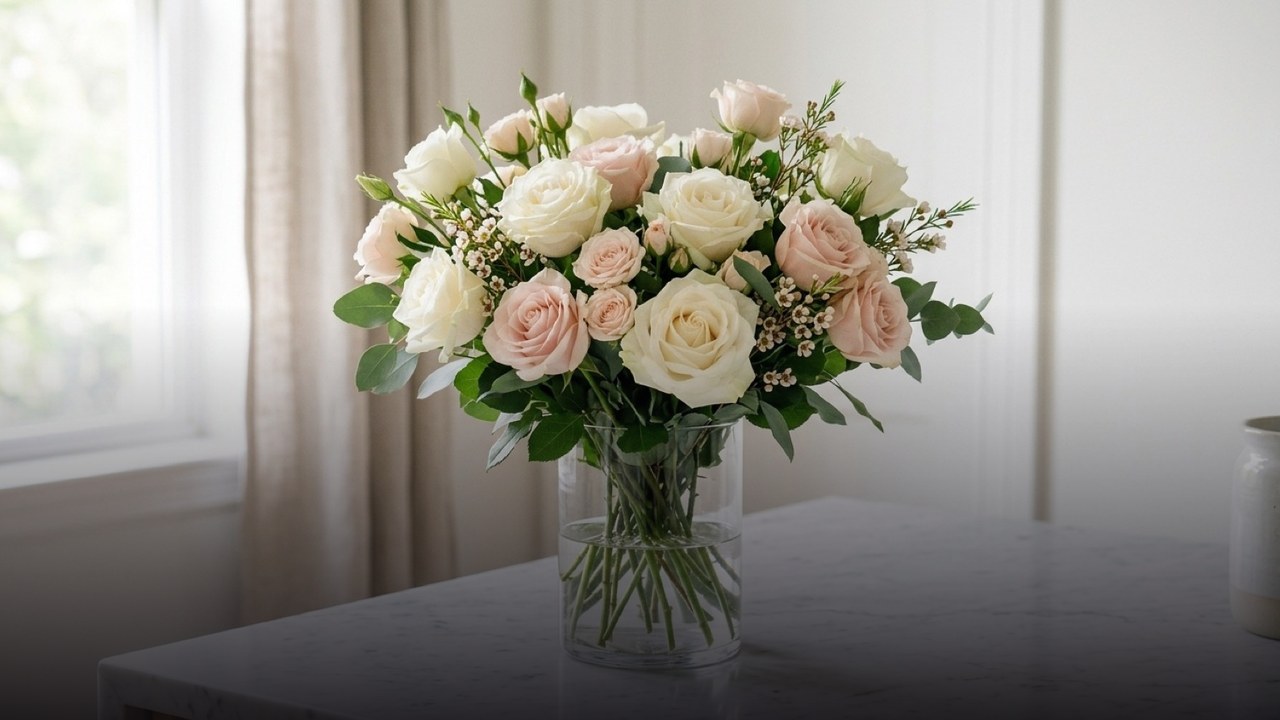
Yes, you can put some cut flowers in the fridge for a short period, provided they have water, enough space and protection from freezing or direct cold airflow. A household fridge is unsuitable for some flowers, especially tropical varieties, so a cool room is the safer choice when you do not know what your bouquet contains. Keep flowers away from fruit and vegetables, and never force a bouquet into a crowded shelf.
At Pyat Tsvetov (5 Flowers), customers often ask about refrigeration when they need to keep a gift until morning or hide a bouquet before a celebration. The useful starting point is the condition and composition of the flowers, followed by the space available at home. We have been serving customers in Saint Petersburg since 2011, and our practical advice is to arrange water and a suitable resting place before deciding whether refrigeration will help.
Decide whether your bouquet belongs in a household fridge
Many familiar cut flowers, including roses and carnations, can benefit from cool storage, but this does not make every household fridge suitable. A florist's flower cooler offers conditions intended for flowers; a kitchen fridge is designed around food. Before using yours, check for freezing spots, strong airflow and enough clearance for every flower head. If the bouquet touches the back wall, choose another place.
Tropical flowers such as anthuriums and many orchids can suffer chilling damage, so do not refrigerate them without advice specific to the variety. A mixed bouquet needs care that suits its most sensitive component, including decorative foliage. Do not judge suitability by the largest or most recognisable flower alone. If you cannot identify the contents, leave the whole arrangement in a cool room away from heat.
Refrigeration is an optional storage measure, not a substitute for everyday vase care. Flowers that have been left dry need attention to their stems and water supply before you consider where to keep them. Cooling will not repair bruised petals or reverse established decay. For most households, a clean vase in a shaded, comfortably cool room is a simpler and more dependable starting point.
Prepare the stems and vase before storing flowers
Start with a clean vase and fresh water, then remove any leaves that would sit below the waterline. Recut the stem ends with a clean, sharp tool so they can take up water without crushed tissue blocking the cut. Keep the flower heads supported while you work, particularly in a large bouquet. Place the stems into water promptly rather than leaving them on the counter while you clear the fridge.
If the bouquet includes a sachet of cut-flower food, follow its dilution instructions rather than adding the whole packet to an arbitrary amount of water. Avoid improvised mixtures of sugar, household cleaners or other additives. The vase should hold enough water to keep the cut ends submerged while standing securely on the shelf. Our guide to how much water to put in a vase explains the practical checks.
Remove outer wrapping if it prevents the bouquet from sitting properly in water or presses against the petals. Keep a structural tie in place if removing it would cause the arrangement to fall apart. Flowers supplied in floral foam need their existing water-holding base maintained; do not pull the stems out just to fit them into a vase. If their container cannot stand securely in the fridge, use a suitable room instead.
Bouquets we can deliver




Check the fridge for fruit, freezing spots and crowding
Ripening fruit releases ethylene, a gas that can accelerate ageing in sensitive cut flowers. Apples, bananas and other produce therefore make a shared household fridge a poor storage choice for a bouquet. A separate, clean fridge without produce is preferable if refrigeration is appropriate for the flowers. Wrapping a bouquet in paper does not provide reliable protection from ethylene in the surrounding air.
Look at the space the bouquet will occupy, including the distance above the tallest bloom. Petals should not touch the shelf above, containers beside them or the cooling surfaces at the back. Keep the vase away from vents and any area where food sometimes freezes. Do not put flowers in the freezer compartment or lower the fridge setting in an attempt to make them last longer.
Use a stable container that will remain upright when the door opens, and clear away anything that could fall onto the flowers. Leave enough room to take the vase out without dragging the blooms across a shelf. Avoid sealing wet flowers inside a plastic bag, where moisture can remain trapped against the petals. If you cannot make this space without bending stems or compressing heads, abandon the fridge plan.
Use refrigeration for a brief hold, then return to normal care
For a suitable bouquet in a suitable fridge, holding it overnight can be a practical way to bridge the gap before giving it as a gift. Think of this as a short pause rather than a way to store flowers indefinitely. The bouquet's previous handling, condition and varieties all affect the result, so there is no single safe duration for every arrangement. See our advice on storing a bouquet in the fridge overnight for that specific situation.
Keep stems in water during storage and avoid repeatedly moving the bouquet between the fridge and a warm room. When you take it out, place it somewhere shaded while you check the water level and inspect the stems. Handle the petals as little as possible, especially if moisture has collected on them. Do not put chilled flowers straight beside a radiator, in strong sunshine or beneath a warm air vent.
After storage, remove damaged material and any leaves that have slipped into the water. Change water that has become cloudy, clean the vase when needed and keep the stem ends submerged. A bouquet still needs these checks even if it spent the night in cool conditions. If flowers remain limp after their water supply has been restored, do not assume that another spell in the fridge will revive them.
Choose a cool room when refrigeration is impractical
A cool room works well when the fridge contains food, the bouquet is too large or the flower varieties are uncertain. Choose a shaded position away from radiators, cooking heat and direct sun. Keep the vase clear of fruit bowls and place it where people will not brush past the flower heads. A hallway or spare room may suit, provided its conditions are stable and the water cannot freeze.
An open window, balcony or parked car is not a controlled alternative to a fridge. Outdoor temperatures can change, while wind and direct sun add stresses that are easy to overlook. Choose an indoor position if you cannot assess the conditions throughout the storage period. Keep the vase upright on a level surface rather than leaving the bouquet lying on a table with only the wrapping around it.
For a surprise gift, hide the flowers in a room the recipient is unlikely to enter and keep the card somewhere dry. Bring the bouquet out close to the moment you plan to give it, then return it to water after the presentation. If you are taking it elsewhere, organise the journey so it spends as little time as practical without water. Avoid placing luggage or coats against the blooms during transport.
Plan delivery in Russia to reduce storage at home
If you are ordering from abroad for someone in Russia, arranging delivery near the intended occasion can reduce the need for overnight storage. Pyat Tsvetov delivers flowers across Russia, with city delivery costing 500 RUB; an operator confirms the price for remote districts and suburbs when confirming the order. You can select from the bouquets catalogue and plan around when the recipient can receive the flowers. In Saint Petersburg, delivery is available around the clock.
In large cities, express delivery is available within 1–2 hours after order confirmation. You can also arrange an exact delivery time with a tolerance of 30 minutes, choose a 09–12, 12–15, 15–18 or 18–21 window, or preorder 1–30 days ahead. The courier calls the recipient about 15 minutes before arrival, so account for that call when planning a surprise. Delivery is anonymous by default, and a card with your text is free.
If the recipient is absent, we agree a second delivery the same day or, with the sender's consent, hand the flowers to a neighbour or concierge. Online checkout uses CloudPayments; customers abroad should check the payment options displayed at checkout, as acceptance of every foreign card cannot be assumed. Read delivery and payment details when arranging the order. For questions, call 8 (812) 507-67-05.
Frequently asked questions
Can I put flowers in the fridge without water?
For ordinary home storage, keep the cut ends in water rather than placing a dry bouquet on a fridge shelf. Cooling does not replace the water the flowers need.
Can I put roses in the fridge overnight?
Roses can be suitable for brief refrigeration if the fridge has no freezing spots, ripening produce or crowded shelves. Use a clean, stable vase with water and keep the blooms away from walls and vents.
Can a mixed bouquet go in the fridge?
Only if the storage conditions suit every flower and foliage type in the arrangement. If it includes chilling-sensitive tropical flowers or unidentified varieties, choose a cool room instead.
Should I put wilted flowers in the fridge to revive them?
First check the water supply, clean the vase and recut the stems with a clean, sharp tool. Refrigeration cannot repair damaged tissue, and it should not be treated as a revival method.
Is a kitchen fridge as good as a florist's flower cooler?
A kitchen fridge is designed for food and may have unsuitable airflow, freezing spots or ethylene from produce. Use it only when both the flowers and the available storage conditions are suitable.
Ready to send a bouquet?
Pick a city, choose the flowers, and we will hand them over with a photo confirmation.
Choose a city →