
Carrying Flowers on a Russian Train: Keeping a Bouquet Fresh
Every week someone calls us after arriving in Moscow or Novosibirsk with a bouquet that looked perfect at Saint Petersburg's Moskovsky station and looked like wet newspaper four hours later. The problem is almost never the flowers themselves — it is the gap between how a florist packs a bouquet for a five-minute car ride and what a bouquet actually needs for a six-hour platzkart journey in a heated carriage. This article covers the practical side: which varieties survive the trip, how to keep stems hydrated without flooding your seat neighbour, what temperatures do to petals, and the small checks that separate a presentable gift from an embarrassing handful of wilted stems.
What Happens to Flowers Inside a Russian Train Carriage
Russian long-distance trains run their heating systems hard, especially from October through April. Carriage temperatures regularly sit between 22 and 26 degrees Celsius, and in platzkart — the open third-class format with rows of bunks — there is almost no way to escape that warmth. Flowers lose water through their petals constantly, a process called transpiration, and heat accelerates it sharply. A rose that would hold its shape for three days in a cool room at 10 degrees can begin to droop within two hours at 24 degrees if its stems are not in water. The second problem is mechanical: Russian trains are not smooth. The Sapsan high-speed service between Saint Petersburg and Moscow is relatively gentle, but overnight trains to Yekaterinburg, Kazan or Sochi rock and jolt enough to bruise soft petals and snap thin stems if the bouquet is standing upright in a bag. The third factor is dry air. Train ventilation pulls humidity down, which desiccates petals faster than still warm air would. Understanding these three stresses — heat, movement and dry air — tells you exactly what preparation to do before you board, and it also tells you which flowers are worth bringing on a long journey and which are not.
Bouquets we can deliver


Varieties That Actually Survive the Journey
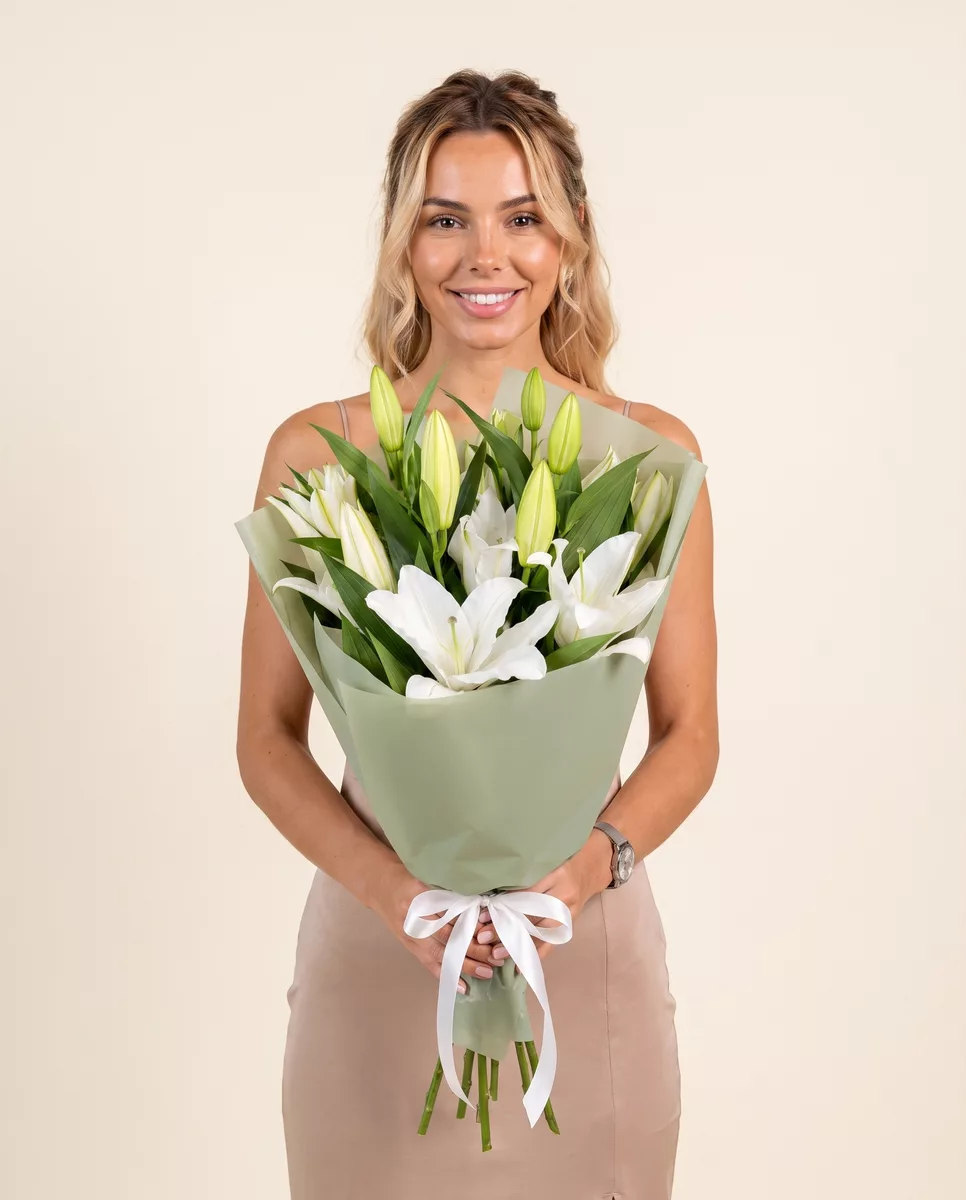
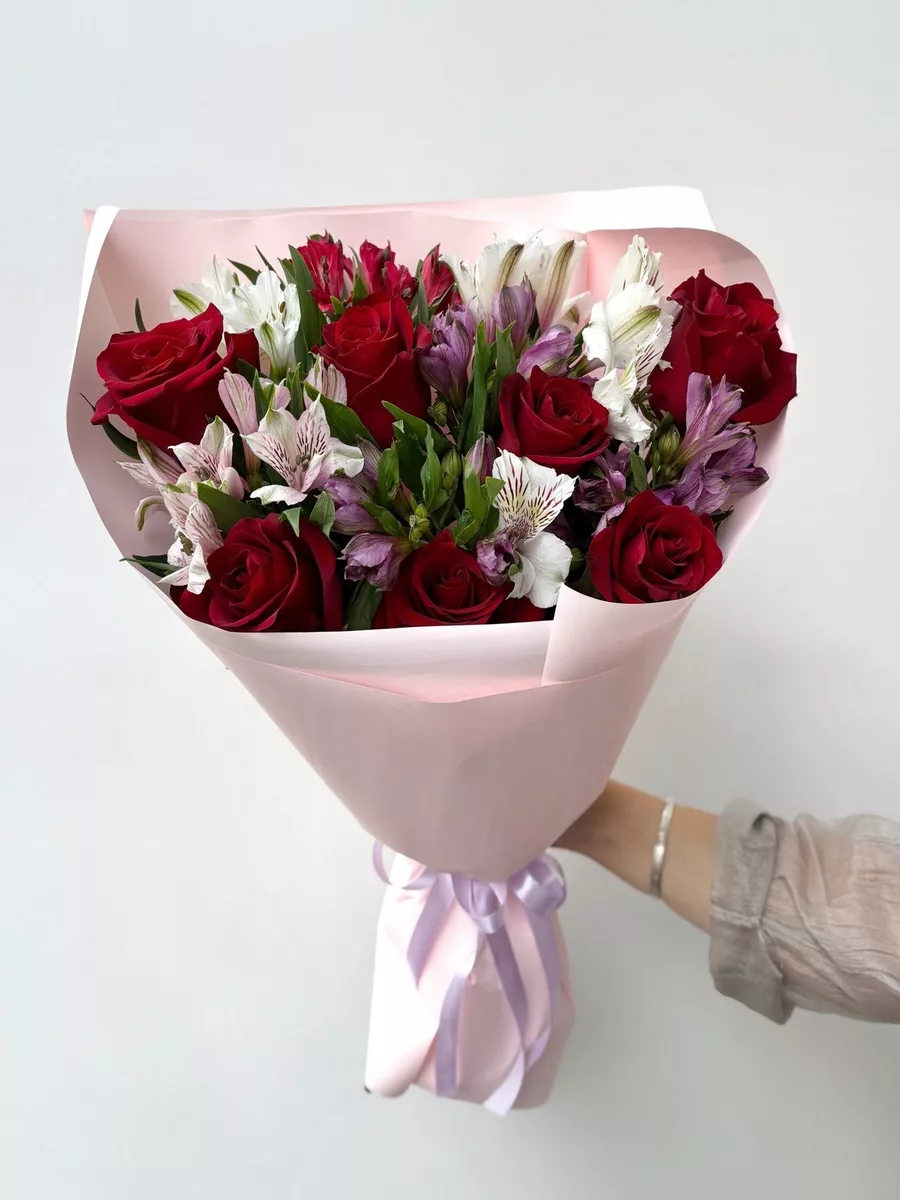
Not all flowers are equally suited to a multi-hour train ride, and choosing the right ones is the single most effective thing you can do before you even think about packaging. Spray roses — the small-headed, multi-stem variety — are significantly more resilient than large hybrid tea roses because their petals are thicker and their stems shorter, giving them less leverage to snap. Standard single-head roses in bud stage, not fully open, also travel well because the petals are still tightly packed and less exposed. Chrysanthemums, both the large santini type and standard button chrysanthemums, are excellent: they hold moisture in their thick petals and tolerate warmth better than almost any other common cut flower. Alstroemeria is another strong choice — the stems are flexible rather than brittle, and the flowers continue opening slowly during transit, which means they often look better at arrival than at departure. Lisianthus in bud is reliable; fully open lisianthus is fragile. Carnations are underrated for travel: they have a waxy cuticle that reduces water loss noticeably. Flowers to avoid on long journeys include fully open peonies, which bruise at the slightest contact, open gerberas, which have hollow stems that collapse quickly without water, and any tropical varieties like strelitzia or anthurium that react badly to temperature swings. Tulips in spring can work if they are kept cool, but in a warm carriage they open fast and become floppy within three hours.
Hydration: The Water Tube Method and Its Limits
The most effective way to keep stems hydrated on a train is the water tube, sometimes called an aqua-pick. These are small plastic vials with a rubber cap that you push the stem through; you fill the tube with water before departure and it feeds the stem continuously. A florist preparing a bouquet for travel should use one tube per stem on any flower with a single prominent stem — roses, lisianthus, alstroemeria. For spray branches with multiple stems, a single tube at the main cut is usually enough. The tubes hold roughly 10 to 15 millilitres of water each, which sounds minimal but is sufficient for six to eight hours if the cap is fitted tightly and the stem is freshly cut at a 45-degree angle before insertion. The 45-degree cut matters because it maximises the surface area drawing water up. A straight cut, which is what most people make with kitchen scissors, reduces uptake significantly. One mistake we see constantly: people fill the tubes, push the stems in, and then wrap the entire bouquet tightly in cellophane, which traps heat and accelerates wilting. The wrap should be loose around the flowers and firm only around the stem area to hold the tubes in place. If you are on a journey longer than eight hours — overnight trains to Sochi or Yekaterinburg typically run 24 to 48 hours — water tubes are not enough on their own. You need a secondary strategy: a damp cloth or paper towel wrapped around the stem bundle and secured with a rubber band, refreshed at major station stops where you can access water.
Packaging a Bouquet Before You Board
The packaging a florist uses for a bouquet intended to be carried into a shop or a car is not the same packaging that will protect flowers on a train. Standard cellophane or kraft paper wrapping is designed for short transfers, not for two hours of vibration and heat. Before you board, unwrap the bouquet completely and repack it yourself or ask the florist to do it with the journey in mind. The stem bundle should be wrapped in two or three layers of damp newspaper — actual newspaper, not kitchen paper, because newspaper holds moisture longer and is more absorbent. Over that, apply a single layer of kraft paper to protect the damp layer and give the bundle some structure. The flower heads need loose protection: a cone of kraft paper or a light cardboard sleeve that prevents petals from pressing against each other without sealing them in. Sealed plastic around flower heads is one of the most common mistakes we see. Plastic traps ethylene gas, which flowers produce naturally and which accelerates their own ageing — it is the same reason you should not store cut flowers next to fruit. The finished package should be long enough that you can lay it flat in the overhead luggage rack, which is far better than standing it upright in a bag. Horizontal travel reduces the stress on stems and prevents the top-heavy flower heads from swaying and bruising. On platzkart carriages the overhead shelf is wide enough for most bouquets up to 70 centimetres. On kupé — the four-berth compartment — you can also slide a flat package under the lower bunk mattress edge.
Temperature Management During the Trip
The overhead rack in most Russian long-distance train carriages is the coolest spot available to a regular passenger, simply because warm air rises and collects near the ceiling later than at seat level. This sounds counterintuitive — put the flowers higher where it is warmer — but in practice the rack is away from the radiators that run along the floor and under the windows, and a bouquet lying flat there is not sitting directly on a heat source. The window area, which looks attractive because of the light, is one of the worst places: the radiator directly below the window pumps out consistent heat, and in summer the glass itself can radiate additional warmth. At major station stops, particularly those lasting 10 minutes or more, it is worth stepping onto the platform with the bouquet if the outside temperature is below 15 degrees. Even five minutes of cool air slows transpiration and gives the flowers a reset. In winter this needs a small caution: temperatures below minus 10 degrees Celsius can damage petals in under two minutes of direct exposure, so hold the bouquet inside your coat or keep it in its paper wrap. Roses and lisianthus are particularly sensitive to freezing; chrysanthemums and carnations tolerate brief cold better. If you are travelling in summer and the carriage has air conditioning — the newer Firmenny trains and the Sapsan do — position the bouquet where it gets indirect cool airflow but not a direct blast, which dries petals out almost as fast as heat does.
What to Do at Long Station Stops
Russian long-distance trains make scheduled stops ranging from two minutes to 40 minutes or more at major cities. The timetable is printed in the carriage and the conductor can tell you which stops are long enough to leave the train. At stops of 15 minutes or more, you have a real opportunity to refresh the bouquet. The station will have a tap — usually in the toilet facilities on the platform or inside the station building. Unwrap the stem bundle, recut each stem by one centimetre with scissors or a small knife, and hold the cuts under running water for 30 seconds before rewrapping in fresh damp newspaper. This recutting step removes the air bubble that forms at the base of the stem when it is out of water, which blocks water uptake as effectively as a cork. Even florists who know this skip it on a train because it feels fussy, but on a journey of more than eight hours it makes a visible difference. Refill any water tubes that have emptied. If you do not have scissors, ask the train conductor — provodnitsas, the carriage attendants who are a consistent feature of Russian rail travel, often have small tools and are generally willing to help with practical requests. They also control the samovar, the hot water boiler at the end of each carriage, but hot water is obviously not useful for flowers. What is useful is that the toilet at the end of the carriage has cold running water available throughout the journey, which means you can refresh damp wrapping without waiting for a station stop.
Presenting the Bouquet on Arrival
A bouquet that has survived an eight-hour train journey will not look exactly as it did when it left the shop, but with the right preparation it will look entirely presentable — which is the realistic and honest goal. When you arrive, give the flowers 20 to 30 minutes before presenting them if you have any flexibility. Unwrap them completely, recut the stems, and place them in a vase or a tall glass of cool water at room temperature. Do not use ice water: a sudden temperature drop causes thermal shock in some varieties, particularly roses, which makes the outer petals curl and blacken at the edges. Room temperature water, changed once, is enough to revive the stems. If the flower heads look slightly droopy — a common result of heat exposure — submerge the entire stem and head in cool water in a bathtub or sink for 20 minutes. This full-immersion technique, called hardening, rehydrates the petals directly and is standard practice in florist workrooms for flowers that have been out of water. Roses, lisianthus and alstroemeria all respond well to it. After hardening, stand them upright in fresh water for another 30 minutes before arranging. Remove any leaves that fall below the waterline in the vase, because submerged foliage rots quickly and the bacteria it produces will shorten the life of every stem in the container. A bouquet handled this way after a long journey will typically last another four to six days in a cool room, which is a respectable outcome for flowers that have crossed several time zones with you.
Carrying flowers on a Russian train is not complicated once you understand what the carriage environment actually does to cut stems. Heat, dry air and vibration are the three things working against you, and each one has a direct countermeasure: water tubes and damp wrapping for hydration, horizontal storage in the overhead rack for vibration, and a brief platform stop in cool air for temperature management. Choosing the right varieties before you travel — spray roses, chrysanthemums, carnations, alstroemeria in bud — removes most of the risk before you even board. The recutting step at long station stops and the full-immersion revival on arrival complete the process. None of this requires special equipment: newspaper, a rubber band, small scissors and a little cold water are enough to move a decent bouquet across Russia in good condition. We deliver bouquets across Russia in 1–2 hours.
Frequently asked questions
Can I bring a large bouquet on a Russian long-distance train without buying an extra ticket?
Russian Railways rules allow passengers to carry personal items including flowers without an additional ticket, provided the total hand luggage does not exceed 36 kilograms and 180 centimetres in combined dimensions. A standard bouquet wrapped flat falls well within those limits. Conductors rarely raise objections to flowers, but keeping the bouquet flat and out of the aisle avoids any friction.
How long can roses survive on a train without any water at all?
At typical Russian carriage temperatures of 22 to 26 degrees Celsius, roses with freshly cut stems and no water source will begin to droop noticeably within two to three hours. Roses in tight bud last longer than fully open ones. Water tubes extend this to six to eight hours reliably. Beyond eight hours without any hydration, petal damage is almost certain regardless of variety.
Is the Sapsan high-speed train between Saint Petersburg and Moscow better for carrying flowers than overnight trains?
Yes, for two reasons. The Sapsan journey takes roughly four hours, which is short enough that properly prepared flowers with water tubes need no additional attention. The ride is also smoother than overnight trains, reducing mechanical stress on stems and petals. The air conditioning is consistent, which helps with temperature. For journeys under five hours on any train, basic preparation is sufficient.
What is the best way to carry flowers in winter when the platform temperature is well below zero?
Wrap the bouquet in two layers of kraft paper before stepping onto the platform and hold it against your body inside your coat if possible. Exposure below minus 10 degrees Celsius damages rose and lisianthus petals within two minutes. Chrysanthemums and carnations tolerate brief cold better. Limit platform time to five minutes maximum in severe frost, and allow the bouquet to warm gradually indoors before unwrapping.
Should I tell the florist the bouquet is for a train journey when ordering?
Yes, always. A florist who knows the bouquet is for train travel will choose varieties in tighter bud stage, fit water tubes to individual stems, wrap the stem bundle in damp material rather than dry paper, and create a flat package suitable for an overhead rack. These adjustments take only a few extra minutes but make a significant difference over a multi-hour journey. Mentioning the travel time and destination helps the florist calibrate the preparation correctly.
Ready to send a bouquet?
Pick a city, choose the flowers, and we will hand them over with a photo confirmation.
Choose a city →