
Why You Should Keep Flowers Away from Fruit Bowls
Every week customers call us asking why their roses dropped petals on day three or why their alstroemeria went yellow overnight — and at least half the time, the bouquet was sitting on the kitchen counter next to a fruit bowl. The culprit is ethylene gas, a colourless, odourless ripening agent that fruit produces naturally and that cut flowers absorb through their petals and leaves. Understanding this one fact will add days to the life of almost any bouquet you buy.
What Ethylene Gas Actually Is and Where It Comes From
Ethylene is a simple hydrocarbon gas — chemical formula C2H4 — that plants produce as a hormone to coordinate ripening, senescence and stress responses. In fruit, it triggers the conversion of starches to sugars, softens cell walls and deepens colour. Apples are among the highest emitters, releasing ethylene continuously even after harvest; bananas produce large spikes as they ripen from green to yellow; pears, tomatoes, avocados and mangoes are significant sources as well. Citrus fruits emit far less, which is why a bowl of oranges is less dangerous to nearby flowers than a single ripening banana. The gas disperses into the surrounding air and does not require direct contact to cause damage — a bouquet placed even half a metre from an apple bowl is still exposed to meaningful concentrations in a typical kitchen with limited airflow. Commercially, florists and wholesalers use ethylene inhibitors such as 1-MCP (1-methylcyclopropene) to extend vase life during transport, but these treatments wear off before the flowers reach your home. Once the bouquet is on your counter, it is entirely unprotected. The practical takeaway is straightforward: ethylene is invisible, it travels through air, and fruit bowls are its primary indoor source. Keeping flowers in a separate room from fruit is not fussiness — it is the single most effective storage decision you can make after changing the water.
Bouquets we can deliver



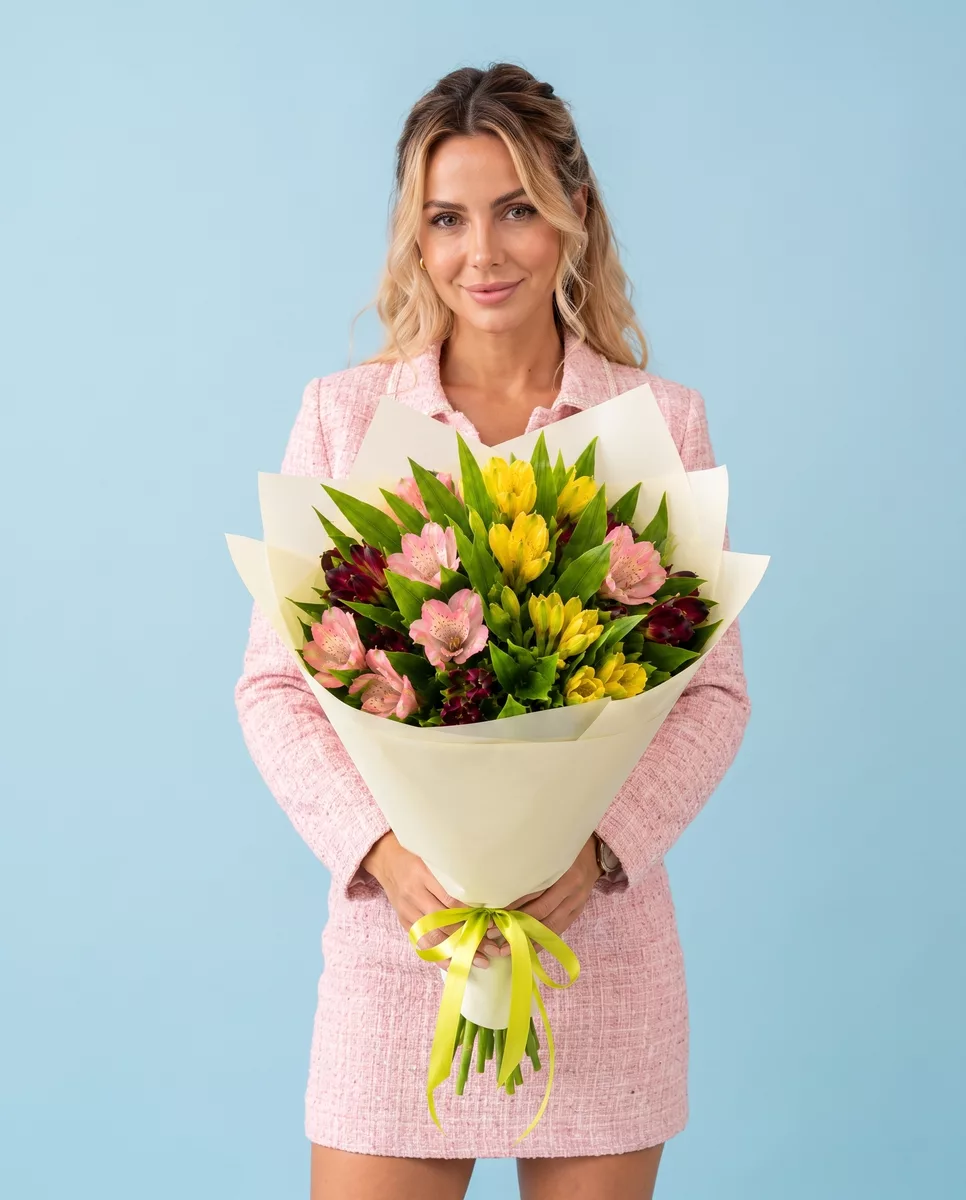
Which Cut Flowers Are Most Sensitive to Ethylene
Not all flowers respond to ethylene at the same rate, and knowing which varieties are most vulnerable helps you prioritise where you place specific bouquets. Carnations are extremely sensitive — ethylene causes their petals to roll inward and collapse within 24 to 48 hours of significant exposure, a phenomenon florists call sleepiness. Standard and spray carnations are both affected equally. Roses show petal drop rather than sleepiness: outer guard petals detach suddenly, making the bloom look sparse even when the remaining petals are still fresh. This is one of the most common complaints we receive and almost always traces back to kitchen placement. Alstroemeria, also called Peruvian lily, yellows rapidly at the leaf level before the flowers themselves show damage, which confuses customers who assume the stems are rotting. Lisianthus petals bruise and brown at the edges. Delphinium and snapdragons drop individual florets from the bottom of the spike upward. Orchid sprays — particularly Cymbidium and Dendrobium — develop brown spotting on petals within two to three days of ethylene exposure. On the less sensitive end, you will find sunflowers, chrysanthemums and tropical varieties such as protea and anthurium, which tolerate moderate ethylene levels reasonably well. Gerbera daisies fall somewhere in the middle: the petals hold, but the central disc discolours faster. If your bouquet contains carnations, roses, lisianthus or alstroemeria, treat ethylene avoidance as non-negotiable rather than optional advice.
The Specific Damage Ethylene Causes and the Timeline
Ethylene binds to receptors in plant cells and triggers a cascade of responses that were designed to help a plant shed leaves and ripen seeds — processes that are catastrophic for a cut flower trying to stay presentable. The first visible symptom in most flowers is accelerated petal senescence: cells in the petals stop dividing and begin breaking down, which shows as softening, colour change and eventually collapse. In carnations this happens within one to two days of sustained exposure. In roses the abscission layer at the base of each petal activates, causing clean drop rather than gradual wilting. Leaf yellowing in alstroemeria and other foliage occurs because ethylene accelerates chlorophyll breakdown — the same process that turns leaves yellow in autumn. Buds that have not yet opened are particularly vulnerable because their tissue is actively developing; ethylene can prevent a tight bud from opening at all, which means you buy a bouquet expecting five days of blooms and find that half the buds simply never unfurl. The timeline depends on concentration and ventilation. In a small kitchen with a closed window and a bowl of mixed fruit including apples and bananas, damage to sensitive varieties can begin within 12 hours and become obvious within 36. In a larger, ventilated space the same fruit bowl might take three days to produce visible effects. Temperature amplifies the problem: warmer rooms increase both fruit ethylene output and flower cell metabolism, compressing the damage timeline further. A room at 22 degrees Celsius accelerates senescence noticeably compared to one kept at 18 degrees.
Kitchen Placement Mistakes Customers Make Most Often
The kitchen is where most bouquets end up because it has water, countertop space and good light — all of which seem logical but combine badly with ethylene sources. The most common mistake is placing a vase directly on the kitchen island or countertop next to the fruit bowl, often within 30 to 50 centimetres. At that distance, in a kitchen with normal air circulation, ethylene concentration around the flowers is significant. The second mistake is placing flowers near the rubbish bin, where overripe or discarded fruit continues to emit gas at high rates — a single rotting apple in a bin produces more ethylene than several fresh ones. Customers also frequently set bouquets on top of the refrigerator, which seems safe because it is away from the fruit bowl, but the warm air rising from the refrigerator compressor accelerates wilting independently of ethylene. Windowsills above the sink are another problem spot: direct sunlight raises the local temperature, and if the window faces south, afternoon sun can push petal temperature well above room temperature. We also see bouquets placed near the gas hob, which introduces combustion byproducts including ethylene itself — gas burners produce small amounts during incomplete combustion. The practical rule is to treat the kitchen as the worst room in the home for flowers unless you have a separate area well away from all fruit, bins and heat sources. A dining table in a cooler room, a bedroom windowsill away from direct sun, or a hallway shelf are all better options than most kitchen positions.
Correct Storage Conditions to Counter Ethylene Damage
Correct storage combines three variables: temperature, airflow and separation from ethylene sources. The ideal temperature range for most cut flowers is between 4 and 8 degrees Celsius — the range used in professional cold storage — but most homes cannot maintain that in a living space. A practical compromise is keeping flowers in the coolest room available, typically between 16 and 20 degrees, away from radiators, direct sunlight and appliances that generate heat. At night, when rooms cool naturally, flowers recover some of the cellular stress accumulated during the warmer day, which is why bouquets often look slightly fresher in the morning. Airflow matters because ethylene disperses in moving air. A gently ventilated room — one with occasional air exchange through an open window or door — maintains lower ethylene concentrations than a sealed space even if a fruit bowl is present elsewhere in the home. However, do not place flowers directly in a draught, as rapid moisture loss from petals accelerates wilting by a different mechanism. Water management remains important alongside ethylene avoidance: change vase water every two days, cut stems at a 45-degree angle each time using a clean knife rather than scissors, and keep the vase clean to prevent bacterial buildup that blocks stem uptake. Removing leaves that fall below the waterline prevents bacterial growth that also releases gases harmful to flowers. Flower food sachets provided with bouquets contain a biocide, a pH adjuster and a sugar source — use them in the first fill, as they provide a measurable extension of vase life particularly for roses and carnations.
What to Check When You Receive a Delivery
When a bouquet arrives, the first five minutes of handling determine a significant portion of its eventual vase life. Start by unwrapping the bouquet immediately — packaging that traps warmth and humidity accelerates bacterial growth on stems. Check the stem ends: if they have dried or sealed over during transit, re-cut at least two centimetres from the bottom at a 45-degree angle before placing in water. This is especially important for roses, which form an air bubble at the cut end within minutes of being out of water. Fill the vase with cool, clean water — not cold from the tap, which can shock tropical varieties such as anthurium and bird of paradise, but cool at around 15 to 18 degrees. Add the flower food sachet if one was included. Place the bouquet in its chosen spot immediately and assess that spot against the ethylene checklist: no fruit within at least one metre, no ripening or overripe produce nearby, no bin, no heat source above or below, no direct sunlight. If you are buying flowers as a gift to be received by someone else, it is worth sending a brief message explaining placement — many recipients in Russia and elsewhere assume the kitchen windowsill is the natural home for flowers, and a simple note redirecting them to a cooler spot can double the bouquet's lifespan. Check the water level daily, as some varieties drink more than a litre per day in warm conditions — roses and hydrangeas are particularly thirsty.
Varieties That Last Longest Even with Some Ethylene Exposure
If you know your home has unavoidable ethylene sources — a kitchen you share, a fruit bowl that will not move, a small flat with limited room separation — choosing more tolerant varieties is a practical strategy rather than a compromise. Chrysanthemums in all their forms, from the large single-headed varieties to the dense spray types, are among the most ethylene-resistant cut flowers available and routinely last 14 days or more under ordinary home conditions. Sunflowers tolerate ethylene well and have the additional advantage of being visually striking even as they age gracefully. Protea and leucadendron, both South African natives increasingly available in Russian floristry, are highly durable and essentially indifferent to ethylene at typical domestic concentrations. Anthurium, with its waxy spathe, resists ethylene damage and stays presentable for two to three weeks with basic care. Among more conventional bouquet flowers, statice — the small purple or white filler flower — is naturally dried in structure and produces little response to ethylene. Waxflower, a small Australian shrub flower with tiny white or pink blooms, is similarly tolerant and adds texture to mixed arrangements. Hypericum berries, often used as filler alongside roses and alstroemeria, are robust and long-lasting. If you regularly buy flowers for a kitchen or other high-ethylene environment and find that roses and carnations disappoint, switching to arrangements built around chrysanthemums, sunflowers and tropical varieties will produce noticeably better results without requiring any change to where you keep the bouquet.
The distance between your fruit bowl and your flower vase is one of the cheapest and most effective interventions in cut flower care — it costs nothing, requires no products and adds days to almost any bouquet. Ethylene is the reason florists keep their cold rooms free of any produce, and the same logic applies at home. Keep carnations, roses, lisianthus and alstroemeria well away from apples, bananas and ripening pears, manage water and temperature consistently, and you will find that flowers last significantly longer than you have come to expect. We deliver bouquets across Russia in 1–2 hours.
Frequently asked questions
How far should flowers be from a fruit bowl to be safe?
At least one metre in a well-ventilated room is a reasonable minimum, but the safest approach is a different room entirely. Ethylene disperses through air, so distance alone is not a complete solution if the space is small and poorly ventilated. Removing high-emitting fruit such as apples and bananas from the same room as flowers is more effective than simply moving the vase slightly further away.
Does putting flowers in the fridge overnight help?
Yes, significantly. Most domestic refrigerators run between 3 and 7 degrees Celsius, which slows cellular metabolism and ethylene uptake in flowers. Remove fruit from the fridge before placing flowers inside, as the enclosed space concentrates ethylene dramatically. Avoid the salad drawer, which retains moisture and can cause mould. Even a few hours of overnight cold storage extends vase life noticeably for roses and carnations.
Are some flowers completely unaffected by ethylene?
No cut flower is entirely immune, but chrysanthemums, anthuriums, protea and sunflowers show very low sensitivity under normal domestic ethylene concentrations. Dried or preserved flowers are not affected at all since their cells are no longer active. If you regularly struggle with short vase life and cannot control ethylene sources in your home, building arrangements around these tolerant varieties is a practical and effective solution.
Does a single banana really produce enough ethylene to damage flowers?
A ripening banana produces a significant ethylene spike, particularly as it transitions from yellow to spotted. In a small, enclosed kitchen this is enough to accelerate petal drop in carnations and roses within 36 to 48 hours. A green banana produces far less. Overripe or bruised fruit of any kind emits the highest concentrations, so a browning banana near flowers is genuinely damaging rather than a theoretical concern.
Does flower food in the vase water protect against ethylene damage?
Flower food sachets contain a biocide and pH adjuster that improve water uptake and reduce bacterial growth, but they do not block or neutralise ethylene. They extend vase life by a different mechanism. Commercial ethylene inhibitors exist but are not available to consumers in standard retail formats. Flower food is worth using, but it does not replace separating flowers from fruit sources.
Ready to send a bouquet?
Pick a city, choose the flowers, and we will hand them over with a photo confirmation.
Choose a city →