
Congratulating a Russian Colleague on Their Birthday: Flowers, Sizes and Office Delivery
Every week someone calls us and asks the same thing: I need to send flowers to a colleague in a Russian office, I have no idea what is appropriate, and I need it there by noon. The rules are not complicated, but they are specific — wrong flower count, wrong colour, wrong timing and the gesture lands badly. Here is what florists who do this daily actually know.
Why Flower Count Matters More Than Anything Else
The single rule that surprises most non-Russian customers is the odd-number rule. In Russia, even numbers of flowers are associated with funerals and mourning, so a bouquet for a living person must contain an odd number of stems — 3, 5, 7, 11, 15, 21, 25. This is not a superstition confined to older generations; it is observed across age groups and professional environments, including modern tech offices and corporate headquarters. If you order a round dozen roses because it seems tidy, the recipient will notice immediately and feel uncomfortable, and your colleagues who see the bouquet will notice too. The practical fix is simple: always confirm the stem count when you place an order. Reputable shops count it for you by default, but if you are assembling something custom, double-check before the order is confirmed. The minimum that reads as a proper birthday gesture in a workplace context is five stems for a modest bouquet and eleven or fifteen stems for something that signals real appreciation. A single stem, common in some Western European contexts, does not carry the same romantic lightness in Russian office culture — it tends to read as an afterthought rather than a considered gift. Three stems is acceptable between close friends but feels thin as a professional gesture. Seven is a solid middle ground that works for most colleague relationships without being excessive.
Bouquets we can deliver
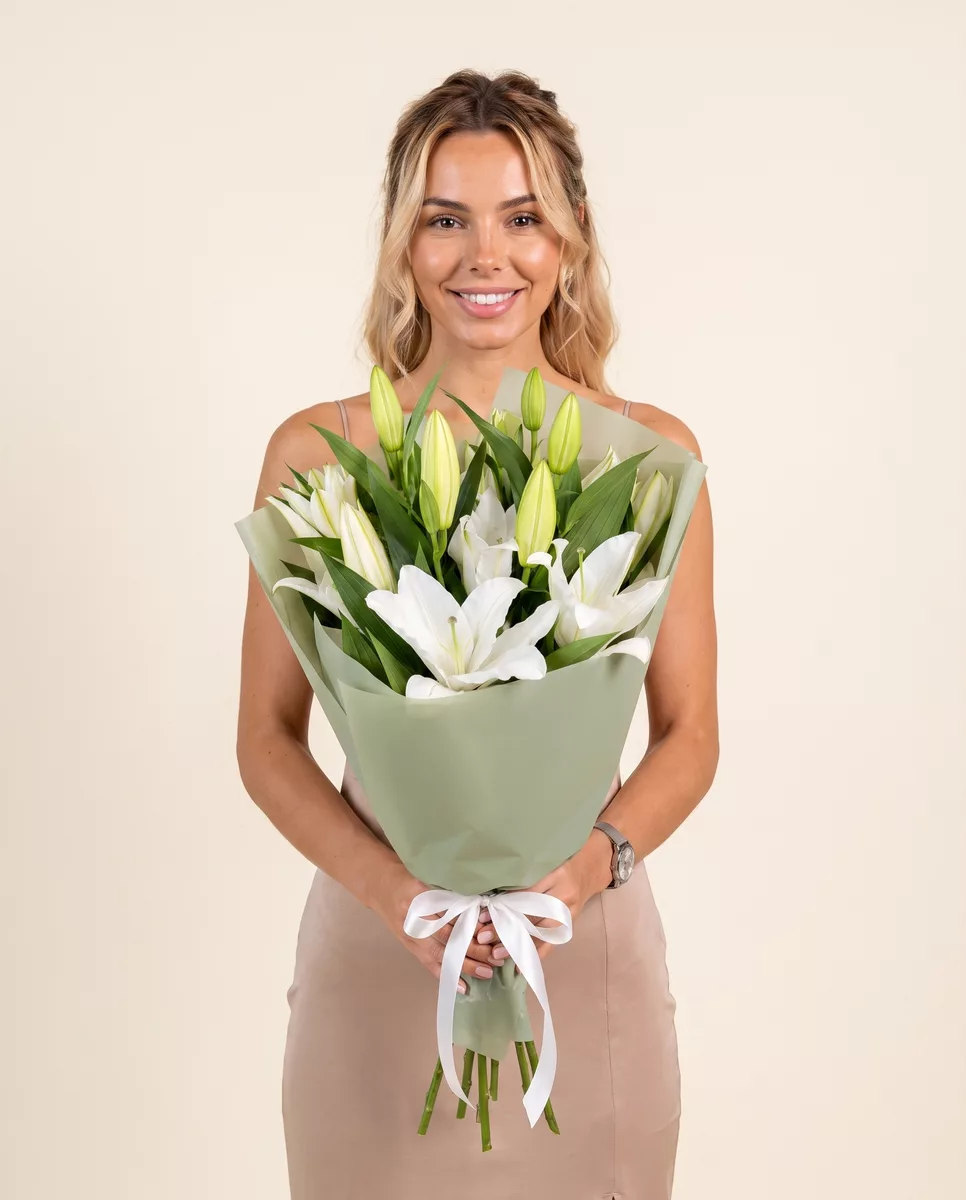
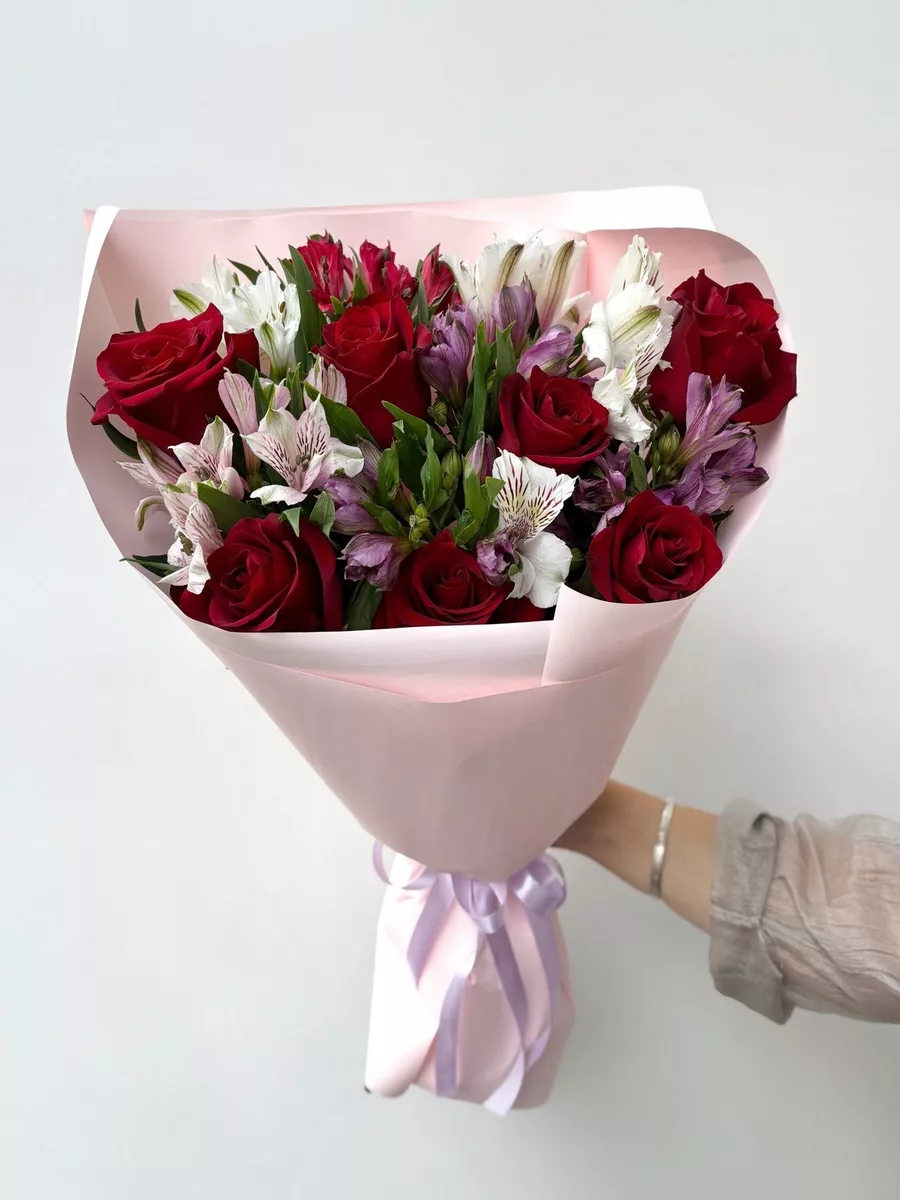
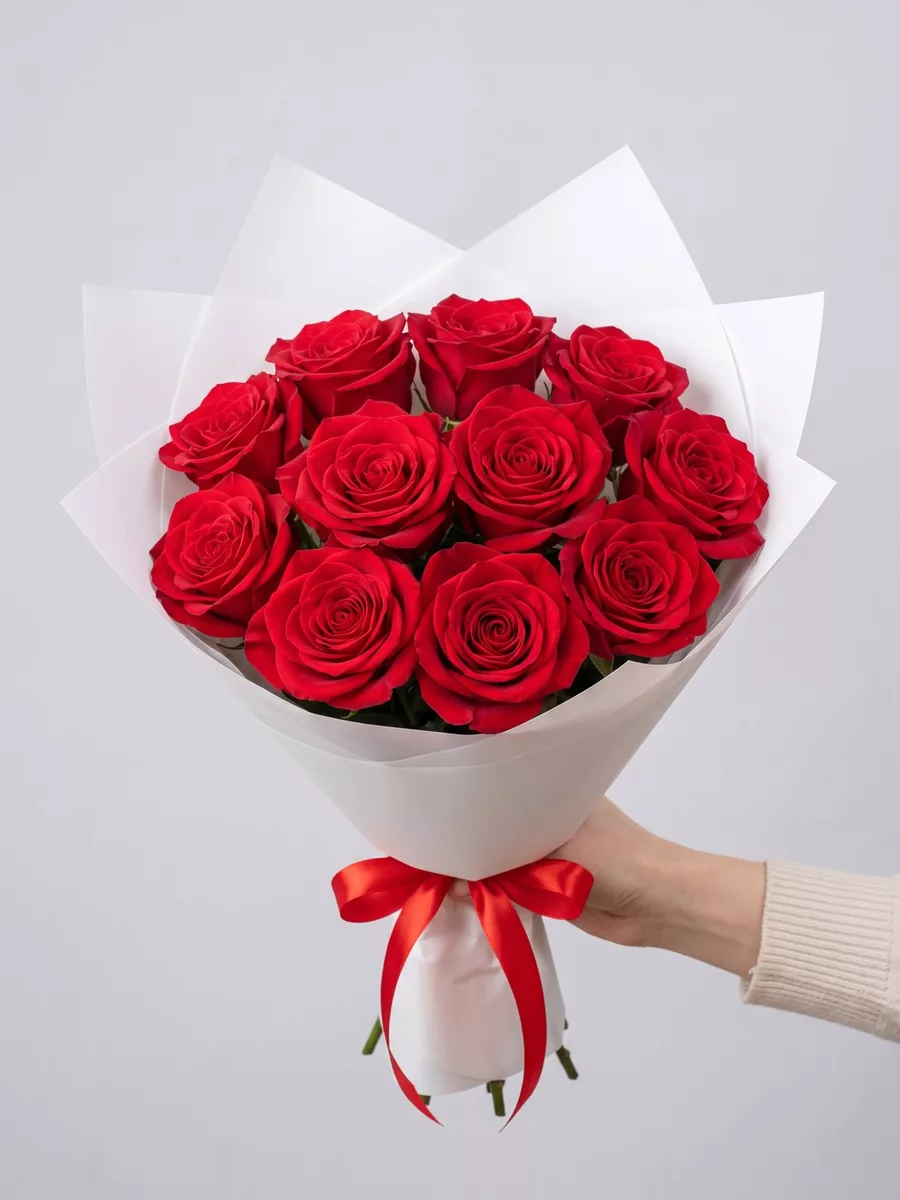

Which Flowers Are Right for a Russian Office Setting
Roses remain the default for a reason — they are universally understood, widely available year-round, and carry no ambiguous cultural signal in a workplace context. For a colleague you know reasonably well, a bouquet of 11 spray roses or large-headed garden roses in cream, peach, coral or pale pink reads as warm and professional without being intimate. Red roses in large numbers shift the register toward romance, so keep red to a minimum or avoid it entirely unless the relationship is close. Chrysanthemums are worth knowing about: they are popular and affordable in Russia, but some recipients associate white chrysanthemums with funeral arrangements. Stick to yellow, orange or burgundy chrysanthemums if you want to use them. Eustoma, also called lisianthus, is an excellent office flower — it holds well at room temperature, looks full without being heavy, and mixes well with roses and greenery. Alstroemeria works well in mixed bouquets because it is long-lasting and adds volume at a reasonable cost. Tulips are strongly seasonal: from February through April they are everywhere and feel fresh; outside that window they are harder to source at consistent quality. Peonies peak from May to June and are very well received when in season. Gerbera daisies are cheerful and informal — good for a younger colleague or a relaxed office culture, less appropriate for a formal corporate environment. Avoid lilies in enclosed office spaces; the scent is strong and can trigger headaches in a meeting room.
Bouquet Size and What It Communicates at Work
Russian workplace culture has a fairly clear visual grammar for bouquet size. A small bouquet of five to seven stems says you remembered and made an effort — appropriate for a colleague you interact with occasionally. Eleven to fifteen stems is the standard for a direct teammate or someone you work with daily; it is substantial enough to be noticed by the whole office without feeling like a declaration. Twenty-one stems and above signals that this person matters significantly — a manager you respect, a colleague who has been a genuine ally, or someone celebrating a milestone birthday like a fortieth or fiftieth. Going above twenty-five stems for a standard workplace birthday can feel excessive and even create mild social awkwardness, since others in the office may feel their own birthdays were undermarked by comparison. The physical size of the bouquet also matters practically: it needs to fit on a desk, survive a workday without water, and be carried home on public transport or in a car. A tightly wrapped bouquet of fifteen roses with minimal filler greenery is easier to manage than a sprawling arrangement of the same number. Ask the florist to wrap it in a way that the stems can be placed in a glass of water immediately — most Russian offices have a kitchen where someone will find a vase or a tall glass within minutes of the delivery arriving. Bouquets in foam or water tubes travel and sit better if the recipient is in back-to-back meetings.
Timing the Delivery to an Office
Office deliveries have a narrow window that most people underestimate. The ideal arrival time is between 10:00 and 12:00. By 10:00 most office workers have arrived and settled, the recipient is reachable, and there is time for the small social moment that a birthday bouquet creates before the day gets busy. Deliveries after 15:00 risk missing the person entirely — afternoon meetings, early departures, and remote work arrangements mean the office empties unpredictably. Deliveries right at 09:00 can arrive before the recipient and sit at reception, which is fine logistically but loses the live moment. For Saint Petersburg specifically, factor in morning traffic on major routes: Nevsky Prospekt, Ligovsky, and the embankments slow significantly between 08:30 and 10:00, so a 10:30 target arrival usually means dispatching by 09:30 from the city centre. Our shop delivers across Saint Petersburg within one to two hours from order confirmation, which means if you order at 09:00 you can reliably target a 10:30 to 11:00 office arrival. Always provide the full office address including floor number, the recipient's full name as it would appear on an access list, and a direct phone number — not just the company switchboard. Many modern Saint Petersburg office buildings have security desks that require the courier to call the recipient directly. If the birthday person is working remotely that day, confirm this before ordering; redirecting a bouquet mid-delivery is possible but adds time.
What to Write on the Card
A card is not optional in Russian office culture — a bouquet arriving without any note feels anonymous and slightly cold. The card does not need to be long; two or three sentences is standard. In Russian workplaces, birthday messages tend to be warmer and more personal than in many Northern European or Anglo-American professional contexts. Phrases that express genuine warmth, wish health and success, and acknowledge the person specifically are expected and appreciated. If you are writing in Russian and are not a native speaker, keep it simple rather than reaching for elaborate phrases that might read oddly. A short sincere message in correct Russian is better than a long one with grammatical errors. If you are writing in English because the recipient speaks it well and your relationship is conducted in English, that is entirely acceptable — it will read as natural rather than foreign. Avoid generic corporate phrases like wishing you continued professional growth; they read as impersonal. Specific references — to a project you worked on together, a quality you genuinely admire, a shared joke — are remembered. If this is a group gift from a team, collect signatures on the physical card rather than listing names in the printed text; handwritten names feel more personal. Cards from our shop are small kraft envelopes with a notecard inside — you can dictate the message when you order and we print it clearly, or you can request a blank card if you want to write it yourself and have it delivered separately.
Group Gifts and Collecting Money from Colleagues
Collecting money from a group for a birthday bouquet is extremely common in Russian offices and is handled openly — someone, usually a close colleague or a team organiser, sends a message in the work chat or goes desk to desk. There is no particular awkwardness about this; it is expected. The typical contribution per person varies by city and office culture, but the principle is that everyone gives what they can and the total determines the bouquet. If you are the one organising, set a target bouquet size first and work backward from the cost, rather than collecting whatever comes in and then figuring out what to buy. This prevents the situation where you have either too little for anything meaningful or a surplus that creates accounting questions. For a team of eight to twelve people, a bouquet of fifteen to twenty-one roses or a mixed arrangement with eustoma and alstroemeria is a comfortable target. When ordering a group gift, put one person's name and phone number as the delivery contact — the courier needs a single point of contact, not a committee. If the birthday falls on a Monday, start collecting on the Thursday before so you have time to place the order by Sunday evening for a Monday morning delivery. Our shop accepts orders around the clock, and a Sunday evening order for Monday morning delivery in Saint Petersburg is standard, not exceptional. Confirm the office is open on that day — some companies have flexible Mondays or remote days that are not obvious from the outside.
What to Check Before You Confirm the Order
There are five things that cause almost every failed or awkward office delivery, and all of them are checkable before you click confirm. First, verify the stem count is odd. Second, confirm the delivery address is complete — building, entrance number if applicable, floor, office number, and the recipient's name as it appears on the company access system. Third, check whether the recipient is actually in the office that day; a quick message to a mutual colleague takes thirty seconds and prevents a wasted trip. Fourth, make sure the flowers you have chosen are in season or confirmed as available — roses and eustoma are reliable year-round, but if you have requested peonies in November or tulips in September, ask the florist to confirm stock before the order is locked. Fifth, read the card text back to yourself before submitting: names misspelled on a card are noticed and remembered. Beyond these five points, think about the packaging. Office bouquets should be wrapped firmly so they survive courier transport and can stand upright in a corner without spilling water. Aqua packaging — a small water reservoir at the stem end — adds an hour or two of freshness, which matters if the recipient is in meetings until the afternoon. Room temperature in a Saint Petersburg office in winter is typically 20 to 22 degrees Celsius, which means cut flowers without water will start to show stress after three to four hours; aqua packaging or a quick trim and water glass solves this entirely. Ask for it explicitly when you order.
Sending flowers to a Russian colleague is a straightforward gesture once you know the rules: odd stem count, appropriate size for the relationship, reliable timing before noon, a genuine card, and an address that will actually get the courier through the door. The flowers themselves — roses, eustoma, alstroemeria — are widely available and well understood. What makes the difference is the preparation done before the order is placed, not the price paid. We deliver bouquets across Russia in 1–2 hours.
Frequently asked questions
Is it acceptable to send flowers to a male colleague in a Russian office?
Yes, though it is less common than sending flowers to women. A small bouquet of seven to eleven stems in neutral colours — white, cream or mixed — is appropriate. Avoid very feminine arrangements with lots of small blooms and ribbon. A clean, structured bouquet of roses or a simple mixed arrangement works well for male recipients in professional settings.
What if I do not know which flowers the colleague prefers?
Roses are the safest default because they are universally accepted and carry no ambiguous meaning in a Russian workplace context. A bouquet of eleven cream or coral roses with minimal greenery will not go wrong. If you know the person well enough to ask a mutual colleague, eustoma and alstroemeria are also widely liked and hold up well through a workday.
Can the bouquet be delivered to reception if the colleague is in a meeting?
Yes, and this is common. Provide the recipient's full name clearly so reception staff can identify them. Ask the florist to include a card with your name on it so the colleague knows who sent the flowers. Most Saint Petersburg office receptions will hold a bouquet for several hours without issue. Aqua packaging at the stems helps the flowers stay fresh while waiting.
How far in advance should I order for a morning office delivery?
For a 10:00 to 11:00 delivery in Saint Petersburg, placing the order the evening before or by 08:30 on the morning itself is sufficient. Our delivery window is one to two hours from confirmation. If the birthday falls on a Monday, ordering Sunday evening is reliable. Last-minute same-day orders are accepted but confirm availability of your chosen flowers first.
Are there flowers I should definitely avoid sending to a Russian colleague?
Avoid white chrysanthemums, which some people associate with funerals. Avoid lilies in enclosed office spaces due to strong scent. Avoid even numbers of stems — this is the most important rule. Red roses in large numbers can read as romantic rather than collegial. Yellow flowers are sometimes said to symbolise separation, though this belief is less widespread among younger recipients.
Ready to send a bouquet?
Pick a city, choose the flowers, and we will hand them over with a photo confirmation.
Choose a city →