
Cornish Lily: A Practical Guide to Nerine Flowers
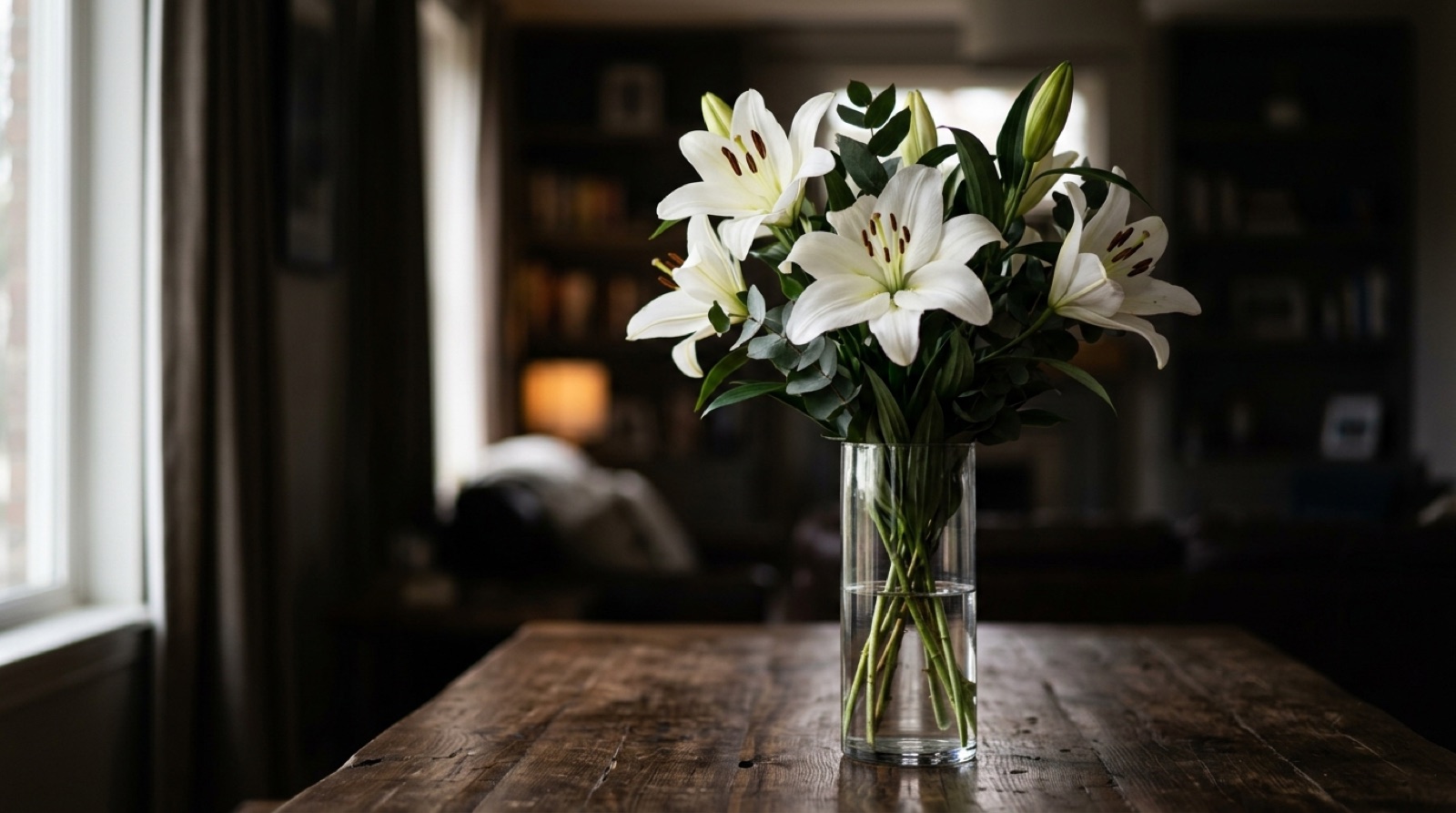
Cornish lily usually refers to Nerine bowdenii, a South African bulb grown for its pink autumn flowers with narrow, curled-back petals. Despite its common name, it is a nerine in the amaryllis family, rather than a true lily of the genus Lilium. If you are identifying a plant or choosing flowers, look for several delicate blooms held together at the top of a bare stem.
At Pyat Tsvetov (5 Flowers), customers choosing an unusual flower often need help separating a familiar common name from the plant it actually describes. That distinction matters here: advice for ordinary bouquet lilies does not automatically apply to nerines, and a photograph alone may not identify the species. Our Saint Petersburg flower shops have been serving customers since 2011; this guide explains what to check before growing, cutting or requesting a Cornish lily.
How to recognise a Cornish lily
A typical Nerine bowdenii flower head carries several pink, trumpet-like flowers with six slender segments and conspicuous projecting stamens. The petal edges look rippled, and their tips curve backwards, giving the cluster a light, spidery outline. Each upright stalk rises separately from the strap-shaped foliage rather than carrying leaves along its length. These features are more useful for identification than the shade of pink, which varies between cultivars.
Common names overlap, so treat a label reading simply “Cornish lily” as a starting point. Guernsey lily is often used for Nerine sarniensis, a related species whose growing requirements should not be assumed identical to those of N. bowdenii. Our Nerine sarniensis guide explains that distinction in more detail. For a bulb purchase, look for the botanical name and cultivar on the label; for cut flowers, use a clear reference photograph alongside the name.
Growing bulbs: position, planting and flowering
For Nerine bowdenii, choose a sunny position with freely draining soil, because persistent wetness around the bulb is a greater concern than a dry surface between waterings. In suitable garden conditions, the bulb neck is normally left at or just above soil level rather than buried deeply. Avoid a spot where rainwater collects or neighbouring plants form a dense, damp cover. Check planting guidance for the named species before applying this approach to another nerine.
Keep the leaves while they are green: they supply the bulb with energy for later growth and flowering. Water during active growth as needed, allowing excess moisture to drain, and reduce watering as the foliage naturally dies back. Nerines can be slow to settle after planting or division, so a first season without flowers does not by itself mean the bulb has failed. Before moving it again, review its light, drainage, planting depth and whether its leaves were removed too early.
Bouquets we can deliver




Containers and winter care in a Russian climate
A container gives you more control over drainage and seasonal protection, particularly where garden winters are severe. Use a pot with drainage holes and a free-draining growing mix, and empty any saucer after watering so the base does not remain submerged. Choose a manageable container that you can move without damaging emerging stems. A decorative outer pot is useful only if you can check that water has not accumulated inside it.
Do not interpret the name Cornish lily as evidence that a bulb can overwinter outdoors anywhere in Russia. Winter survival depends on the species, local conditions, drainage and exposure, so seek advice specific to your region before leaving bulbs in the ground. Where outdoor overwintering is unsuitable, container growing allows protected conditions appropriate to the plant's growth cycle. Follow the foliage rather than a fixed calendar: green leaves still need light, while a dormant bulb requires a different watering routine.
Cutting and caring for nerines in a vase
When cutting garden-grown nerines, choose a stem with some flowers opening and further buds still developing, and use clean, sharp tools. Leave the plant's green leaves in place rather than gathering them with the flower stalk. Bring the cut stems into a clean vase promptly, recut their bases and keep any foliage or plant debris out of the water. Handle the flower heads gently, since the slender petals and projecting stamens can catch on wrapping or neighbouring stems.
Use flower food according to its packet instructions, check the water level daily and replace cloudy water after cleaning the vase. Keep the arrangement away from direct sun, heaters and ripening fruit, and remove individual flowers as they fade. There is no single dependable vase-life figure for every nerine: harvest stage, freshness and room conditions all affect the result. Keep bulbs and cut material out of reach of children and pets, and seek veterinary advice promptly if a pet chews or swallows the plant.
Choosing nerines for a gift or arrangement
Nerines suit a recipient who enjoys fine detail and an open arrangement: their individual flowers are best seen with some space around them. In a mixed bouquet, their branching outlines can soften the shape of broader flowers without needing a tightly packed design. If you are judging size from a photograph, examine the number of stems and the overall outline rather than counting every small bloom as a separate stem. A close-up of one flower head can make the finished arrangement difficult to assess.
There is no universally fixed message attached to the name Cornish lily, so let your card explain the occasion rather than relying on a supposed flower meaning. For a birthday, thank-you or autumn greeting, mention something personal about the recipient or your relationship. Before requesting this particular flower, distinguish whether the exact botanical species matters or whether you mainly want its pink colour and airy shape. That gives you a clear basis for choosing another bouquet yourself if the requested flower is unavailable.
Sending flowers to Russia from abroad
If you are searching for Cornish lilies as a gift to Russia, do not assume that the name indicates current stock. Begin with our bouquets catalogue, and call 8 (812) 507-67-05 if you need to clarify a particular flower before ordering. We deliver flowers across Russia; city delivery costs 500 RUB, while the operator confirms the price for remote districts and suburbs when confirming the order. Online checkout uses CloudPayments, so check the payment options displayed there rather than assuming that every foreign card will be accepted.
For timing, consult delivery and payment and use the recipient's local date and time when planning your order. Express delivery in large cities is available in 1–2 hours after confirmation; other options include an exact time within ±30 minutes, the windows 09–12, 12–15, 15–18 or 18–21, and advance orders 1–30 days ahead. Saint Petersburg delivery operates around the clock, and the courier calls the recipient about 15 minutes before arrival. Delivery is anonymous by default and a card with your text is free; if the recipient is absent, we agree a second delivery that day or, with the sender's consent, handover to a neighbour or concierge.
Frequently asked questions
Is a Cornish lily a true lily?
Cornish lily usually means Nerine bowdenii, which belongs to the amaryllis family. It is not a member of Lilium, the genus containing true lilies, so use nerine-specific growing advice.
When does a Cornish lily flower?
Nerine bowdenii normally flowers in autumn, although the precise timing varies with climate and growing conditions. Its flowering season does not establish whether cut stems are currently available to order.
Why does my nerine have leaves but no flowers?
Possible reasons include recent planting or division, insufficient sun, unsuitable planting depth or removal of green leaves in a previous season. Check those conditions and the bulb's drainage before disturbing it again.
Can I grow Cornish lilies outdoors in Russia?
That depends on the species and your local winter conditions; the common name is not a reliable guide to hardiness. Where outdoor survival is uncertain, a movable container makes it easier to provide suitable seasonal protection.
Can I send flowers to Russia without naming myself?
Yes, delivery is anonymous by default: the courier does not name the sender. A card with your text is free, so include your name in the message if you want the recipient to know who sent the flowers.
Ready to send a bouquet?
Pick a city, choose the flowers, and we will hand them over with a photo confirmation.
Choose a city →