
Cut flower care instructions for a bouquet that lasts
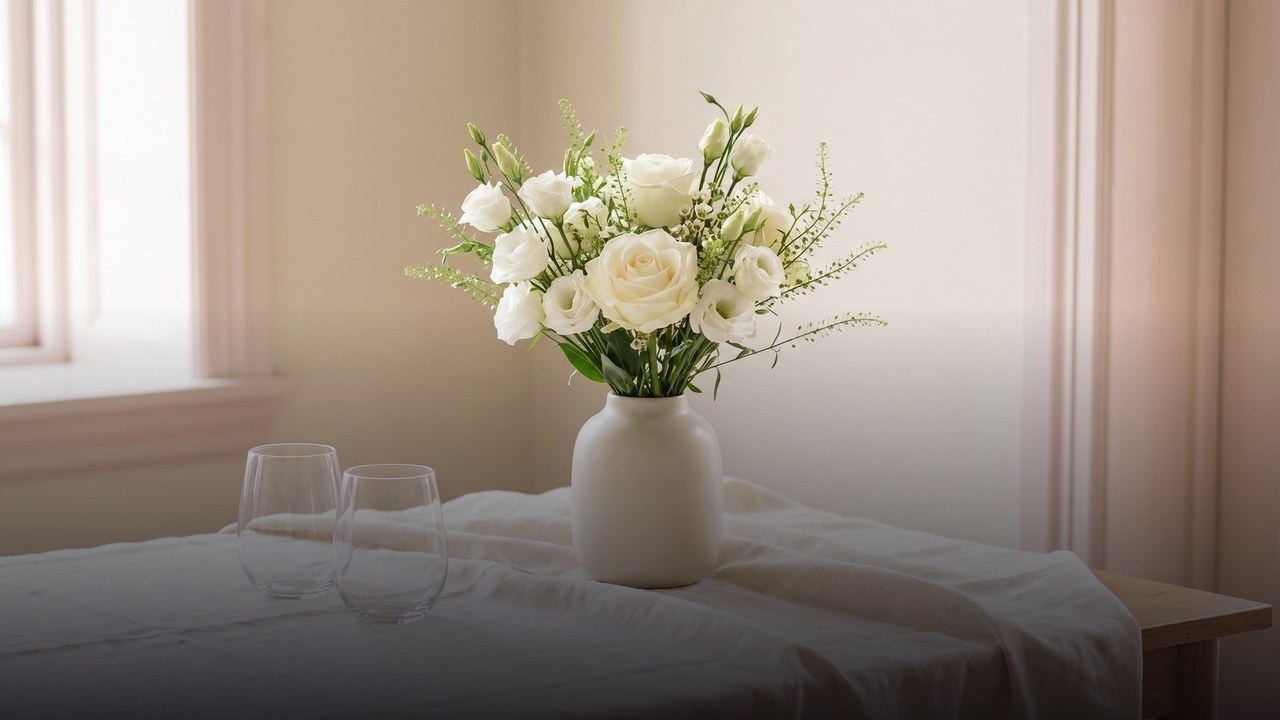
To care for cut flowers, use a thoroughly washed vase, remove any leaves that would sit below the waterline, and trim the stems with a clean, sharp tool before placing them in water. Add commercial cut flower food at the dilution printed on its packet, then keep the bouquet away from direct sun, heaters and ripening fruit. Check the water daily, topping it up as needed and replacing it promptly if it becomes cloudy or develops an odour.
Customers at Pyat Tsvetov (5 Flowers) often want to know what to do as soon as a bouquet reaches the kitchen table, especially when it has arrived as a gift. Our Saint Petersburg flower shops have been serving customers since 2011, and the useful starting point is a simple routine: clean equipment, unobstructed stems and regular attention. Flower varieties age at different rates, so judge the condition of individual stems rather than expecting every bloom to follow the same timetable.
Unwrap the bouquet and prepare a clean vase
Have the vase ready before you begin unwrapping, so the flowers spend as little time as practical out of water. Remove transport wrapping and loosen decorative material that would otherwise become wet or conceal the waterline. If a tie holds a hand-tied bouquet together, you can leave it in place provided it does not crush the stems or prevent them from sitting comfortably in the vase. Choose a vessel that supports the arrangement without squeezing its stems into a tight bundle.
Wash the vase with detergent, rinse it thoroughly and pay attention to residue around the base and neck. A quick rinse of a previously used vase can leave behind deposits that make fresh water dirty sooner. Use fresh tap water suitable for drinking, avoiding hot water and temperature extremes; any specific instructions supplied for the flowers take precedence. Set the vase on a stable surface where you can lift the bouquet out easily for cleaning and water changes.
Trim stems carefully and keep foliage out of the water
Remove leaves from the portion of each stem that will be submerged, while keeping healthy foliage above the waterline. Wet leaves and loose plant fragments decay in the vase and make maintenance harder. With clean, sharp secateurs or a suitable flower knife, remove roughly 1–2 cm from the stem ends, cutting above any damaged or softened tissue. A slight angle is useful, but a clean cut matters more than achieving a precise angle; return the stems to water promptly.
Do not smash woody stems with a hammer or scrape away their outer layers as a general treatment. These methods create damaged surfaces, and different flowers need different handling rather than one aggressive preparation technique. When refreshing a mixed bouquet, shorten stems only as much as necessary and check that the remaining length still suits the vase. If a stem has become slimy or discoloured, clean the vase and assess whether a fresh cut reaches firm, healthy tissue before returning it.
Bouquets we can deliver




Use flower food correctly and refresh the water
If you have commercial cut flower food, measure the water and follow the packet's stated dilution. A sachet intended for a larger volume should not automatically be emptied into a small vase, and extra powder does not mean extra freshness. When no flower food is available, use clean water and maintain it carefully rather than improvising a mixture of household ingredients. Sugar alone is not a complete preservative, while bleach, vinegar, aspirin and coins are unnecessary additions to a normal home care routine.
Check the water level every day, particularly during the first days when a bouquet may take up water quickly. Change it every one to two days as a practical starting routine, or sooner if you see cloudiness, floating debris or an unpleasant smell; follow any different directions on the flower food. At each change, lift out the flowers, wash and rinse the vase, and prepare fresh solution at the correct dilution. Our vase care guide explains cleaning and additives in more detail.
Choose the position and adapt care to the flowers
Place the bouquet in a cool part of the room, away from direct sunlight, radiators, heating vents and draughts. A bright windowsill may look attractive in a photograph but can expose the flowers to warmth and direct sun for hours. Keep the vase away from bowls of ripening fruit, which can release ethylene that hastens ageing in sensitive flowers. Avoid putting a household bouquet in a refrigerator without species-specific advice, since unsuitable cold, stored food and cramped shelves can create new problems.
Mixed bouquets need individual checks because their flowers do not all drink, open or fade in the same way. Tulips may continue to lengthen and bend towards light, so adjust their spacing or support rather than treating every curved stem as wilt. Remove lily anthers carefully before loose pollen reaches fabric, without rubbing pollen into petals or clothing. If lilies are present, keep them completely away from cats: true lilies and daylilies can cause severe poisoning, including through pollen and vase water.
Deal with drooping flowers without damaging healthy stems
When a flower droops, first check the water level, the cleanliness of the vase and whether its stem end is actually submerged. Move the arrangement away from heat, remove decaying foliage, and give the affected stem a clean cut before placing it back in fresh water or correctly mixed flower food. Allow time to see whether it becomes firmer, while keeping the other flowers supported. Drooping can reflect water loss, damage or natural ageing, so recovery is possible in some cases but cannot be promised.
Remove individual spent blooms as they fade, rather than leaving them pressed against healthy petals. Avoid boiling-water treatments, whole-bouquet soaking and heavy misting as universal rescue methods; wet petals and unsuitable treatments can cause further damage. You can transfer sound stems into a smaller vase as the arrangement becomes shorter or less full. For a more detailed assessment of limp stems and ageing blooms, read how to revive dying flowers.
Send flowers to Russia with care and timing in mind
When ordering from abroad, choose the delivery date around when the recipient can receive the bouquet and put it into water. We deliver flowers across Russia, with city delivery costing 500 RUB; the operator confirms the price for remote districts and suburbs when confirming the order. In large cities, express delivery is available in 1–2 hours after order confirmation, alongside an exact-time option with a margin of +/-30 minutes and windows of 09–12, 12–15, 15–18 or 18–21. You can also pre-order 1–30 days ahead; around-the-clock delivery applies in Saint Petersburg.
Browse the bouquets catalogue and use the free card for a personal message or a brief care reminder, such as placing the flowers in a clean vase promptly. Delivery is anonymous by default, meaning the courier does not name the sender, so sign the card if you want the recipient to know who sent it. The courier calls about 15 minutes before arrival; if the recipient is absent, we agree a second delivery that day or a handover to a neighbour or concierge with the sender's consent. Online checkout uses CloudPayments: check the options displayed there, as acceptance of every foreign card is not guaranteed; see delivery and payment or call 8 (812) 507-67-05 for questions.
Frequently asked questions
How often should I change the water for cut flowers?
Check the level daily and change the water every one to two days as a starting routine, following any specific flower food instructions. Replace it sooner if it turns cloudy, contains decaying material or develops an odour, and wash the vase each time.
Can I put cut flowers in plain tap water?
Yes, fresh tap water suitable for drinking is a practical option when you do not have commercial flower food. Keep the vase clean, remove submerged leaves and refresh the water regularly.
Should I cut flower stems every day?
Daily cutting is not automatically necessary. Trim them when first arranging the bouquet, then inspect the ends during water changes and make a fresh cut if they are deteriorating or a stem is struggling to take up water.
Do I need to remove all the wrapping from a bouquet?
Remove transport wrapping and any material that would sit in the water or obstruct access to the vase. A bouquet tie can remain if it supports the arrangement without crushing or tightly constricting the stems.
Can I order flowers to Russia using a foreign card?
Online checkout uses CloudPayments, and you should check the payment options displayed at checkout. Acceptance of every foreign card is not guaranteed.
Ready to send a bouquet?
Pick a city, choose the flowers, and we will hand them over with a photo confirmation.
Choose a city →