
Do Flowers Like Ice Water? What to Put in the Vase
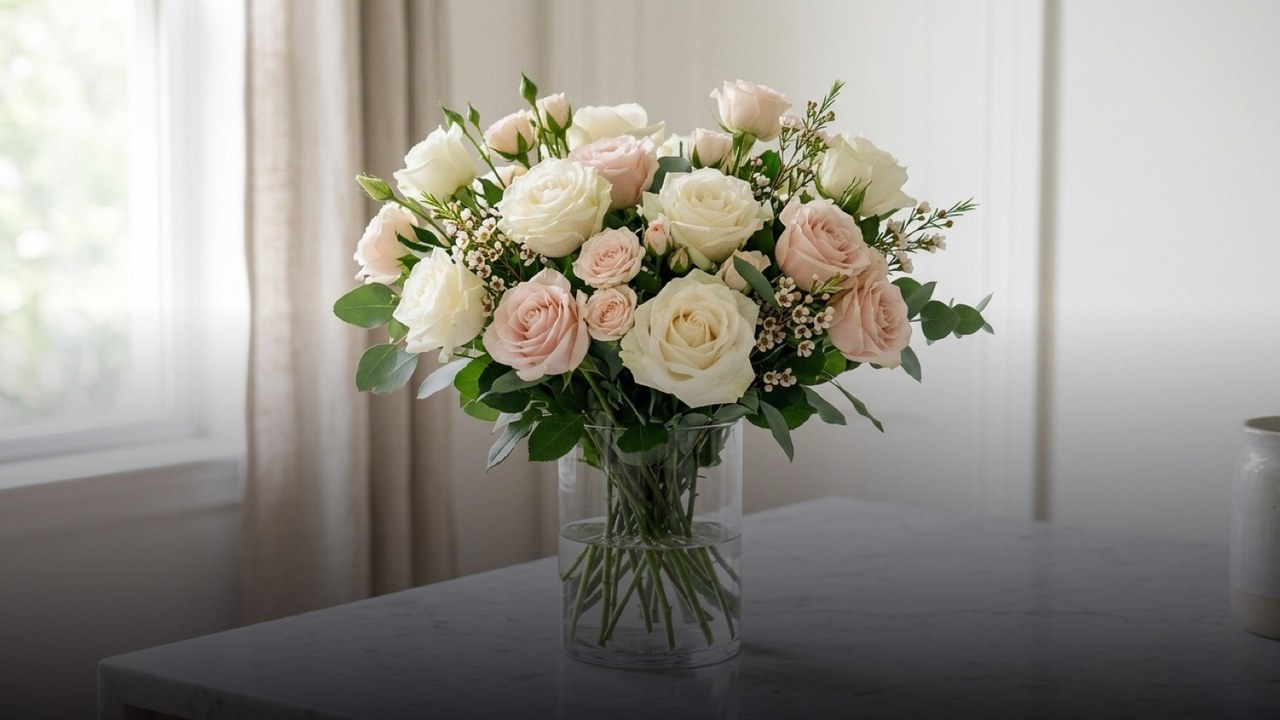
Customers ask us whether adding ice will keep a bouquet fresh for longer. Most cut flowers do not need ice water: fresh, clean water that feels cool or at room temperature is a sensible starting point. Ice is unnecessary for routine vase care, and it will not correct dirty water, damaged stems or a vase standing in the sun.
At Pyat Tsvetov (5 Flowers), with three flower shops in Saint Petersburg and a history dating back to 2011, we start with the condition of the bouquet rather than a universal temperature trick. A mixed arrangement may contain flowers with different care needs, so any instructions supplied with it take priority. The practical aim is to help the stems take up water while keeping the flowers away from heat and contamination.
Cool water and ice water are different choices
Cool water does not have to contain ice or feel painfully cold to your hand. For ordinary home care, use fresh drinking-quality water and avoid temperature extremes. If your tap water runs warm at first, let it run until it is cool rather than trying to chill a full vase with ice cubes.
Ice changes the water temperature as it melts, but that does not make it a reliable flower-preserving treatment. A flower's condition also depends on its age, handling, stem health and surroundings. There is no single icy-water rule that will suit every stem in a mixed bouquet.
A florist's refrigerated storage is also different from putting stems into freezing-cold water at home. Chilling the vase cannot reproduce a controlled storage environment, especially when the flower heads remain in a warm room. For the everyday distinction between cool water and colder treatments, see our guide to whether flowers like cold water.
Prepare the vase before deciding on water temperature
Wash the vase with washing-up liquid, rinse it thoroughly and check the inside for any slippery residue. Old vase water can leave contamination even when the glass looks clear from a distance. Choose a container that supports the bouquet without squeezing the stems together so tightly that you cannot inspect them.
Remove leaves that would sit below the waterline, keeping healthy foliage above it. Submerged leaves decay and make clean water harder to maintain. If a flower head or leaf is already damaged, remove the affected material gently so that loose pieces do not fall into the vase.
Refresh the stem ends with a clean, sharp tool before arranging the flowers in water. Make a neat cut without crushing or splitting the stem, and transfer the bouquet to the prepared vase promptly. Where flower food is supplied, follow its instructions and use the stated amount of water; ice cubes are not a substitute for it.
Bouquets we can deliver




Match the care to the flowers in your bouquet
Tulips are often associated with cool conditions, but that is not a reason to surround their stems with ice. Give them clean water, a supportive vase and a position away from direct heat. They may continue to grow and bend after cutting, so a changing outline does not by itself mean the water temperature is wrong.
With roses, check that the stem ends are freshly cut and can reach the water freely. A drooping head can have several causes, and colder water alone may not resolve it. Avoid treating every bent rose as a temperature problem or repeatedly moving the bouquet between hot and icy water.
Flowers of tropical origin may require different handling from temperate flowers, which makes blanket advice about ice particularly unhelpful. For a mixed bouquet, keep the arrangement in a comfortable, cool indoor position and follow any specific care guidance. Do not put it in a household freezer or assume a domestic fridge is suitable storage.
Build a daily routine that helps more than adding ice
Check the water level every day, especially during the first day after the bouquet goes into its vase. Stems need their cut ends to remain submerged, and a decorative container can hide a falling level. Add fresh water as needed, following the flower-food instructions if you are using a prepared solution.
Replace water that becomes cloudy or develops an unpleasant smell, and wash the vase before refilling it. Look for fallen petals, submerged foliage or soft stem sections while you work. Routine water changes are more useful than adding ice to old water and leaving the source of contamination in place.
Keep the bouquet away from radiators, direct sunshine and hot appliances, and avoid placing it beside ripening fruit. Pick a stable location where people will not brush against the flower heads. A cooler room can reduce heat stress, but an icy vase cannot compensate for hours on a sunny windowsill.
Respond to wilting without a temperature shock
If a bouquet starts to droop, first check whether the stems are actually reaching the water. Remove the flowers, clean the vase and inspect the lower stems for damage or decay. Refresh sound stem ends with a clean cut and return them to fresh water in a cooler place away from direct sun.
Give the flowers time to take up water before judging the result, and avoid changing several things in quick succession. Some wilting can improve after basic care, while flowers affected by age or damage may not recover. No water temperature can reverse every cause of deterioration, so treat dramatic revival claims cautiously.
Do not pour boiling water over a mixed bouquet or submerge every flower head as a general rescue method. Treatments intended for a particular flower or condition may be unsuitable for other stems in the same vase. For a rose-focused approach, use our guide to reviving wilted roses after delivery.
Arrange delivery in Russia with vase care in mind
When sending flowers to someone in Russia, choose an arrival window when they can receive the bouquet and put it in water. Browse the bouquets catalogue, then check the delivery arrangements for the destination. We deliver across Russia; city delivery costs 500 RUB, while an operator confirms the price for remote districts and suburbs when confirming the order.
In large cities, express delivery is available in 1–2 hours after order confirmation. You can also choose an exact time within plus or minus 30 minutes, a window of 09–12, 12–15, 15–18 or 18–21, or pre-order 1–30 days ahead. Delivery in Saint Petersburg operates around the clock; check the delivery and payment information when planning the gift.
Delivery is anonymous by default: the courier does not name the sender, and a card with your text is free. The courier calls the recipient about 15 minutes before arrival; if they are absent, we agree another delivery that day or, with the sender's consent, hand the flowers to a neighbour or concierge. Online checkout uses CloudPayments, so check the payment options displayed there; for questions, call 8 (812) 507-67-05.
Frequently asked questions
Should I put ice cubes in a flower vase?
Ice cubes are usually unnecessary for cut flowers. Start with a clean vase and fresh cool or room-temperature water, following any care instructions supplied with the bouquet.
Do roses last longer in ice water?
Ice water is not a reliable way to extend the life of roses. Clean water, freshly cut stem ends and a position away from heat are more useful parts of routine care.
Is very cold water best for tulips?
Tulips suit cool surroundings, but routine care does not require ice water. Keep their cut ends in clean water and use a vase that supports the stems as they grow and bend.
Can ice water revive a wilted bouquet?
It may not address the cause of wilting. Check the water level, clean the vase and refresh healthy stem ends; recovery depends on the flowers' condition and is not guaranteed.
What should I tell someone receiving flowers in Russia?
Suggest having a clean vase ready, removing leaves below the waterline and placing the bouquet in fresh water promptly. Daily water checks and a position away from heat are more practical than adding ice.
Ready to send a bouquet?
Pick a city, choose the flowers, and we will hand them over with a photo confirmation.
Choose a city →