
Do Picked Flowers Need Sunlight to Stay Fresh?
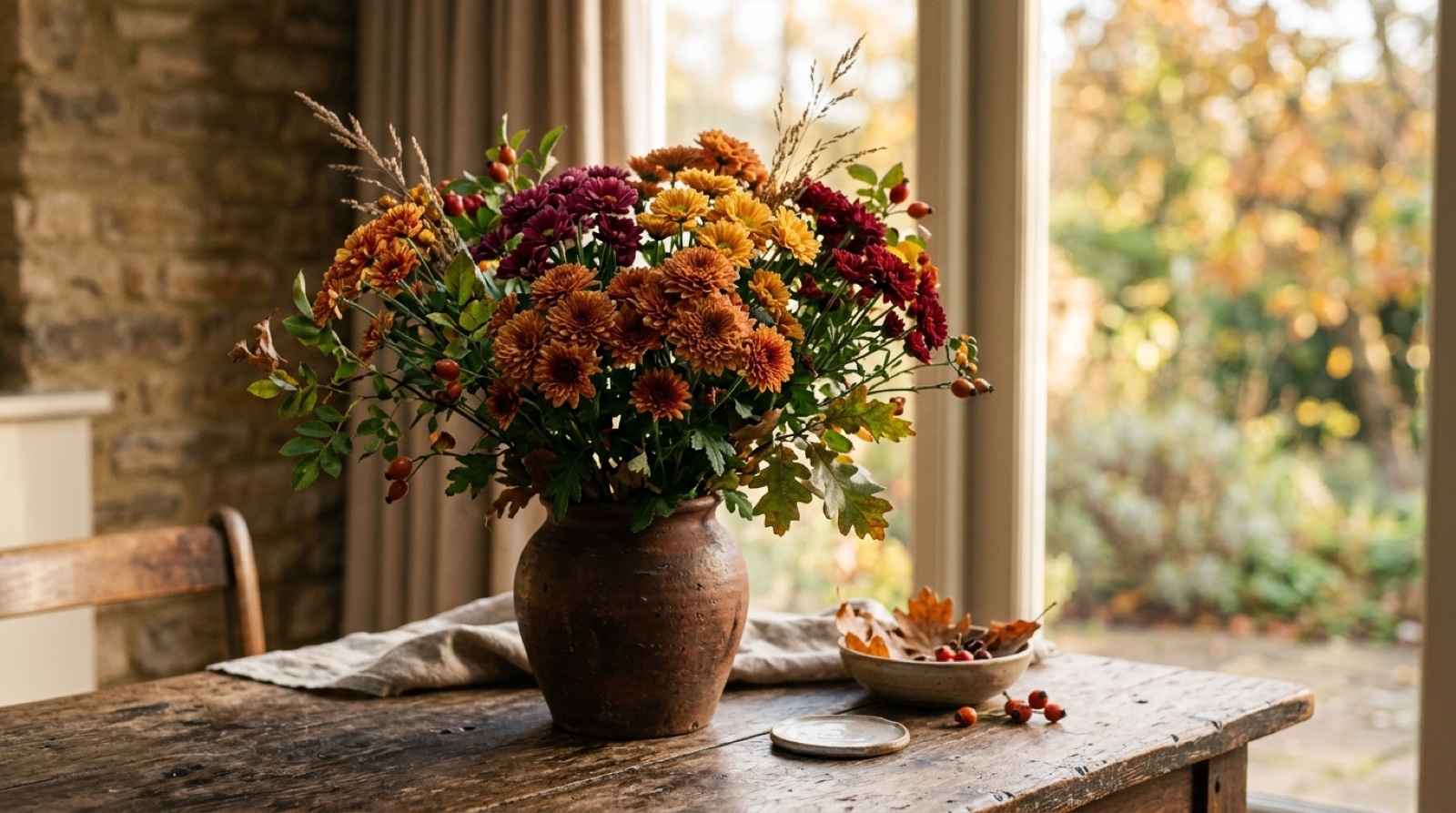
Picked flowers do not need direct sunlight to stay fresh in a vase. Keep them in a cool place with gentle, indirect light: strong sun can warm the water and increase moisture loss, making flowers wilt sooner. Clean water and stems that can take it up matter much more than a sunny windowsill.
Customers in our shops often ask whether a freshly picked bunch should go beside a window to recover. At Pyat Tsvetov (5 Flowers), with flower shops in Saint Petersburg since 2011, we recommend checking water and placement first. A flower growing outdoors and a stem cut for a vase have different needs, even when they are the same variety.
Why picking changes a flower’s needs
A growing plant uses its roots to draw water from the soil while its leaves use light for photosynthesis. Once you cut a flowering stem, it loses that root supply and depends on water entering through the cut end. Sunlight cannot replace those roots or repair a blocked stem, so moving a drooping bunch into the sun rarely addresses the cause.
Leaves left on a cut stem may still photosynthesise when conditions allow, but that does not make direct sun a useful vase-care treatment. The immediate problem is keeping water uptake in step with water loss. A hot, bright position can upset that balance, particularly while a newly picked stem is recovering from time out of water.
Picked flowers also continue to age, even with careful care. Some buds may open in the vase, while others picked too early never develop properly; the outcome depends on the flower and its stage at cutting. Our guide to what happens after flowers are picked explains this gradual change in more detail.
Choose a vase position that stays cool through the day
Choose a table, shelf or sideboard with ordinary room light and no direct midday or afternoon sun. Check where the sun falls later, because a shaded spot in the morning may become a hot patch by lunch. A little distance from the window often gives you a better display position without exposing petals and vase water to prolonged heating.
Keep the vase away from radiators, fireplaces, ovens and hot air from appliances. Avoid placing it directly in the path of an air conditioner or a strong draught, which can dry exposed petals and leaves. A stable spot with comfortable room conditions is a more useful target than trying to find the brightest place in the house.
There is no need to buy a grow light or put ordinary cut flowers in a dark cupboard. You should be able to enjoy the bouquet in the room where you spend time, provided it stays away from heat and strong sun. For examples of suitable positions, see our guide to where flowers last longest in a vase.
Bouquets we can deliver




Prepare freshly picked stems before displaying them
If you are cutting from your own garden, choose a cooler part of the day and have a clean container of water ready. Use clean, sharp secateurs or scissors suited to the stem, so you make a clean cut without crushing it. Put stems into water promptly instead of leaving the bunch on a sunny garden table while you finish picking.
Wash the vase thoroughly, including any residue around the base and inside the neck. Remove leaves that would sit below the waterline, while keeping healthy foliage above it where practical. Submerged leaves decay and encourage bacterial growth, which can interfere with water uptake and make the vase unpleasant well before the petals have faded.
Refresh the stem ends with a clean cut before arranging the flowers, and make sure every cut end reaches the water. Add commercial cut-flower food if supplied, following the packet’s dilution instructions. Avoid guessing with sugar, bleach or other kitchen mixtures: incorrect proportions can harm stems or encourage microbial growth instead of helping the flowers.
Make water care part of the daily routine
Check the water level every day, especially during the first day after picking or unpacking a bouquet. A large bunch can use more water than you expect, and some stems may stop reaching it before the vase looks empty. Top up as needed, using the correct dilution if you are adding a prepared flower-food solution.
Replace water when it becomes cloudy or develops an unpleasant smell, and clean the vase before refilling it. With plain water, a daily refresh is a useful routine; with flower food, follow the product’s directions. Remove fallen petals and damaged foliage at the same time so decaying material does not remain among otherwise healthy stems.
Keep the arrangement away from a bowl of ripening fruit, particularly in a small, enclosed space. Ripening fruit can release ethylene, which speeds ageing in flowers that are sensitive to it. Sunlight, fruit and dirty water affect flowers in different ways, so moving the vase into shade should be one part of care rather than the only action.
Help drooping flowers without giving them a sunbath
When a flower droops, first check whether its stem end is actually submerged and whether the water is clean. Move the vase out of direct sun and away from heat, then inspect the stems for crushed sections or decay. Recut sound stems with a clean tool and return them promptly to fresh water in a washed vase.
Give the flowers some quiet time in a cool, shaded place before rearranging them repeatedly. Dehydrated stems sometimes recover, but damaged tissue and advanced ageing cannot always be reversed. Avoid boiling-water treatments, ice baths or submerging the entire bouquet as a general rescue method, because different flowers respond differently and delicate petals may be damaged.
Judge each stem separately instead of treating every change as a water problem. Tulips can curve and continue growing after cutting, while a lily opening can alter the balance of an arrangement. If one stem has soft, decaying tissue or badly deteriorated petals, remove it so you can keep the remaining flowers clean and assess their condition more easily.
Plan a flower delivery to Russia around the recipient’s day
When sending flowers to someone in Russia, choose a delivery period when they can receive the bouquet and put it in water. Think about their local schedule, especially if you are ordering from a different time zone. A short card can carry the personal message; there is no need to turn a gift note into a long set of flower-care instructions.
We deliver flowers across Russia, and city delivery costs 500 RUB. For remote districts and suburbs, the operator confirms the delivery price when confirming the order. Express delivery in large cities is available in 1–2 hours after confirmation; other options are an exact time within ±30 minutes, windows of 09–12, 12–15, 15–18 or 18–21, and pre-ordering 1–30 days ahead. In Saint Petersburg, delivery is available around the clock.
Delivery is anonymous by default: the courier does not name the sender, and a card with your text is free. Sign the card if you want the recipient to know who sent it. The courier calls about 15 minutes before arrival; if the recipient is absent, we agree a second delivery that day or handover to a neighbour or concierge with the sender’s consent.
Choose your flowers in the bouquets catalogue and check the available options when placing the order. Online checkout uses CloudPayments; if you are paying from abroad, check the payment options displayed there, as acceptance of every foreign card is not guaranteed. For questions, call 8 (812) 507-67-05, and remind the recipient to place the flowers in clean water away from direct sun. We deliver bouquets across Russia in 1–2 hours.
Frequently asked questions
Can picked flowers stay fresh in a room without windows?
A windowless room can be suitable for a temporary cut-flower display if it stays cool and the flowers have clean water. Direct sunlight is not required, but water care and the flowers’ condition still determine how well they last.
Will sunlight help picked flower buds open?
Direct sun is not a reliable way to open buds and may dry or overheat them. Whether a bud opens depends on the species, how mature it was when cut and its condition.
Should I leave picked flowers on a windowsill overnight?
Check both the overnight conditions and the sunlight that will reach the vase in the morning. A position away from cold glass, a radiator and early direct sun is usually easier to manage.
Do picked flowers need watering or misting?
Picked stems need access to water through their cut ends, so checking the vase is the priority. Misting is not a substitute for water uptake, and wetting delicate petals may cause spotting.
How long will freshly picked flowers last?
There is no single lifespan for all picked flowers: species, maturity at cutting, handling and room conditions all matter. Clean water, prompt preparation and protection from heat help, but they cannot stop natural ageing.
Ready to send a bouquet?
Pick a city, choose the flowers, and we will hand them over with a photo confirmation.
Choose a city →