
Flower Colour Meaning in Russia: What Senders Get Wrong
Every week customers call us after a bouquet has already been delivered, asking why the recipient seemed surprised or, worse, quietly upset. Nine times out of ten the issue is not the flowers themselves but the colour. Russian cultural associations around flower colour are specific, sometimes the opposite of what a sender from another country expects, and they vary by occasion, by relationship and even by the age of the recipient. This article breaks down the four colours we get the most questions about — red, white, yellow and pink — and tells you exactly what each one signals to a Russian recipient so you can order with confidence.
Why Colour Carries More Weight in Russia Than in Many Other Countries
In Russia, flowers are a serious social currency. People give them at graduations, on International Women's Day on 8 March, at first meetings with a partner's parents, and at countless other moments where the wrong signal can linger for months. Because the tradition of giving flowers is so embedded, recipients read them carefully — variety, quantity and colour all carry meaning simultaneously. A customer sending flowers from Germany or the United States often assumes that the associations they grew up with are universal. They are not. Yellow, for instance, is strongly positive in many Asian cultures and fairly neutral in much of Western Europe, but in Russia it carries a specific warning that most senders outside the country have never heard of. White, which feels celebratory and bridal in many Western contexts, works beautifully in Russia too but only in the right combinations. Red is the colour with the most straightforward positive reading, yet even red has a boundary that matters enormously: the number of stems. Understanding these layers before you order is the difference between a bouquet that lands perfectly and one that requires an apologetic phone call. Our florists at Five Flowers field these questions daily, and the answers below come directly from what we see on the shop floor, not from general etiquette books.
Bouquets we can deliver



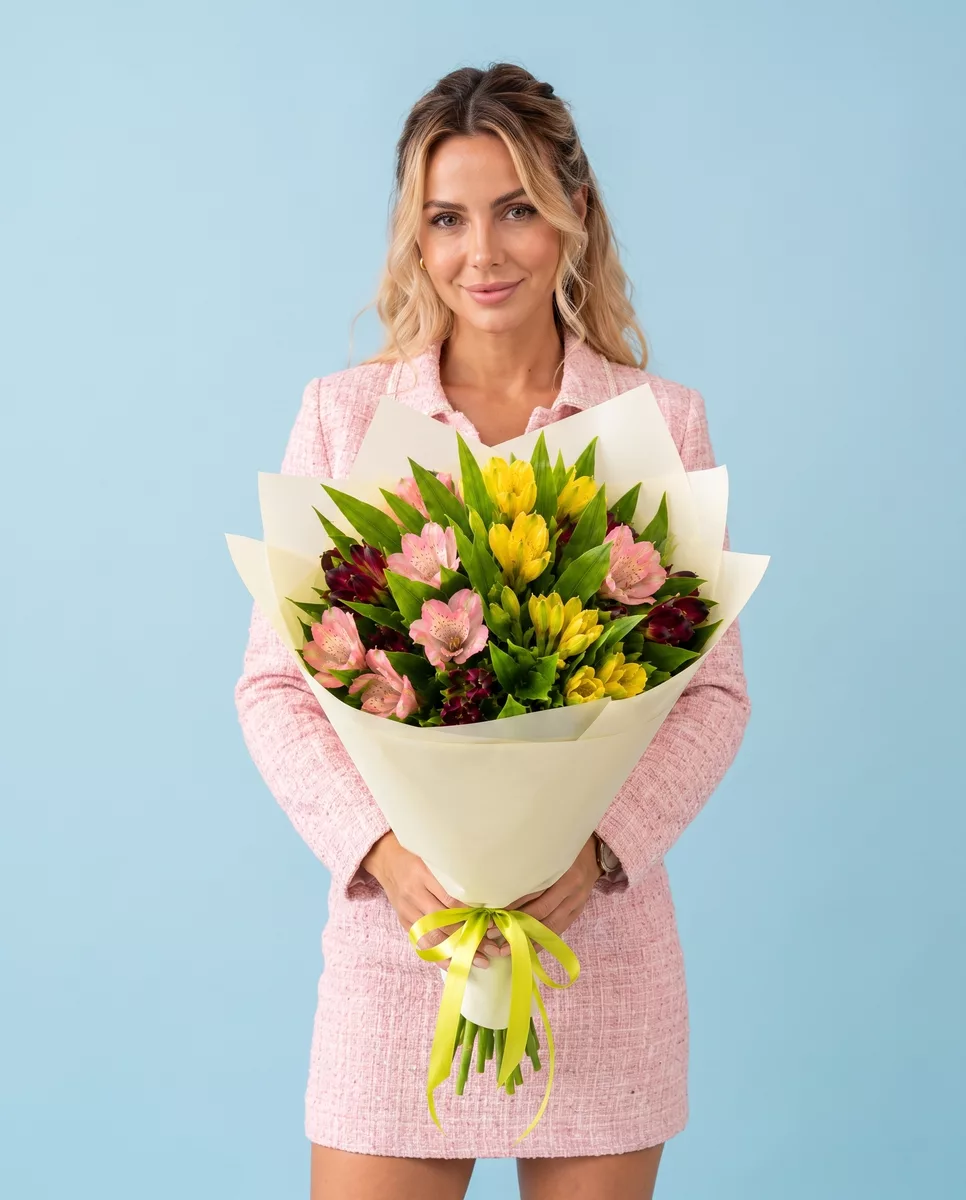
Red Flowers: Passion, Respect and the Rule of Odd Numbers
Red is the safest colour in Russia for expressing strong positive feeling, and it works across a wide range of occasions — romantic declarations, deep respect for an older woman, congratulations to a colleague on a significant achievement. Red roses are the most requested flower we handle, followed by red tulips in spring and red peonies from late May through June. The variety matters for longevity: Red Naomi and Explorer roses, for example, hold their shape for seven to ten days in a cool room, while cheaper market reds can drop petals within three days. Always ask what variety is being used when you order. The critical rule that every sender must know is the odd-number convention. In Russia, even numbers of flowers are reserved for funerals and mourning — a context this article is not covering in detail, but the rule itself is essential to understand because violating it in a celebratory context genuinely upsets recipients. Give 1, 3, 5, 7, 11, 15, 21, 25 or 51 stems — never 2, 4, 6, 8, 10 or any other even count. This applies to every colour, but because red bouquets are so often given at emotionally charged moments, the stakes of getting the count wrong feel highest there. A bouquet of 12 red roses, which reads as romantic in many Western countries, reads as a serious misstep in Russia. Our ordering system at Five Flowers flags even numbers automatically, but if you are ordering elsewhere, count manually before confirming.
Yellow Flowers: The Colour That Needs the Most Explanation
Yellow is the colour we spend the most time discussing with customers, because the gap between its meaning in Russia and its meaning almost everywhere else is the widest. In Russia, yellow flowers — particularly yellow roses — are traditionally associated with separation, jealousy and the end of a relationship. This is a deeply held folk belief, not a fringe superstition, and it is especially strong among women over forty. Younger recipients in Moscow and Saint Petersburg are somewhat more relaxed about it, but even among people in their twenties, giving yellow roses to a romantic partner is considered a risk that most Russians would simply avoid. The association is specific to yellow roses and to yellow flowers given in an exclusively yellow bouquet. Mixed arrangements that include yellow as one element among other colours — say, a spring bouquet of yellow ranunculus, white anemones and blush tulips — read quite differently and are generally well received. Sunflowers are a partial exception: they are associated with warmth and summer rather than with romantic trouble, and a bouquet of sunflowers given to a friend or a colleague lands positively in most contexts. Yellow mimosa, sold almost exclusively around 8 March, is another exception — it is the signature flower of Women's Day and carries festive rather than negative associations. The practical rule: if you are sending yellow flowers to a romantic partner or to someone whose age and outlook you do not know well, choose a mixed arrangement and confirm with our florists that yellow is not the dominant colour.
White Flowers: Purity, Celebration and Getting the Mix Right
White flowers have a broadly positive reading in Russia and work well for birthdays, graduations, new jobs and formal congratulations. White roses — varieties like Avalanche and White O'Hara — are perennial bestsellers for exactly this reason. White tulips in spring and white peonies in early summer are equally popular and feel fresh rather than formal. The nuance with white in Russia is not the colour itself but the composition of the bouquet. A purely white arrangement, with no other colour present, can feel cold or overly solemn to some recipients, particularly older ones. Adding a secondary colour — blush pink, soft green foliage, a single deep red stem — warms the bouquet considerably and removes any ambiguity about the occasion. White chrysanthemums are the one variety to handle with care: they carry stronger associations with formal and solemn occasions than other white flowers do, and while they are perfectly acceptable in many contexts, they are not the first choice for a celebratory bouquet aimed at someone you do not know well. White orchids, by contrast, read as elegant and contemporary and are well received across age groups. For corporate gifting — sending flowers to a business partner or a client — white arrangements with structured, long-lasting varieties like orchids or anthuriums are the most reliable choice because they signal professionalism without any romantic subtext. If you are ordering for a woman's birthday and want to play it safe, a white and blush pink combination is almost universally well received in Russia.
Pink Flowers: The Most Versatile Colour in the Russian Market
Pink is the colour our florists recommend most often when a customer is unsure, and for good reason: it carries no negative associations in Russian culture and works across the widest range of occasions and recipient ages. Light pink — blush roses, pale pink peonies, soft pink tulips — reads as tender and affectionate without being overtly romantic, which makes it ideal for friendships, for giving to a colleague, or for a first bouquet to someone you are just getting to know. Deeper pinks — hot pink gerberas, magenta ranunculus, saturated pink roses like the variety Sweet Avalanche — read as energetic and celebratory and work well for birthdays and significant achievements. Pink is also the colour that photographs best in Russian interior light, which matters more than it might seem: recipients frequently photograph bouquets for social media within minutes of receiving them, and a pink arrangement holds its colour and contrast better under warm indoor lighting than red or white. The one practical consideration with pink is seasonality. Peonies, which are among the most requested pink flowers we carry, have a short season from roughly late May to late June. Outside that window, garden roses in similar blush tones are the closest substitute and hold up well in transit. Pink tulips are available from February through April and are significantly more affordable than roses during that period. If budget is a factor and the occasion is not a major milestone, a generous bunch of pink tulips will make a stronger impression than a small arrangement of roses at the same price point.
Mixed Colour Bouquets: How Russians Actually Read Combinations
Most bouquets sold in Russia are not single-colour arrangements — they are combinations, and understanding how those combinations are read matters as much as understanding individual colours. The general principle is that the dominant colour sets the emotional register and secondary colours modify it. A bouquet where red accounts for seventy percent of the stems reads as romantic or deeply respectful regardless of what else is in it. A bouquet where pink is dominant and red provides accent reads as warm and celebratory rather than romantic. White as a dominant colour with pink accents reads as elegant and gentle. Where customers most often go wrong with combinations is in using yellow as a significant element in a bouquet intended for a romantic partner. Even if yellow accounts for only thirty percent of the stems, a recipient who holds the traditional association will notice it. If you want warmth and brightness in a romantic bouquet, use peach tones — varieties like Coral Charm peonies or Peach Avalanche roses — rather than yellow. Peach has no negative associations in Russian culture and reads as affectionate and slightly playful. Green flowers and foliage — eucalyptus, green trick dianthus, hellebores — are neutral and contemporary in Russian reading, used mainly as structural elements rather than colour statements. Purple and lilac flowers, including lavender roses and lisianthus, read as romantic and slightly mysterious and are popular for Valentine's Day and anniversaries. Blue flowers, which are rare in nature and usually dyed, are less common in Russian gifting culture and carry no strong associations either way.
Practical Checks Before You Place Your Order
Knowing the colour rules is only useful if you apply them at the moment of ordering, and there are four specific checks worth running before you confirm any delivery. First, count the stems and verify the number is odd. If the shop's website shows a bouquet of ten roses, ask for eleven or nine — any reputable florist will adjust without complaint. Second, if yellow appears anywhere in the arrangement and the recipient is a romantic partner or an older woman, ask the florist to substitute a peach, blush or coral variety. Third, confirm the dominant colour: bouquet photos on websites are often taken in studio lighting that shifts colours, so ask explicitly what the primary colour reads as in person. Fourth, check the variety names rather than just the colour description. A flower listed as a red rose could be Red Naomi, which lasts ten days, or an unnamed market variety that lasts three. The variety name tells you what you are actually getting. At Five Flowers we deliver across Russia within one to two hours of order confirmation, which means the flowers arrive fresh and the colour you see in the product photo is the colour the recipient receives — we do not substitute without calling first. Temperature during transit matters too: in winter, flowers travel in insulated packaging to prevent cold damage, and in summer, delivery is timed to avoid midday heat. If you are ordering for a specific time — a birthday dinner, a meeting, an anniversary moment — tell us the exact window and we will schedule accordingly. A bouquet that arrives two hours late at the wrong temperature is a different gift from the one you intended.
Colour in Russian flower-giving is not decoration — it is communication, and the message a bouquet sends depends on getting the colour, the count and the combination right simultaneously. Red signals warmth and respect when the stem count is odd. Yellow needs context and care, especially in romantic situations. White works broadly but benefits from a secondary colour to feel celebratory rather than formal. Pink is the most forgiving and versatile choice across nearly every occasion and recipient. When in doubt, call us before ordering rather than after: our florists know these associations from daily experience and can steer you toward an arrangement that lands exactly as you intend. We deliver bouquets across Russia in 1–2 hours.
Frequently asked questions
Is it really true that yellow roses mean separation in Russia?
Yes, and it is taken seriously, particularly by women over forty. Younger recipients in large cities are more relaxed about it, but the association is strong enough that most Russian florists actively advise against yellow roses for romantic occasions. Mixed arrangements where yellow is a minor accent rather than the dominant colour are generally fine.
Why do Russian bouquets always have an odd number of flowers?
The odd-number convention is rooted in a long-standing cultural rule that even numbers belong to solemn and mourning contexts. Giving an even number at a birthday or celebration is considered a significant mistake. Always count your stems before confirming: 3, 5, 7, 11, 15, 21 and 25 are the most common quantities we send.
Can I send white flowers for a birthday in Russia?
Yes, white flowers are a good birthday choice. White roses, white tulips and white peonies all read as celebratory. The one adjustment worth making is to include a secondary colour — blush pink, soft green foliage or a single accent stem in another colour — so the arrangement feels warm rather than formal. Purely white bouquets can feel solemn to some recipients.
What is the safest colour if I have no idea about the recipient's preferences?
Pink is the safest choice in Russian flower culture. It carries no negative associations, works across all ages and occasions, and reads as affectionate without being overtly romantic. A blush or light pink arrangement is appropriate for colleagues, friends, relatives and romantic partners alike, making it the default recommendation when our florists are asked for a no-risk option.
Do sunflowers carry the same negative meaning as yellow roses in Russia?
No. Sunflowers are treated as a separate category from yellow roses. They are associated with warmth, summer and friendliness rather than with the separation symbolism attached to yellow roses. A bouquet of sunflowers given to a friend or colleague is well received. The caution around yellow applies most strongly to roses and to bouquets where yellow is the sole or dominant colour.
Ready to send a bouquet?
Pick a city, choose the flowers, and we will hand them over with a photo confirmation.
Choose a city →