
Flower Colours in Russia: What Each Shade Signals When You Send a Bouquet
Customers ordering from abroad ask the same question almost every week: is it true yellow flowers mean breakup in Russia? The short answer is yes, that association is real and widespread, but the full picture is more layered than a single rule. Colour in Russian gifting is a system — red signals one thing at a wedding and something slightly different at a work anniversary, white reads as romantic to one generation and formal to another, and orange barely carries any negative weight at all. Getting the colour wrong does not ruin a relationship, but getting it right shows you paid attention, and that is exactly what a good bouquet is supposed to do.
Red Flowers: Passion, Respect and the Varieties That Deliver Both
Red is the most requested colour in the shop, and it works across more occasions than most senders realise. In Russian culture red signals strong feeling — romantic love, deep respect, or a formal mark of honour — which is why it appears at Valentine's Day deliveries, at milestone birthdays for senior relatives, and at graduation ceremonies in roughly equal measure. The key is the variety and the scale of the arrangement. A dozen red Freedom or Explorer roses in tight bud is the classic romantic statement; it reads as intentional and direct. Spray roses in red, such as Lydia or Red Sensation, read softer and suit friendship or a thank-you gesture without the romantic weight of a single-variety long-stemmed bouquet. Red tulips — Ile de France or Red Impression — are seasonal from January through April and carry the same warmth as roses but feel less formal, which makes them popular for younger recipients. Red gerberas are cheerful rather than intense and work well for colleagues. One practical note: red flowers show bruising and petal damage more visibly than lighter shades, so delivery timing matters. In summer, a red rose bouquet sitting in a warm car for forty minutes will show it. We pack red arrangements with gel packs above fifteen degrees Celsius and recommend recipients trim stems and place the bouquet in cool water immediately. Choosing red is rarely a mistake; choosing the wrong variety for the occasion is where senders go wrong.
Bouquets we can deliver



Yellow Flowers: The Reputation, the Reality and When to Use Them Anyway
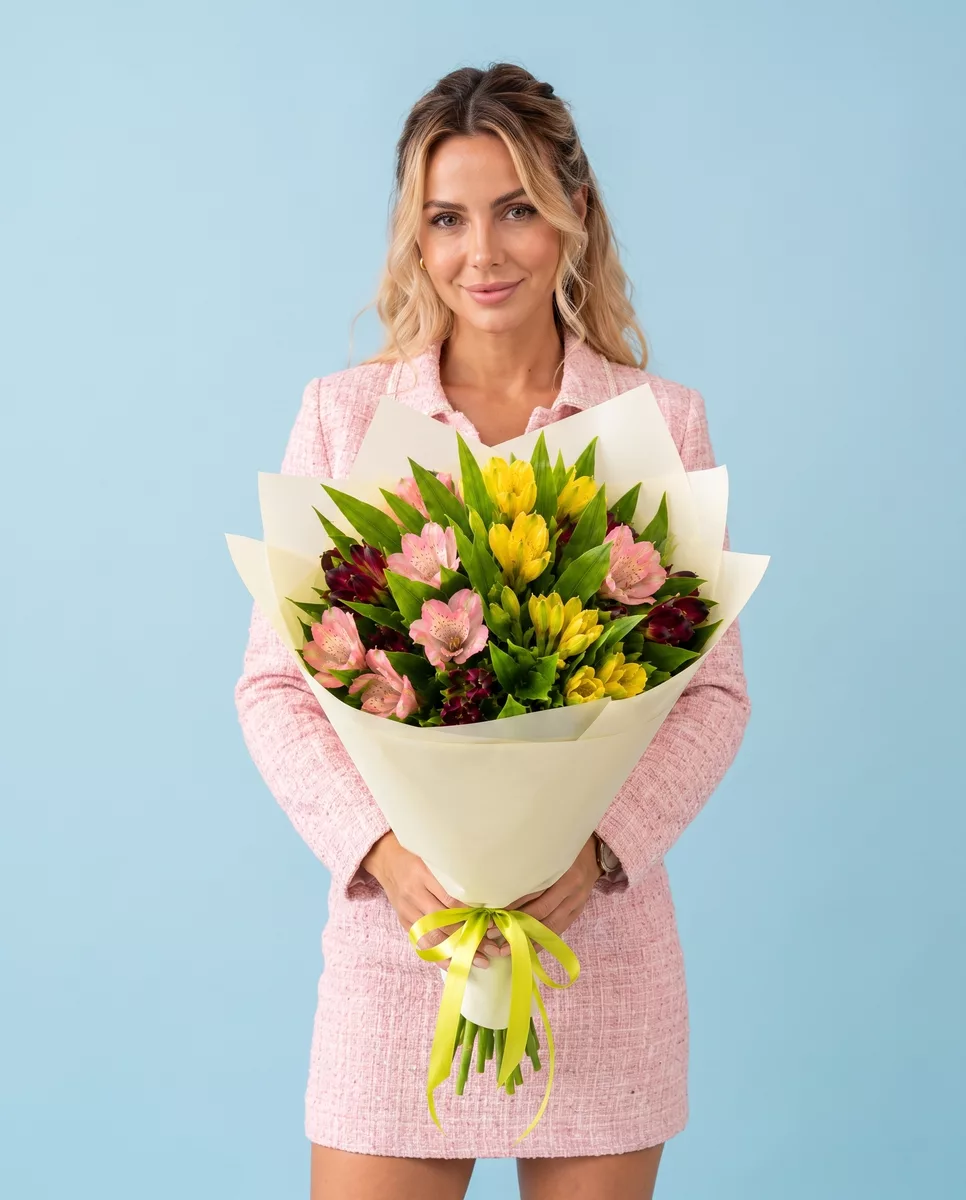
Yellow flowers carry the strongest cultural caution in Russia. The widespread belief — held firmly by people over roughly forty — is that yellow flowers signal separation, a coming farewell, or the end of a relationship. This is not a fringe superstition; florists across the country hear it constantly, and many Russian recipients will register the colour before they register the variety. Sending a yellow bouquet to a romantic partner without knowing this can land badly regardless of your intention. That said, the association is generational and shifting. Younger recipients in Saint Petersburg and Moscow are far less likely to read yellow negatively, and in professional or celebratory contexts — a new job, a child's school performance award, a housewarming — yellow reads as energy and warmth without the romantic baggage. Yellow sunflowers, Helianthus annuus, are particularly safe because they carry their own strong positive identity: they are associated with summer, generosity and Ukrainian cultural symbolism, which gives them a distinct frame that overrides the colour anxiety for most people. Yellow ranunculus and yellow eustoma work well in mixed bouquets where yellow is one element among several colours, diluting any negative reading. The practical rule from the shop floor: if you are sending to someone over fifty in a romantic context, avoid a purely yellow arrangement. If you are sending to a colleague, a friend, or anyone under thirty-five, yellow is fine and often striking. When in doubt, ask us to mix yellow with white or peach — the combination reads as fresh and considered rather than as a signal.
White Flowers: Purity, Formality and How the Reading Splits by Age
White is the colour that generates the most conflicting customer questions, and the conflict is real. In Russian culture white carries two distinct registers depending on context and the recipient's generation. For younger people and in romantic gifting, white reads as pure, elegant and sincere — white roses, particularly varieties like Avalanche or White O'Hara, are among the most popular choices for proposals and anniversaries. White peonies, in season from May through June, are considered one of the most desirable gifts a person can receive regardless of occasion. For older recipients, particularly in formal or family contexts, white can carry a more serious, ceremonial feeling that some people associate with solemnity rather than celebration. This does not mean white is wrong for older recipients — it means the arrangement style matters. A lush, full bouquet of white hydrangea and white spray roses reads as festive and generous. A spare, minimal arrangement of white chrysanthemums can feel austere to someone from an older generation who associates that specific combination with more formal occasions. White flowers are also the most temperature-sensitive in terms of visible damage: white petals bruise to brown at the edges faster than coloured petals, and any discolouration is immediately obvious. We store white arrangements at four to six degrees Celsius and move them to delivery packaging last. For senders outside Russia choosing white: it is an excellent choice for romantic occasions, new baby deliveries, and professional congratulations, but ask for full, generous arrangements rather than minimal ones to keep the reading warm and celebratory.
Pink Flowers: The Widest Safe Range and the Varieties Worth Knowing
Pink is the most versatile colour in Russian gifting and the one that generates the fewest misreadings across generations, genders and occasions. Light pink reads as tender and affectionate — appropriate for mothers, grandmothers, close female friends, and romantic partners early in a relationship when red might feel too intense. Deep or hot pink reads as confident and festive, closer to red in emotional weight but without the formal gravity. This range means pink works for a child's teacher at the end of the school year, for a business partner's birthday, for a romantic anniversary, and for a get-well delivery, often without any adjustment to the arrangement style. Among roses, the variety selection in pink is extensive. Keira and Juliet from the David Austin range are garden-style roses with layered petals that photograph well and last seven to ten days with proper care. Standard pink roses like Sweet Unique or Aqua are reliable, long-lasting and available year-round. Pink peonies — Sarah Bernhardt is the most widely available variety — are the peak gift from May through early July and are requested more than almost any other flower during that window. Pink tulips, such as Mistress Mystic or Dynasty, cover the January-to-April season. Pink eustoma, also called lisianthus, extends the life of mixed bouquets because it opens slowly over several days, giving the arrangement a longer display window. One common mistake: senders sometimes choose very pale pink thinking it looks sophisticated, but very pale pink can look washed out in photographs and in low-light interiors. Medium pink holds colour better in most settings.
Orange Flowers: Energy Without Baggage and the Seasonal Advantage
Orange is underused in Russian gifting, which is actually an argument for choosing it. It carries almost no negative cultural associations — no superstitions, no generational splits, no ambiguous readings — and it reads as energetic, warm and slightly unconventional. Recipients who receive orange bouquets tend to comment on them specifically because the colour is less expected, which makes orange a strong choice when you want the gift to be noticed and remembered. Orange roses — varieties like Trixx, Naranga or Orange Crush — are available year-round and hold their colour well from bud to full open. They are particularly effective in autumn arrangements from September through November, when orange connects naturally to the season and looks intentional rather than random. Orange tulips, such as Orange Princess or Prinses Irene, are among the most vivid tulip varieties available from February through April and pair well with yellow or red tulips if a mixed seasonal bouquet is the goal. Orange gerberas are a reliable filler flower that adds volume and brightness to mixed arrangements at a lower cost per stem than roses, making them useful for large celebratory bouquets. Orange lilies — Asiatic varieties like Grand Cru or Brunello — are dramatic, long-lasting and strongly scented, which is worth flagging to the recipient in case they prefer low-scent flowers in a small space. The practical advantage of orange for senders ordering remotely: it photographs accurately. Red flowers often appear darker or more burgundy in photographs than in person; orange stays true across most phone cameras, so the recipient's photograph matches what they actually receive.
Mixed Colour Bouquets: When Combining Colours Changes the Message
A significant share of orders at the shop are mixed-colour bouquets, and the combinations matter as much as the individual colours. The most important rule is that yellow as a dominant colour in a mixed arrangement still carries some of the yellow caution for older recipients, while yellow as a minor accent — two or three stems among fifteen — reads simply as part of a palette. This is why our florists often suggest adding yellow ranunculus or yellow waxflower as an accent element in spring arrangements rather than making yellow the lead colour when the recipient's age or preferences are unknown. Red and white mixed bouquets have a specific reading in Russian culture: they are associated with romantic partnership and are a common choice for couple anniversaries, more so than red alone in some regions. Red and pink together read as warm and celebratory without the formal edge of pure red. White and pink is the most reliably safe combination across all ages and occasions and works particularly well for professional gifting where the sender wants to be warm but not overly personal. Purple — which appears in lavender, lilac, violet lisianthus and some roses like Ocean Song — reads as sophisticated and slightly artistic in Russian gifting and combines well with white or pink for a refined arrangement. Avoid mixing white with yellow as the primary two colours for older recipients, as this combination can feel stark. The most practical advice for remote senders: tell the florist the recipient's approximate age, the occasion, and whether the relationship is personal or professional. With those three data points, colour selection becomes straightforward rather than a guessing exercise.
Checking Your Order: Colour, Condition and Delivery Timing
Once you have chosen a colour, three practical checks determine whether the bouquet actually lands well. The first is condition at the time of cutting and packing. Flowers for same-day delivery in Saint Petersburg are sourced from refrigerated wholesale stock held at four to six degrees Celsius and should go from cooler to delivery packaging to recipient within two to three hours maximum in warm weather. Ask the shop what the cut-to-delivery window is for your specific date, particularly in July and August when ambient temperatures in the city regularly exceed twenty-five degrees Celsius. The second check is bud stage. A fully open rose is beautiful in a photograph but will last three to four days; a tight bud will last seven to ten days but looks sparse on arrival. Most recipients prefer medium bud — one-third to half open — which photographs well and still has days of opening ahead. Specify this when ordering if it matters to you. The third check is colour accuracy in the product photograph versus the actual variety. Rose colours in particular vary between growers and seasons: a variety listed as coral can arrive more orange or more pink depending on the batch. If colour precision matters — for example, if you are matching a specific aesthetic for a photograph or event — ask the florist to confirm the specific variety name and grower batch before packing. For deliveries to recipients in other Russian cities fulfilled from our Saint Petersburg operation, transit time adds to the delivery window, so order earlier in the day to keep the cut-to-delivery time within acceptable limits and protect the arrangement regardless of colour.
Colour in Russian gifting is a real system with real stakes, but it is not complicated once you know the framework. Red works across almost every positive occasion and age group when the variety matches the context. Yellow needs care for older recipients in romantic situations but is fine in professional and friendship gifting. White is excellent for romance and celebration when the arrangement is full and generous. Pink is the safest and most flexible choice across the widest range of situations. Orange is underused and almost always well received. Mixed arrangements follow the logic of their dominant colour, and a florist who knows the recipient's age, the occasion and the relationship type can guide you to the right combination in a single conversation. The goal is not to decode a secret cultural code — it is to choose a colour that matches what you mean to say, in a way the recipient will understand without explanation. We deliver bouquets across Russia in 1–2 hours.
Frequently asked questions
Are yellow flowers really considered bad luck in Russia?
The association between yellow flowers and separation is genuine and widely held, particularly among recipients over forty. Younger Russians in major cities are less likely to share this belief, and yellow works well in professional or friendship contexts. If you are unsure about the recipient's age or outlook, mix yellow as a minor accent rather than the dominant colour, or ask the florist to suggest an alternative warm shade like peach or orange.
Can I send white flowers for a birthday in Russia?
Yes, white flowers are appropriate for birthdays. The key is the arrangement style: choose a full, generous bouquet with varied textures — white roses, white hydrangea, white eustoma — rather than a minimal or sparse arrangement. A lush white bouquet reads as celebratory and elegant across most age groups. Very spare white arrangements with only one or two variety types can feel more formal or austere to older recipients, so volume and variety matter.
What colour should I choose for a female colleague's work anniversary?
Pink or a pink-and-white combination is the most reliable choice for a female colleague in a professional context. It is warm without being romantic, appropriate across all age groups, and reads as thoughtful rather than generic. Orange is also a strong option if you want the bouquet to stand out. Avoid pure red for professional gifting unless the relationship is close, as red carries a personal intensity that can feel out of place in a work setting.
Do Russian men receive flowers, and does colour matter differently for them?
Men do receive flowers in Russia, most commonly at professional milestones, graduations and significant birthdays. For male recipients, red, orange and white are the most common choices. Pink is less frequently chosen for men but is not considered inappropriate. Yellow carries the same cautionary note regardless of the recipient's gender. Bouquet style often shifts toward structured, architectural arrangements with fewer frilly elements, but colour rules remain consistent.
How far in advance should I order if I want a specific colour variety?
For standard colours and varieties — red roses, pink peonies in season, white hydrangea — same-day ordering by early afternoon is usually sufficient for delivery within one to two hours. For less common varieties or specific colour shades, ordering the evening before gives the shop time to confirm stock. During peak dates such as March 8th and Valentine's Day, ordering two to three days ahead is strongly recommended to guarantee both variety and delivery slot.
Ready to send a bouquet?
Pick a city, choose the flowers, and we will hand them over with a photo confirmation.
Choose a city →