
Flower Delivery Across Russian Cities: Zones, Varieties and Delivery Times
The most common question we get from customers outside Saint Petersburg is simple: can you actually get flowers to my city today? The answer depends on where you are, what you are ordering, and what time the order lands with us. This article walks through the full geography of our delivery network — from the obvious major hubs to the regional towns that surprise people — and explains what changes about the order when the destination is far from the shop floor.
Moscow and the Central Federal District
Moscow is the single busiest destination outside our home city of Saint Petersburg, and we handle it as a separate operational zone with its own cut-off times. Orders placed before noon Saint Petersburg time reliably reach Moscow addresses within the same day, typically landing in the two-hour window customers expect. The Central Federal District surrounding Moscow — covering cities like Tver, Yaroslavl, Vladimir and Ryazan — follows the same logistics corridor, so delivery times are comparable. What changes in this zone is variety selection. Roses travel the distance well when they are cut at the tight bud stage, with petals still closed and stems kept in water-filled transport boxes at four to six degrees Celsius. We use Dutch garden roses and standard spray roses for Moscow runs rather than delicate open garden varieties that would bruise in transit. Peonies in season — roughly May through July — are a strong choice for Moscow because they ship in the tight cabbage-head stage and open beautifully over twenty-four hours at the recipient's home. Customers sometimes ask for fully open sunflowers or wide-open hydrangeas for Moscow delivery; we advise against it because those heads lose structure quickly once they warm up. Tulips in spring are excellent for this corridor: they are robust, they travel in bunches of ten or fifteen, and they arrive looking fresh when kept cool. If you are sending to a Moscow address, confirm the recipient will be home within two hours of delivery, because leaving a bouquet in a warm hallway for longer than that starts to affect stem hydration.
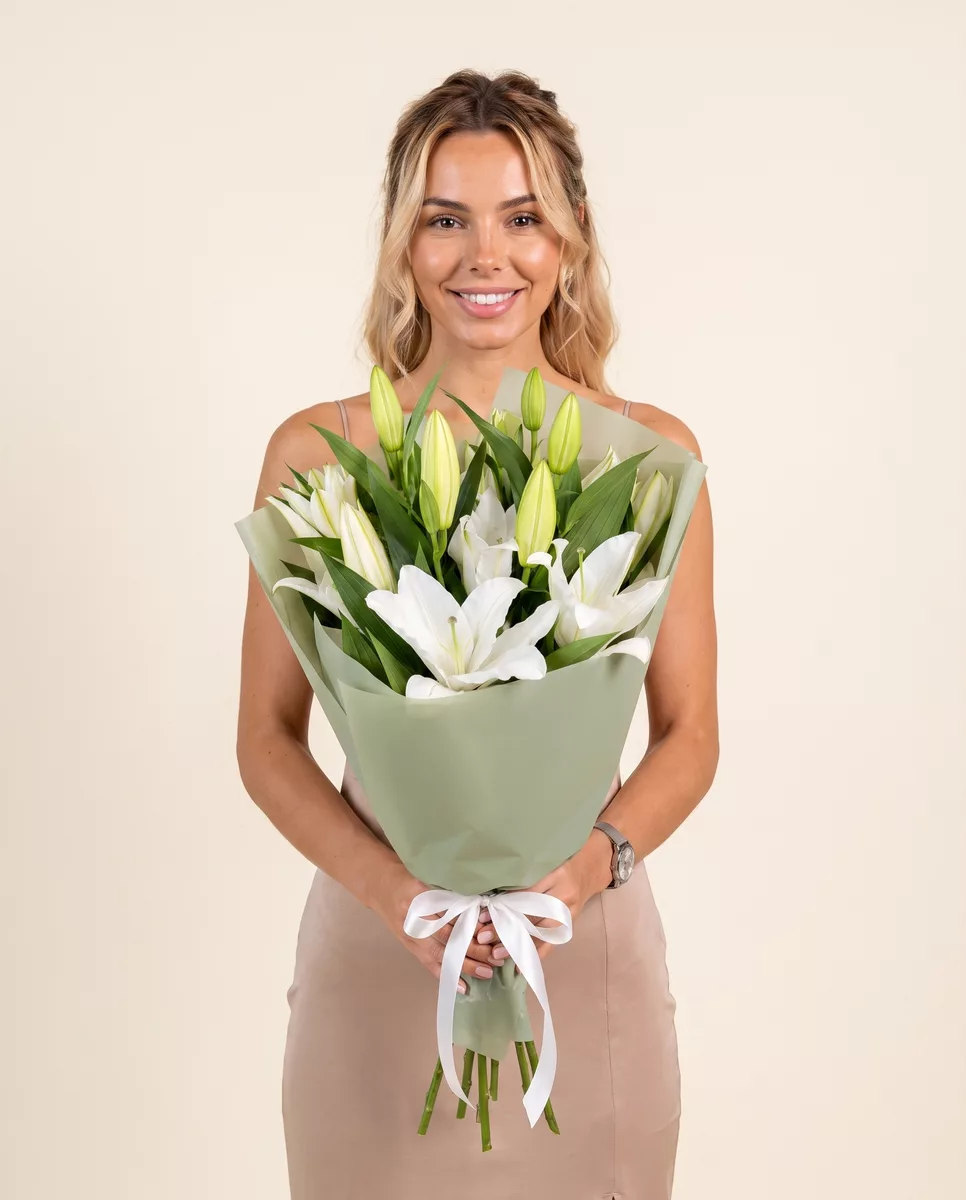
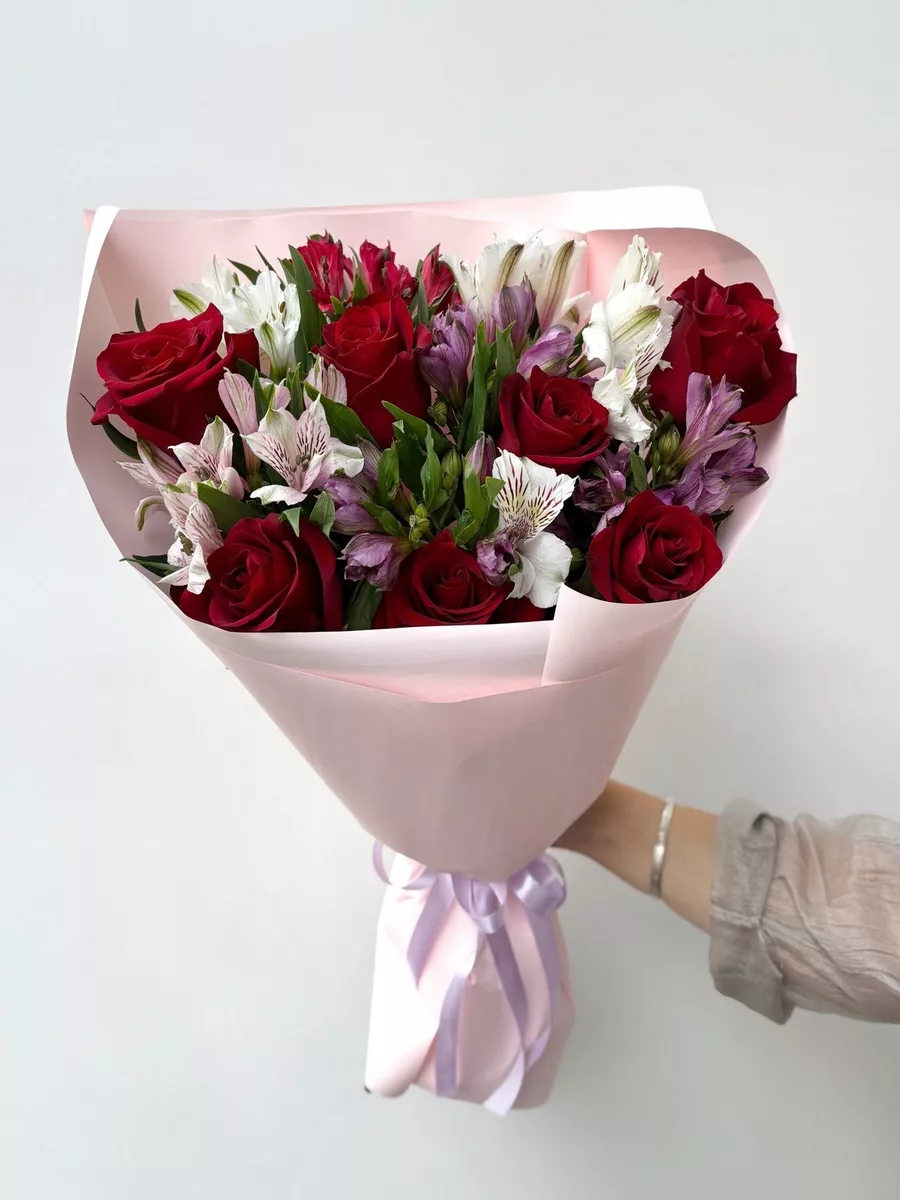
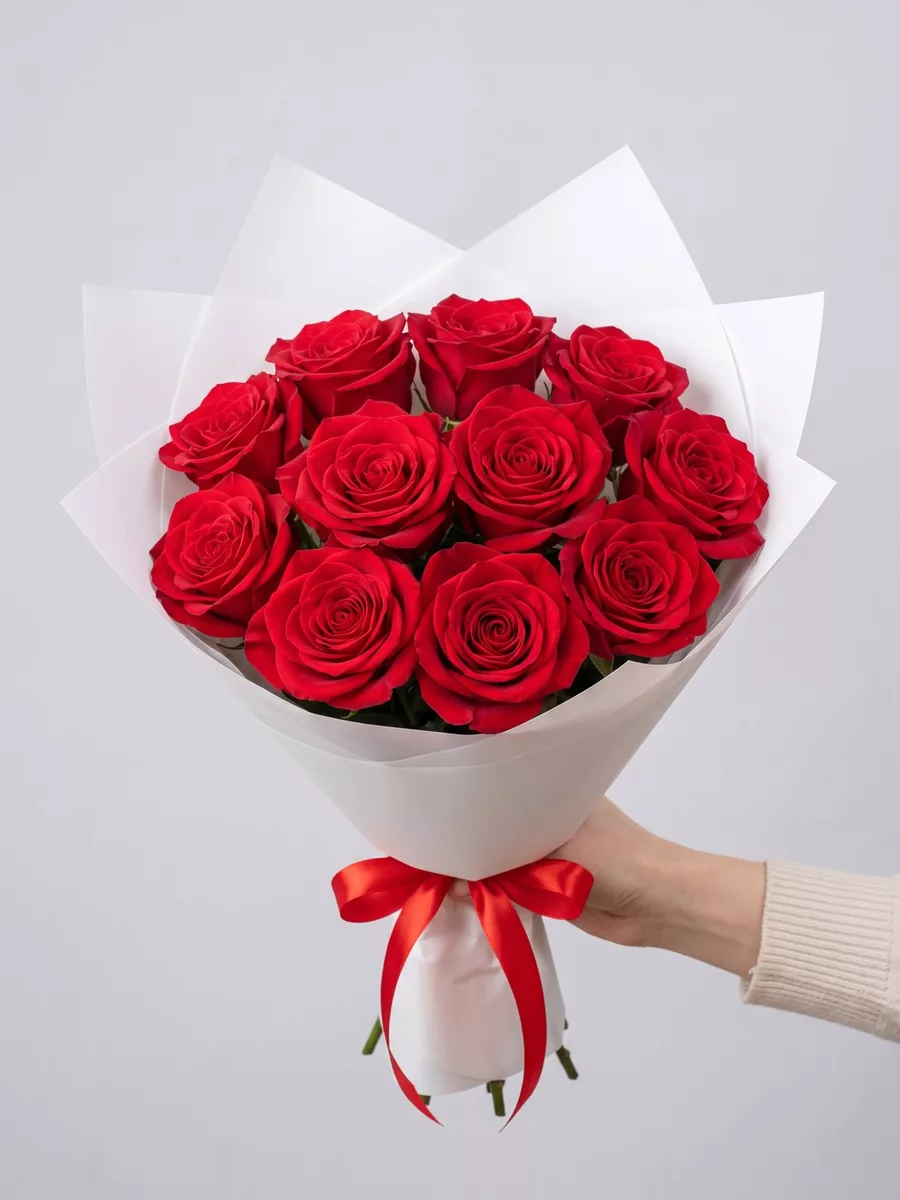
Bouquets we can deliver

Saint Petersburg and the Leningrad Region
Our home ground is Saint Petersburg and the surrounding Leningrad Region, which includes towns like Gatchina, Pushkin, Pavlovsk, Vsevolozhsk and Vyborg. Within the city itself the two-hour window is the standard, and for central districts like Vasilievsky Island, Petrogradskaya and the historic centre, orders placed before 9 pm can still be fulfilled the same evening. The Leningrad Region adds fifteen to forty minutes depending on the town, and we factor that into the quoted delivery window at checkout. Customers in Pushkin and Gatchina often order for dacha addresses, which presents a specific challenge: make sure the gate code or intercom number is in the order notes, because a courier waiting outside an unmanned gate with peonies in July heat loses time the flowers cannot afford. For this zone we offer the widest variety range — everything from single-stem ranunculus and anemones in spring to lisianthus, eustoma, and mixed seasonal bouquets year-round. Customers in Saint Petersburg also frequently order same-day for corporate offices, and for those orders we recommend roses or chrysanthemums over fragile varieties like sweet peas, simply because office receptions are often warm and the flowers sit on a desk before anyone puts them in water. The Leningrad Region in winter — December through February — sees road conditions that can add twenty to thirty minutes to suburban runs, so ordering with a buffer of an hour beyond the standard window is sensible practice for addresses outside the ring road.
The Volga Region: Kazan, Nizhny Novgorod and Samara
The Volga Federal District covers some of Russia's most active flower-buying cities, and Kazan, Nizhny Novgorod and Samara are the three destinations we handle most frequently in this corridor. Kazan has a strong gifting culture tied to both Russian and Tatar calendar dates, which means demand spikes not only on February 14 and March 8 but also around Sabantuy in early summer and major Islamic holidays. Customers ordering for Kazan should plan two to three days ahead during these peak periods rather than relying on same-day availability. The variety question for the Volga region comes down to temperature: summer temperatures in Samara and Kazan regularly exceed thirty degrees Celsius, and flowers in transit need to be in climate-controlled packaging. We use gel packs and insulated kraft boxes for summer shipments to this zone. Roses, alstroemeria and carnations handle the Volga summer better than tulips, which go limp quickly above twenty degrees. Nizhny Novgorod sits on a slightly shorter logistics run than Samara, and customers there can often get next-day delivery on orders placed by 3 pm. For all three cities, the recipient's phone number in the order is non-negotiable — our courier will call ahead, and in a city where the address system can involve large residential complexes, that call saves the bouquet. Chrysanthemums are a practical choice for Volga summer delivery: they are heat-tolerant, long-lasting, and available in white, yellow and burgundy throughout the season.
The Urals: Yekaterinburg and Chelyabinsk
Yekaterinburg is the fourth-largest city in Russia and one of our most consistent regional destinations. It sits on the boundary between Europe and Asia geographically, and culturally it has a strong gifting tradition — corporate flower orders are common here, and large mixed bouquets of fifty or seventy stems are a regular request from business customers. Chelyabinsk, roughly two hours south of Yekaterinburg by road, follows the same delivery schedule. For the Urals zone, transit time means we focus on varieties that hold for forty-eight hours without re-cutting: roses, carnations, alstroemeria and solidago are the backbone of Urals bouquets. Lisianthus — also called eustoma — is an excellent choice for this region because it looks delicate but is structurally robust and holds its petals for up to ten days with proper hydration. Customers sometimes request peonies for Yekaterinburg delivery in June, and we can fulfil that, but we ship them in the tight bud stage specifically so they arrive firm and open over the following two days rather than arriving blown and dropping petals. The Urals winter is severe — temperatures can drop to minus twenty-five or colder — and in January and February we use additional insulation in packaging. Customers ordering in winter should note that the recipient needs to bring the bouquet indoors immediately; leaving it in a car boot or unheated entrance for even thirty minutes at those temperatures will damage stems. Yekaterinburg customers also frequently order for addresses in nearby towns like Pervouralsk and Berezovsky, and we handle those as part of the same zone.
Siberia: Novosibirsk, Omsk and Krasnoyarsk
Siberia is the zone that surprises customers most — people assume delivery is impossible or takes a week, and neither is true. Novosibirsk, Omsk and Krasnoyarsk are all active destinations in our network, with next-day and in some cases same-day delivery depending on the order time. Novosibirsk is Russia's third-largest city and has a busy flower-buying culture; March 8, known as International Women's Day, is the single biggest flower day in Russia, and Novosibirsk orders for that date need to be placed at least four to five days in advance. The variety selection for Siberia is deliberately conservative in winter. We do not ship open tropical varieties or large-headed garden roses to Siberian addresses in January through March because the temperature differential between the packaging and the outdoor air — which can be minus thirty — creates condensation that damages petals. Roses in tight bud, alstroemeria, carnations and waxflower are the reliable Siberian winter palette. In summer the picture changes completely: Novosibirsk summers are warm and short, and customers there order peonies, sunflowers and mixed seasonal bouquets with enthusiasm. Krasnoyarsk sits further east and adds a small amount of transit time, but the same variety logic applies. Omsk customers should note that delivery windows are quoted in local time, not Moscow time — Russia spans eleven time zones, and we always confirm the local delivery window in the order confirmation. For all Siberian cities, a daytime delivery address such as a workplace is more reliable than a home address, simply because someone is guaranteed to be there to receive the bouquet.
The South: Krasnodar, Rostov-on-Don and Sochi
The southern cities present a different operational challenge from Siberia: heat rather than cold. Krasnodar and Rostov-on-Don regularly see summer temperatures above thirty-five degrees Celsius, and Sochi, being a subtropical coastal city, is warm even in autumn. For summer deliveries to these cities we use gel cooling packs and limit variety selection to heat-tolerant flowers. Carnations are the quiet heroes of southern delivery — they are underestimated by customers who associate them with old-fashioned arrangements, but they hold in heat better than almost any other cut flower and arrive looking composed. Roses for southern summer delivery should be Dutch varieties in tight bud, not garden roses or open-faced varieties. Sunflowers are popular in Krasnodar because they are grown locally and feel appropriate to the region; they travel well in summer because they are already adapted to warm conditions. Customers in Sochi sometimes order for hotel deliveries, which requires the hotel name, room number and the guest's full name in the order notes — front desks will not accept a bouquet addressed only to a first name. Krasnodar is also a strong corporate gifting market, and large arrangements of white roses or mixed white and green bouquets are a frequent business order. Rostov-on-Don customers should note that the city has a significant Armenian community with its own gifting calendar, and orders around Armenian Christmas in January and Easter dates see demand spikes worth planning around. For all three southern cities, evening delivery is preferable in summer — temperatures drop after 7 pm and flowers travel better.
Smaller Regional Towns: What Changes When the City Is Smaller
Beyond the major hubs, our network reaches a long list of smaller Russian cities and towns — places like Pskov, Petrozavodsk, Ulan-Ude, Vladikavkaz and Arkhangelsk. Customers ordering to these destinations should understand that two things change: the delivery window and the variety range. In smaller towns the two-hour guarantee that applies in Saint Petersburg and Moscow becomes a four-to-six-hour window, and same-day orders require earlier cut-off times — typically before 11 am local time. The variety range narrows because transit is longer. For smaller regional towns we focus on what we call robust stems: roses, alstroemeria, carnations, chrysanthemums and solidago. These varieties have been selected specifically because they hold their quality through extended transit without re-cutting. Customers who want ranunculus, sweet peas or anemones for a smaller town address should order for the following day and note that these varieties need to go into water within an hour of arrival. Packaging for smaller towns always includes a care card in Russian explaining how to trim stems at an angle, remove lower leaves, and change water every two days — because in a smaller town the recipient may not have a florist nearby to ask. One practical note for customers ordering to addresses in the Russian Far East — cities like Vladivostok and Khabarovsk — the time zone difference is significant: Vladivostok is seven hours ahead of Moscow, so an order placed at 10 am Moscow time arrives during the local evening. We always confirm this with the customer before processing Far East orders to avoid a bouquet arriving after the recipient has gone to bed.
The geography of flower delivery across Russia is genuinely wide, and the practical differences between sending to central Moscow and sending to a town in Siberia come down to three things: which varieties you choose, how far ahead you order, and whether the recipient's contact details are accurate and complete. At Five Flowers we have built the logistics around keeping flowers cold, moving them fast, and being honest with customers when a combination of city, date and variety is not going to work. The customers who get the best results are the ones who tell us the full picture — the occasion, the city, the recipient's schedule — and let us match the bouquet to what the journey actually requires. We deliver bouquets across Russia in 1–2 hours.
Frequently asked questions
Can you deliver flowers to a city not listed on the website?
Contact us directly with the city name and delivery date before placing the order. We cover many destinations that do not appear in the main city list, but some require an extra day of lead time or a narrower variety selection. We will confirm availability and the realistic delivery window before you pay.
Why does the variety choice matter for long-distance delivery?
Cut flowers lose water through their petals continuously. Delicate varieties like anemones or open garden roses have large petal surfaces and drop condition faster than tight-budded roses or carnations. For routes over four hours we select varieties that hold their structure and hydration without re-cutting, so the bouquet arrives looking the way it should.
What happens to the flowers in very cold Siberian or Ural winters?
We use insulated packaging with additional lining for deliveries to cities where outdoor temperatures fall below minus fifteen Celsius. The recipient should bring the bouquet indoors immediately and let it warm gradually at room temperature for twenty minutes before removing the packaging. Do not place a cold bouquet directly into warm water.
How far in advance should I order for March 8 deliveries to regional cities?
International Women's Day on March 8 is the peak flower day in Russia, and demand in regional cities like Novosibirsk, Kazan and Yekaterinburg outpaces same-day capacity by a wide margin. We recommend placing orders at least four to five days before March 8 for any destination outside Saint Petersburg and Moscow to guarantee both variety availability and the delivery slot you need.
Is the delivery window quoted in Moscow time or local time?
Always in local time at the destination. Russia spans eleven time zones, and we convert every quoted window to the recipient's local time before confirming the order. The order confirmation you receive will state the local delivery window clearly. If you are unsure about the time zone for a specific city, ask us when placing the order.
Ready to send a bouquet?
Pick a city, choose the flowers, and we will hand them over with a photo confirmation.
Choose a city →