
Sending Flowers to Ak-Dovurak from Abroad: Zones, Timing and Varieties
Ak-Dovurak sits in the Republic of Tuva, deep in southern Siberia, roughly 5,000 kilometres from Saint Petersburg and even further from most points outside Russia. Every week senders from Germany, Kazakhstan, Israel and elsewhere place orders expecting the same experience they would get sending flowers across a European capital. The reality involves time zones, limited flight connections, temperature swings that hit minus 30 in January, and a city of around 13,000 people where the address system requires precision. This article tells you exactly what to prepare, what varieties travel reliably, and where senders from abroad most often go wrong.
Where Ak-Dovurak Is and Why It Matters for Delivery
Ak-Dovurak is the second-largest city in the Tyva Republic, located in the Sayan Mountains near the border with Mongolia. The city sits at roughly 51 degrees north latitude and is surrounded by steppe and mountain terrain that creates sharp seasonal temperature contrasts. In summer daytime highs reach 35 degrees Celsius; in winter the air regularly drops to minus 25 or minus 30. Both extremes affect how flowers are packaged and how quickly they need to move from origin to recipient. The city is not served by a major commercial airport of its own. The nearest significant air hub is Kyzyl, the Tuvan capital, about 170 kilometres to the east. Logistics from Saint Petersburg therefore involve air freight to Kyzyl followed by ground transport to Ak-Dovurak. This chain means senders must account for a minimum of one full day of transit time, and in practice two days is the standard planning window. Senders from abroad often assume that because Russia is one country, all cities receive deliveries at the same speed. Ak-Dovurak requires more lead time than Moscow or Kazan, and that lead time needs to be built into the order date. If the occasion is a birthday or anniversary on a specific day, the order should be placed at least 48 hours in advance. For senders in time zones far west of Russia, that calculation also needs to account for the seven-hour difference between Moscow Time and, say, Central European Time, which means an evening order in Berlin is already the following morning in Kyzyl.
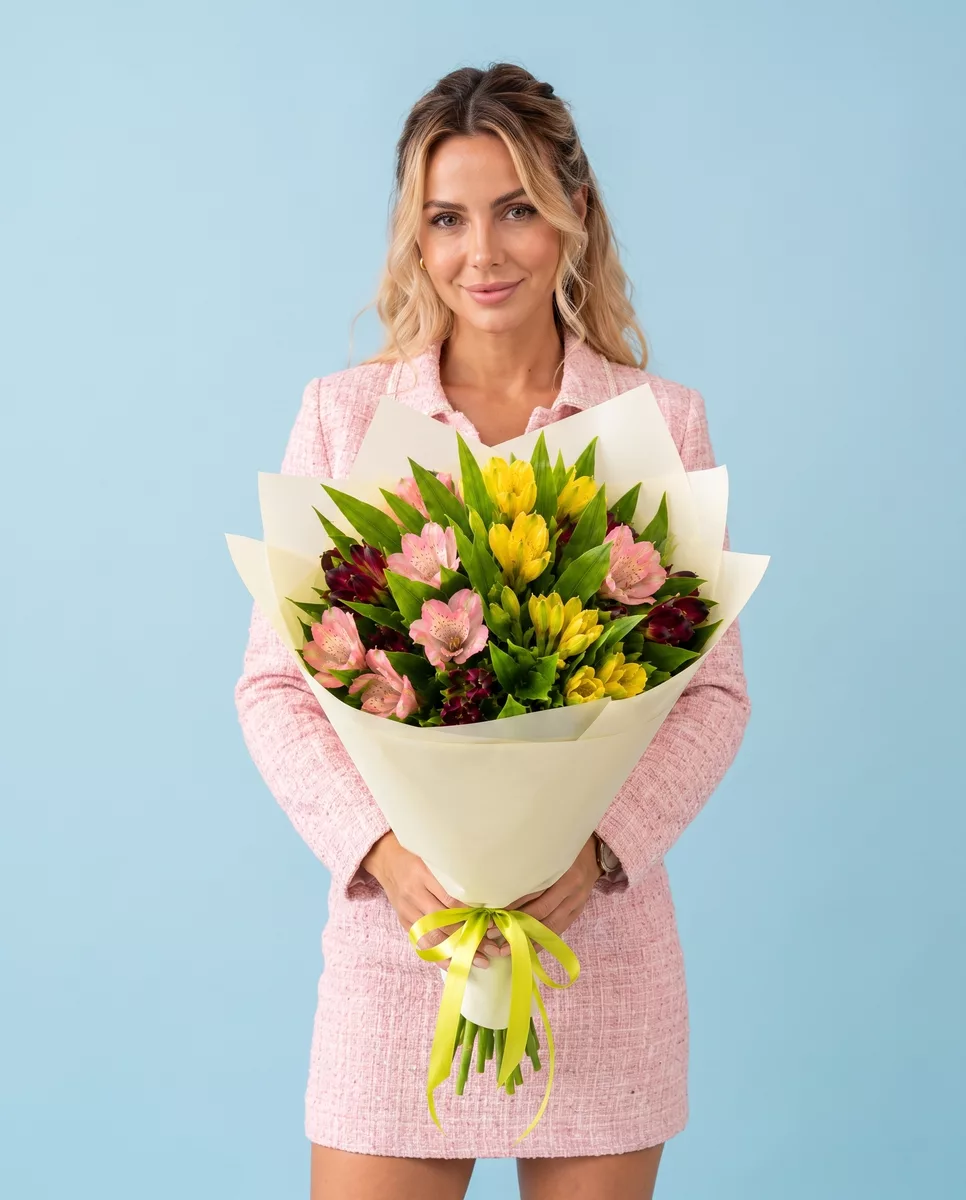
Bouquets we can deliver



What the Recipient's Address Must Include
Russian addresses follow a specific structure that differs from Western European or North American conventions, and Ak-Dovurak has its own layout that confuses senders unfamiliar with the city. A complete address needs the republic name, city, street name, building number, apartment or office number, and the recipient's full name. In Tuva many streets have been renamed since Soviet times and some older residents still use the previous names when giving directions. When a sender provides an address, it should be the current official name as it appears on postal records, not a colloquial version. Building numbering in smaller Russian cities sometimes includes corpus designations, written as korpus or abbreviated as k, which indicate a specific block within a larger residential compound. Missing the corpus number sends the courier to the wrong building. Senders from abroad should ask the recipient directly for their full address written in Russian Cyrillic and then paste that text into the order form rather than transliterating it themselves. Transliteration errors are the single most common cause of failed first delivery attempts in remote cities. If the recipient lives in a private house rather than an apartment block, the order form should note this clearly because access and timing differ from multi-storey residential buildings. Including the recipient's mobile phone number is not optional in Ak-Dovurak; it is essential. Couriers will call ahead when approaching, and without a reachable number the delivery cannot be completed. Senders outside Russia should confirm that the number they provide includes the correct country code and is currently active.
Varieties That Travel Well to Ak-Dovurak
Not every flower that looks beautiful in a Saint Petersburg shop window will arrive in the same condition after two days of mixed air and road transit through Siberian temperature gradients. The varieties that consistently perform well on this route are those bred for structural durability and extended vase life. Spray roses, particularly varieties in the white and cream range such as Majolica and Lydia, handle transit stress better than large-headed hybrid teas because their smaller blooms lose moisture more slowly. Standard roses in varieties like Explorer and Red Naomi are workhorses on long routes when cut at the correct bud stage, which is tight enough that petals have not yet separated but colour is fully developed. Chrysanthemums are among the most reliable choices for remote destinations. Santini types and standard disbud chrysanthemums in white, yellow and bronze tolerate temperature fluctuation and mechanical movement without bruising. Alstroemeria is another strong option; its stems are firm, its blooms are compact, and it continues opening gradually after arrival, which means the recipient gets a bouquet that improves over several days rather than peaking immediately. Flowers to avoid on this route include open-faced garden roses, ranunculus, sweet peas, and any tropical variety such as strelitzia or anthurium. These varieties either bruise easily or require stable humidity that cannot be guaranteed in transit. Orchid stems in phalaenopsis can work if the sender orders a potted plant rather than cut stems, because the pot provides a stable root system that sustains the plant through the journey. Senders should specify the occasion and let the florist select within the reliable range rather than insisting on a specific variety they saw in a photograph.
Seasonal Availability and Temperature Planning
Ak-Dovurak experiences a continental climate with pronounced seasons, and that climate interacts with flower availability in two ways. First, the transit environment changes dramatically between July and January, requiring different packaging and different variety choices. Second, Russian flower supply chains have their own seasonal rhythms that affect what is genuinely fresh versus what has been held in cold storage. From November through March, temperatures along the Kyzyl to Ak-Dovurak road section can be severe enough to damage unprotected flowers within minutes. All winter orders are packed with insulated thermal wrapping and gel packs calibrated to keep the interior of the box between two and eight degrees Celsius, which is the standard cold chain range for cut flowers. Senders placing winter orders should not request delicate open blooms; tight buds are specified precisely because they survive the cold chain better. From May through August the challenge reverses. Heat is the risk, and flowers that sit in a warm vehicle for an extended ground leg will deteriorate faster than in winter. Summer orders prioritise varieties with waxy or firm petals and avoid anything with a high ethylene sensitivity, such as carnations in mixed arrangements where ripening fruit in the same space could accelerate ageing. Senders from the Southern Hemisphere or from warm climates sometimes underestimate how cold Siberian winters actually are. A sender in Dubai ordering flowers in December for a recipient in Ak-Dovurak needs to understand that the destination is experiencing one of the coldest inhabited climates in Russia, and the order should be placed with that context explicitly stated so packaging is prepared accordingly.
Payment from Outside Russia and What to Prepare
Since 2022 the Russian banking system has operated under significant international restrictions, and senders from most Western countries cannot use standard Visa or Mastercard transactions with Russian merchants. This is a practical reality that senders need to address before placing an order, not after. Several payment routes remain functional depending on the sender's country. Senders from former Soviet states including Kazakhstan, Belarus, Armenia and Azerbaijan can typically pay through their domestic bank cards or through payment systems that maintain Russian connectivity. Senders from the European Union, the United Kingdom or the United States need to use alternative methods, which may include cryptocurrency, international transfer through compatible systems, or payment via a Russian-based intermediary such as a family member who holds a Russian bank account. The shop's order team can advise on the current available methods when contacted directly, because the landscape of functional payment channels changes and what worked six months ago may not work today. Senders should not assume that a payment has gone through until they receive explicit confirmation from the shop. A failed transaction without notification is a common point of confusion, and in the meantime no order has been registered. Currency is another consideration. All pricing is in Russian roubles, and the rouble equivalent of any foreign currency sum changes daily. Senders should check the current rate and understand that the rouble price shown at the time of order is what is charged, regardless of subsequent exchange rate movement. Ordering early also protects against last-minute payment complications that could delay the bouquet past the intended delivery date.
Customs Around Giving Flowers in Tuva
Tuva is a predominantly Buddhist region with a distinct cultural identity that differs from the Russian mainstream, and senders from abroad benefit from understanding a few conventions before choosing what to order. Flowers are a welcome and appreciated gift across Tuvan culture, particularly for birthdays, graduations, and significant life milestones. There is no strong taboo around specific flower colours in the way that white flowers are sometimes associated with mourning in East Asian traditions, but yellow flowers occupy a slightly ambiguous position in some Russian social contexts where they are occasionally linked to separation or jealousy. To avoid any unintended message, senders who are uncertain can simply request mixed arrangements that avoid a predominantly yellow palette. Odd numbers of flowers are the standard for celebratory gifts in Russian and Tuvan tradition. A bouquet of eleven roses, fifteen stems of alstroemeria, or twenty-three chrysanthemums is appropriate for a birthday or congratulatory occasion. Even numbers are traditionally reserved for commemorative contexts that this article does not address. Senders from cultures where even numbers are considered lucky, such as Chinese or Korean traditions, sometimes request ten or twelve stems and are puzzled when the florist suggests an adjustment. The reason is cultural, not arbitrary. Card messages attached to deliveries in Ak-Dovurak can be written in Russian or in the Tuvan language; the shop's team can transliterate a short message if the sender provides the text in English or another Latin-script language and requests Russian transcription. A personal message in the recipient's language makes a significant difference to how the bouquet is received, and senders from abroad who take the trouble to include one consistently report better reactions from recipients.
Confirming the Delivery and Following Up from Abroad
One of the most frequent frustrations for international senders is not knowing whether the flowers actually arrived. When you are in Frankfurt or Tel Aviv and the recipient is in Ak-Dovurak, you cannot simply call a local number to check. The delivery confirmation process needs to be set up at the order stage, not after the fact. When placing the order, senders should request that the shop send a delivery confirmation message to their email or messenger contact as soon as the bouquet has been handed to the recipient. Most deliveries include a photograph taken at the door, and this photograph can be forwarded to the sender as proof of completion. If the sender does not request this explicitly, it may not happen automatically. Time zone arithmetic is important here. Moscow Time is three hours ahead of Central European Time and eight hours ahead of Eastern Standard Time in North America. A delivery scheduled for 14:00 in Ak-Dovurak, which runs on Krasnoyarsk Time at UTC plus seven, means the sender in London would receive confirmation at around 10:00 their time if everything runs on schedule. Senders should not interpret silence at the expected hour as a problem; the confirmation may simply be in transit. If no confirmation arrives within two hours of the scheduled delivery window, contacting the shop directly is appropriate. Providing both the order number and the recipient's phone number speeds up any trace inquiry. Failed delivery attempts, usually caused by an unreachable recipient, generate an automatic notification, and the shop will attempt redelivery or contact the sender for instructions. Senders who are difficult to reach during Russian business hours should leave a secondary contact in the order notes.
Sending flowers to Ak-Dovurak from abroad is entirely achievable when the order is built around the real conditions of the route rather than assumptions borrowed from European delivery experiences. The combination of correct address detail, appropriate variety selection, realistic timing expectations, and a working payment method covers the majority of what can go wrong. Tuvan recipients appreciate fresh flowers as much as anyone, and a well-chosen bouquet of spray roses or chrysanthemums arriving in good condition after two days of Siberian transit carries the same warmth as one delivered across town. The effort of getting the details right shows, and recipients in remote cities know it. We deliver bouquets across Russia in 1–2 hours.
Frequently asked questions
How far in advance should I order flowers for delivery to Ak-Dovurak from abroad?
Plan for a minimum of 48 hours between placing the order and the intended delivery date. This covers the air freight leg to Kyzyl and the ground transport to Ak-Dovurak. If you are ordering around a Russian public holiday, add an extra day because logistics slow across the network. For winter orders, earlier is always safer.
Can I write the card message in English for a recipient in Ak-Dovurak?
You can provide the message in English and ask the shop team to transcribe it into Russian. Most recipients in Ak-Dovurak read Russian as their administrative language, while Tuvan is the home language for many families. A message in Russian lands better than one in English, so the extra step of requesting transcription is worth taking when you place the order.
What happens if the recipient is not home when the courier arrives?
The courier will call the recipient's mobile number before arrival. If there is no answer, a second attempt is made within the same delivery window. If the second attempt also fails, the shop contacts the sender for instructions. This is why an active, reachable mobile number for the recipient is mandatory rather than optional for Ak-Dovurak deliveries.
Are there flowers I should specifically avoid ordering for Ak-Dovurak in winter?
Avoid ranunculus, open garden roses, sweet peas, and any tropical cut flower in winter. These varieties are too fragile for the cold chain conditions between Kyzyl and Ak-Dovurak. Spray roses, chrysanthemums, and alstroemeria are the reliable winter choices because they tolerate the temperature range without bruising or wilting during ground transport.
Is it possible to schedule a delivery for a specific time of day in Ak-Dovurak?
You can request a morning or afternoon delivery window rather than an exact hour. Remote city logistics do not allow precision to the minute, but a two-hour window is realistic. Specify the window in the order notes and include the recipient's phone number so the courier can call ahead. Evening deliveries past 20:00 local time are generally not available for residential addresses.
Ready to send a bouquet?
Pick a city, choose the flowers, and we will hand them over with a photo confirmation.
Choose a city →