
Flower Delivery in Belaya Kalitva: Zones, Timing and What to Expect
Customers calling from Belaya Kalitva often ask the same thing first: can you actually get there in time? The answer depends on which part of town the address falls in, what time the order lands with us, and which flowers are in the assembly queue that day. This article covers all three questions directly, so you know what to expect before you confirm the order.
Which Parts of Belaya Kalitva We Reach and How Long It Takes
Belaya Kalitva sits in the Rostov Oblast in southern Russia, straddling the Kalitva and Chir rivers. The central districts around Lenina Street and the main market square are our core delivery zone and typically receive bouquets within one to two hours of order confirmation. Residential areas on the western bank, including the neighborhoods near the industrial zones, add fifteen to twenty minutes to that window because of the bridge crossing and the road layout on that side. The Gorny microdistrict and addresses on the outskirts toward Dyogtevo require us to confirm availability before we lock in a time, since distance and traffic on the single approach road can push the window to two and a half hours during peak periods. When you place an order, always give us the full street name, building number, and apartment or office number. In Belaya Kalitva, some streets share similar names across different quarters, and a missing building number has caused wrong-address deliveries more than once. If the recipient lives in a gated residential compound, note the entry code or the intercom number in the comments field. We call the recipient fifteen minutes before arrival as a standard step, but if the person should be surprised, mark that in the order and we will call the ordering party instead. Knowing the zone before you pay saves everyone a rescheduling conversation.
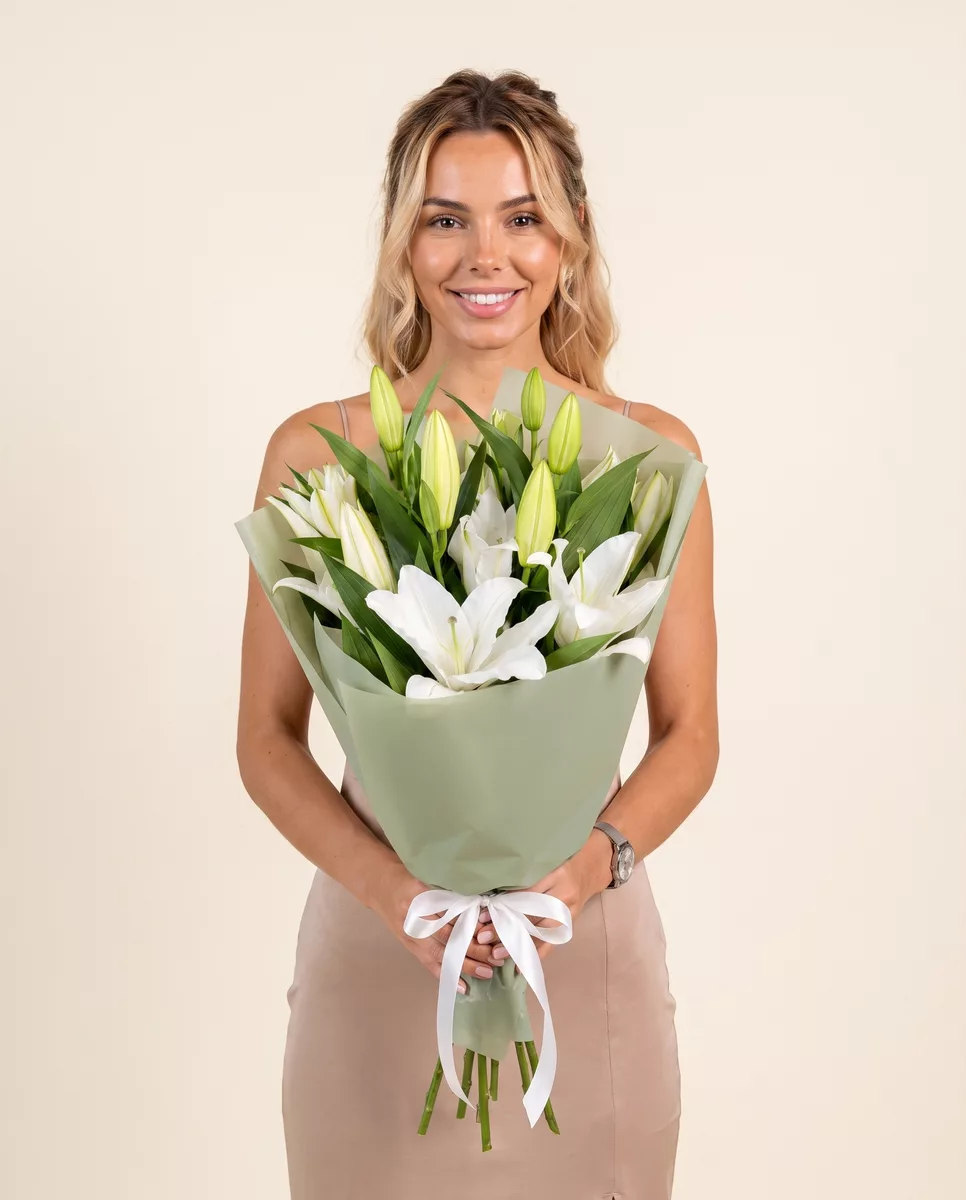
Bouquets we can deliver



Timing Windows and When to Place Your Order
We assemble and dispatch orders from our Saint Petersburg base around the clock, but same-day delivery to Belaya Kalitva has a practical cutoff. Orders confirmed before noon local Rostov time have the highest probability of arriving within the same calendar day, with the courier reaching the recipient in the early to mid afternoon. Orders placed between noon and three in the afternoon typically land in the late afternoon or early evening slot, which works well for after-work surprises but requires that the recipient is actually reachable at that hour. Evening orders, placed after five in the afternoon, are usually scheduled for the following morning between nine and eleven, which is often the most reliable window anyway because the recipient is home and the roads in the residential quarters are clear. For dates that carry social weight in Russia, specifically February 14, March 8 International Women's Day, and May 9, we recommend placing orders at least 48 hours in advance. March 8 in particular generates a volume spike that compresses assembly time across all destinations, and Belaya Kalitva is no exception. If you are ordering for a birthday or anniversary, give us the exact time the person is expected to be at the delivery address. A bouquet arriving two hours before the recipient gets home from work is not a failed delivery, but it does mean the flowers sit in a hallway without water, which shortens their vase life noticeably. Precision on timing is as important as precision on address.
Which Flowers Travel Well on This Route
The route to Belaya Kalitva involves transit time and, depending on the season, temperature swings that matter for flower condition. Roses are the most requested flower on this route and they travel reliably when cut correctly and packed in water-retaining wrapping. We use Dutch and Ecuadorian roses most often, with stem lengths between 50 and 70 centimeters, because shorter stems lose moisture faster in transit packaging. Spray chrysanthemums are a strong choice for longer transit windows because they are structurally robust and hold their heads without wilting even if the packaging shifts in the vehicle. Alstroemeria is another good traveler and gives a bouquet visual density without adding weight that stresses the stems. Lisianthus, sometimes called eustoma, is popular in the south of Russia and holds well in cool conditions, though it bruises if packed too tightly. What we avoid recommending for this route in summer, specifically June through August when Rostov Oblast temperatures regularly exceed 30 degrees Celsius, are open garden roses with very thin petals, anemones, and ranunculus, all of which are sensitive to heat and can arrive with petals already dropping. In winter, the concern reverses: tulips and hyacinths can freeze in an unheated vehicle during loading and unloading. We pack cold-sensitive flowers with insulating material and track the vehicle temperature on long-distance dispatches. If you have a strong preference for a heat-sensitive variety in summer, ask us about early morning dispatch, which reduces heat exposure significantly.
Bouquet Sizes and What They Actually Contain
Customers sometimes order a bouquet by size name and are surprised by what arrives, so here is what each category typically means in practice. A small bouquet on our menu usually contains between five and nine stems, combined with two or three types of filler greenery such as eucalyptus, ruscus, or pittosporum. This is appropriate for a desk, a bedside table, or a low-key gesture. A medium bouquet runs from eleven to fifteen stems and is what most people picture when they think of a standard gift: enough volume to fill a medium vase and make an impression when unwrapped. Large bouquets start at nineteen stems and often include a structural element, either a premium focal flower like a garden rose, a peony in season, or a large-headed chrysanthemum, surrounded by supporting varieties and greenery. Peonies are available from late May through July and are extremely popular in Belaya Kalitva orders during that window, but availability changes week to week depending on the harvest cycle, so confirm when you order rather than assuming they are in stock. Mono-bouquets, meaning a single variety repeated across all stems, are a distinct category. A bouquet of 25 or 51 red roses is a classic Russian gift format, particularly for significant occasions, and the odd number is a long-standing convention in Russian gifting culture rooted in the idea that even numbers are reserved for solemn occasions. If you are ordering from outside Russia and unfamiliar with this, it is worth knowing: odd numbers are the safe default for celebratory gifts.
Packaging and Condition on Arrival
Every bouquet leaving our shop is wrapped in a combination of kraft paper and a moisture-retaining inner layer that keeps the stem ends damp for up to four hours in transit. For the Belaya Kalitva route, we add a secondary outer wrap when temperatures are above 28 degrees Celsius to slow the warming of the flower heads. The bouquet arrives ready to hand over: no assembly required on the recipient's side. We include a small card with the sender's message printed clearly, and a brief care card in Russian that tells the recipient how to trim the stems and what water temperature to use. This matters because many people, especially those who do not regularly receive flowers, do not know that cutting stems at an angle underwater extends vase life by several days. Roses should have their lower leaves removed before going into the vase to prevent bacterial buildup in the water. Chrysanthemums and alstroemeria do well in clean cool water changed every two days. If the recipient notices that a stem or two arrived with slight bruising on the outer petals, that is often the guard petals, which are the outermost layer that protects the bud in transit and is meant to be peeled off. This is a common point of confusion and not a sign of a damaged flower. We photograph every completed bouquet before dispatch, so if there is a genuine quality issue, we can compare the dispatch photo with what the recipient describes and respond accordingly.
What Can Delay a Delivery and How We Handle It
Delays on the Belaya Kalitva route fall into three categories: road conditions, recipient unavailability, and order queue volume. Road conditions in the Rostov Oblast can be affected by heavy rain in spring, which softens unpaved approach roads in some residential areas, and by snow in January and February, which slows traffic on the main arterial roads. We monitor conditions actively and contact the ordering party if we project a delay of more than thirty minutes beyond the confirmed window. Recipient unavailability is the most common cause of a missed first delivery attempt. If the recipient does not answer the door or the phone, the courier waits up to ten minutes and then contacts us. We then try the ordering party. If no contact is made within twenty minutes, the bouquet is held and a second attempt is scheduled, usually within two to three hours. Flowers held in the vehicle for more than ninety minutes in warm weather are kept in the coolest part of the cargo area, but this is not a substitute for a refrigerated environment, so reaching the recipient on the first attempt is genuinely important for flower condition. Order queue volume affects assembly timing, not delivery timing, but a bouquet assembled late starts its delivery window late. During high-volume periods, we send a dispatch notification with a revised estimated arrival time so the ordering party can inform the recipient if needed. Transparency about delays is standard practice for us, not an exception.
What to Check Before You Confirm the Order
Before you hit the confirm button, run through five things. First, verify the address includes the street, building number, entrance number if it is a multi-entrance apartment block, floor, and apartment number. In Belaya Kalitva, apartment buildings in the central district often have multiple entrances numbered separately, and entrance number is not the same as apartment number. Second, confirm that the recipient will be at that address during the delivery window you selected. If there is any doubt, choose a window with a thirty-minute buffer on either side. Third, check whether the recipient has any known allergies to specific flowers. Lilies, particularly Asiatic and Oriental varieties, release strong pollen that can trigger reactions in sensitive individuals, and some people are sensitive to the scent of freesia or hyacinth in enclosed spaces. If there is any concern, ask us to substitute with a pollen-free variety. Fourth, if you are adding a gift item alongside the flowers, a box of chocolates or a soft toy, confirm that item is in stock when you order, not after payment. Fifth, read the cancellation and change policy before confirming. Orders can be modified up to two hours before dispatch in most cases, but once the bouquet is assembled and the courier is dispatched, changes are not possible. These five checks take three minutes and prevent the majority of problems we see on this route.
Flower delivery to Belaya Kalitva is straightforward when the address is complete, the timing window matches where the recipient actually is, and the variety choice fits the season and the transit conditions. The southern Russian climate in summer demands heat-tolerant flowers and early dispatch; winter requires insulation and confirmed recipient availability. Get those three variables right and the bouquet arrives in the same condition it left the shop. We deliver bouquets across Russia in 1–2 hours.
Frequently asked questions
Which neighborhoods in Belaya Kalitva take longest to reach and should I order earlier?
The western bank residential areas near the industrial zones add fifteen to twenty minutes to standard delivery compared to the central districts around Lenina Street. If your address falls there, place the order before noon Rostov time rather than cutting it to the afternoon window. Ask the operator to confirm your zone when you call so timing expectations are set correctly before payment.
Do Dutch and Ecuadorian roses travel differently on the Belaya Kalitva route?
Both varieties handle the route well when packed in water-retaining wrapping, but Ecuadorian roses carry denser petals and tend to arrive with heads more firmly closed, which means they open over the following day or two. Dutch roses open faster and look fuller on arrival. For a bouquet meant to impress immediately, Dutch stems work better; for one that lasts several days, Ecuadorian is the stronger choice.
How many stems should I expect in a small versus a medium bouquet for this route?
A small bouquet typically contains five to nine stems combined with filler and foliage. A medium steps up to roughly eleven to fifteen stems depending on the flower variety selected. Roses with 60 to 70 centimeter stems take more space in assembly than shorter varieties, so a medium rose bouquet may carry fewer heads than a medium mixed bouquet at the same price point.
What is the latest I can confirm an order and still reach a recipient in Belaya Kalitva the same day?
Orders confirmed before noon local Rostov time have the highest probability of same-day arrival, with the courier typically reaching the recipient in early to mid afternoon. Orders placed between noon and three in the afternoon land later in the day but same-day delivery remains possible. Anything confirmed after three should be discussed with the operator directly before you assume it qualifies as same-day.
Does the season affect which flowers I should choose for delivery to Belaya Kalitva?
Temperature swings on the transit route matter most in summer, when heat accelerates wilting in thin-petalled varieties like lisianthus and open garden roses. Roses with closed buds, chrysanthemums and alstroemeria hold condition better across that route in warm months. In winter the risk shifts to freezing during the final courier leg, and the same compact bud varieties handle cold better than fully open blooms.
Ready to send a bouquet?
Pick a city, choose the flowers, and we will hand them over with a photo confirmation.
Choose a city →