
Flower Delivery in Elektrogorsk: Zones, Timing and Prices
Elektrogorsk sits about 80 kilometres east of Moscow, and customers who order flowers there for the first time almost always ask the same thing: will they actually arrive fresh, and will the driver find the address? The honest answer is yes on both counts, but only if you understand how distance, road conditions and flower handling interact on a run like this. This article covers exactly that — delivery zones, realistic timing windows, which bouquets travel well, and the three things most customers forget to check before confirming an order.
Where in Elektrogorsk We Deliver and What Counts as the Edge of the Zone
Elektrogorsk is a compact town, and the delivery zone covers the full municipal boundary — the central streets around Lenina and Sovetskaya, the residential blocks further north toward the Klyazma reservoir, and the private house districts on the southern and eastern edges. The practical limit is not a street name but road access: during spring thaw or after heavy snowfall, unpaved lanes to some private plots become impassable for a standard car, so if your address ends in a lane marked as a dirt road on maps, it is worth flagging that when you place the order. Apartment buildings in the town centre and the newer multi-storey complexes near the industrial zone are all reachable without issue. The address format matters here more than in a large city — Elektrogorsk has several streets with similar names, and the house number plus entrance number must both be in the order. Russian addresses include a flat number separately from the building number, and if you are ordering for someone else, confirm that detail with them in advance. Delivery to gated residential compounds requires a gate code or the recipient's phone number so the driver can call ahead; this is standard practice across all Russian towns of this size and not something specific to Elektrogorsk. The town is small enough that once the driver is inside the zone, travel between any two points takes under fifteen minutes.
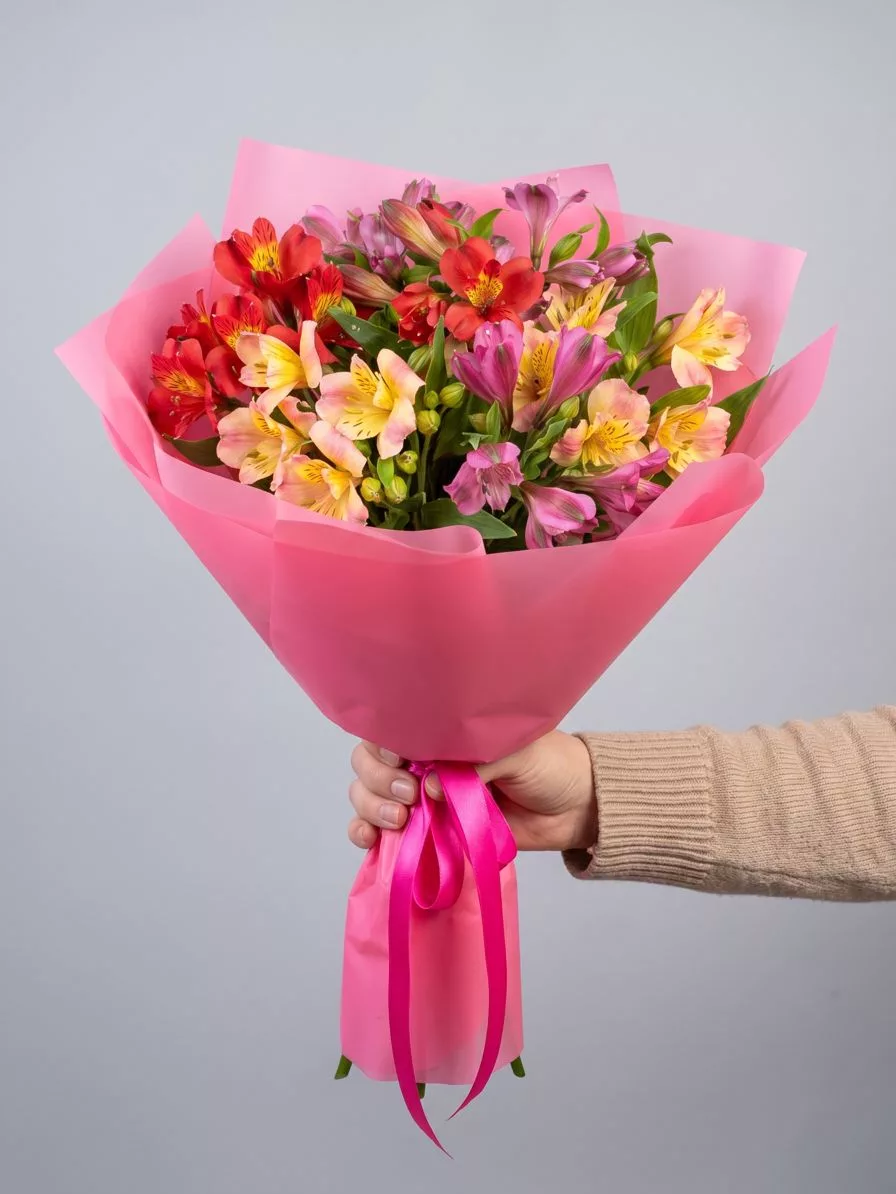
Bouquets we can deliver



Realistic Timing from Order to Door in Elektrogorsk
The distance from our Saint Petersburg studio to Elektrogorsk means that same-day delivery operates on a pre-scheduled run model rather than an on-demand courier dispatch. Orders placed before 10:00 Moscow time are assembled in the morning and dispatched on the midday run, reaching Elektrogorsk addresses between 14:00 and 17:00. Orders placed between 10:00 and 14:00 go on the afternoon dispatch and arrive in the 18:00 to 21:00 window. These are working windows, not guarantees down to the minute — traffic on the Gorkovskoye highway, which is the main route east from Moscow toward Elektrogorsk, is unpredictable on weekday evenings and on Friday afternoons in particular. If the delivery has a fixed time requirement, such as arriving before a birthday dinner or a work event, book the morning run and say so explicitly in the order comments. Next-day delivery has more flexibility and is the safer choice for any order where timing is critical. We do not offer two-hour delivery to Elektrogorsk the way we do inside Saint Petersburg — the geography simply does not allow it — but we can usually confirm a two-hour delivery window the evening before for next-day orders. Customers sometimes expect Moscow-style same-day speed; Elektrogorsk is a separate logistics run, and setting that expectation correctly from the start avoids frustration on both sides.
Which Bouquets Travel Well Over This Distance
Not every flower handles a two-to-three hour road journey equally well, and this is the question florists think about when assembling orders for longer runs. Roses are the most reliable traveller: a stem of garden rose or a standard hybrid tea rose with a water-sealed stem end will arrive in the same condition it left the studio, provided the car is not overheated. We use roses from Dutch and Ecuadorian growers depending on the season, and Ecuadorian stems are particularly suited to long transport because of their head size and petal density. Chrysanthemums — both the single-bloom santini type and the standard spray varieties — are equally robust and a good choice if the recipient prefers something that lasts beyond a week in the vase. Lisianthus, also called eustoma, travels well and adds texture without adding fragility. What does not travel well over this distance without specific packaging: open peonies in summer, fully open tulips in warm weather, and large tropical blooms like strelitzia when temperatures are above 25 degrees Celsius. Peonies and tulips can be sent in bud form, which is actually preferable — they open beautifully in the recipient's home over twenty-four to forty-eight hours. If you are ordering in July or August, mention the heat explicitly; we pack with cold inserts for summer runs, but it helps to know the destination has no air-conditioned lobby if the recipient lives in a private house. Seasonal availability also shifts: ranunculus and anemones are spring flowers, and ordering them in October will result in a substitution.
Seasonal Conditions and How Temperature Affects the Order
Elektrogorsk has a continental climate with cold winters and warm summers, and the temperature range across the year is wide enough to change how we pack and which flowers we recommend. From November through March, the main concern is frost damage during the last few metres of delivery — the walk from the car to the door in minus fifteen degrees can damage open petals, particularly on roses and spray carnations. We wrap all winter deliveries in insulated kraft paper sleeves that hold temperature for roughly twenty minutes of outdoor exposure, which is more than enough for a standard handoff. The recipient should remove the wrapping promptly once inside and not leave the bouquet near a radiator, which dries stems faster than any other indoor condition. From June through August, the heat is the variable to manage: flowers assembled in the morning for an afternoon delivery spend time in a temperature-controlled vehicle, but if the recipient is not home and the bouquet is left with a neighbour or in an unventilated hallway, heat damage can occur within two hours. For summer orders, we strongly recommend confirming the recipient will be available or arranging a shaded handoff point. The shoulder seasons — April, May, September and October — are the most straightforward for delivery: mild temperatures mean less risk in both directions. May is also the peak season for tulips and peonies, and Elektrogorsk orders in May should be placed a day ahead because demand across the region is high and specific varieties sell out quickly.
What the Recipient Should Know Before the Bouquet Arrives
In Russia it is common for the sender to keep the delivery a surprise, and that is completely fine — but the recipient still needs to be reachable by phone. Our driver will call ahead when approximately fifteen to twenty minutes away, and if the call goes unanswered, the driver will wait a reasonable time before the delivery is marked as a failed attempt. A failed attempt in Elektrogorsk is more costly to reschedule than in a city, because it means a separate run rather than a rerouted courier. If the surprise is important, a practical solution is to give the driver the phone number of a trusted neighbour or family member who can receive the flowers without spoiling the moment. The recipient should also have a vase ready — this sounds obvious, but a significant number of complaints about wilting flowers trace back to stems sitting in a bag for three or four hours after arrival because no suitable container was found. A clean vase, cool water, and cutting two centimetres off the stems at an angle are the three steps that extend vase life the most. Flower food sachets are included with most of our bouquets; they are not decorative, and dissolving one in the vase water genuinely extends bloom life by two to four days compared to plain tap water. For recipients who have never received a flower delivery before — and this is more common in smaller towns than people assume — a short text message explaining what to do when the flowers arrive is a thoughtful addition to the order.
Typical Mistakes Customers Make When Ordering to Elektrogorsk
The most common mistake is treating Elektrogorsk as if it were inside a major city and expecting the same same-day flexibility. Someone places an order at noon expecting delivery by 14:00, and then calls frustrated when that is not possible. The second most common mistake is an incomplete address: no entrance number, no flat number, or a building number that does not match what appears on the actual building versus what appears on a map application. Russian buildings in smaller towns sometimes have historical numbering that differs from digital map data, so confirming the address with the recipient directly is always safer than copying it from a contact card. The third mistake is ordering flowers that are out of season and not reading the substitution policy. If you order white peonies in October, the order will be fulfilled with the closest available alternative — likely white lisianthus or white roses — and while we always communicate substitutions before dispatch, some customers are still surprised. The fourth mistake is ordering a very large arrangement — a box of fifty roses or a tall vase arrangement — without considering that the recipient may be alone and unable to carry it from the door. Elektrogorsk has a significant share of elderly residents, and a dense hand-tied bouquet of twenty-five stems is often more practical than an oversized box. Finally, customers occasionally forget to include a greeting card message when ordering for someone else, and there is no way to add it after dispatch. The message field in the order form is short but important; a blank card is a missed opportunity.
How to Place the Order and What to Check Before You Confirm
The order form on the site asks for the recipient's full address including postcode, a contact phone number for the recipient, a preferred delivery window, and a card message. Before you click confirm, run through four checks. First, verify the address includes the street name, building number, entrance number if the building has more than one, and flat number — all four elements. Second, check that the delivery window you have selected matches the run schedule for Elektrogorsk; the site shows available windows based on current dispatch times, and if your preferred window is greyed out, it means that run is already closed for the day. Third, read the composition of the bouquet carefully: some arrangements include flowers you may not want, such as strong-scented lilies if the recipient has allergies, and substitutions can be requested in the comments field before order confirmation, not after. Fourth, confirm the payment: orders to Elektrogorsk require full payment at the time of booking, not on delivery, which is standard for all out-of-city runs. If you are ordering from outside Russia — a common situation where relatives abroad send flowers to family in smaller Russian towns — the payment section accepts international cards, and the order form has a language toggle. Customer support is available by phone and chat in Russian and can assist in English for basic order queries. Once confirmed, you will receive an SMS with a tracking link that updates when the driver departs and when delivery is completed.
Flower delivery to Elektrogorsk is straightforward when you know the timing structure, pack the right varieties for the season, and give the driver a complete address with a reachable phone number. The town is well within our regular delivery zone, and orders placed the evening before with a confirmed morning or afternoon window arrive without complications in the vast majority of cases. The flowers that travel best are roses, chrysanthemums and lisianthus; the mistakes that cause problems are almost always about incomplete addresses or unrealistic timing expectations. Get those two things right and the bouquet will arrive fresh, on time, and ready to spend a week in a vase. We deliver bouquets across Russia in 1–2 hours.
Frequently asked questions
Can I order flowers to Elektrogorsk for delivery the same day?
Yes, same-day delivery is available for orders placed before 14:00 Moscow time. Orders placed in the morning go on the midday dispatch and arrive between 14:00 and 17:00; afternoon orders arrive between 18:00 and 21:00. Friday evenings and public holidays may see delays due to traffic on the Gorkovskoye highway, so next-day booking is safer for time-critical occasions.
What happens if the recipient is not home when the driver arrives?
The driver calls the recipient's phone approximately fifteen to twenty minutes before arrival. If there is no answer after a reasonable wait, the delivery is logged as a failed attempt and rescheduled. To avoid this, provide a backup contact number — a neighbour or family member — in the order comments, especially if the delivery is a surprise and the recipient does not know to expect it.
Are there flowers you would not recommend for delivery to Elektrogorsk in summer?
Fully open peonies and open tulips are risky in temperatures above 22 degrees Celsius because petal edges bruise during transport. We recommend ordering peonies and tulips in bud form — they open at home over one to two days. Large tropical flowers such as strelitzia are also better avoided in July and August unless the recipient has a cool indoor space to receive them immediately.
Can someone outside Russia order flowers to be delivered to Elektrogorsk?
Yes. The order form accepts international payment cards and has a language toggle for English-language navigation. Customer support can assist with basic order questions in English via chat. The recipient's address and phone number must be in Russian format, so it helps to confirm those details with the recipient before placing the order to avoid address errors.
How long will the bouquet stay fresh after delivery to Elektrogorsk?
Roses and chrysanthemums last seven to ten days in a clean vase with cool water and the flower food sachet included in the order. Lisianthus typically lasts eight to twelve days. Trimming two centimetres off the stems at an angle on arrival and changing the water every two days makes a measurable difference. Keeping the bouquet away from direct sunlight and radiators is equally important.
Ready to send a bouquet?
Pick a city, choose the flowers, and we will hand them over with a photo confirmation.
Choose a city →