
How to Get Flowers Past the Gate: Delivery to Secured Compounds in Russia
Every week our couriers stand at a locked barrier somewhere in Saint Petersburg or Moscow with a box of garden roses or a wrapped arrangement of lisianthus, calling the recipient who is not picking up, while a security guard shrugs behind bulletproof glass. The bouquet is fresh, the timing is right, the route was clean — but nobody thought to send us the gate code. Gated residential complexes, closed cottage settlements, and guarded business parks are now the norm across Russia's larger cities, and they each have their own entry logic. This guide walks you through exactly what information to gather before you place an order, so the flowers arrive at the door rather than waiting at the checkpoint.
Why Gated Complexes Create Unique Delivery Problems
Russia's newer residential developments — particularly the premium and business-class segments built since roughly 2010 — almost always include a controlled entry point. This is not like a doorman in a Western hotel lobby who waves parcels through. Russian security posts are staffed by contracted guards who follow written instructions from the management company, and those instructions rarely say anything about flower couriers. The guard cannot let someone in on goodwill alone; he needs either a pass list, a code, or a call from the resident. Our courier carries a temperature-controlled bag, a box, and sometimes a tall arrangement of delphiniums or amaryllis that cannot be left outside in a Russian winter where temperatures regularly drop below minus fifteen degrees Celsius. Cold exposure of even twenty minutes can blacken delphinium petals or cause tulip stems to crack at the base. The problem compounds when the recipient is the one being surprised: you cannot call them to buzz the courier in without ruining the gift. That means all access information must come from the sender before the order is placed. We ask for it during checkout, but roughly a third of customers skip those fields assuming the courier will figure it out. He will try, but every minute spent at the barrier is a minute the flowers spend in the cold, and our one-to-two-hour delivery window starts to shrink fast.
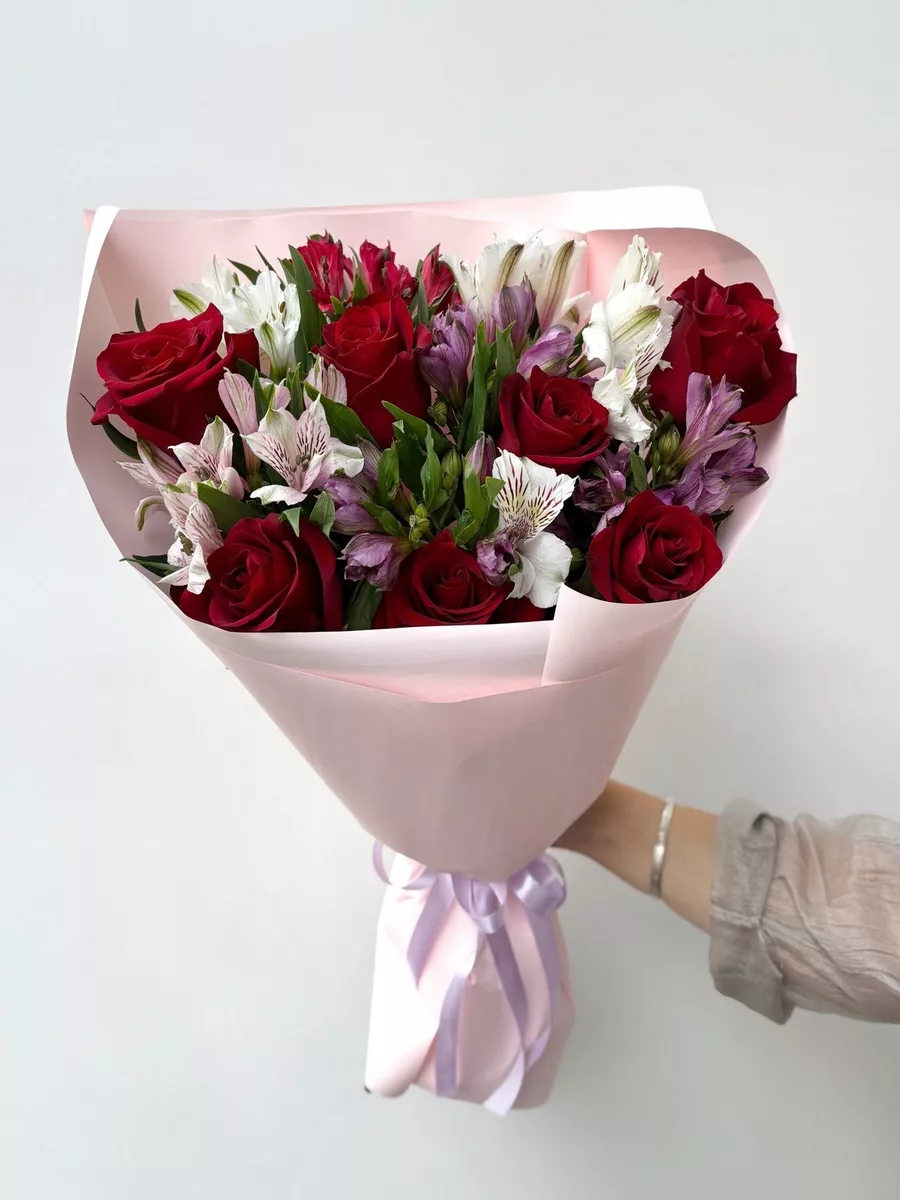
Bouquets we can deliver



Types of Entry Systems You Will Encounter Across Russia
Not all gated compounds work the same way, and the type of system determines what information you need to provide. The most common setup in large city residential complexes is a barrier with an intercom panel mounted on a post or wall. The courier dials an apartment number on the panel, the resident answers and presses a button to lift the barrier. This works fine for non-surprise deliveries, but you need to confirm the apartment number is correct and that the intercom is functioning — older panels in complexes built before 2015 frequently have broken speakers or missing number buttons. The second type is a staffed security post where a guard checks a pass list or calls the resident directly. For this you need to add our courier to the visitor list in advance, which is done through your complex's management app, the concierge desk, or by calling the security post number yourself. The third type uses a numeric keypad code at the barrier or pedestrian gate — these codes change monthly or quarterly in many complexes, so a code that worked last time you ordered may already be invalid. Cottage settlements outside city limits, known in Russian as kotedzhnye posyolki, often combine all three: a code for the outer gate, a guard post inside, and then a separate intercom at the house itself. We have delivered ranunculus and peony arrangements to settlements an hour outside Saint Petersburg in February — possible, but only when all three layers of access are sorted before dispatch.
Exactly What Information to Send Us Before Your Order
The order comment field exists for a reason, and for gated deliveries it should be treated as a mandatory checklist rather than an optional note. Start with the full address including the building corpus or section number — many large complexes have multiple buildings sharing a street number, and the entrance to building three is often on a completely different road from building one. Next, write the gate or barrier code if one exists, and specify which gate it applies to: main entrance, pedestrian entrance, or service entrance. Then describe the security post procedure in plain terms: does the guard need to call the resident, or can the courier simply state a name from a pre-approved list? If a pass list is required, add the courier's name — you can use a generic entry like Five Flowers courier, which most management companies accept. Include the intercom apartment number separately from the postal apartment number, because in many Russian complexes these do not match. Add a working phone number for the security post itself if you have it; our dispatcher can call ahead to clear the courier's entry. Finally, note any physical quirks: a barrier that only opens from the inside after six in the evening, a pedestrian gate that requires a separate fob, or a dog that the guard keeps at the post. These details sound minor but they are the difference between a fresh bunch of spray roses delivered on time and a wilted one delivered an hour late.
Surprise Deliveries to Gated Addresses: How to Plan Them
Surprise deliveries to secured addresses require more planning from the sender, not less. The instinct is to give us less information to keep the secret, but that logic works against the flowers. What you actually need to do is handle the access layer yourself before the courier leaves our shop. If your complex uses a pass list, add the delivery to it through your management app or by calling the concierge the morning of the delivery — you do not need to mention flowers specifically, just register a visitor for the relevant time window. If the barrier uses a code, send it to us. The recipient will not know a bouquet is coming just because a courier was pre-cleared. For cottage settlements where you know the outer gate code but the inner area requires a guard call, ask the guard post in advance to let through a delivery between, say, two and four in the afternoon. Most guards are cooperative when contacted ahead of time and spoken to politely. The flowers themselves also factor into surprise timing: peonies and garden roses are forgiving in a cold bag for up to an hour of waiting, but anemones and sweet peas are fragile and should not sit in any temperature uncertainty. If the access situation at your address is genuinely unpredictable — a new complex still working out its security procedures, for example — consider scheduling the delivery for a time when you know the recipient will be home and can buzz the courier in, then arrange the surprise element around that.
Common Mistakes Senders Make and How to Avoid Them
The single most common mistake is providing the residential address without mentioning the complex is gated at all. From a map view many addresses look like ordinary apartment buildings, and customers assume we will see the barrier when we arrive and improvise. Improvisation at a security post costs time and sometimes the delivery slot entirely. The second mistake is giving a gate code from memory without checking whether it is current — we have had customers confidently provide a four-digit code that turned out to have been reset two months earlier. If you are not certain, call your management company or check the complex's resident app the day of the order. The third mistake involves building and section numbering: writing Zelenaya Street 14 when the actual delivery point is building 14, section 3, entrance 2, which is accessed from a courtyard off a different street. Russian address systems for large residential developments can be genuinely complex, and a small omission causes significant delay. The fourth mistake is ordering for a recipient who lives in a high-security compound — some business-class and premium complexes in Moscow and Saint Petersburg have security protocols that simply do not allow unannounced visitors regardless of what the sender provides. In those cases the recipient must coordinate entry themselves, which means the delivery cannot be a surprise. We will tell you if we know a specific address has this profile, but the sender usually has better local knowledge. Double-check with the recipient's building management if you are not sure of the security level.
What Happens If the Courier Cannot Enter: Our Process
When a courier reaches a barrier and cannot gain entry despite the information provided, our dispatcher contacts the sender immediately — not after waiting, not after a second attempt, but right away, because every minute matters for temperature-sensitive varieties like anemones, ranunculus, or any arrangement containing open garden roses in summer heat. The sender then has a short window to resolve the access problem: call the security post directly, update the pass list remotely, or contact the recipient to buzz the courier in. If the problem is resolved within fifteen minutes the delivery usually proceeds within the original window. If it cannot be resolved, we hold the bouquet at the nearest viable point — sometimes a lobby of a nearby building the courier can enter, sometimes the courier waits in a temperature-controlled vehicle — and we reschedule with the sender. We do not leave flowers at a barrier unattended. A box of lisianthus or a wrapped bunch of tulips left outside in Russian winter or summer heat will be unsalvageable within thirty to forty minutes. If a re-delivery is needed, the flowers are assessed for freshness first: stems are re-cut, water is refreshed, and any damaged outer petals are removed before the second attempt. In most cases this works out fine for sturdy varieties like chrysanthemums, alstroemeria, or spray carnations. For delicate varieties the sender is contacted to discuss options before a second trip is made. The goal is always a fresh bouquet at the door, not a technically completed delivery.
Gated complexes are not going away — if anything, more of Russia's new residential construction includes controlled entry as a standard feature. Getting flowers through that entry point is entirely manageable when the sender treats the access information as carefully as the flower selection itself. A correct gate code, a confirmed pass list entry, a working intercom apartment number, and a note about any unusual security procedures will get a bouquet of peonies or a tall arrangement of delphiniums to the door in the same condition it left our shop. The flowers do the rest. More on this in Same-Day Flower Delivery in Russia: What Is Realistic. We deliver bouquets across Russia in 1–2 hours.
Frequently asked questions
Can you deliver to a gated complex if I do not know the gate code?
Yes, but you need to handle access another way — either add our courier to the pass list through your complex's management company or concierge, or ask the recipient to meet the courier at the barrier. Without a code or a pass list entry, the guard cannot let anyone through, and the delivery window will be lost while we wait.
How far in advance should I add a delivery to the visitor pass list?
Most management companies in Russian residential complexes process visitor additions within a few hours, but some require the request by the morning of the delivery day. Check your complex's specific rules. If you are placing an order for same-day delivery, add the pass entry as soon as you place the order, then send us confirmation that it is done.
What if the intercom apartment number is different from the postal apartment number?
This is very common in large Russian residential complexes, especially those built after 2015 with multiple sections. Always provide both numbers in the order comment: the postal apartment for the address and the intercom number the courier should dial at the panel. If you are unsure of the intercom number, check the sticker on your intercom handset inside the apartment.
Will the flowers survive if the courier has to wait at the barrier?
Sturdy varieties like chrysanthemums, alstroemeria, and spray roses hold well in a temperature-controlled bag for up to an hour. Delicate varieties like anemones, sweet peas, and open garden roses are more vulnerable — twenty to thirty minutes of temperature stress can cause visible damage. This is why we contact the sender immediately rather than waiting at the barrier.
Can I order a surprise delivery to a gated address without telling the recipient anything?
Yes, and many customers do it successfully. The key is that you handle the access layer in advance — update the pass list yourself, provide the correct gate code, or arrange guard clearance through the security post. The recipient does not need to know a delivery is coming just because access has been arranged. Plan the access, keep the surprise.
Ready to send a bouquet?
Pick a city, choose the flowers, and we will hand them over with a photo confirmation.
Choose a city →