
Flower Delivery in Kotelnikovo: Zones, Timing and What to Expect
Customers ordering flowers to Kotelnikovo for the first time usually ask the same question: can a shop based in Saint Petersburg really get fresh flowers to a city in Volgograd Oblast the same day? The answer depends on what you order, when you place the order, and which part of Kotelnikovo you are sending to. This article lays out exactly what to expect — no vague promises, just the practical details that decide whether your bouquet arrives in good shape.
Where in Kotelnikovo We Deliver and What Counts as the City Boundary
Kotelnikovo is a compact city by Russian standards, sitting in the south of Volgograd Oblast close to the Kalmykia border. The central districts — around Ulitsa Lenina, the railway station area, and the main administrative blocks — fall within the standard delivery zone and receive the fastest service. Residential streets further from the centre, including the private house sectors on the eastern and western outskirts, are also covered but may add time to the route depending on courier availability at the moment of dispatch. Customers sometimes assume that a city this size is treated as a single flat zone everywhere, but road conditions and address accessibility vary more than the map suggests. If you are sending to a private home rather than an apartment building, include the gate number or any landmark in the address field — couriers in smaller Russian cities navigate partly by local knowledge, and a complete address avoids the back-and-forth phone calls that delay delivery. Industrial areas on the city periphery are covered on request; confirm availability when placing the order rather than assuming. The key rule: always enter the full postal address including the postal code, the street name in Russian if you know it, and the recipient's phone number. A working phone number is not optional — it is the single most important field in the order form, because the courier will call ahead before arriving.
Bouquets we can deliver
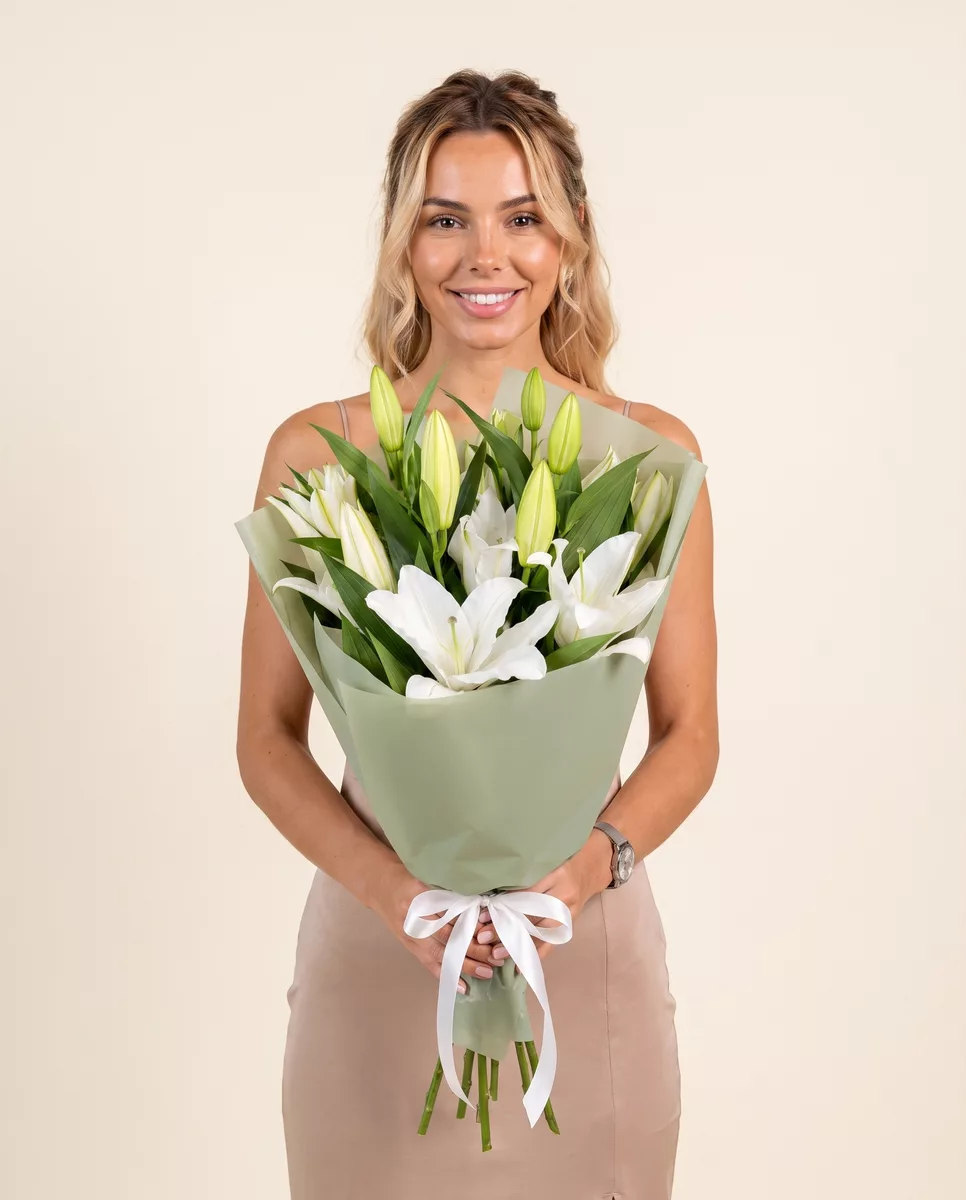
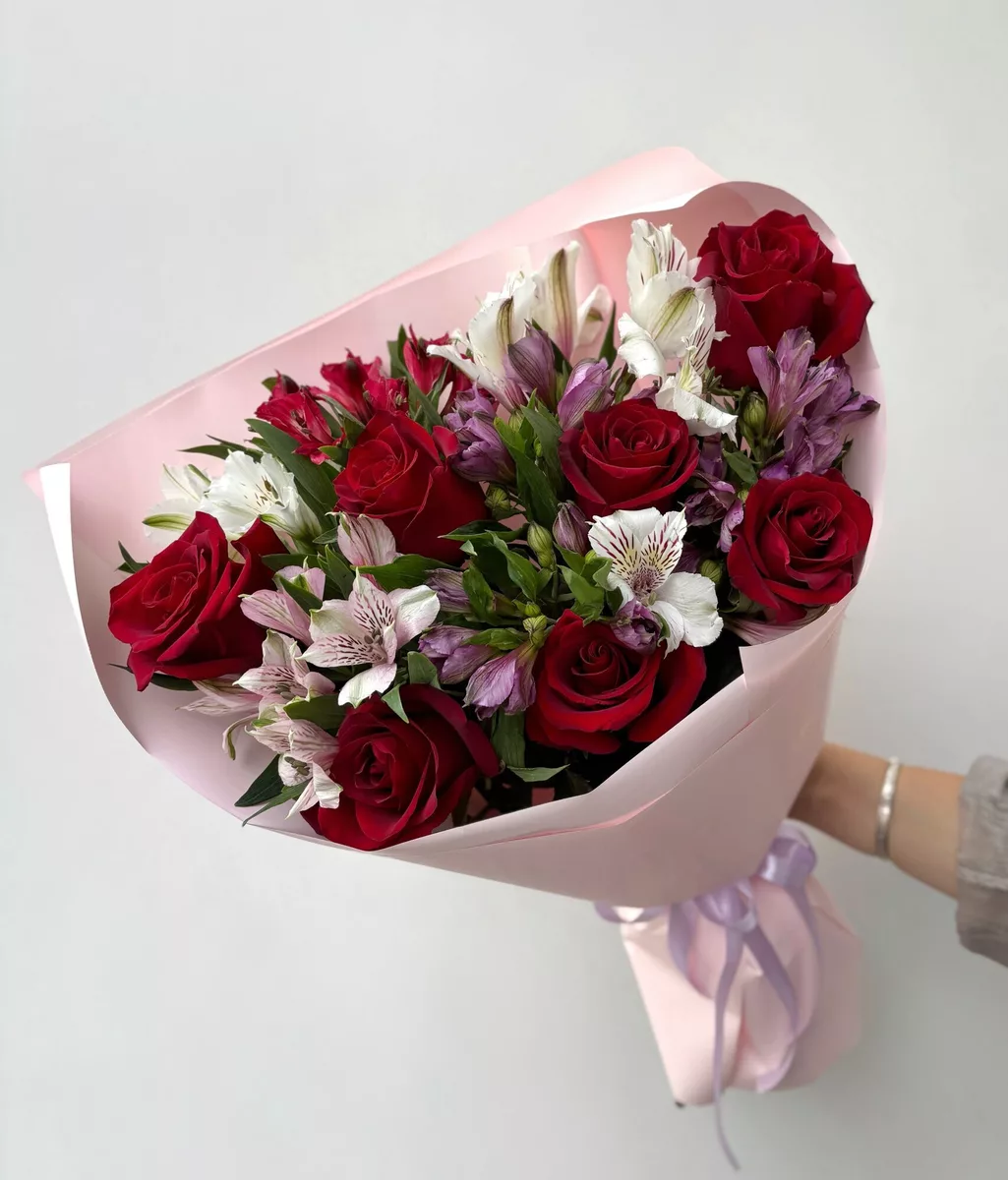
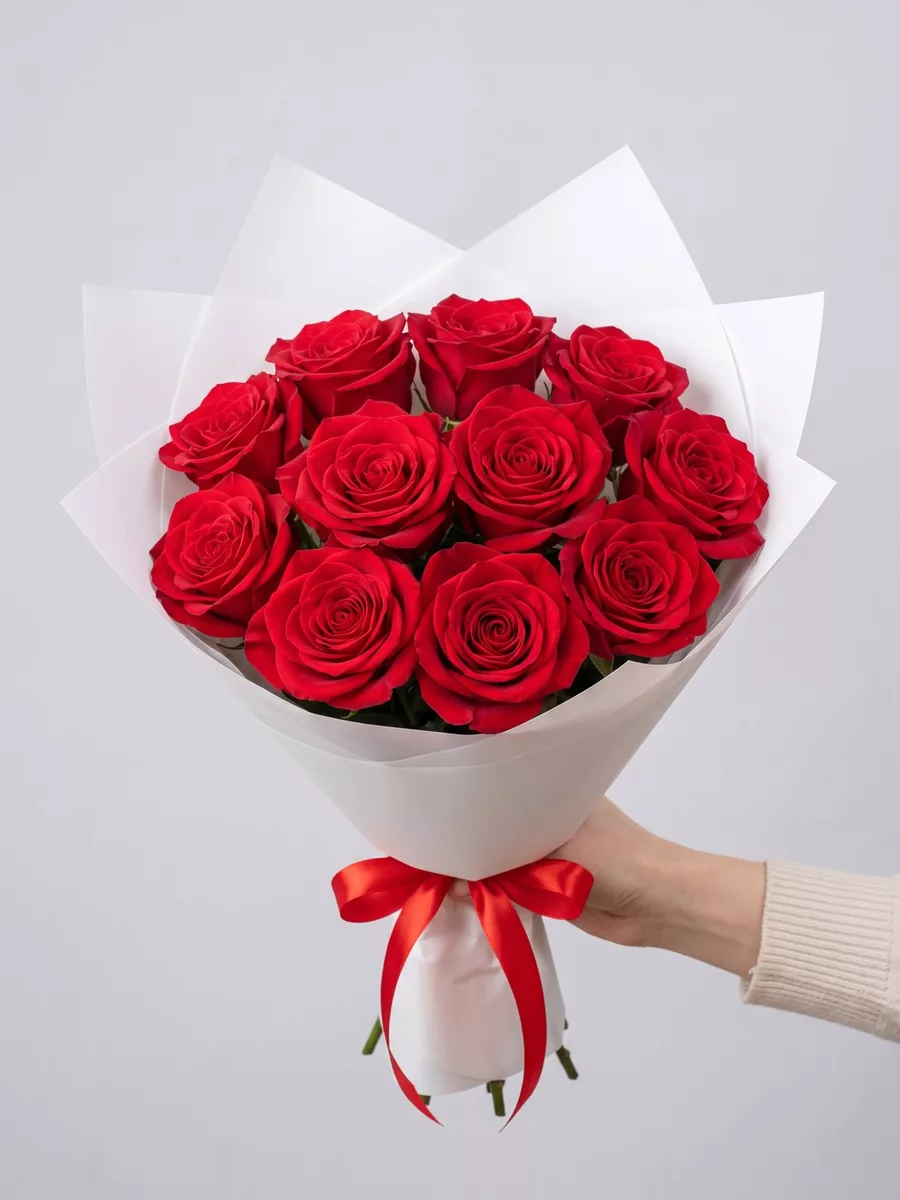

Delivery Timing: What Same-Day Actually Means for Kotelnikovo
Same-day delivery to Kotelnikovo is available when orders are placed before the cut-off time published on the site for that date. The distance from our Saint Petersburg base means the logistics chain involves careful pre-positioning of stock, and orders placed in the afternoon for same-day arrival in Kotelnikovo have a narrower window than orders placed in the morning. The safest approach is to order at least one day ahead for any date that matters — an anniversary, a birthday, or a significant occasion — and to specify a two-hour delivery window in the comments rather than an exact minute. Russian flower delivery culture generally treats a window rather than a precise time as the standard, and recipients in Kotelnikovo are accustomed to receiving a call from the courier twenty to thirty minutes before arrival. If the recipient is not home, the courier will call and agree on a revised handover; flowers are not left unattended at a door in warm weather because heat damages them within an hour in summer temperatures. Kotelnikovo sits in a continental climate zone where July and August temperatures regularly exceed 35 degrees Celsius, which makes timing especially critical in summer — morning deliveries before noon are strongly preferable during those months. In winter the concern shifts: frost below minus ten degrees Celsius requires the bouquet to be wrapped in thermal packaging, which we apply as standard but which adds a few minutes to preparation time. Always mention the season's conditions in your order comments if you have any concern about temperature at the point of handover.
Which Flower Varieties Travel Well to Kotelnikovo
Not every variety that looks beautiful in a Saint Petersburg refrigerator will arrive in the same condition in Kotelnikovo, particularly in summer. The varieties that consistently perform well over longer logistics chains are spray roses, single-head roses from Ecuadorian and Dutch growers, chrysanthemums in both spray and single-bloom form, alstroemeria, and lisianthus. These hold their structure and colour for the transit period and continue to open naturally after delivery, giving the recipient several days of good display. Tulips and ranunculus are more delicate and are better ordered in spring when temperatures along the route are moderate; in July heat they require extra cold-chain care and we will flag this when you select them. Peonies are seasonal — they are available from late April through June and ship well within that window but are not available year-round, so do not plan a peony bouquet for August and expect it to materialise. Hydrangeas are popular in Russia for large-volume arrangements and they travel acceptably if kept cool, but they wilt quickly once out of water, so the handover should happen promptly. Orchid stems, particularly cymbidium, are among the most robust options for warm-weather delivery because they tolerate temperature variation better than most cut flowers. When you are unsure which variety suits the season and the distance, describe the occasion and the recipient's colour preferences in the order comments — we will select from what is in peak condition that day rather than substituting a tired alternative.
Bouquet Sizes, Composition and What the Numbers Mean
Bouquets on the site are described by stem count and approximate assembled diameter, and both numbers matter when you are ordering for delivery to a city you cannot visit yourself. A bouquet of fifteen roses at a standard 50-centimetre stem length produces a compact, dense arrangement that travels securely in a box; a bouquet of the same roses at 70-centimetre stems requires a longer box and is more susceptible to stem damage if the packaging is handled roughly in transit. For Kotelnikovo deliveries we recommend staying with 50-centimetre or 60-centimetre stems for rose-based bouquets unless the occasion specifically calls for the taller variety. Mixed bouquets — combining roses with alstroemeria, waxflower, or eucalyptus greens — tend to arrive looking fuller than single-variety bouquets of the same stem count because the filler material cushions the main flowers. A common mistake is ordering the smallest available option to save money and then being disappointed by how it looks in photographs sent by the recipient; a bouquet of seven roses is a sincere gesture but it reads as small in a photo. The middle range — fifteen to twenty-five stems in a mixed composition — photographs well and is the most frequently ordered size for birthdays and anniversaries in regional Russian cities. Mono-bouquets of chrysanthemums or alstroemeria can be ordered in larger stem counts without a significant price jump because these varieties are more economical than roses, and they create a visually generous impression. If you are ordering for a workplace delivery where the bouquet will be displayed on a desk, a compact round composition in a box with a built-in water source is more practical than a tall open arrangement.
What to Write in the Card and How Russian Recipients Read It
Every order includes the option to add a printed card, and this small detail matters more than most customers realise. In Russia, receiving flowers without any accompanying text is considered slightly abrupt — even a short phrase establishes the occasion and the sender's identity. If you are sending from abroad or from another Russian city and the recipient does not know to expect a delivery, a card that says who it is from prevents the confusion of a recipient refusing to accept flowers from an unknown courier. Write the text in Russian if you can, or in English if the recipient reads English — we print exactly what you submit, so check spelling before confirming. Avoid very long messages on the card because the printed area is limited and text gets truncated; two or three sentences are enough. The standard Russian card format opens with an address to the person by first name or first name and patronymic for older recipients, then the message, then the sender's name. Patronymics are the middle names derived from the father's first name — for example, a woman named Elena whose father is called Sergei would be addressed as Elena Sergeyevna in a formal context. If you do not know the patronymic, using just the first name is perfectly acceptable and is the norm for friends and colleagues of similar age. Avoid generic phrases that could apply to any occasion; a specific reference to the date or the shared memory makes the card feel personal rather than transactional. If you are uncertain about the Russian name spelling, write it in Latin characters and we will transliterate it correctly.
Common Mistakes When Ordering Flowers to Kotelnikovo
The most frequent problem we see is an incomplete delivery address. Kotelnikovo uses a standard Russian address format: city, street, building number, apartment number, and postal code. Missing the apartment number in a multi-storey building means the courier cannot reach the recipient without a lengthy phone exchange. The second most common mistake is ordering a variety that is out of season and not reading the availability note on the product page — customers sometimes add peonies to a cart in November and proceed to checkout without noticing the seasonal warning. The third mistake is specifying an exact delivery time rather than a window; courier routes in a city of this size are planned by zone, not by individual minute, and a rigid time requirement often leads to disappointment when traffic or a previous delivery runs slightly long. A fourth issue specific to Kotelnikovo is providing a recipient phone number that goes to voicemail — if the courier cannot reach the recipient, the delivery is held and rescheduled, which means the flowers sit in the vehicle longer than ideal. Make sure the recipient's phone is active and that they are reachable during the delivery window, or provide an alternative number. Finally, customers sometimes forget that Russian name days and major holidays — March 8th International Women's Day being the largest — create very high order volumes, and same-day delivery slots fill by the previous evening. For March 8th deliveries to Kotelnikovo, ordering two to three days ahead is not excessive; it is simply realistic planning that guarantees your bouquet is included in the day's logistics.
After the Delivery: Keeping Flowers Fresh in Kotelnikovo's Climate
Once the bouquet reaches the recipient, a few immediate steps determine how long it lasts. The stems should be re-cut at an angle under running water as soon as the packaging is removed — this removes the air pocket that forms at the cut end during transit and allows the flower to draw water again immediately. In Kotelnikovo's summer heat, placing the vase away from direct sunlight and away from air-conditioning vents is important; both extremes shorten vase life. A cool room between 18 and 22 degrees Celsius is ideal for most cut flowers. Roses and alstroemeria benefit from a small amount of flower food dissolved in the vase water; we include a sachet with each bouquet, and recipients should use it rather than setting it aside. The water should be changed every two days, and the stems re-cut by a centimetre each time — this sounds like extra effort but it extends display life from four or five days to eight or nine days for roses. Chrysanthemums are more forgiving and will last well over a week with basic care. Lisianthus, which resembles a ruffled rose and is one of the longest-lasting cut flowers available, can remain in good condition for two weeks with clean water and regular stem trimming. If the recipient is not at home when delivery arrives and the flowers wait in a warm entrance hall for more than two hours, they should be placed in water immediately upon arrival and given a fresh cut. Advising the recipient of these steps in your card message — even briefly — is a practical kindness that makes the gift last longer.
Ordering flowers to Kotelnikovo from Five Flowers is straightforward when you have the right information in front of you before you place the order. Choose varieties suited to the current season, provide a complete address with a working phone number, select a delivery window rather than an exact time, and order at least a day ahead for any occasion that cannot be rescheduled. The distance from Saint Petersburg to Kotelnikovo is real, but with proper logistics and cold-chain handling, a fresh, well-composed bouquet arrives in the same condition it left our preparation room. We deliver bouquets across Russia in 1–2 hours.
Frequently asked questions
Does the railway station area of Kotelnikovo fall inside the standard delivery zone?
Yes, the railway station area is within the standard zone and typically receives faster service than the outer residential sectors. Private house streets on the eastern edges of the city may carry a surcharge or require confirmation at the time of ordering. Enter the full street name and house number when placing the order so the zone can be confirmed before payment.
Which specific rose varieties from Ecuador or the Netherlands hold up best on the logistics chain to Kotelnikovo?
Single-head Ecuadorian roses with thick stems and tight buds at dispatch — varieties bred for export such as Freedom and Explorer — consistently arrive in better condition than thin-stemmed domestic greenhouse roses. Dutch roses from established growers perform similarly. Both outperform locally sourced material when transit time is extended, which the Kotelnikovo route involves by its geography.
If I order a bouquet of fifteen stems, what assembled diameter should I expect and does that affect delivery handling?
A fifteen-stem bouquet of single-head roses typically assembles to around 25–30 centimetres in diameter depending on head size and wrapping style. Larger diameters require wider courier packaging and can affect which vehicle handles the run. If the recipient's entrance or lift is narrow, note that in the order comments so packaging can be adjusted before dispatch.
Can I order lisianthus for summer delivery to Kotelnikovo or does the heat make it impractical?
Lisianthus is one of the varieties that holds structure better than expected over longer summer logistics chains, provided it is dispatched in bud rather than in open bloom. Fully open lisianthus is fragile in heat. When ordering in July or August, specify in the comments that you want buds at a closed or half-open stage, and the assembly team will select accordingly from refrigerated stock.
What cut-off time applies if I want same-day delivery to the central districts of Kotelnikovo on a weekday?
The exact cut-off is published on the site for each specific date because it shifts with logistics scheduling and seasonal demand. Morning orders consistently fall within the window; afternoon orders are narrower. Check the current cut-off on the order page before selecting same-day, and if you are close to the limit, call the shop directly to confirm whether the central Kotelnikovo zone can still be reached that day.
Ready to send a bouquet?
Pick a city, choose the flowers, and we will hand them over with a photo confirmation.
Choose a city →