
Flower Delivery in Kusa: Zones, Timing and What to Expect
Kusa is a small industrial town in Chelyabinsk Oblast, and customers ordering flowers there for the first time almost always ask the same question: can you really get fresh flowers delivered here, and how long will it take? The answer is yes, and the details matter more than the yes itself. This article covers the delivery zones we work with in Kusa, the realistic timing you should plan around, which flower varieties travel well to this region, and the specific mistakes that cause most orders to go wrong.
Where in Kusa We Deliver and How the Town Is Divided
Kusa sits along the Kusa River in the southern Urals, and its street layout reflects decades of industrial development rather than any tidy grid. The central part of town, around Lenina Street and the area near the local administration building, is the most straightforward to reach. Residential districts on the outskirts, including streets that climb toward the forested slopes surrounding the town, add travel time and require more precise address information from the customer. When you place an order, the street name alone is rarely enough. Kusa has several streets with similar names, and some addresses lack clear building numbers on the physical structures themselves, which is common in smaller Russian towns. Always include the full address: street, building number, apartment or office number if applicable, and a working phone number for the recipient. If the recipient lives in a private house rather than an apartment block, note whether there is a gate code or a dog in the yard — both are real factors that affect whether a delivery reaches the door in one attempt. We cover the full municipal territory of Kusa, not just the center, but delivery to addresses on the far residential edges may take longer than to central locations. Specifying landmarks near the delivery point, such as a nearby school or factory building, genuinely helps when street signage is unclear.
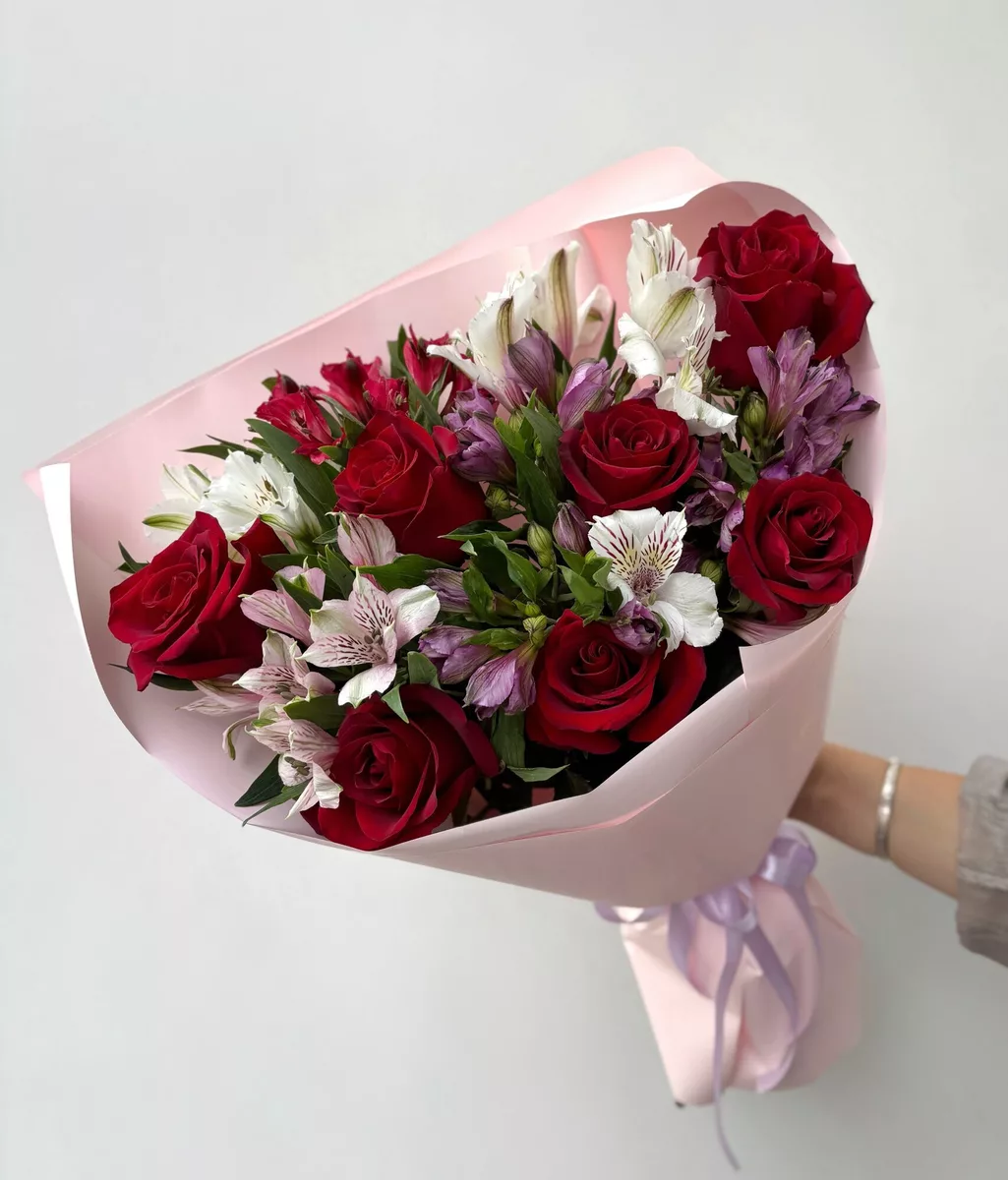
Bouquets we can deliver



Delivery Timing: What One to Two Hours Means for Kusa
Our standard delivery window across Russia is one to two hours from order confirmation, and that figure holds for Kusa under normal conditions. The key phrase is normal conditions, which means the order is placed during business hours, the address is complete and correct, and the roads between the dispatch point and the destination are clear. Kusa experiences proper Ural winters, and between November and March road conditions can slow delivery, particularly after heavy snowfall or during the ice melt period in early spring when road surfaces become unpredictable. If you are ordering for a specific time, such as a birthday dinner that starts at seven in the evening, place the order at least three to four hours ahead rather than relying on the minimum window. That buffer is not pessimism — it is the professional standard any working florist would recommend for time-sensitive occasions. Same-day delivery is available for most of the day, but orders placed after eight in the evening may be scheduled for the following morning depending on the specific address and current dispatch load. When you need delivery at an exact hour, use the scheduled delivery option in the order form and confirm the recipient will actually be at the address at that time. A missed delivery because the recipient stepped out for thirty minutes is the most common complaint we receive, and it is entirely preventable.
Which Flowers Travel Best to Kusa and Why It Matters
Not every flower handles a long transit through varying temperatures equally well, and Kusa's climate makes this a practical concern rather than a theoretical one. Roses are the most requested flower for delivery in smaller Russian towns, and they are a reliable choice provided you select varieties with dense petals and strong stems. Garden spray roses, which carry multiple smaller blooms on a single stem, are particularly sturdy and look full even if one blossom is slightly less open than the others. Chrysanthemums, both the large single-headed variety and the branching spray type, are excellent for Kusa delivery because they hold their shape across a wide temperature range and last well after arrival. Alstroemeria is another strong option — the buds continue opening after delivery, which means the recipient gets a bouquet that changes and improves over several days. Flowers that struggle more in transit include open garden peonies in summer, which bruise easily, and fully open tulips in spring, which wilt quickly once they leave refrigeration. Tulips in bud form travel fine. Orchid stems, specifically cut cymbidium and dendrobium, are more resilient than most customers expect and make striking additions to a bouquet that needs to look impressive on arrival. In winter, all flowers need proper wrapping against the cold, and our packaging accounts for temperatures that can drop well below minus twenty Celsius in the Chelyabinsk region during January and February.
Bouquet Sizes and Compositions That Work for This Region
Customers ordering flowers for recipients in smaller towns like Kusa sometimes overthink the composition and end up with something that is harder to transport safely and harder for the recipient to display at home. A compact, well-structured bouquet of eleven or fifteen stems in a single dominant variety with complementary greenery is almost always more effective than a large mixed arrangement with many open blooms at different heights. Eleven roses in a classic spiral arrangement with eucalyptus and ruscus is a format that photographs well, holds its shape during transport, and fits easily into a standard apartment. Fifteen stems of spray chrysanthemums with limonium filler creates visible volume without the fragility of a loose, open structure. For significant occasions, a mono-bouquet of twenty-five or thirty-one stems in one variety — roses, ranunculus in season, or eustoma — makes a strong impression without the logistical complications of mixed exotic arrangements. Russian flower-giving customs favor odd numbers of stems, and recipients in Kusa will notice and appreciate this detail even if they do not explicitly mention it. Even numbers of flowers are traditionally associated with mourning in Russian culture, so bouquets of ten, twelve or twenty stems are something to avoid for celebratory occasions. If you are ordering from outside Russia and are unfamiliar with this convention, it is worth knowing before you select the stem count in the order form.
Seasonal Availability and What Changes Through the Year in Kusa
Kusa has four clearly defined seasons, and what is available for delivery shifts meaningfully across them. In late winter and early spring, tulips dominate — Dutch imports arrive in large volumes from February onward, and the price-to-impact ratio of a large tulip bouquet is hard to beat at that time of year. By May and June, peonies appear briefly and sell out quickly because the season is genuinely short. If you want peonies, order early in the day and do not assume they will be available in the evening. Summer brings a broader range of seasonal flowers including lisianthus, which is also called eustoma, and various types of statice and scabiosa that add texture to arrangements. Sunflowers are available through summer and early autumn and are popular for informal, cheerful bouquets. From October onward, the range shifts back toward roses, chrysanthemums, and imported tropical varieties like anthuriums and tropical lilies, which are available year-round but become more prominent in the autumn and winter assortment. Hydrangeas are available most of the year as cut flowers and add large, lush volume to bouquets, though they require conditioning in water immediately after delivery to perform well. Customers who order hydrangeas should tell the recipient to trim the stems and place them in water within thirty minutes of receiving the bouquet. This is not unusual care — it is simply how hydrangeas work as a cut flower.
What to Check Before Confirming Your Order
The most common reason an order in a town like Kusa goes wrong is not the flowers — it is the information provided at checkout. Before you confirm, verify three things: the address is complete and matches how it appears on official documents, the recipient's phone number is active and the recipient knows to expect a call from an unfamiliar number, and the delivery time you have selected is realistic given when you are placing the order. Russian mobile numbers should be entered with the country code, and it is worth double-checking that you have not transposed digits. A single wrong digit in a phone number makes the delivery significantly harder to complete. If you are sending flowers as a surprise, note in the order comments that the recipient should not be called in advance, but also understand that this increases the risk of a missed delivery if the recipient is not home. For surprise deliveries, coordinate with someone who can confirm the recipient's location without revealing the surprise — a family member or colleague usually works. Regarding payment, all major cards and Russian payment systems are accepted, and the order is confirmed once payment clears. If you are ordering from abroad, check that your card is enabled for international transactions before starting the order, as a declined payment at the final step means the time slot you selected may no longer be available when you retry. Keeping a screenshot of your order confirmation is useful if you need to follow up.
How to Care for Flowers After They Arrive in Kusa
Delivery is only part of the equation. A bouquet that arrives in perfect condition can deteriorate within a day if it is not handled correctly after delivery, and this is especially relevant in Kusa where the recipient may not have experience with fresh cut flowers. The first step after receiving a bouquet is to trim the stems at a diagonal angle, about two centimeters from the bottom, using a sharp knife rather than scissors. Scissors compress the stem tissue and reduce water uptake. The bouquet should go into a clean vase with fresh, cool water immediately after trimming. Tap water in most Russian towns is fine for this purpose. The vase should be placed away from direct sunlight and away from heat sources, including radiators, which are in heavy use across Kusa from October through April. Central heating in Russian apartments is often very warm, and this is one of the main reasons flowers fade faster than expected in winter — the air is dry and warm, which accelerates wilting. Changing the water every two days and re-trimming the stems each time extends vase life significantly. Remove any leaves that sit below the waterline, as submerged leaves rot quickly and introduce bacteria that shorten the life of the entire bouquet. Roses typically last seven to ten days with correct care. Chrysanthemums can last two weeks or longer. Tulips, once open, last four to six days but look spectacular during that time. Passing these instructions to the recipient, either verbally or as a note with the bouquet, is one of the most practical things an order-sender can do.
Ordering flowers for delivery in Kusa is straightforward when you know what to prepare: a complete address, a working phone number for the recipient, a stem count in an odd number, and enough lead time for the specific occasion. The flower selection available through Five Flowers covers everything from everyday roses and chrysanthemums to seasonal peonies and tulips, and the packaging is adapted to the Ural climate so that what leaves Saint Petersburg in good condition arrives in Kusa in good condition. The details in this article are the same ones our florists work through every day on orders heading to smaller towns across Russia, and getting them right is what separates a delivery that works from one that requires a follow-up call. We deliver bouquets across Russia in 1–2 hours.
Frequently asked questions
Can I order flowers for delivery in Kusa on the same day?
Yes, same-day delivery to Kusa is available for orders placed during business hours. Orders placed late in the evening may be scheduled for the following morning depending on the address and current dispatch availability. For time-sensitive occasions, placing the order at least three to four hours before the intended delivery time gives the most reliable result.
Why do Russian bouquets always have an odd number of stems?
In Russian tradition, even numbers of flowers are associated with mourning and are brought to funerals. Odd numbers are used for all celebratory and everyday occasions. Recipients in Kusa, like most people across Russia, are aware of this convention and will notice the stem count, so it is worth selecting an odd number when ordering.
What happens to flowers during delivery in very cold Kusa winters?
All bouquets are wrapped in insulating packaging designed for sub-zero temperatures. The wrapping protects flowers during transit even when outdoor temperatures drop below minus twenty Celsius, which is common in the Chelyabinsk region in January and February. The packaging is removed by the delivery person before handing the bouquet to the recipient.
Can I send a bouquet as a surprise without the recipient knowing in advance?
Yes, note in the order comments that no advance call should be made to the recipient. Be aware this increases the risk of a missed delivery if the recipient is away from home. Coordinating with a family member or colleague who can confirm the recipient's presence without revealing the surprise is the most reliable approach for surprise deliveries.
Which flowers last the longest after delivery in Kusa?
Chrysanthemums are among the longest-lasting cut flowers and can stay fresh for up to two weeks with correct water changes and stem trimming. Alstroemeria and eustoma also have strong vase life. Roses last seven to ten days when cared for properly. Tulips are shorter-lived once open but look striking for four to six days.
Ready to send a bouquet?
Pick a city, choose the flowers, and we will hand them over with a photo confirmation.
Choose a city →