
Flower Delivery in Lensk: Zones, Timing and What to Expect
Lensk sits deep in Yakutia on the Lena River, roughly 2,500 kilometres northeast of Irkutsk, and customers ordering flowers here ask the same first question every time: will they actually arrive fresh? The answer depends on how the order is structured, which varieties are chosen, and how realistic the delivery window is. This article covers all three, plainly and in detail.
Where in Lensk We Deliver and How the Zones Are Drawn
Lensk is a compact city by Russian standards, with a central district running along Lenina Street and residential neighbourhoods spreading toward the river port and the industrial zone near the airport. Delivery covers the full city boundary, including the Severny district and addresses near the Lena River embankment. The airport area and the port-side streets are included in the standard delivery zone, though roads near the port can slow a courier significantly during navigation season when truck traffic is heavy. Addresses in the surrounding settlements — villages sitting ten to thirty kilometres outside the city limits — are handled on a case-by-case basis, and customers should specify the exact street and landmark when placing an order, because GPS coverage in those areas is inconsistent. The city centre, from the main square down to the market district, is the fastest zone to reach. Peripheral residential blocks built in the Soviet era, identifiable by their five-storey panel buildings, are fully covered but may add fifteen to twenty minutes to the courier's route depending on parking access. When you place the order, enter the full address including the apartment number, the building code if the entrance has an intercom, and a working phone number for the recipient — Lensk couriers rely on phone contact more than in larger cities because street numbering in some districts does not follow a straight sequence.
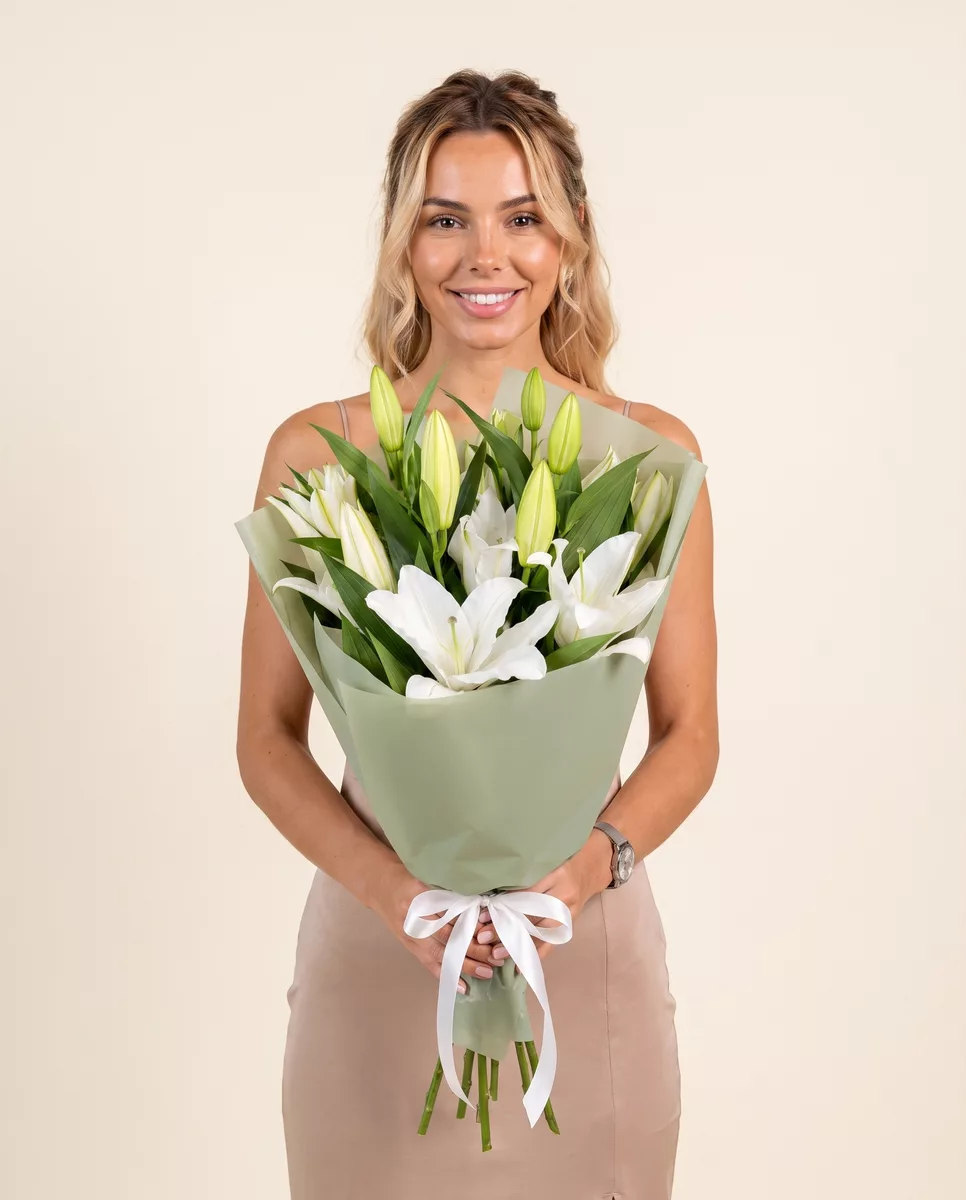
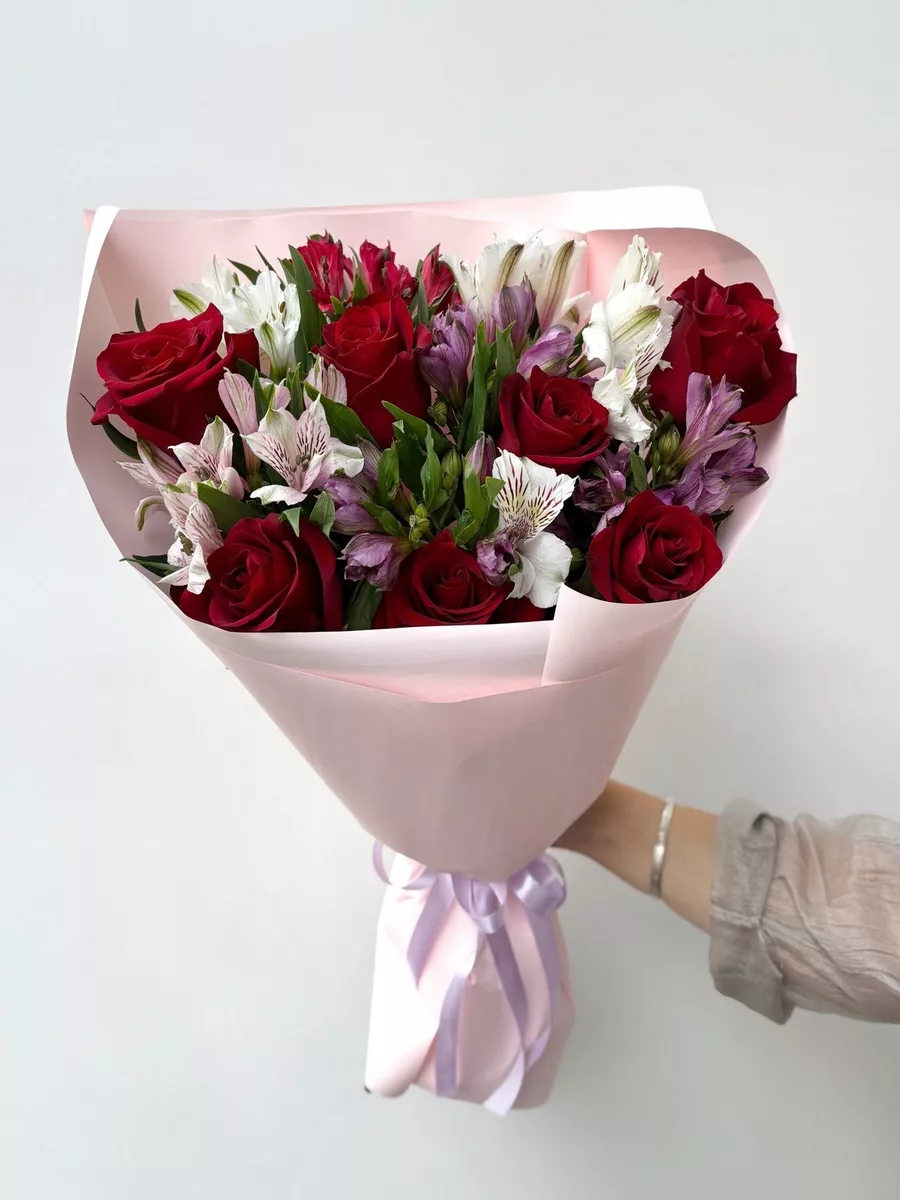
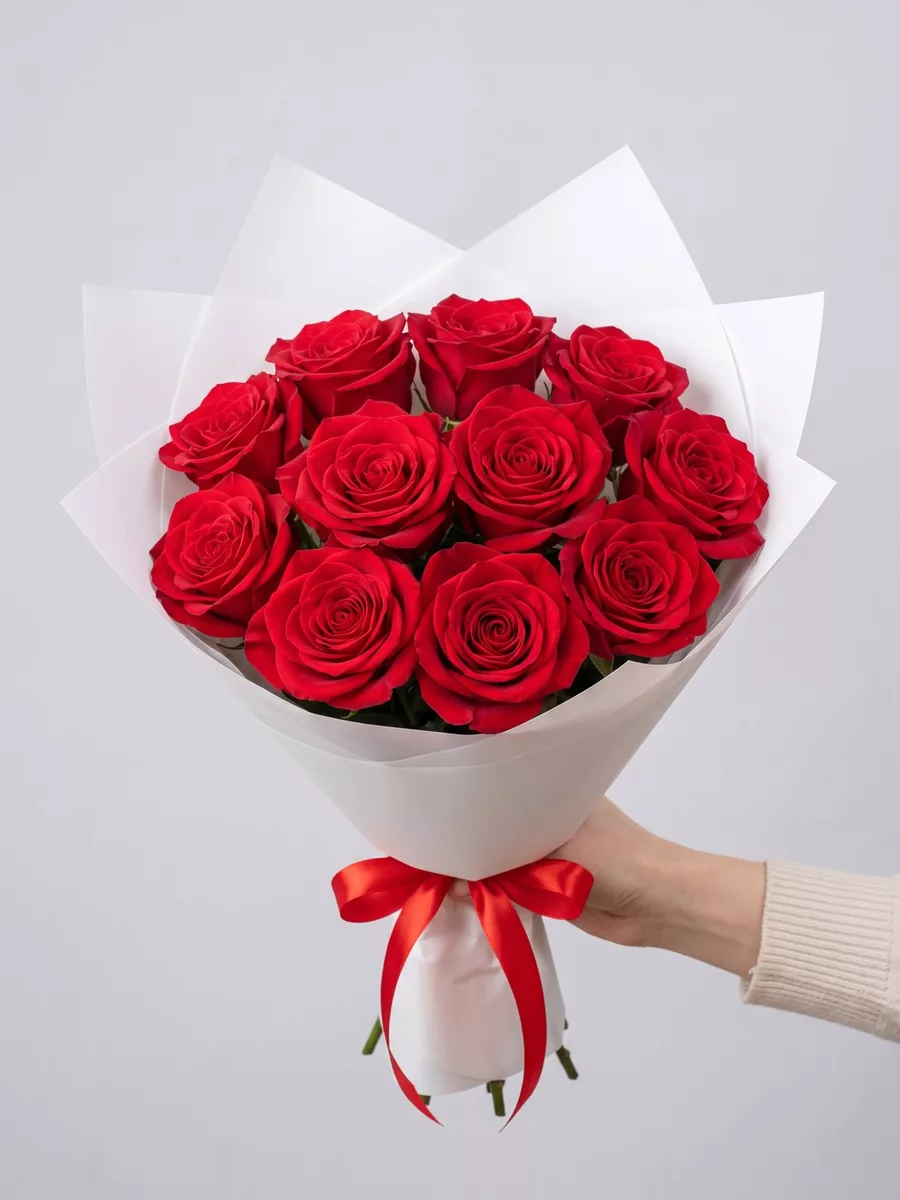
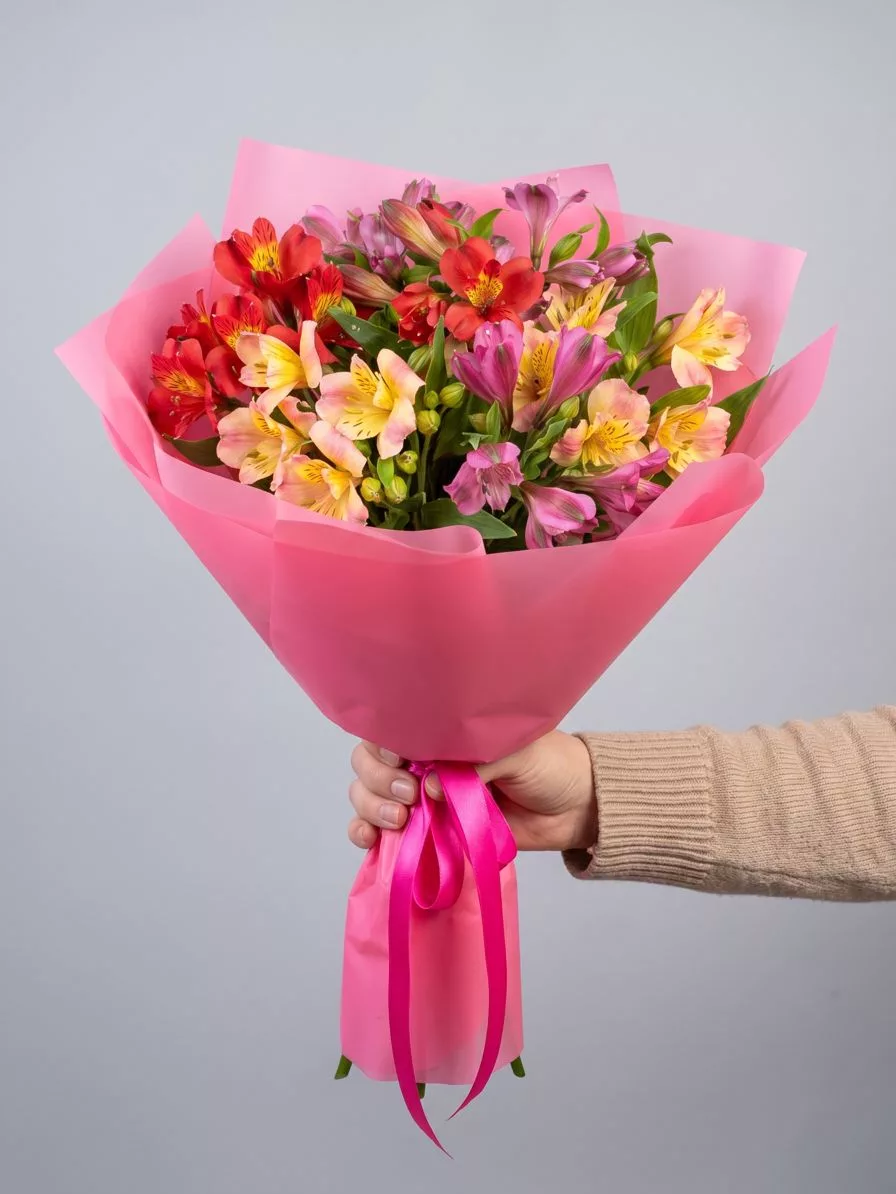
Bouquets we can deliver
Delivery Timing: What One to Two Hours Means in Practice
The one-to-two-hour delivery window that Five Flowers advertises is the standard for Saint Petersburg, and for Lensk the logistics are structured so that locally dispatched orders meet the same target. The key variable is order cutoff time. Orders placed before midday local Yakutia time consistently reach recipients within ninety minutes. Orders placed in the afternoon, between fourteen and seventeen hours local time, still meet the two-hour window on most days. Evening orders, placed after nineteen hours, are fulfilled the following morning unless the customer specifically requests a late delivery slot, which is available but should be confirmed at the time of ordering. Weather is the second variable that customers in Lensk underestimate. In winter, when temperatures regularly drop below minus thirty Celsius, couriers carry flowers in insulated packaging and minimise the time the bouquet spends outside. A rose stem exposed to minus thirty for more than two or three minutes will show petal damage, so the packaging is not decorative — it is functional. Customers sometimes ask to have the wrapping removed before the courier rings the bell so the bouquet looks more presentable at the door; this is not recommended in January or February. Summer in Lensk brings heat rather than cold, with July temperatures reaching plus thirty, and direct sun exposure in a vehicle without climate control can wilt chrysanthemums and tulips within twenty minutes. The courier routes are planned to avoid unnecessary stops during peak heat hours.
Which Flowers Travel Well to Lensk and Which Ones Do Not
Choosing the right variety is the single most practical decision a customer can make when ordering to a remote Siberian city. Roses are the most requested flower everywhere in Russia, and they hold up well in transit provided they are at the correct hydration stage when packed — buds that are one-quarter open travel better than fully open blooms. Spray roses, which have multiple smaller flowers on a single stem, are more forgiving than large-headed garden roses because the individual blooms are smaller and less prone to bruising. Chrysanthemums, both single-stem and spray varieties, are reliable for Lensk deliveries in any season: the petals are firm, the stems are sturdy, and they recover quickly after transit. Alstroemeria is another strong choice — the flowers are compact, they do not bruise easily, and a single stem carries multiple buds that continue opening after delivery, which means the recipient gets a bouquet that looks fresh for a longer period. Lilies require more caution. Oriental lilies have large, heavy blooms that can snap at the neck if the packaging is not rigid, and their scent intensifies in warm spaces, which some recipients find overwhelming indoors. Tulips are seasonal: they are excellent in spring when the supply chain is at its freshest, but summer and autumn tulips have often been in cold storage longer and may open too quickly after reaching a warm apartment. Delicate flowers such as sweet peas, anemones, and ranunculus are not recommended for Lensk delivery because they do not tolerate the temperature fluctuations of long-distance logistics.
Bouquet Formats That Work for Lensk Recipients
Customers ordering to Lensk tend to choose one of three formats: a single-variety bouquet of fifteen to twenty-five stems, a mixed bouquet combining a focal flower with a filler and foliage, or a boxed arrangement. Each has practical implications for delivery. Single-variety bouquets of roses or chrysanthemums are the easiest to pack securely because all stems are the same length and the packaging can be standardised. A bouquet of twenty-five white spray roses, for example, is compact enough to fit in an insulated sleeve without compression, which protects the outer petals. Mixed bouquets that combine, say, alstroemeria with eucalyptus and waxflower are popular for birthdays and are well-suited to Lensk deliveries because the foliage acts as a natural cushion between the flower heads. The eucalyptus is particularly useful in winter because it releases a faint scent that masks any slight mustiness from the insulated packaging. Boxed arrangements — flowers arranged in a hat box or craft box with floral foam — are beautiful but carry more risk over distance because the foam can shift if the courier brakes sharply. If you want a boxed arrangement for Lensk, specify that the box should have a reinforced base and ask for confirmation that the foam has been secured with tape. Bouquets of fewer than seven stems look sparse in person even if they photograph well, and customers in Yakutia often comment that a small bouquet feels underdressed for the occasion. Eleven stems is a reasonable minimum for a meaningful gift, and most customers in the region order between fifteen and twenty-five stems.
Seasonal Availability and What Changes Month by Month
Lensk has a sharply continental climate, and the seasons affect flower availability more visibly here than in European Russia. From November through March, the range of available varieties narrows because certain flowers simply cannot be transported safely at ambient temperatures below minus twenty-five. During this period, the most reliable choices are roses, spray chrysanthemums, carnations, and alstroemeria — all of which have been successfully delivered to Lensk in deep winter. Carnations are underrated by customers who associate them with older Soviet-era aesthetics, but a modern bicolour carnation bouquet is visually striking and travels better than almost any other cut flower. From April through June, the range expands significantly. Tulips are at their best in April and early May, supplied from Dutch and domestic growers at the peak of their season. Irises become available in late April and hold their colour well if delivered before the buds fully open. June brings the first of the summer lilies and the start of the peony season, and peonies are intensely popular across Russia for graduations and late-spring birthdays. Peonies travel well when the buds are tight — they open gradually over two to three days at room temperature, which is actually an advantage for the recipient. July and August are the warmest months, and the focus shifts to heat-tolerant varieties: sunflowers, statice, and solidago are all good choices. September and October bring the autumn chrysanthemum season, which is the most cost-effective time to order large, full bouquets to Lensk.
How to Place the Order Correctly and Avoid Common Mistakes
The most common mistake customers make when ordering to Lensk is entering an incomplete address. Yakutia addresses sometimes include a district prefix or a building block number that is separate from the apartment number, and missing this detail means the courier arrives at the right building but cannot locate the specific entrance. Always write the full address in the format: street, house number, building or block number if applicable, apartment number, floor. The second most common mistake is selecting a delivery time without accounting for the time zone difference. Lensk operates on Yakutia Time, which is UTC plus nine, meaning it is six hours ahead of Moscow. A customer in Moscow ordering for a recipient in Lensk at eleven in the morning Moscow time is placing an order for five in the afternoon Lensk time — still within the delivery window, but worth knowing. The third mistake is not including a message card or including one that is too generic. In Russian gift culture, a handwritten-style card with a specific personal note is considered more meaningful than a printed generic greeting. The florist can write the card in Russian if the customer provides the text, which is worth doing if the recipient does not read English. Finally, customers sometimes forget to specify whether the recipient knows a delivery is coming. Surprise deliveries are common and entirely manageable, but the courier needs a working phone number to coordinate access, especially in buildings with intercoms. If the recipient is at work, include the workplace address as an alternative or specify a delivery time when they will be at home.
What Happens After Delivery: Care Instructions for Lensk Conditions
Recipients in Lensk, particularly those receiving flowers for the first time from an out-of-city florist, sometimes do not know the basic steps for extending the vase life of fresh flowers. The florist includes a care card with each delivery, but it is worth knowing the main points in advance so you can pass them on. The first step after unwrapping is to cut the stems at a forty-five-degree angle under running water and place them immediately in a clean vase with cool water. The diagonal cut increases the surface area through which the stem absorbs water. In winter, the flowers will have been in a cold environment during transit and should be allowed to acclimatise at room temperature for thirty minutes before being placed near a heat source — central heating radiators are common in Yakutian apartments and they dry out flowers quickly if the vase sits directly beside one. Roses and alstroemeria should be kept away from direct radiator heat and from draughts near doors and windows. The water should be changed every second day, and the stems should be recut each time. Chrysanthemums are the easiest to maintain and can last ten to fourteen days with basic care. Lilies will drop pollen from their stamens as they open, and the pollen stains fabric and surfaces permanently — recipients should remove the stamens with a dry tissue as soon as the flowers open, without touching them with wet hands. Peonies and tulips should not be placed in the same vase as narcissus, because narcissus stems release a sap that shortens the vase life of other flowers.
Ordering flowers to Lensk is straightforward when the address is complete, the variety suits the season and the temperature, and the delivery time accounts for the Yakutia time zone. The distance is real, but it has been solved through correct packaging, reliable routing, and variety selection that matches the logistics rather than fighting them. Five Flowers has structured its Lensk deliveries around exactly these variables, and a well-placed order arrives in the same condition it left the preparation table. We deliver bouquets across Russia in 1–2 hours.
Frequently asked questions
Can flowers really be delivered to Lensk in one to two hours?
Yes, for orders placed before midday Lensk local time the ninety-minute window is standard. Afternoon orders are fulfilled within two hours on most days. Evening orders should be placed with a next-morning delivery time unless a late slot has been confirmed. The one-to-two-hour window applies from the moment the order is confirmed and dispatched, not from when it is placed online.
What is the safest flower to order to Lensk in winter?
Spray chrysanthemums and carnations are the most reliable winter choices for Lensk. Their stems are sturdy, the petals do not bruise at low temperatures, and they recover quickly after the transition from cold packaging to a warm apartment. Roses are also safe when ordered as tight buds. Avoid fully open lilies, ranunculus, and sweet peas in January and February.
Do I need to order in Russian, or can I place the order in English?
The order form on 5cv.ru works in Russian, but the notes field accepts any language and the team reads English. For the card message, if you want it written in Russian for a recipient who does not read English, type your message in English in the notes and specify that it should be translated and written on the card in Russian. This is a common request and is handled without extra charge.
How far in advance should I order flowers for a Lensk delivery?
For a standard delivery the same day, placing the order three to four hours before the desired delivery time gives the team enough preparation time. For large bouquets of twenty-five stems or more, or for specific rare varieties, ordering the day before is advisable. For major dates such as March 8th, which is the most popular flower-giving day in Russia, ordering two to three days ahead is strongly recommended.
What should I do if the recipient is not at home when the courier arrives?
The courier calls the recipient's phone number before arriving. If there is no answer, the courier waits briefly and calls again. If the recipient is temporarily unavailable, the courier and customer service team coordinate a second delivery attempt or an alternative drop-off point such as a workplace. Providing both a home and a work address at the time of ordering eliminates most missed-delivery situations.
Ready to send a bouquet?
Pick a city, choose the flowers, and we will hand them over with a photo confirmation.
Choose a city →