
Flower Delivery in Melenki: Zones, Timing and What to Expect
Customers from Melenki call us with a version of the same question almost every week: can you actually get fresh flowers here, and will they arrive looking the way they do in the photos? The honest answer is yes, with some planning. Melenki is a small town in Vladimir Oblast, roughly 300 kilometres east of Moscow, and it sits well outside the same-day courier belt that covers the two capitals. That does not mean delivery is impossible — it means the logistics work differently, and understanding those differences is what separates a bouquet that arrives crisp and cold from one that has spent too long in a warm transit vehicle.
The Geography of Melenki and Why It Matters for Flower Orders
Melenki sits in the south-east of Vladimir Oblast, connected to larger cities primarily by regional roads rather than major federal highways. The town has a population of around 14,000 people, which means it does not have the freight volume that triggers daily courier runs from Saint Petersburg or Moscow. For flower delivery, this geography has a direct consequence: orders to Melenki are fulfilled on a scheduled basis rather than within a rolling one-to-two-hour window. Customers who are used to ordering flowers in Saint Petersburg and receiving them before lunch need to recalibrate their expectations slightly when ordering to Melenki. The distance from Vladimir city to Melenki is approximately 140 kilometres, and from Murom — the nearest larger centre — it is around 60 kilometres. These are not insurmountable distances, but they do mean that transit time is a real factor in how we pack and condition the flowers. We account for road quality, seasonal temperature swings and the absence of refrigerated relay points along the route. Ordering at least 24 hours in advance is not a formality; it is what allows us to cut stems at the right moment, hydrate them properly and dispatch them in insulated packaging that keeps the internal temperature stable. Customers who treat the lead time as optional often end up with bouquets that arrive technically intact but visually tired, and that is a situation we prefer to avoid entirely by being direct about the timeline from the first call.
Bouquets we can deliver

Delivery Zones Within Melenki: Which Addresses We Reach
Melenki is a compact town, and within its boundaries we deliver to the central residential districts, the area around the main market square, the hospital zone on the northern edge and the newer housing blocks that were built along the southern approach road. Private houses with garden plots — the so-called chastniy sektor — are also within our standard delivery zone, provided the address has a clear street name and house number. What occasionally causes problems is the peri-urban fringe: the small villages and settlements within five to ten kilometres of Melenki itself. Places like Unzha, Strelnikovo and the dacha clusters along the Unzha River are reachable but require explicit confirmation at the time of ordering. We ask customers to state not just the town but the full postal address, including any building code or apartment number, because Russian address formats can be ambiguous to non-residents. A typical Melenki address will include the street name, house number and sometimes a korpus number if the building is part of a Soviet-era block complex. Customers ordering from abroad for a recipient in Melenki should ask the recipient to send them the address in Russian Cyrillic and then pass it to us exactly as written — transliteration introduces errors that can delay delivery. We confirm the address by phone with the recipient before dispatch, which adds a small step but eliminates the far larger problem of a courier arriving at the wrong building.
Timing: When to Order and When Flowers Arrive
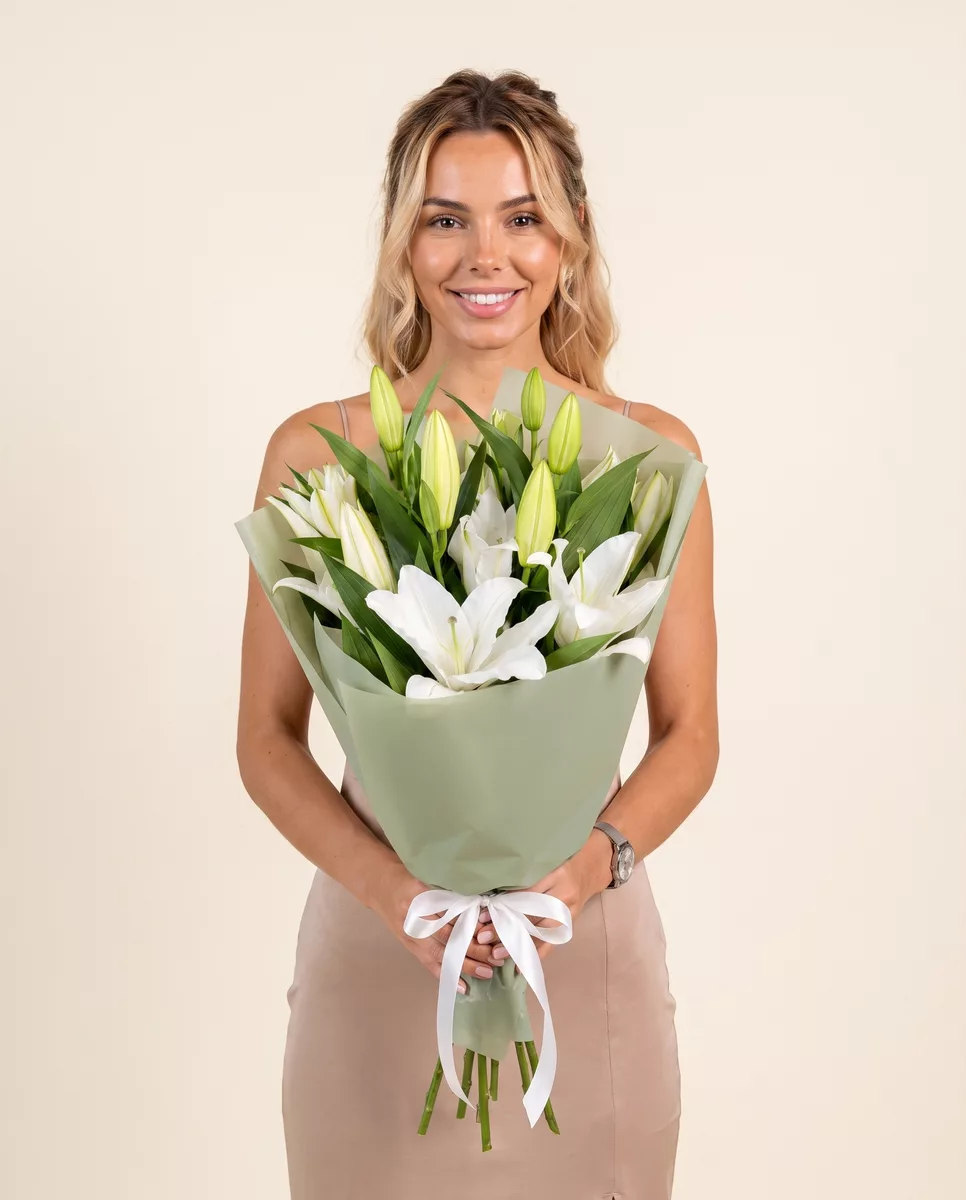
The standard delivery window for Melenki is same-day if the order is placed before 10:00 Moscow time, and next-day for orders placed after that cutoff. In practice, most customers ordering for a specific occasion — a birthday, an anniversary, a professional milestone — book the day before, which gives us the most flexibility on stem selection and packaging. Flowers dispatched to Melenki travel in insulated boxes with gel ice packs positioned to maintain a temperature between 4 and 8 degrees Celsius throughout transit. Roses, which are the single most ordered flower for Melenki deliveries, hold well in this range for up to 18 hours without visible deterioration. Tulips are more sensitive to temperature fluctuation and tend to open faster if the box is exposed to warmth for even a short period, so we cut tulips tighter than we would for a local Saint Petersburg delivery. Chrysanthemums and carnations are the most forgiving options for longer transit and are genuinely underrated for this reason — a spray chrysanthemum bouquet that arrives in Melenki will look nearly identical to one delivered across town in Saint Petersburg, because the variety simply handles transit stress well. Customers who want lilies should know that the buds will be tightly closed on arrival, which is intentional: open lily blooms bruise in transit, and closed buds give the recipient three to five days of bloom as the flowers open at room temperature. We tell recipients this when we call to confirm delivery, so there is no confusion when the box is opened.
Bouquet Options That Travel Well to Melenki
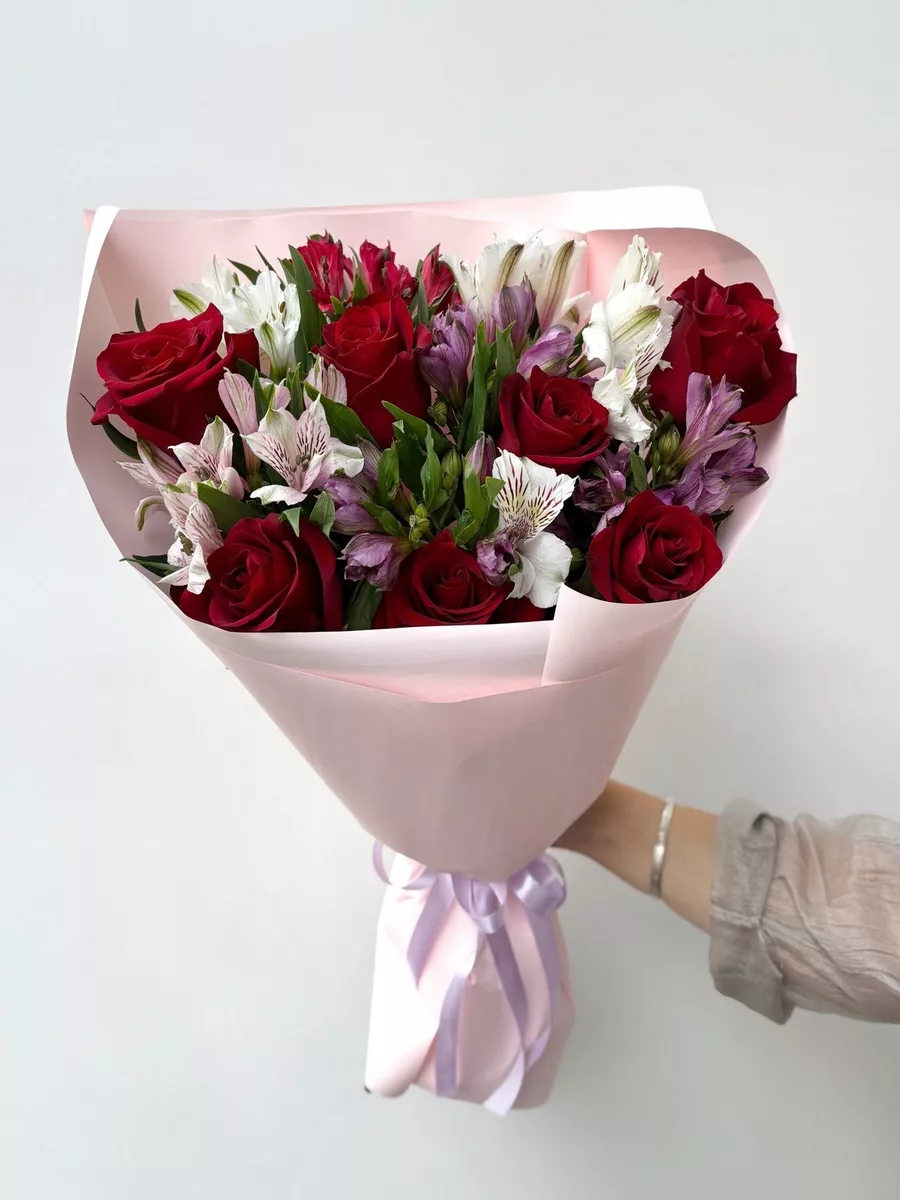
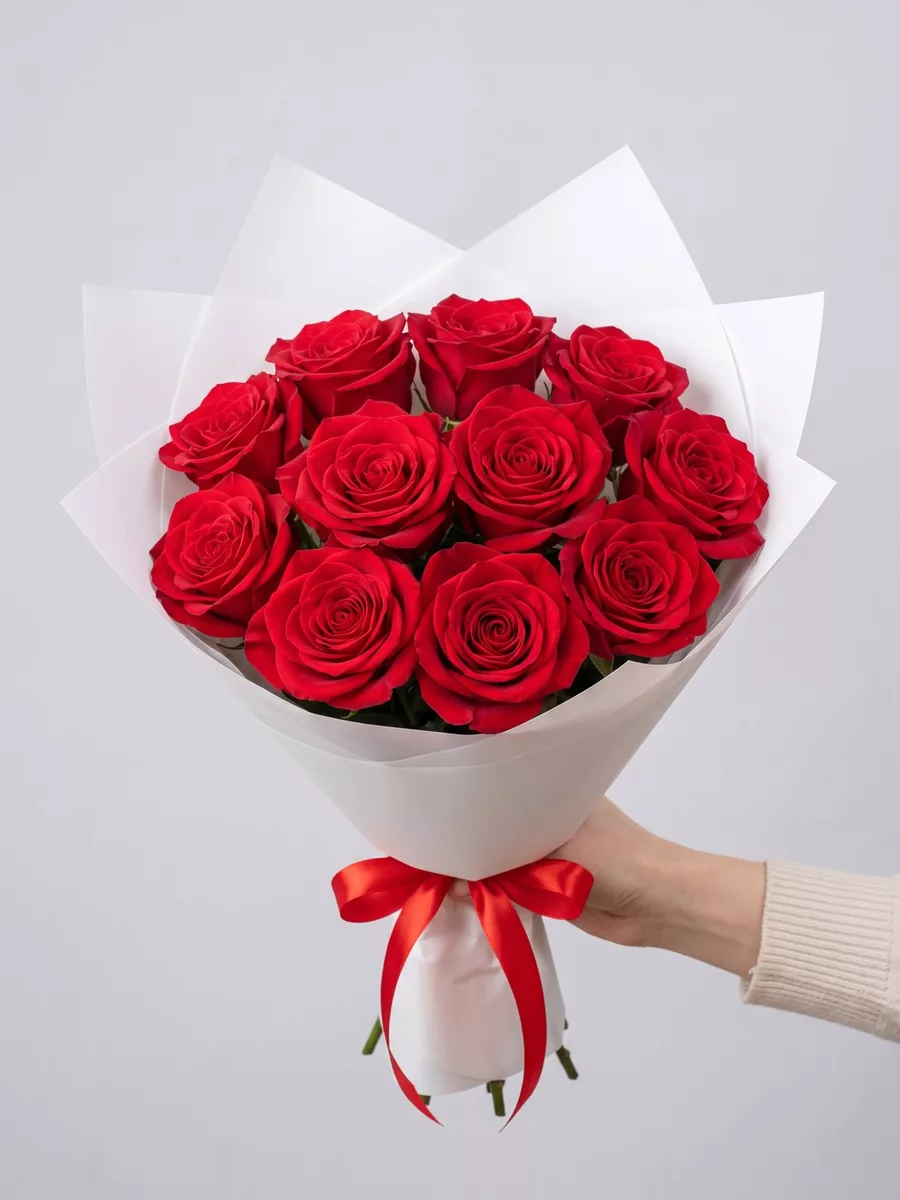
Not every arrangement in our catalogue is suitable for a 300-kilometre journey, and we are honest about this rather than letting customers order something that will disappoint. Tall, branching arrangements built around decorative branches or large tropical leaves — bird of paradise, anthurium, strelitzia — are structurally fragile in transit and we do not recommend them for Melenki unless the order is for a fixed address where someone will be present to receive the box immediately. What works very well is the classic mono-bouquet: 25 or 51 roses of a single variety, packed in a kraft sleeve and supported in the box with a water-absorbing floral foam pad at the stem ends. Dutch garden roses — varieties like Juliet, Keira and Constance — travel better than standard hybrid tea roses because their petal count gives them structural rigidity. Peonies, when in season from late May through June, are another strong choice: they arrive as dense buds and open over 48 hours into full blooms. Mixed seasonal bouquets work well when the component flowers are chosen for transit compatibility — we typically combine eustoma, alstroemeria and solidago for a mixed arrangement destined for Melenki, because all three varieties are robust and hold colour well. Customers who want something more elaborate can order a hatbox arrangement, where the flowers are fixed in foam and the rigid box provides structural protection during transit. We do not send glass vases to Melenki as part of an order — ceramic or no vessel is the practical choice.
Seasonal Considerations: Temperature, Availability and What Changes by Month
Melenki has a continental climate with cold winters and warm summers, and this affects flower delivery in two distinct ways: what is available and how we pack for the journey. In January and February, ambient temperatures along the transit route can drop to minus 15 or minus 20 degrees Celsius. Flowers do not freeze at these temperatures if they are properly insulated, but the risk window is the moment of handoff — when the courier is at the door and the recipient is not immediately present. We ask customers ordering in deep winter to ensure the recipient is home or to arrange a specific handoff time, because a bouquet left on a doorstep in a Russian February will freeze within 20 minutes. In summer, the problem reverses: ambient temperatures in a vehicle can exceed 30 degrees Celsius if the transit takes longer than expected, and we increase the volume of gel packs accordingly. July and August orders to Melenki carry a small surcharge for additional cooling materials, which we explain transparently at checkout. Availability shifts seasonally in ways that matter to customers: Dutch tulips are plentiful from February through April, then disappear from stock; peonies have a six-week window; sunflowers peak in August and September. Customers ordering in November or December should expect a palette dominated by roses, chrysanthemums, carnations, eustoma and imported alstroemeria — all excellent flowers, but the range is narrower than in spring.
What to Check Before You Confirm an Order to Melenki
There is a short checklist that prevents the majority of delivery problems, and it is worth going through it before clicking confirm rather than after. First, verify the recipient's phone number is current and that they are expecting a call from an unfamiliar number — Russian recipients sometimes decline calls from unknown numbers, which delays the handoff confirmation. Second, confirm the delivery date against the order cutoff time; if you are ordering at 14:00 Moscow time for a same-day delivery, that is past our cutoff for Melenki and the order will move to the following day. Third, specify whether the recipient should be surprised or informed — we can call ahead to confirm they will be home without revealing who sent the flowers, but we need to know which approach you prefer. Fourth, check that the address includes the apartment or office number if the recipient lives in a multi-storey building; the street and house number alone are not sufficient for buildings with multiple entrances. Fifth, if you are ordering for a specific event time — a birthday dinner at 19:00, for example — state that time explicitly so we can schedule dispatch to arrive before it rather than after. Customers who skip these steps are not being careless; they often simply do not know the Russian delivery context. A birthday bouquet that arrives at 21:00 because no one was home at 17:00 is a common and entirely avoidable outcome. We would rather spend two minutes on the phone clarifying details than have the order rescheduled.
How We Pack Flowers for the Journey to Melenki
Packaging is where the actual work of long-distance flower delivery happens, and it is worth describing concretely because customers sometimes assume a courier simply picks up a finished bouquet and drives. Stems are cut at an angle under water immediately before packing, which prevents air bubbles from blocking water uptake during transit. Each stem end is placed in a small water-retaining sachet — a gel-filled tube sealed around the cut end — that keeps the flower hydrated for up to 24 hours without a vase. The bouquet is then wrapped in a moisture-retaining inner sleeve, placed in a rigid cardboard outer box and surrounded by shredded kraft paper for cushioning. Gel ice packs are positioned along the sides of the box, not directly against the blooms, because direct contact with ice can cause petal burn on sensitive varieties like garden roses and ranunculus. The box is sealed and labelled with a fragile sticker and an upright arrow — both of which matter more than they might appear to, because transit handlers respond to visible labelling. We do not use polystyrene foam boxes for flower delivery because they are not breathable and create condensation that damages petals; corrugated cardboard with an inner foil lining is our standard. Customers occasionally ask whether they can request a specific box design or colour — the answer is no, because the packaging is functional rather than decorative, and the bouquet itself carries the visual impact. What the recipient opens is a properly conditioned flower that looks the same as it did when it left our cooler.
Delivering flowers to Melenki is straightforward when the order is placed with enough lead time and the address details are complete. The town is fully within our delivery coverage, the journey is manageable with proper conditioning, and the range of flowers available — roses, chrysanthemums, eustoma, seasonal peonies and tulips — is wide enough to suit almost any occasion. The customers who have the best experience are those who order the day before, confirm the recipient's availability and pick varieties suited to transit rather than insisting on the most delicate option in the catalogue. We have been doing this long enough to know which flowers arrive well and which ones struggle, and we will always tell you honestly before you confirm the order. We deliver bouquets across Russia in 1–2 hours.
Frequently asked questions
How far in advance should I order flowers for delivery to Melenki?
Order at least one day before the delivery date. For same-day delivery, the cutoff is 10:00 Moscow time. Ordering the day before gives us time to select the best stems, condition them properly and schedule dispatch so the bouquet arrives within your preferred time window rather than at the end of the day.
Can flowers be delivered to a private house or dacha near Melenki?
Yes. Private houses within Melenki and in the immediate surrounding area are within our delivery zone. For settlements and dacha clusters further out — along the Unzha River or towards Unzha village — confirm the address with us at the time of ordering. We will tell you directly if a specific location requires additional arrangements or a longer lead time.
What happens if the recipient is not home when the flowers arrive?
We call the recipient before the courier arrives to confirm they are present. If there is no answer and no one is home, the courier will attempt a second delivery later the same day. We strongly recommend informing the recipient that a delivery is coming, even if you want to keep the sender a surprise — being home matters more than the element of surprise.
Which flowers are not suitable for delivery to Melenki?
Large tropical arrangements with bird of paradise, anthurium or decorative branches are not recommended because they are structurally fragile over long distances. Fully open lily blooms also travel poorly. We send lilies as tight buds intentionally. For Melenki, the most reliable choices are roses, spray chrysanthemums, carnations, eustoma and alstroemeria.
Is winter flower delivery to Melenki safe given the cold temperatures?
Yes, if the recipient is available to receive the bouquet promptly. Flowers are packed in insulated boxes and do not freeze in transit. The risk is at the point of handoff — a bouquet left outside in minus 15 degrees will freeze quickly. We ask all winter customers to ensure the recipient is home and ready to bring the box inside immediately on arrival.
Ready to send a bouquet?
Pick a city, choose the flowers, and we will hand them over with a photo confirmation.
Choose a city →