
Flower Delivery in Shakhunya: Zones, Timing and What to Expect
Customers ordering flowers to Shakhunya for the first time usually ask the same two questions: how long will it take and will the flowers still look fresh when they arrive. Both are fair questions, and the answers depend less on distance than on how the order is assembled, packed and handed over. This article covers the practical side of delivery to Shakhunya — which parts of the city we reach, how timing works across the week, which bouquets travel well on longer routes, and the small details that most people only learn after their first order goes wrong.
Where in Shakhunya We Deliver and What That Means for Your Order
Shakhunya is a compact city in the Nizhny Novgorod region, and its residential layout is relatively straightforward compared to sprawling regional centres. We deliver across the central streets, the railway district, and the residential blocks that extend toward the city's northern and southern edges. The address you provide matters more than the neighbourhood name, because some addresses on the outskirts require additional coordination with the recipient to confirm access to the building entrance or courtyard gate. When you place an order, write the full street name, building number, apartment number and any entry code in the comment field — this single step removes the most common cause of delayed handover. If the recipient lives in a private house rather than an apartment block, note that too, since the approach and timing can differ. We do not deliver to industrial zones or to addresses that are not reachable by a standard vehicle. For office deliveries within Shakhunya's central business area, it helps to specify the floor and the name of the person at the reception desk, especially if the bouquet is a surprise. Courier contact with the recipient is standard practice for longer-route deliveries, so make sure the phone number you provide is one the recipient actually answers — a missed call is the most frequent reason a delivery window gets pushed by an hour or more.
Bouquets we can deliver



Delivery Timing: Windows, Cut-Off Times and Same-Day Orders
Delivery from Saint Petersburg to Shakhunya operates on a scheduled route basis rather than an on-demand courier dispatch, which means timing works differently from a local city delivery. Orders placed before 10:00 Moscow time on a given day are typically processed for same-day or next-morning delivery, depending on the route schedule active that week. Orders placed after midday are more reliably fulfilled the following day, and we always confirm the exact window with you by message or call before dispatch. The delivery window we quote is usually a two-hour slot rather than a precise minute, because road conditions between Nizhny Novgorod and Shakhunya can vary, particularly in winter when the R159 and connecting roads carry slower traffic. If you need delivery before a specific event — a birthday dinner, an anniversary lunch — tell us the hard deadline when ordering, not afterward. We can often accommodate tight windows when we know about them in advance, but we cannot reorganise a route once a courier has departed. Weekend and public holiday deliveries are available but require orders placed at least a day ahead, since route frequency changes during those periods. Russian public holidays cluster in early January, early May and early November, and those are exactly the times when people order flowers and forget that logistics slow down — plan an extra day of lead time around those dates.
Which Flowers Travel Well on the Route to Shakhunya
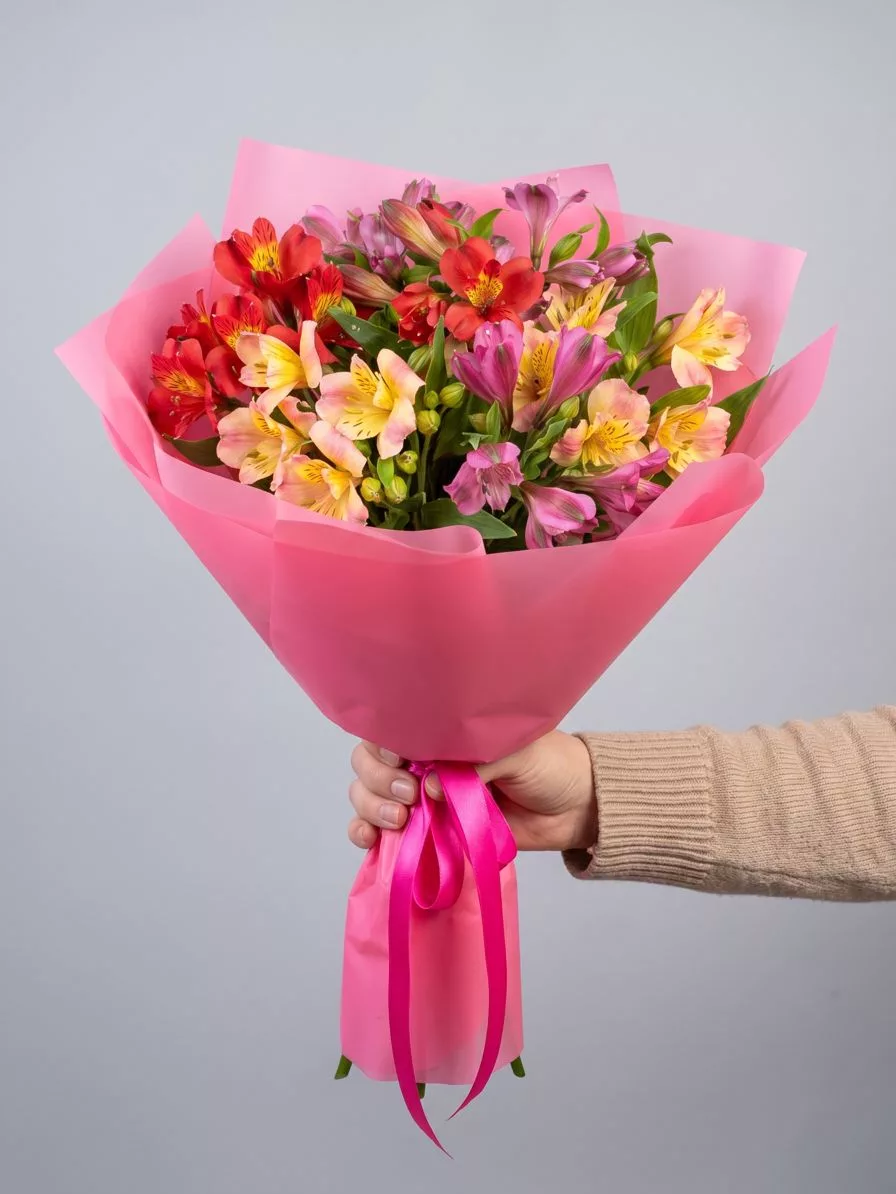
Not every variety that looks beautiful in the shop window survives a multi-hour journey in good condition, and this is where florists and customers often disagree. Roses are the most requested flower for delivery to Shakhunya, and they travel well provided the stems are cut correctly and the heads are protected from pressure. Dutch roses with tight bud closure — varieties like Explorer, Avalanche and Red Naomi — hold their form better over distance than fully open garden-style roses, which bruise easily when jostled. Chrysanthemums, both spray and single-stem, are genuinely robust travellers and are underused in long-distance orders; a well-assembled chrysanthemum bouquet can look crisp after eight hours in a cooled box. Alstroemeria is another reliable choice — the small flowers stay closed during transit and open gradually once placed in water at the destination. Tulips are seasonal and temperature-sensitive: in spring they are fine, but in summer heat they wilt faster than almost anything else, and in deep winter they can freeze if the packaging is not adequate. We do not recommend open-headed peonies or garden dahlias for Shakhunya delivery because their petals are too fragile for the journey. Orchid stems in a water vial travel acceptably if the box is kept upright. When in doubt, ask us to assemble the bouquet specifically for a long-distance delivery — the construction technique differs from a same-day city bouquet.
Seasonal Availability and What Changes Month by Month
The flowers available for delivery to Shakhunya change with the season, and understanding this saves a lot of disappointment. From January through March, the main supply comes from Dutch and Ecuadorian growers via the Saint Petersburg wholesale market — roses, carnations, gerberas, and imported tulips dominate this period. Russian domestic tulips begin appearing in late February and peak in March around International Women's Day on the eighth, which is the single busiest flower date in the Russian calendar; orders for that date should be placed at least five to seven days ahead without exception. April and May bring peonies from domestic greenhouses, ranunculus, and the first lisianthus of the year. Summer months add sunflowers, dahlias and locally grown eustoma, though heat management in packaging becomes more important from June onward. September and October are strong months for chrysanthemums, which are grown in large volumes domestically and are reliably fresh. November and December shift back to imported stock, with a strong demand for roses around New Year. Hyacinths appear in December from Dutch growers and travel well in cool conditions. If you have a specific flower in mind for a Shakhunya delivery, message us a few days before the order date — we can tell you whether that variety is in stock and in good condition, rather than substituting something different without warning.
Packaging for Long-Distance Delivery: What We Do and Why It Matters
Packaging for a delivery to Shakhunya is not the same as wrapping a bouquet for a customer who walks out of the shop and into a car. The flowers need to stay hydrated, protected from mechanical pressure, and kept within a temperature range that does not cause either wilting or frost damage. We use aqua-packs — small water-filled bags sealed around the stem ends — for most long-distance bouquets, which keeps the stems drinking during transit. The outer packaging is a rigid box with internal bracing to stop the heads from pressing against each other or against the box walls. In summer, when ambient temperatures in the cargo area can climb, we add cooling elements inside the box. In winter, the risk reverses: temperatures below minus five degrees Celsius damage cell walls in delicate petals, so insulating wrap goes around the flowers before the box is sealed. Customers sometimes ask to see a photo of the assembled bouquet before dispatch, which we can provide — this is a reasonable request and we encourage it for orders above a certain value. One thing we ask in return: do not request that packaging be removed before the recipient receives it, even if it looks less decorative than a ribbon-wrapped bunch. The packaging is functional, and a wilted bouquet with a pretty ribbon is worse than a fresh one in a plain box. Once the recipient cuts the box open and places the stems in water, the bouquet opens properly within a few hours.
Common Mistakes When Ordering Flowers to Shakhunya
The mistakes we see most often are not about flower choice — they are about information and timing. The first and most common is providing an incomplete address: no apartment number, no entry code, no floor. A courier standing outside a nine-storey building with no way to reach the recipient wastes everyone's time and risks the flowers. The second mistake is ordering for a specific time without flagging it as a hard deadline. If you write the delivery time in the comment field but do not mention it when speaking with us, it may be treated as a preference rather than a requirement. The third mistake is ordering the day before a major Russian holiday and expecting same-day fulfilment. March 8th, February 14th and New Year's Eve are the three dates when this happens most frequently, and every year we have the same conversation with customers who are surprised that routes are already full. The fourth mistake is requesting a flower variety that is out of season without accepting a substitute — this leads to delays while we source the specific flower, sometimes by several days. The fifth mistake, and the one that surprises people most, is giving the recipient's number to a person who screens calls from unknown numbers. Courier calls from a mobile number the recipient does not recognise often go unanswered, which stalls the handover. Tell your recipient a delivery is coming, even if you want the contents to be a surprise — knowing a call will come is enough.
What Happens After Delivery: Care Instructions for Shakhunya Recipients
A bouquet that has travelled from Saint Petersburg to Shakhunya needs a few minutes of attention when it arrives, and the difference between flowers that last three days and flowers that last ten days is almost entirely in what happens in the first thirty minutes. The recipient should cut the stems at an angle — about two centimetres from the bottom — using scissors or a knife, not by snapping them. This opens the vascular tissue and lets the stem drink properly. The water in the vase should be clean and at room temperature, not cold; cold water slows hydration in flowers that have been in transit. Remove any leaves that would sit below the waterline, because submerged leaves rot quickly and contaminate the water with bacteria that block the stems. Change the water every two days and re-cut the stems each time. Keep the bouquet away from direct sunlight, radiators and fruit bowls — fruit emits ethylene gas as it ripens, which accelerates petal drop in roses and carnations. In Shakhunya's winters, apartments are often kept very warm by central heating, which shortens vase life; placing the bouquet in a cooler room overnight extends it noticeably. We include a small care card with every long-distance delivery, but experience shows that most people read it only after something goes wrong. The varieties we select for long-distance orders are chosen partly for their vase life — a fresh Avalanche rose kept correctly will last ten to twelve days without effort.
Ordering flowers to Shakhunya is straightforward once you understand that the route requires a little more planning than a same-city delivery. The flowers we send are cut and packed to travel, not just to look good on a shelf, and the varieties we recommend for this route are chosen because they arrive in good condition and last well in the vase. The two things that make the biggest difference to a successful delivery are a complete address and an order placed with enough lead time — everything else we handle on our end. We deliver bouquets across Russia in 1–2 hours.
Frequently asked questions
Can I order flowers to Shakhunya for delivery on the same day I place the order?
Same-day delivery to Shakhunya is possible for orders placed before 10:00 Moscow time, subject to route availability that day. Orders placed after midday are more reliably scheduled for the following morning. During major Russian holidays such as March 8th and New Year's Eve, same-day fulfilment is rarely possible regardless of order time, so plan at least five days ahead for those dates.
Which flowers are not suitable for delivery to Shakhunya?
Open-headed peonies, garden dahlias and fully open large-headed roses do not travel well over longer distances because their petals bruise easily in transit. Tulips are risky in summer heat and deep winter cold unless packaging is specifically adapted. We recommend tight-bud roses, chrysanthemums and alstroemeria for Shakhunya deliveries, and we will tell you plainly if a specific variety you want is not suitable for the route.
Do I need to tell the recipient that a delivery is coming?
You do not need to reveal what is being delivered, but it helps to let the recipient know they should expect a call from an unfamiliar number. Couriers on longer routes call ahead to confirm the handover point, and missed calls are the most common reason a delivery window is delayed. A simple message saying a parcel is on its way is enough without spoiling any surprise.
What should the recipient do with the flowers immediately after receiving them?
Cut the stems at an angle, place them in a clean vase with room-temperature water, and remove any leaves below the waterline. Change the water every two days and re-cut the stems each time. Keep the bouquet away from direct sun, radiators and fruit. In heated winter apartments, moving the bouquet to a cooler room overnight extends vase life by several days.
Can I request a specific delivery time rather than a two-hour window?
You can flag a hard deadline when placing the order, and we will do our best to accommodate it, especially if we know about it before the route is planned. A precise single-minute delivery time is not something we can guarantee on a long-distance route, but a specific hour target — for example, before 14:00 — is workable when communicated clearly at the time of ordering, not afterward.
Ready to send a bouquet?
Pick a city, choose the flowers, and we will hand them over with a photo confirmation.
Choose a city →