
Flower Delivery in Surazh: Zones, Timing and What to Expect
Customers ordering flowers to Surazh for the first time usually ask the same thing: will they actually arrive fresh, and will they look like the photo? Those are fair questions for a small city, and the answers depend less on luck than on knowing how distance, temperature and variety choice interact. This article covers everything a first-time or repeat customer needs to place a confident order.
Where We Deliver in Surazh and the Surrounding District
Surazh is a compact city in the Bryansk Oblast, and delivery coverage here includes the central streets, residential mikrorayons on the outskirts, and addresses within the broader Surazh district up to roughly fifteen to twenty kilometres from the city centre. When you enter your address at checkout, the system calculates the delivery zone automatically, so you will see immediately whether your street falls within the standard window or requires an extended slot. Streets in the historic centre and the main residential blocks near the market square are typically covered under the same timing tier. Addresses further out — villages and rural settlements in the district — may shift the window by thirty to sixty minutes, and it is worth confirming this at the time of ordering rather than assuming the city-centre schedule applies. One practical point that catches people off guard: apartment buildings with locked entrance doors or intercoms that do not connect reliably can delay handover by several minutes, which matters when a recipient is waiting at a specific time. Always leave a working mobile number for the recipient, not just a landline. If the recipient lives in a private house rather than an apartment block, note the gate or entrance details in the comments field. Couriers are familiar with the city layout, but a short note saves time on both sides and keeps the flowers in the bag rather than sitting in a warm car while someone searches for the right building.
Bouquets we can deliver



Delivery Timing: What One to Two Hours Actually Means
The one-to-two-hour delivery window is calculated from the moment your order is confirmed and the bouquet is assembled, not from the moment you click the button. Assembly itself takes ten to twenty minutes depending on the complexity of the arrangement, so factor that into your planning when a specific arrival time matters. For a birthday where the recipient has a dinner reservation at seven in the evening, placing the order by five gives a comfortable margin. Orders placed in the morning for same-day delivery within Surazh are generally straightforward; orders placed after eight in the evening may push to the following morning depending on current courier availability, and the checkout will show you the earliest available slot in real time. Weather is a genuine variable in the Bryansk region. Winter temperatures in Surazh regularly drop below minus ten Celsius, and while bouquets travel wrapped and insulated, the time a courier spends outdoors between vehicle and door still matters. Summer heat above thirty degrees works in the opposite direction, accelerating wilting in transit. Both extremes make timing precision more valuable: the shorter the time between assembly and handover, the better the flowers look on arrival. Customers sometimes ask whether they can specify a delivery time down to the exact minute. The honest answer is that a thirty-minute window is realistic; a five-minute window is not, because road conditions, parking and building access all introduce small delays. Book the slot that starts thirty minutes before you actually need the flowers in hand and you will almost always be satisfied.
Which Flowers Travel Well to Surazh
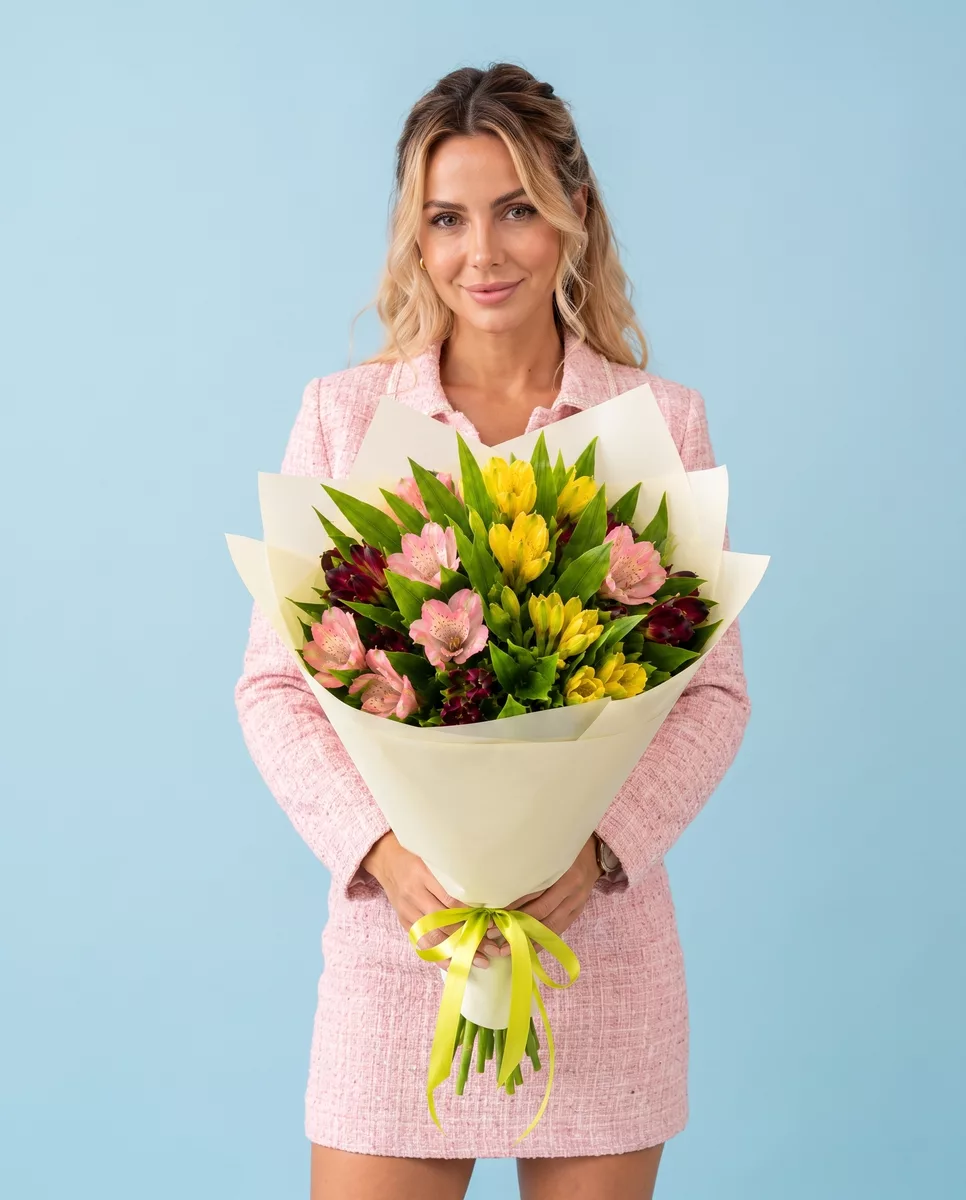
Not every variety handles a courier journey equally, and choosing well is the single biggest factor in how the bouquet looks when it is unwrapped. Roses are the most ordered flower to Surazh and travel reliably when the stems are properly hydrated before packing. Garden roses with many petals — varieties like David Austin types — are more sensitive to heat than standard long-stemmed roses, so in July and August it is worth noting that preference in the order comments. Chrysanthemums, both the single-stem and spray types, are exceptionally robust and hold their shape through temperature changes better than most other cut flowers. Alstroemeria is another strong traveller: the buds open gradually over several days after delivery, which means the recipient gets a bouquet that keeps improving rather than one that peaks on arrival day. Eustoma, sometimes called lisianthus, is popular in mixed arrangements and travels well in cooler months but can bruise in summer heat if the journey is long. Tulips are highly seasonal — they are at their best from February through April when Russian growers have peak supply — and outside that window the stems tend to be softer and more prone to bending in transit. Peonies follow a similar logic: late May through June is peak season and the flowers are firm and fragrant; ordering peonies in October means imported stock that has travelled further before it even reaches the shop. Hydrangeas are beautiful but thirsty — they need water within hours of delivery, so include care instructions when sending them to someone who may not know this.
Seasonal Availability and What Changes Month to Month
Russian flower retail runs on two parallel supply lines: domestic greenhouse production and imports, primarily from the Netherlands, Ecuador and Kenya. What this means practically is that availability and price shift significantly by season, and an arrangement that looks a certain way in March may look quite different if you reorder it in August without specifying the same varieties. February is the highest-demand month in Russia due to Defender of the Fatherland Day on the twenty-third and International Women's Day on the eighth of March. Orders placed in the final days of February and the first week of March face the longest lead times of the year, and specific varieties — red roses in particular — can sell through quickly. Placing your order two to three days ahead during this period is not overcaution; it is simply how the calendar works. Spring brings domestic tulips, daffodils and hyacinths from Russian growers, which are fresher and less expensive than imported equivalents. Summer is strong for sunflowers, zinnias and dahlias from local producers. Autumn shifts the palette toward chrysanthemums, which are grown domestically in large volumes and are priced accessibly. Winter relies heavily on imports, and the variety selection narrows compared to spring and summer, though roses and spray carnations remain consistently available year-round from import supply chains. When ordering for a specific occasion in Surazh, it helps to describe the colour palette and the occasion rather than insisting on a single variety — this gives the florist room to substitute intelligently if your first choice is temporarily out of stock.
Packaging for Distance: What Keeps the Bouquet Intact
A bouquet assembled in Saint Petersburg and delivered to Surazh travels several hundred kilometres before it reaches the recipient. That distance requires packaging that does more than look attractive at the point of sale. Stems are placed in water-retaining material — typically a damp wrap at the cut end — which keeps them hydrated through the journey. The outer packaging is structured to prevent the flower heads from pressing against each other during transit, because bruising on petals is almost always caused by contact rather than by temperature alone. Kraft paper and rigid box packaging serve different purposes: kraft wrapping is lighter and allows the bouquet to breathe, while box packaging provides more physical protection for delicate varieties like garden roses or open peonies. If you are ordering a large arrangement or something with particularly open blooms, selecting box packaging in the order options is worth considering. Ribbon and decorative elements are added after the structural wrap, not before, which is why the bouquet looks finished but not compressed when it arrives. One thing customers sometimes misread: condensation on the inside of packaging after a cold-to-warm transition is normal and does not indicate a problem with the flowers. It simply means the bouquet moved from a cold courier bag into a warm room, and the moisture is from the air, not from damaged petals. Unwrap the bouquet promptly on arrival, trim the stems at an angle under running water, and place them in a clean vase with fresh water. These three steps do more for longevity than any additive or preservative.
Common Ordering Mistakes and How to Avoid Them
The most frequent mistake is ordering too close to the required time. Customers who place an order forty minutes before a birthday dinner begins are essentially hoping that assembly, packing and transit all go perfectly simultaneously. They sometimes do, but the margin for any small delay disappears entirely. The second most common issue is an incomplete delivery address. Surazh has streets where building numbers are not sequential, and an address like 'Lenina Street, 12' without a building letter or apartment number can mean several different locations. Fill in every address field, and use the comments box for anything that helps the courier find the exact entrance. A third mistake is choosing a variety without checking seasonal availability. If someone asks for white peonies in November, the honest answer is that they are available but expensive and have travelled a long distance, so they may not be at peak freshness. Asking the shop to suggest the best white option for that week will usually produce a better result. Ordering without specifying the recipient's preferences is another gap: a bouquet of strong-scented lilies sent to someone who works in a small office can be more disruptive than delightful. If you know the recipient dislikes strong fragrance, note it. Finally, customers sometimes forget that Russian flower gifting has a practical convention around odd numbers: bouquets traditionally contain an odd number of stems for celebratory occasions. Even numbers are associated with mourning in Russian custom. If you are sending flowers to a Russian recipient and this detail matters to you, confirm the stem count when ordering.
After Delivery: Care Instructions That Actually Matter
What happens in the first hour after delivery determines how long the bouquet lasts, and this is where most post-delivery complaints originate. The bouquet arrives wrapped, and the instinct is to display it as-is rather than immediately tending to it. That instinct costs two to three days of vase life. The correct sequence is: unwrap completely, cut one to two centimetres from the bottom of each stem at a forty-five-degree angle using a sharp knife or scissors, remove any leaves that would sit below the waterline in the vase, and place the stems in a clean vase filled with fresh cool water. Do this within thirty minutes of delivery and the flowers will last noticeably longer. Roses specifically benefit from being placed in water up to their necks for the first hour if they arrive looking slightly tired from transit — this is called deep watering and rehydrates the stems quickly. Change the vase water every two days and re-trim the stems each time. Keep the bouquet away from direct sunlight, radiators and fruit bowls — ripening fruit releases ethylene gas, which accelerates petal drop in roses and carnations. Air conditioning is fine in summer and actually extends vase life by keeping the room temperature lower. Most cut flowers last five to seven days with proper care; chrysanthemums and alstroemeria regularly reach ten days or more. If a stem wilts early, remove it rather than leaving it in the water, as decomposing stems release bacteria that shorten the life of the remaining flowers. Sending care instructions along with the bouquet is something we include with every order, but it helps to remind the recipient verbally if you know they are not experienced with cut flowers.
Ordering flowers to Surazh is straightforward once you understand the variables that actually matter: address completeness, timing buffer, variety choice by season, and what the recipient does with the bouquet in the first thirty minutes after delivery. The distance from our shop to your recipient's door is fixed, but every other factor is in your control. Place the order with enough lead time, pick varieties suited to the current season and the transit conditions, and pass along the care instructions — that combination produces satisfied recipients far more reliably than any single element on its own.
Frequently asked questions
Can I order flowers to a village outside Surazh city limits?
Yes, we deliver to addresses in the Surazh district beyond the city boundary, though the delivery window may be extended by thirty to sixty minutes compared to central Surazh addresses. Enter the full address at checkout and the system will show you the available time slots for that specific location before you confirm the order.
What happens to the bouquet if the recipient is not home at delivery time?
The courier will call the recipient's mobile number before arrival. If there is no answer, we will contact the person who placed the order to arrange a second delivery attempt or an alternative handover. Leaving flowers unattended outside a door is not standard practice, as temperature and security both present risks depending on the season and building type.
Is it true that flowers in Russia should come in odd numbers?
Yes, this is a genuine and widely observed custom in Russia. Odd numbers of stems are given at celebrations and happy occasions; even numbers are associated with mourning. If you are sending to a Russian recipient and the stem count matters to them, confirm the number when ordering. Our florists follow this convention by default for standard bouquets.
Which flowers last longest after delivery to Surazh in summer heat?
Chrysanthemums and alstroemeria are the strongest performers in warm conditions, regularly lasting eight to ten days with basic care. Spray carnations are also resilient. Roses last well if the recipient re-cuts the stems and changes the water promptly. Tulips and open peonies are more sensitive to heat and have a shorter vase life in summer.
Can I schedule a delivery for a specific date several days in advance?
Yes, advance scheduling is available and recommended for dates like birthdays, anniversaries and the peak periods around February 23rd and March 8th. Booking two to three days ahead during high-demand weeks ensures your preferred varieties are reserved and your chosen delivery slot is confirmed, rather than depending on same-day availability.
Ready to send a bouquet?
Pick a city, choose the flowers, and we will hand them over with a photo confirmation.
Choose a city →