
Flower Delivery in Tara: Zones, Timing and What to Expect
Tara sits in the Omsk region, roughly 300 kilometres north of Omsk city, which already tells you something important about ordering flowers here: distance, road conditions and temperature swings all shape what arrives at the door and when. Customers call us asking whether we can get roses to a street in the old town centre or to a residential block on the northern edge, and the honest answer depends on specifics — the address, the day of the week, the current weather. This article lays out exactly what we know about delivering fresh flowers to Tara so you can order with realistic expectations rather than guesswork.
How Far Tara Is and Why That Distance Matters
Tara is one of the most historically significant towns in Siberia, founded in 1594, but its geography creates real logistical weight for flower delivery. The town is connected to Omsk primarily via the R402 highway, a route that crosses flat West Siberian terrain subject to fog, ice and spring flooding at different points in the year. A courier leaving Omsk city in good conditions covers that distance in roughly four to five hours, which means same-day delivery to Tara requires an order placed early in the morning — typically before ten o'clock — to give the route enough buffer. This is not a figure we invented: it reflects actual road time, loading, and the need to keep flowers in a temperature-controlled environment during transit rather than rushing and arriving with heat-damaged stems. Customers sometimes assume that because Tara is a regional centre with its own infrastructure, delivery works like it does inside Omsk city. It does not. The courier does not stop at multiple addresses along the route the way an urban driver does; the journey is dedicated and planned. That planning is what keeps carnations crisp and spray roses intact by the time they reach a Tara doorstep. If you are ordering for a birthday dinner that starts at seven in the evening, placing the order the previous evening or first thing in the morning on the day is the correct approach, not ordering at lunchtime and hoping.
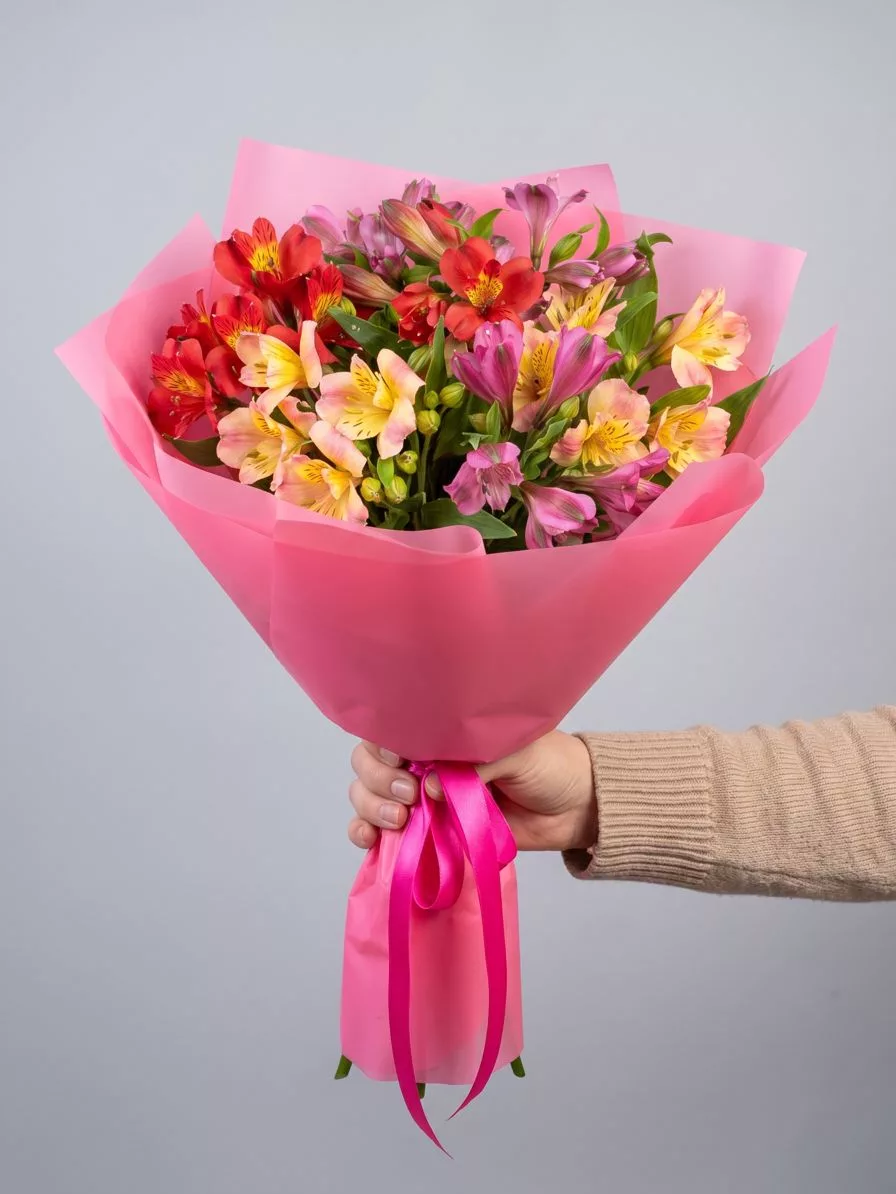
Bouquets we can deliver



Which Parts of Tara We Deliver To
Tara is a compact town of roughly 28,000 residents, but its street layout stretches across several distinct districts. The historical centre around Karl Marx Street and the Irtysh riverbank is straightforward to reach; addresses there are well-mapped and couriers navigate them without difficulty. The residential areas further from the centre — including newer blocks on the outskirts toward the Muromtsevo road — are also within our delivery zone, though they may add a small amount of time to the final leg of the journey because street numbering in those areas can be inconsistent on mapping applications. Industrial zones and addresses without a clear residential building number are the cases where we ask customers to call and confirm before we dispatch, because a courier arriving at a vague location with a bouquet of lisianthus and no way to find the recipient is a problem nobody wants. Dachas and seasonal addresses on the edge of town require the same confirmation step. The practical advice is simple: when you place an order, write the full address including the apartment or office number, the floor if it is a multi-storey building, and a contact phone number for the recipient. If the recipient does not speak Russian, note that in the order comments so the courier can be prepared. Tara residents often give landmarks in addition to street addresses — a church, a school, a recognisable building — and including those in the delivery notes genuinely helps.
Timing Windows and What Affects Them
The standard delivery window we quote for Tara is not the one-to-two hours that applies inside Saint Petersburg or central Omsk. For a remote regional town at this distance, the honest window is same-day delivery if ordered before ten in the morning, with arrival in the afternoon, or next-day delivery for orders placed later. We tell customers this plainly because a missed anniversary because of a misunderstood timeline is worse than a slightly longer wait that was communicated clearly. Weather is the most unpredictable variable. In January and February, temperatures in the Omsk region regularly drop to minus 25 or minus 30 degrees Celsius. At those temperatures, exposed flower stems freeze within minutes, so the courier uses insulated packaging and the handover at the door needs to happen quickly. In April, snowmelt can make sections of the R402 slow-moving or temporarily redirected. In July and August, heat above 30 degrees Celsius is a different threat — roses and tulips wilt fast in a hot car, so we use cooled transport and avoid leaving flowers in direct sun during loading. The timing of public holidays matters too. Around International Women's Day on the eighth of March, which is the single biggest flower-buying day in Russia, orders to remote destinations like Tara need to be placed two to three days in advance because courier capacity fills up. The same applies to Valentine's Day and New Year, though Women's Day is by far the peak. Customers who order on the seventh of March for the eighth of March delivery to Tara are taking a real risk.
Which Flowers Travel Best on This Route
Not every flower handles a five-hour road journey equally well, and choosing the right variety is one of the most practical decisions you make when ordering for Tara. Roses are the most requested flower and they travel well when properly conditioned — stems cut at an angle, hydrated, and kept between two and eight degrees Celsius during transit. Garden roses with dense petals, such as David Austin-style varieties, are slightly more fragile than standard hybrid tea roses because their petals bruise more easily in transit, but with good packaging they arrive intact. Chrysanthemums are among the most reliable long-distance flowers: their stems are sturdy, they hold water well, and they do not drop petals from vibration the way some delicate blooms do. A large chrysanthemum bouquet makes a strong visual impression and survives the Tara route consistently. Lisianthus, which resembles a ruffled rose but belongs to the gentian family, is another good choice — the buds travel in a semi-closed state and open over two to three days after delivery, which actually works in the recipient's favour. Tulips are popular in spring but require careful temperature management; they continue to grow after cutting and can become floppy if the car gets warm. Peonies, available from late May through July, are spectacular but need to be ordered when they are in tight bud so they open after arrival rather than arriving already blown. Sunflowers travel well due to their thick stems. Delicate flowers like sweet peas or anemones are better suited to local same-city delivery than a long-haul route.
Packaging for Cold Weather and Long Journeys
The packaging that gets flowers from our workroom in Saint Petersburg to a door in Tara is not the same as what you see in a local shop. For long-distance and cold-weather delivery, we use layered insulation: the bouquet is wrapped in kraft paper or a sleeve, then placed in a box with insulating lining, and for temperatures below minus ten degrees Celsius, additional thermal wrapping goes around the box. This is not decorative — it is functional. A bouquet of roses exposed to minus 25 degrees for even ten minutes will have ice crystals in the petals, which turn to dark bruised patches as the flowers warm up. The box also protects the bouquet from physical damage during loading and unloading; a courier carrying a loose bouquet across an icy car park in winter is a recipe for bent stems and broken heads. Customers sometimes ask whether the packaging looks presentable for a gift. The answer is yes: the outer box is clean and can include a ribbon or a branded band, and the inner bouquet is arranged so that when the recipient opens the box, the flowers are displayed properly rather than stuffed in. The card or note goes inside the box, protected from weather. For summer deliveries, the packaging shifts to focus on ventilation and moisture retention rather than insulation — a sealed box in thirty-degree heat becomes an oven, so we use designs that allow some airflow while keeping the stems damp. Customers do not need to specify this; our team adjusts packaging to the forecast temperature on the delivery day.
What to Check Before You Confirm Your Tara Order
There are five things worth verifying before you click confirm on a flower order to Tara, and they come from the questions we get after something goes wrong rather than before. First, check the recipient's address is complete: street, building number, apartment number, and a working phone. A courier who cannot reach the recipient and cannot find the building will return to base, and rescheduling adds a day. Second, confirm the recipient will actually be home or reachable during the delivery window. If they are at work, either arrange for a neighbour to accept the delivery or choose a time when they will be back. Third, check the date carefully — orders placed after the cutoff time on a given day will arrive the following day, and if that following day is a public holiday when road conditions or staffing are different, the timeline shifts again. Fourth, consider the season when choosing flowers: ordering peonies in November or tulips in August means working with what is actually available and fresh, not what you remember from a photo taken in May. We will always tell you what is in season and suggest alternatives if your first choice is not available in good condition. Fifth, if the bouquet is a surprise, do not tell the recipient the exact arrival time — tell them to expect a delivery sometime that afternoon so they stay reachable without the surprise being spoiled. These are small steps but they account for the majority of delivery complications we see on long-distance orders.
Ordering for Russian Occasions: Context for International Customers
If you are sending flowers to someone in Tara and you are not familiar with Russian customs around flowers, a few things are worth knowing plainly. In Russia, even numbers of flowers in a bouquet are traditionally associated with mourning, so bouquets are almost always made with an odd number of stems — three, five, seven, eleven, fifteen, twenty-five. This is not a superstition we enforce rigidly, but it is a convention so widely observed that receiving an even-numbered bouquet can feel slightly off to a Russian recipient, even if they cannot immediately explain why. We count stems when we build bouquets and follow the odd-number rule by default. Yellow flowers carry no negative meaning in Russian culture despite what some outdated sources claim — yellow roses and yellow tulips are popular and given freely. Red roses are strongly associated with romantic love, so a large red rose bouquet sent to a colleague or a distant relative can read as more intimate than intended; mixed arrangements or other colours work better in professional or family contexts. Women's Day on the eighth of March is genuinely the most important flower occasion in the Russian calendar, bigger than Valentine's Day, and almost every woman expects to receive flowers that day — from a partner, from children, from colleagues. If you are sending to a woman in Tara on that date, order early and choose something substantial: a single stem reads as an afterthought on that particular day. Spring flowers like mimosa and tulips are especially traditional for Women's Day.
Delivering flowers to Tara is entirely achievable when the order is placed with the right lead time, the address is complete, and the variety suits the season and the journey. The town's distance from Omsk means same-day delivery requires an early order, and winter temperatures require packaging that most local shops simply do not use. What we have found after years of long-distance deliveries is that customers who know these details in advance have consistently better experiences than those who discover them after something goes wrong. A bouquet of well-conditioned roses or sturdy chrysanthemums, packaged properly and dispatched on time, arrives in Tara looking the way it should — and that is the only outcome worth planning for. We deliver bouquets across Russia in 1–2 hours.
Frequently asked questions
Can I order flowers to Tara for same-day delivery?
Same-day delivery to Tara is possible if you place your order before ten in the morning. The road journey from Omsk takes four to five hours under normal conditions, so an early order allows the courier to arrive in the afternoon of the same day. Orders placed after the morning cutoff are scheduled for the following day to avoid rushing and damaging the flowers in transit.
What happens to flowers in very cold weather during delivery?
At temperatures below minus ten degrees Celsius, we use insulated box packaging with thermal lining to protect stems and petals from freezing. Ice crystal damage shows as dark bruising on petals after the flowers warm up, so proper insulation is essential, not optional. The courier also minimises time outdoors during handover. Customers in Tara during winter should be ready to receive the delivery promptly at the door.
Which flowers should I avoid ordering for a Tara delivery in summer?
Delicate varieties like sweet peas, anemones and fully open peonies are risky on a long summer route because heat above 25 degrees Celsius accelerates wilting and petal drop. Roses, chrysanthemums, lisianthus and sunflowers handle summer transport better. If you want peonies, order them in tight bud stage so they open after arrival. We will advise on what is in good condition on the day you order.
Do bouquets for Russia need to have an odd number of flowers?
Yes, by strong Russian convention, bouquets use an odd number of stems — three, five, seven, eleven and so on. Even numbers are associated with mourning occasions and can feel inappropriate as a gift. We follow this rule automatically when building bouquets, so you do not need to count or specify unless you have a particular number in mind for another reason.
What information do I need to provide when ordering flowers to Tara?
You need the recipient's full address including street, building number, apartment number and floor, plus a working mobile phone number. If the recipient will not be home during the delivery window, note an alternative arrangement in the order comments. For surprise deliveries, avoid giving the recipient an exact time — tell them to expect a delivery that afternoon so they remain reachable without knowing exactly when.
Ready to send a bouquet?
Pick a city, choose the flowers, and we will hand them over with a photo confirmation.
Choose a city →