
Sending Flowers to Volokolamsk from Abroad: What You Need to Know
Every week someone calls or messages from Germany, the UAE, Israel or the United States trying to send flowers to a relative in Volokolamsk for a birthday or anniversary. The questions are always the same: will the flowers actually arrive fresh, can I pay in euros or dollars, and what do I write on the card in Russian? This article answers all of that with the kind of detail that saves you a ruined surprise.
Where Volokolamsk Sits and Why It Matters for Delivery
Volokolamsk is a town in Moscow Oblast, roughly 110 kilometres northwest of central Moscow along the Volokolamsk Highway. That distance is important because it shapes everything about how a fresh flower order gets there. The town is not a major transit hub, so delivery is not instant the way it might be in central Moscow or Saint Petersburg. Realistic delivery windows from the moment an order is confirmed run between three and five hours on a standard working day, and that window can stretch to six hours during peak periods such as the eighth of March or Valentine's Day. Senders abroad often assume that because Russia is a large country, any city outside Moscow is remote and unreachable within a day. Volokolamsk is actually well within the Moscow Oblast delivery network, which means same-day delivery is genuinely possible if the order is placed before midday Moscow time. Moscow time is UTC plus three hours year-round, with no daylight saving change, so a sender in London placing an order at nine in the morning local time is already at noon Moscow time, which is the practical cutoff for same-day service. A sender in Los Angeles placing an order at midnight local time is placing it at eleven in the morning Moscow time, which still qualifies. Understanding this time arithmetic before you pick up the phone or open the order form is the single most useful thing a sender from abroad can do.
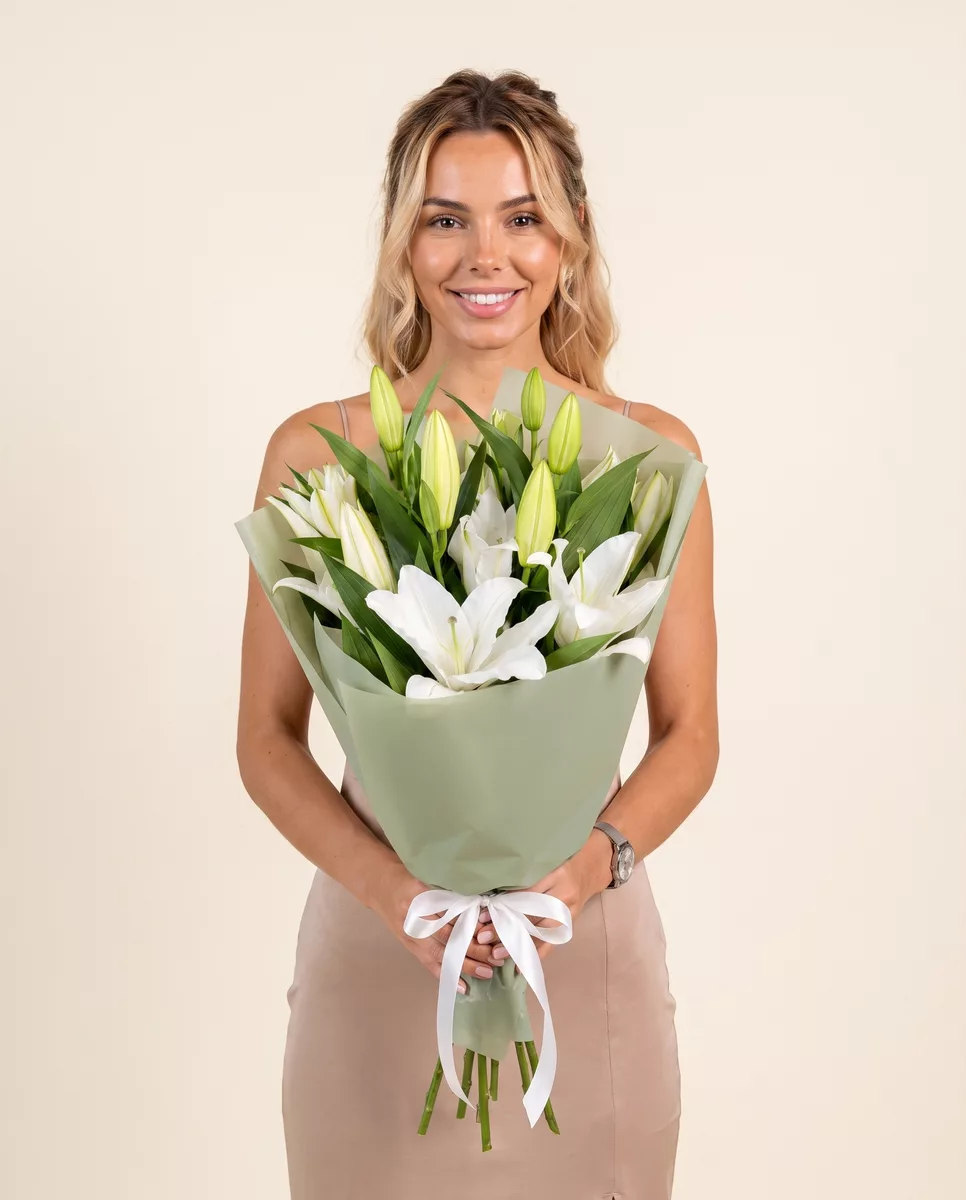
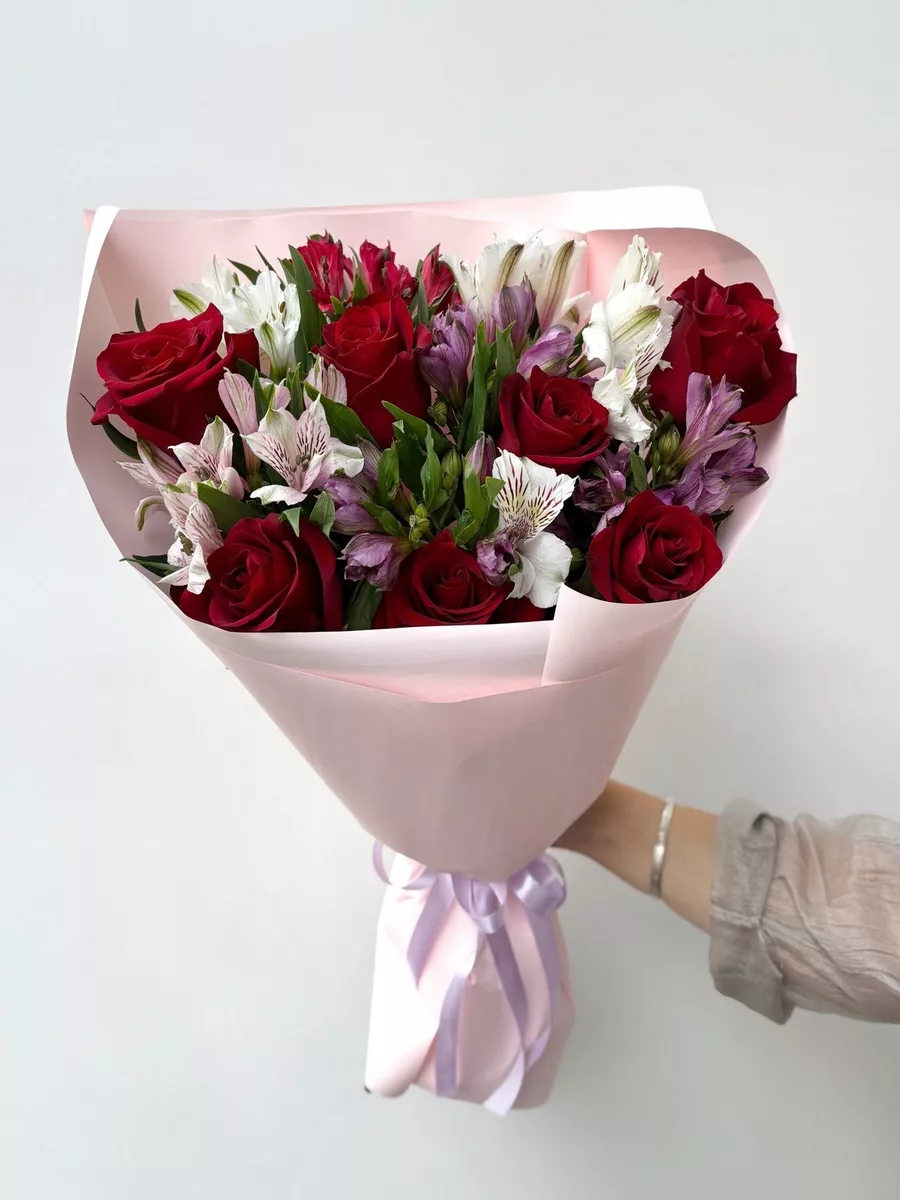
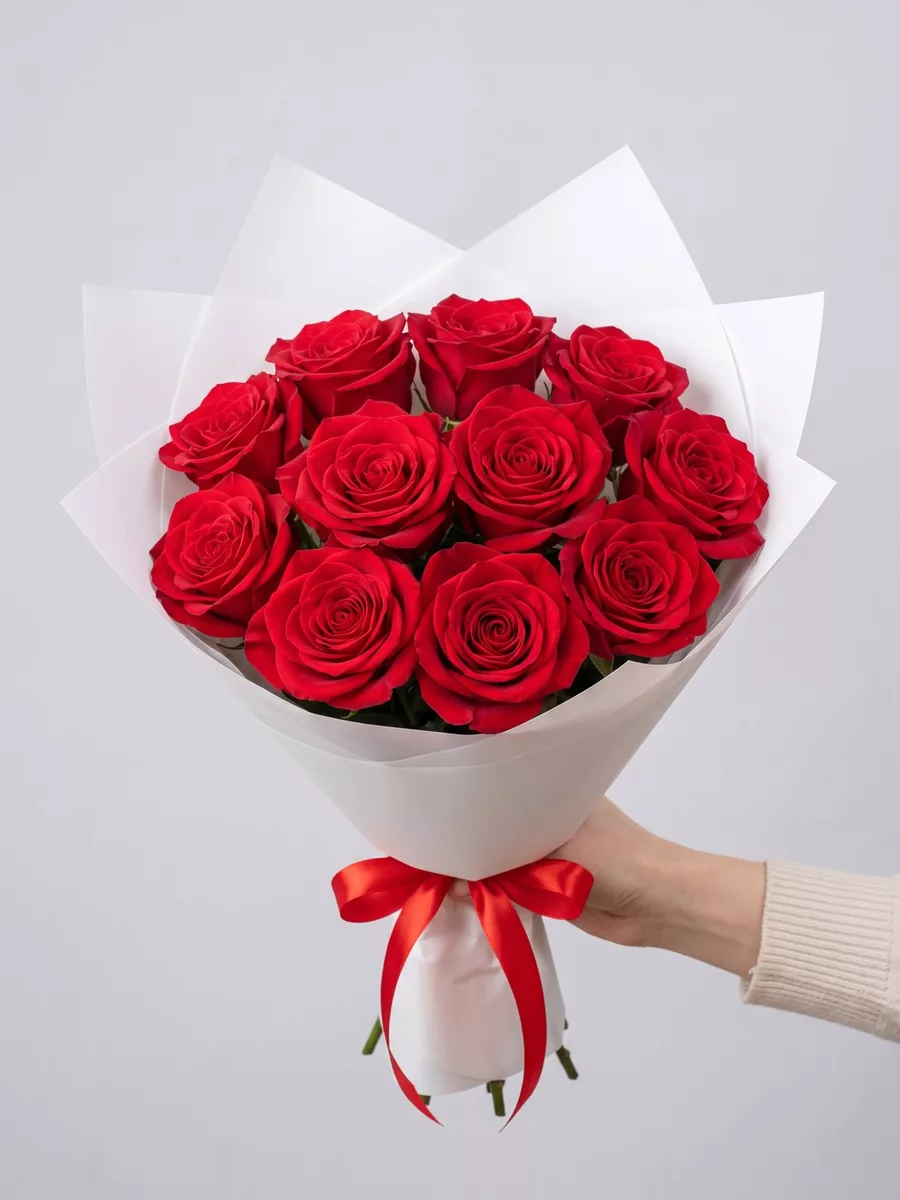
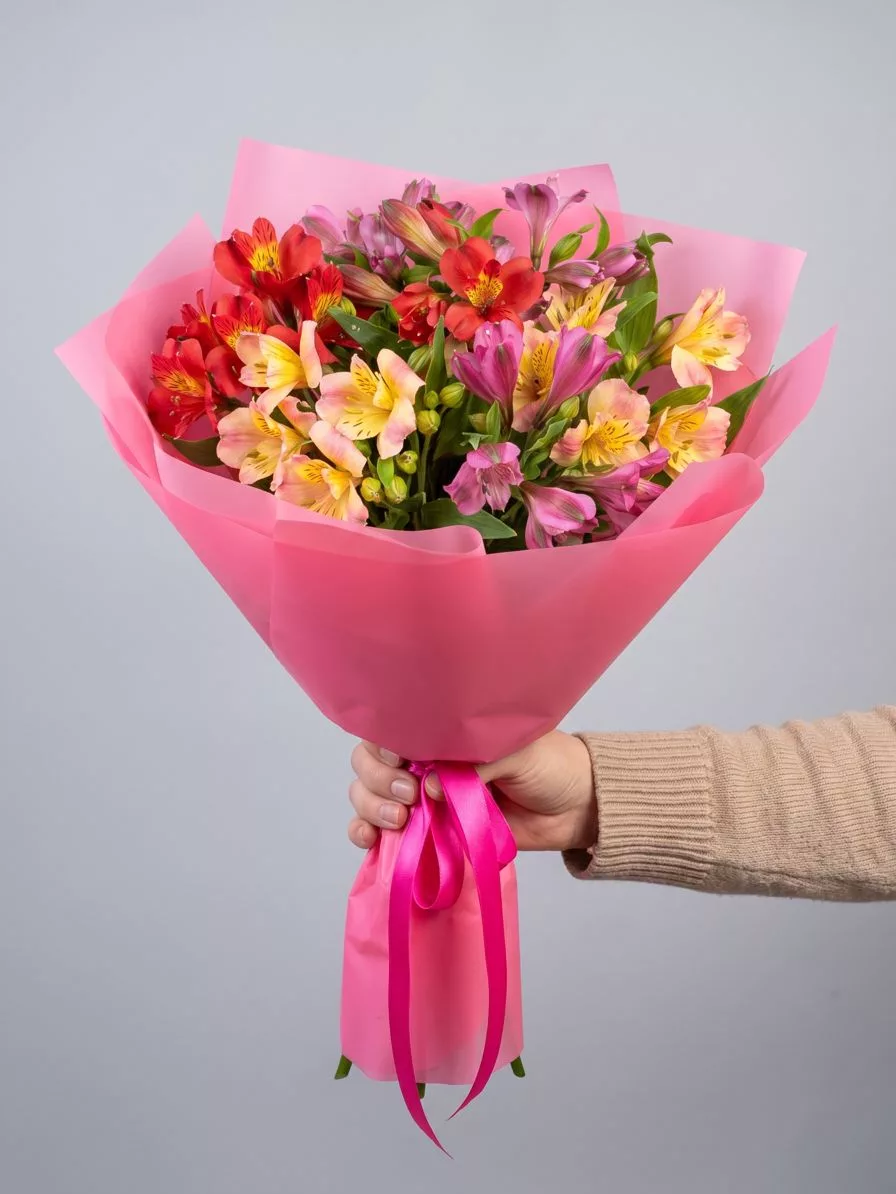
Bouquets we can deliver
Seasonal Varieties That Actually Survive the Journey
Volokolamsk sits in a continental climate zone, which means winters are genuinely cold and summers can be hot. Both extremes affect which flowers travel safely. From November through March, roses are the most reliable choice because they are cut and stored at two to four degrees Celsius and tolerate cold transit vehicles well. Dutch roses in forty, fifty and sixty centimetre stem lengths arrive in tight bud and open over two to three days indoors, which recipients appreciate because the bouquet keeps changing. Chrysanthemums, both spray and single-headed varieties, are excellent in winter because they are robust and last ten to fourteen days in a vase with proper water changes. From April through September the range expands considerably. Alstroemeria holds up well in warmer temperatures and gives a full, layered look without the weight of large tropical flowers. Eustoma, sometimes called lisianthus, is popular at Russian celebrations and comes in white, purple, pale pink and deep burgundy. Peonies are available from late May through July and are enormously popular for birthdays and anniversaries in Russia. Hydrangea works well in summer but needs to be delivered with wet stems and should be ordered for morning delivery slots, not afternoon, when temperatures in the van can peak. Tulips are the default spring choice from February through April. Avoid ordering sunflowers for winter delivery to Volokolamsk because they are cold-sensitive and blacken at the petal edges below five degrees Celsius in transit.
Payment from Outside Russia: What Actually Works
This is the section most international senders skip and then regret. Since 2022 the Russian banking system operates largely outside the international SWIFT network for standard retail transfers, which means a simple card payment from a Visa or Mastercard issued in Europe, the United States, Canada or Australia will be declined at the checkout stage on most Russian e-commerce sites. This is not a shop policy; it is a structural banking reality. What does work is payment through international systems that have maintained Russian connectivity, including UnionPay cards, cards issued by banks in countries that have not applied sanctions, and certain cryptocurrency settlement options that some Russian florists now accept. Wire transfers through intermediary banks in Georgia, Kazakhstan or Armenia also work if you have the patience for the process, which typically takes one to two business days. The most practical solution for most senders is to contact the shop directly by WhatsApp or Telegram, both of which work freely from any country, explain your situation, and ask which payment method is currently available for your specific country of residence. Payment options change, and a florist who is used to international clients will tell you the current working method in under two minutes. Always confirm payment has been received before assuming the order is placed. A confirmation message with an order number is the only reliable signal that your flowers are actually being prepared.
What to Write on the Card and How to Handle Russian Text
Russian recipients expect a card, and a blank envelope or a card that just says Happy Birthday in English is a missed opportunity. Most people ordering from abroad are not fluent in Russian, which is entirely fine, but there are a few practical points worth knowing. First, Russian names have formal and informal versions. Tatyana is formal; Tanya is the diminutive used by family and close friends. Using the wrong register on a card can feel slightly odd to the recipient, so if you are unsure, use the full formal name. Second, the Russian word for birthday is den rozhdeniya, and the standard greeting is S dnem rozhdeniya, which translates literally as with the day of birth and means happy birthday. For anniversaries the word is godovshchina. You do not need to write in Cyrillic script yourself. When placing the order, write the card text in Latin transliteration or in English, and specify that you want it translated and written in Russian. A working florist will do this without being asked if you flag it clearly. Third, keep the message short. Russian card envelopes are small, and a florist writing by hand has limited space. Three to four sentences is the practical maximum. If you want to include a longer personal message, ask whether the shop can print it on a separate insert card rather than handwrite it.
Confirming the Recipient's Address Without Causing Suspicion
This is a real problem that comes up more than senders expect. You want to send flowers to someone as a surprise, but you are not entirely sure of their current address in Volokolamsk, or you have a street name but no apartment number. In Russia, apartment buildings are numbered by both building number and apartment number, and without the apartment number a courier cannot complete delivery. The building number alone is not enough in a multi-storey residential block. The standard way to handle this without spoiling the surprise is to contact someone close to the recipient, a sibling, a colleague, a mutual friend, who can quietly confirm the full address including the apartment number and the entry code if the building has a locked lobby. Entry codes, called domofon codes in Russian, are four to six digit numbers punched into a keypad at the building entrance. Without this code a courier cannot reach the apartment door and will have to call the recipient, which ruins the surprise. If you genuinely cannot get the address confirmed without alerting the recipient, the alternative is to schedule delivery for a time when you know the recipient will be at a specific location, such as a workplace, and arrange delivery there instead. Workplace deliveries in Russia are common and considered entirely appropriate for birthdays and anniversaries. Just make sure you have the full workplace address including the floor and office number if it is a large building.
Timing Your Order Around Russian Public Holidays
Russia has a calendar of public holidays that differs significantly from Western European or North American calendars, and several of them generate enormous demand for flowers with very little warning for senders abroad who are not tracking the Russian calendar. The eighth of March, International Women's Day, is the single busiest flower day in Russia by a wide margin. It is a national public holiday and every woman in the country expects flowers. Demand spikes so sharply that wholesale prices rise by thirty to fifty percent in the two weeks before the date, and popular varieties such as tulips, mimosa and roses sell out at the wholesale level days in advance. If you are planning to send flowers for the eighth of March, place your order no later than the fourth of March. The twenty-third of February is Defender of the Fatherland Day, a holiday that functions as a masculine counterpart to the eighth of March. Flowers for men on this date, typically single roses, carnations or small bouquets of alstroemeria, are common. New Year in Russia runs from the thirty-first of December through the eighth of January as a continuous public holiday period, and many businesses including some florists operate on reduced schedules during this time. Valentine's Day on the fourteenth of February is observed but is less dominant commercially than in Western Europe. Russian Orthodox Christmas falls on the seventh of January, not the twenty-fifth of December, and while it is not a major flower-giving occasion, knowing the date helps you understand why a recipient might be celebrating something on that day.
What to Check Before You Confirm the Order
A checklist approach saves more orders than any amount of good intentions. Before you click confirm or send the final message approving an order, run through these points in order. First, verify the full delivery address including street name, building number, apartment number and domofon entry code. Second, verify the recipient's phone number in Russian format, which is an eleven-digit number starting with seven or eight. The courier will call this number if there is any issue at delivery. Third, confirm the delivery date and time slot in Moscow time, not your local time, and double-check the conversion. Fourth, confirm which varieties are in the bouquet and ask whether any substitutions might be made if a specific flower is out of stock on the delivery day. Responsible florists tell you in advance; always ask rather than assume. Fifth, confirm the card text has been received and will be written in Russian if that is what you requested. Sixth, get an order number or confirmation message before ending the conversation. Without an order number you have no reference point if something needs to be corrected. Seventh, check whether the shop has a photo confirmation policy, meaning they photograph the finished bouquet before dispatch and send you the image. This is standard practice at good flower shops and gives you confidence that what was ordered is what was made. If photo confirmation is available, opt in. It takes thirty seconds and removes all ambiguity about what the recipient will receive.
Sending flowers to Volokolamsk from another country is genuinely manageable once you understand the three variables that actually control the outcome: Moscow time zone arithmetic, which payment method works from your country right now, and a complete confirmed delivery address including the apartment number and entry code. Get those three things right before placing the order and the rest follows naturally. The flowers themselves, the varieties, the arrangement, the card, are all things a good florist handles without you needing to micromanage them. Your job as the sender is to provide accurate logistics information and confirm payment. Do that, and someone in Volokolamsk opens their door to a fresh bouquet that arrived on time. We deliver bouquets across Russia in 1–2 hours.
Frequently asked questions
Can I order flowers for Volokolamsk delivery on the same day I place the order?
Yes, if you place the order before midday Moscow time, same-day delivery to Volokolamsk is possible. Moscow is UTC plus three hours year-round with no daylight saving adjustment. Factor in your local time difference carefully. Orders placed after midday Moscow time are scheduled for the following morning as the default option.
What happens if the recipient is not home when the courier arrives?
The courier calls the recipient's Russian mobile number provided at checkout. If there is no answer after two attempts, the courier returns the bouquet and the shop contacts the sender to reschedule. This is why providing an accurate, active Russian phone number for the recipient is essential, not optional. A workplace address avoids this problem entirely.
Are there any flowers I should avoid ordering for delivery to Volokolamsk in winter?
Sunflowers are cold-sensitive and blacken in transit below five degrees Celsius. Tropical varieties such as strelitzia and anthurium also suffer in cold vans. Stick to roses, chrysanthemums, alstroemeria and eustoma for winter orders. These varieties are cut and stored at two to four degrees and handle cold transit without visible damage.
Can the card message be written in English rather than Russian?
Yes, but most Russian recipients over forty are more comfortable reading Cyrillic Russian than English. For younger recipients in their twenties and thirties, English is usually fine. When in doubt, request a Russian translation of your message. Specify this clearly when placing the order so the florist preparing the card knows what language to write.
How far in advance should I order for the eighth of March delivery to Volokolamsk?
Place the order by the fourth of March at the latest. Tulips, mimosa and roses at popular stem lengths sell out at the wholesale level before the holiday. Ordering four days early guarantees variety availability and a confirmed delivery slot. Orders placed on the seventh of March may be fulfilled but with limited variety choices and no guaranteed time slot.
Ready to send a bouquet?
Pick a city, choose the flowers, and we will hand them over with a photo confirmation.
Choose a city →