
How to Write a Card Message in Russian: Phrases for Every Occasion
You have chosen a stunning bouquet — perhaps creamy garden roses, or a cloud of white lisianthus that will last beautifully in a cool Russian apartment — and now you are staring at a blank card. The recipient lives in Saint Petersburg or Novosibirsk, Russian is their first language, and you want the note to feel genuine rather than translated by a machine. At Five Flowers we prepare hundreds of cards every week, and we see the same hesitation from customers ordering from abroad or from other regions of Russia. This guide gives you real, ready-to-use Russian phrases, explains the customs behind them, and helps you avoid the small errors that can make a warm message feel oddly formal or accidentally cold.
Why the Card Matters as Much as the Flowers
In Russian culture a handwritten or printed card is not an afterthought — it is considered a natural part of the gift. Arriving without a note can actually cause mild confusion, because the recipient may wonder whether the bouquet was meant for someone else or sent by mistake. Russians tend to keep cards for years, tucking them into books or photo albums, so the words carry lasting weight.
Timing matters here too. When we deliver within one to two hours, the flowers arrive fresh — stems still firm, petals fully open — and the card arrives with them in that first moment of surprise. That moment is when your words land hardest. A vague message like 'with best wishes' in English, when the recipient reads only Russian, can flatten the emotion of an otherwise perfect bouquet of coral spray roses or fragrant freesias.
There is also a practical point about transliteration. Some customers write Russian names in Latin letters on the envelope and Cyrillic on the card, which can look inconsistent. Our team can print the card entirely in Cyrillic if you paste your chosen phrase into the order notes, or we can write it by hand for a more personal feel. Either way, knowing a handful of solid Russian phrases means you control the tone rather than leaving it to chance. The sections below cover every major occasion, and each phrase is given first in Russian, then in a phonetic guide, then in plain English so you understand exactly what you are sending.
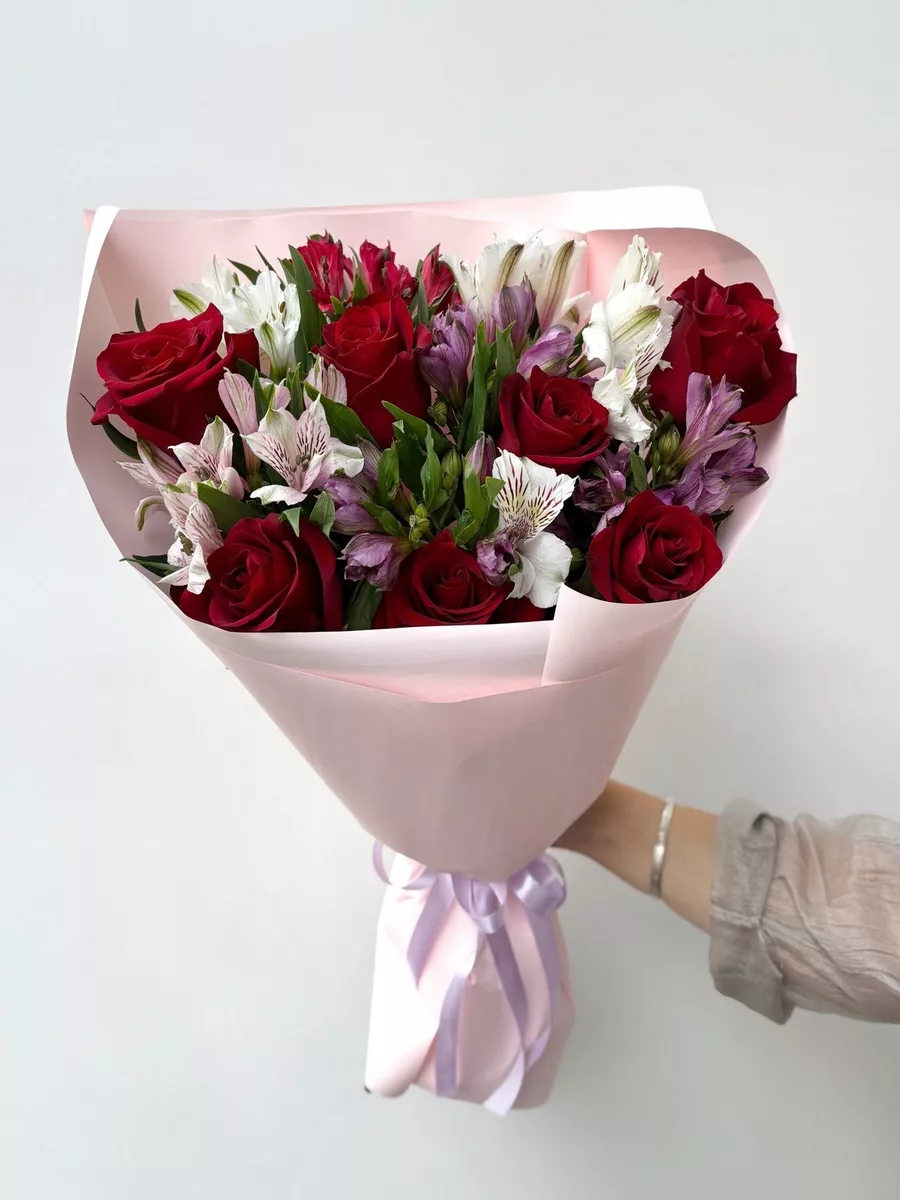
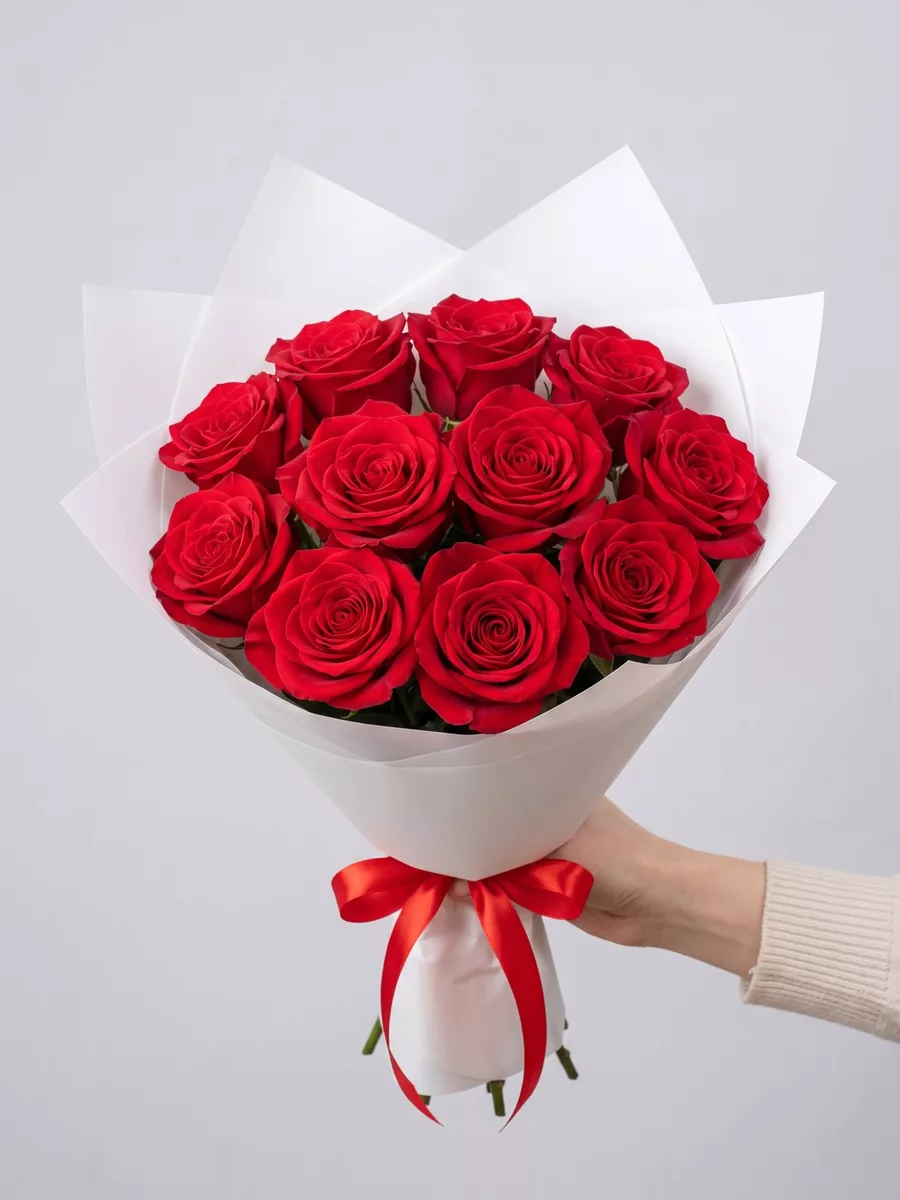
Bouquets we can deliver


Birthday Phrases That Feel Warm, Not Generic
The most common birthday greeting in Russian is С днём рождения (S dnyom rozhdeniya), which simply means 'Happy Birthday.' It is correct and universally understood, but on its own it reads the way a text message reads — functional rather than felt. Pairing it with a second line transforms the card.
For a close friend or partner, try: С днём рождения! Ты делаешь мой мир ярче каждый день. (S dnyom rozhdeniya! Ty delayesh moy mir yarche kazhdyy den.) — 'Happy Birthday! You make my world brighter every day.' The word ярче (yarche) means 'brighter,' which echoes beautifully when the bouquet contains sunflowers or vivid orange gerberas.
For a colleague or someone you respect but do not know intimately, a more polished option works better: Желаю вам здоровья, радости и всего самого лучшего в этот особенный день. (Zhelayu vam zdorovya, radosti i vsego samogo luchshego v etot osobennyy den.) — 'I wish you health, joy, and all the best on this special day.' Notice the use of вам (vam) rather than тебе (tebe). Russian has formal and informal 'you,' and using the formal version with someone you are not close to shows respect. Our florists often suggest pairing this tone with classic white or blush roses rather than bold tropical stems, simply because the visual register matches.
For a parent or grandparent: Дорогая мама, с днём рождения! Ты — моя опора и моя гордость. (Dorogaya mama, s dnyom rozhdeniya! Ty — moya opora i moya gordost.) — 'Dear Mum, happy birthday! You are my support and my pride.' Substitute папа (papa) for father, or use the person's name.
Romantic Messages for Any Stage of a Relationship
Russians are not shy about direct declarations of love, but they do appreciate sincerity over extravagance. The phrase Я тебя люблю (Ya tebya lyublyu) — 'I love you' — carries full weight on its own. Adding a single honest line after it is often more powerful than a long paragraph.
A message that works for anniversaries or simply for a Tuesday surprise: Я тебя люблю сильнее с каждым днём. Эти цветы — маленькое напоминание об этом. (Ya tebya lyublyu silnee s kazhdym dnyom. Eti tsvety — malenkoe napominanie ob etom.) — 'I love you more with every day. These flowers are a small reminder of that.' The word маленькое (malenkoe), meaning 'small,' is a deliberate understatement that Russians find endearing rather than underwhelming.
For new relationships where 'I love you' is too soon, try: Ты занимаешь все мои мысли. (Ty zanimayesh vse moi mysli.) — 'You occupy all my thoughts.' This is romantic without being overwhelming, and it suits a bouquet of pink tulips or pale peach ranunculus — flowers that suggest affection without the full declaration of red roses.
For Valentine's Day specifically: С Днём святого Валентина! Быть рядом с тобой — моё самое большое счастье. (S Dnyom svyatogo Valentina! Byt ryadom s toboy — moyo samoe bolshoe schastye.) — 'Happy Valentine's Day! Being by your side is my greatest happiness.' Valentine's Day is celebrated in Russia on 14 February, just as in Western Europe, so the timing customs are identical. Red roses and deep burgundy peonies are the most requested varieties for this date at our shop.
Congratulations for Milestones: Graduations, Promotions, New Arrivals
Russian congratulatory language tends to be slightly more formal than English equivalents, even between friends. The standard opening word is Поздравляю (Pozdravlyayu) for informal use, or Поздравляем (Pozdravlyaem) when the card is from a group — the difference is simply singular versus plural 'we congratulate.'
For a graduation: Поздравляю с окончанием университета! Впереди — только блестящее будущее. (Pozdravlyayu s okonchaniem universiteta! Vperedi — tolko blestyashchee budushchee.) — 'Congratulations on finishing university! Only a brilliant future lies ahead.' Graduates in Russia often receive large, theatrical bouquets — think tall gladioli or dramatic allium — because the occasion is genuinely celebrated as a major life event.
For a job promotion or professional achievement: Поздравляю с заслуженным успехом! Твой труд и талант всегда были очевидны. (Pozdravlyayu s zasuzhennym uspekhom! Tvoy trud i talant vsegda byli ochevidny.) — 'Congratulations on your well-deserved success! Your hard work and talent were always obvious.'
For the birth of a child: С рождением малыша! Желаю вашей семье здоровья, смеха и бесконечной радости. (S rozhdeniem malysha! Zhelayu vashey semye zdorovya, smekha i beschonechnoy radosti.) — 'Congratulations on the birth of your little one! I wish your family health, laughter, and endless joy.' Note that Russians traditionally wait until after the birth to send flowers — sending them before is considered premature. White or pastel arrangements are appropriate regardless of the baby's sex, as bold pink or blue colour-coding is less common in Russian tradition than in some Western countries.
Thank You and Apology Messages Done Right
Gratitude and apology are two occasions where the wrong phrasing can feel hollow or even rude, so it is worth being precise. The basic thank you is Спасибо (Spasibo), but on a flower card it needs company.
A warm thank-you for a favour or act of kindness: Спасибо за всё, что ты для меня делаешь. Слова не передают моей благодарности. (Spasibo za vsyo, chto ty dlya menya delayesh. Slova ne peredayut moey blagodarnosti.) — 'Thank you for everything you do for me. Words cannot express my gratitude.' This reads sincerely in Russian rather than like a template, which matters because Russians are quite attuned to whether language sounds genuine.
For a professional thank-you, perhaps to a mentor or a host: Благодарю вас за вашу щедрость и поддержку. Это многое для меня значит. (Blagodaryu vas za vashu shchedrost i podderzhku. Eto mnogoye dlya menya znachit.) — 'I thank you for your generosity and support. This means a great deal to me.' Благодарю (Blagodaryu) is slightly more formal than Спасибо and is appropriate with вас (vas), the formal 'you.'
For an apology accompanied by flowers: Прости меня. Я хочу исправить всё, что пошло не так. (Prosti menya. Ya khochu ispravit vsyo, chto poshlo ne tak.) — 'Forgive me. I want to fix everything that went wrong.' Keep the bouquet itself soft and unassuming for an apology — white or pale lilac flowers rather than bold statement stems. Lilies work well here because their fragrance is immediate and hard to ignore, which mirrors the sincerity you want to convey.
Common Mistakes to Avoid When Writing in Russian
The most frequent error we see is mixing formal and informal address within the same card. If you begin with вы (vy), the formal 'you,' stay consistent throughout. Switching to ты (ty) mid-message signals either carelessness or an awkward intimacy the recipient may not expect. When in doubt, use the formal register — it is never offensive, whereas the informal can occasionally feel presumptuous with someone you do not know well.
The second common mistake is using Google Translate for full sentences without checking the output. Machine translation often chooses grammatically correct but emotionally flat phrasing. For example, a translated 'I am thinking of you' can come out as Я думаю о тебе (Ya dumayu o tebe), which is accurate, but the more natural and warmer version Russians actually use is Я думаю о тебе каждый день (Ya dumayu o tebe kazhdyy den) — 'I think of you every day' — because the added specificity makes it feel lived-in rather than processed.
Third: avoid using exclamation marks excessively. In English, 'Happy Birthday!!!' reads as enthusiastic. In written Russian, multiple exclamation marks can read as slightly unhinged. One exclamation mark after the main greeting is standard and warm; two is already a lot.
Finally, check the gender of the recipient before using adjectives. Russian adjectives change endings depending on whether the subject is masculine or feminine. Дорогой (Dorogoy) is 'dear' for a man; Дорогая (Dorogaya) is 'dear' for a woman. Getting this wrong is the most immediately noticeable error on any card, and it is entirely avoidable by simply noting the recipient's gender when you place the order with us.
A flower without a card is a beautiful object. A flower with the right words in the right language becomes a memory. Russian is a rich and expressive language, and even a single well-chosen phrase — written correctly, addressed with the proper level of formality, and matched to the occasion — can make a recipient feel genuinely seen. You do not need to speak Russian fluently to write a card that lands with warmth and care. You simply need the right phrase, a moment of attention to the details above, and a bouquet worth the words. At Five Flowers we handle the flowers and the delivery; with this guide, the message is entirely yours. We deliver bouquets across Russia in 1–2 hours.
Frequently asked questions
Can I write my card message in English and have it delivered to a Russian speaker?
You can, but the impact is reduced if the recipient does not read English comfortably. We recommend using one of the Russian phrases from this guide even if you copy and paste it directly. Our team can print the card in Cyrillic so it looks natural and is easy for the recipient to read without effort.
Does Five Flowers print the card message, or is it handwritten?
We offer both options. Printed cards look clean and professional, which suits formal or corporate occasions. Handwritten cards feel more personal and are popular for romantic and family gifts. Simply note your preference when placing the order, and include the exact phrase you want — including any Russian Cyrillic text — in the order comments.
Is it appropriate to send flowers to a man in Russia?
Absolutely. Flowers for men are common in Russia, particularly for birthdays, professional achievements, or as a gesture of deep respect. Arrangements for men tend to feature bolder forms — think large-headed sunflowers, tropical anthuriums, or architectural proteas — rather than soft pastel palettes. The card phrases in this guide all work equally well regardless of the recipient's gender, with the adjective endings adjusted as noted.
What if I make a spelling mistake in my Russian card message?
If you paste your phrase from this guide, spelling errors are unlikely. If you write your own message, our team reviews card text before printing and will flag any obvious errors. For safety, paste the Cyrillic text directly rather than typing it letter by letter from memory, and double-check gender-specific adjective endings — дорогой for a man, дорогая for a woman.
Are there any occasions when flowers are traditionally not given in Russia?
Russian tradition holds that you should not send flowers before a baby is born — wait until after the birth. It is also customary to give an odd number of stems for celebratory occasions, as even numbers are associated with more solemn events. Our florists follow this convention automatically when assembling bouquets, so you do not need to count stems yourself when ordering.
Ready to send a bouquet?
Pick a city, choose the flowers, and we will hand them over with a photo confirmation.
Choose a city →