
Flower Delivery in Vuktyl: Zones, Timing and What to Expect
Vuktyl sits deep in the Komi Republic, roughly 1,400 kilometres northeast of Saint Petersburg, and customers ordering flowers there for the first time always ask the same thing: will they actually arrive fresh? The answer depends on how the order is packed, which varieties are chosen and what the temperature is doing that week. This article covers all of it plainly so you know exactly what you are getting before you confirm the order.
Where Vuktyl Is and Why It Affects Your Order
Vuktyl is a small city on the Pechora River in the Komi Republic, and its geographic position shapes everything about a flower delivery. The city is not served by regular rail passenger services, so consignments travel by road or by a combination of road and air, depending on the season and the specific route available at the time of dispatch. Distance from our Saint Petersburg base is substantial, which means delivery windows are measured in days rather than the one-to-two hours we quote for in-city work. Customers sometimes assume that because we advertise fast delivery across Russia, Vuktyl operates on the same clock as, say, a Moscow suburb. It does not, and being honest about that upfront saves everyone frustration. The city also experiences significant temperature swings: winters regularly drop below minus twenty-five Celsius, and summers can push above twenty-five Celsius, which means the thermal packaging we choose has to match the actual forecast on the dispatch date, not a seasonal average. We check the Vuktyl forecast before every order leaves the shop. Orders placed for Vuktyl are flagged internally as long-haul cold-climate shipments, which triggers a specific packing protocol involving insulated liners, water-retaining floral foam or sealed water tubes, and protective outer wrapping that shields stems from physical impact during road transit. Getting those details right at the packing stage is what makes the difference between roses that open beautifully on arrival and roses that arrive bruised.
Bouquets we can deliver



Delivery Timing: What the Calendar Actually Looks Like
When you place an order for Vuktyl, the realistic delivery window runs from two to five days depending on which dispatch route is active and whether there are any road closures along the Pechora corridor. We are transparent about this because customers who expect next-day delivery and receive a five-day estimate are understandably disappointed, and that disappointment is avoidable with clear information at the checkout stage. The best practice is to order at least four to five days before the date that matters — a birthday, an anniversary, a professional celebration. Ordering the day before is possible for some routes but carries a higher risk of missing the target date if conditions on the road change. We dispatch from Saint Petersburg on a schedule that aligns with the most reliable carrier runs to the Komi Republic, typically early in the week for mid-week arrivals and mid-week for weekend arrivals. That rhythm is not rigid, but it is a useful starting point when you are planning. One detail that catches people out is the difference between dispatch date and arrival date. When our confirmation message gives you a dispatch date, that is the day the bouquet leaves our shop, not the day it arrives in Vuktyl. Arrival is typically one to three days later depending on the specific leg of the journey. We send a second notification when the order is handed to the final delivery stage, which gives the recipient a narrower window to expect the courier. If the recipient works during the day, it is worth noting that in the order comments so we can coordinate timing.
Which Flowers Travel Well to Vuktyl
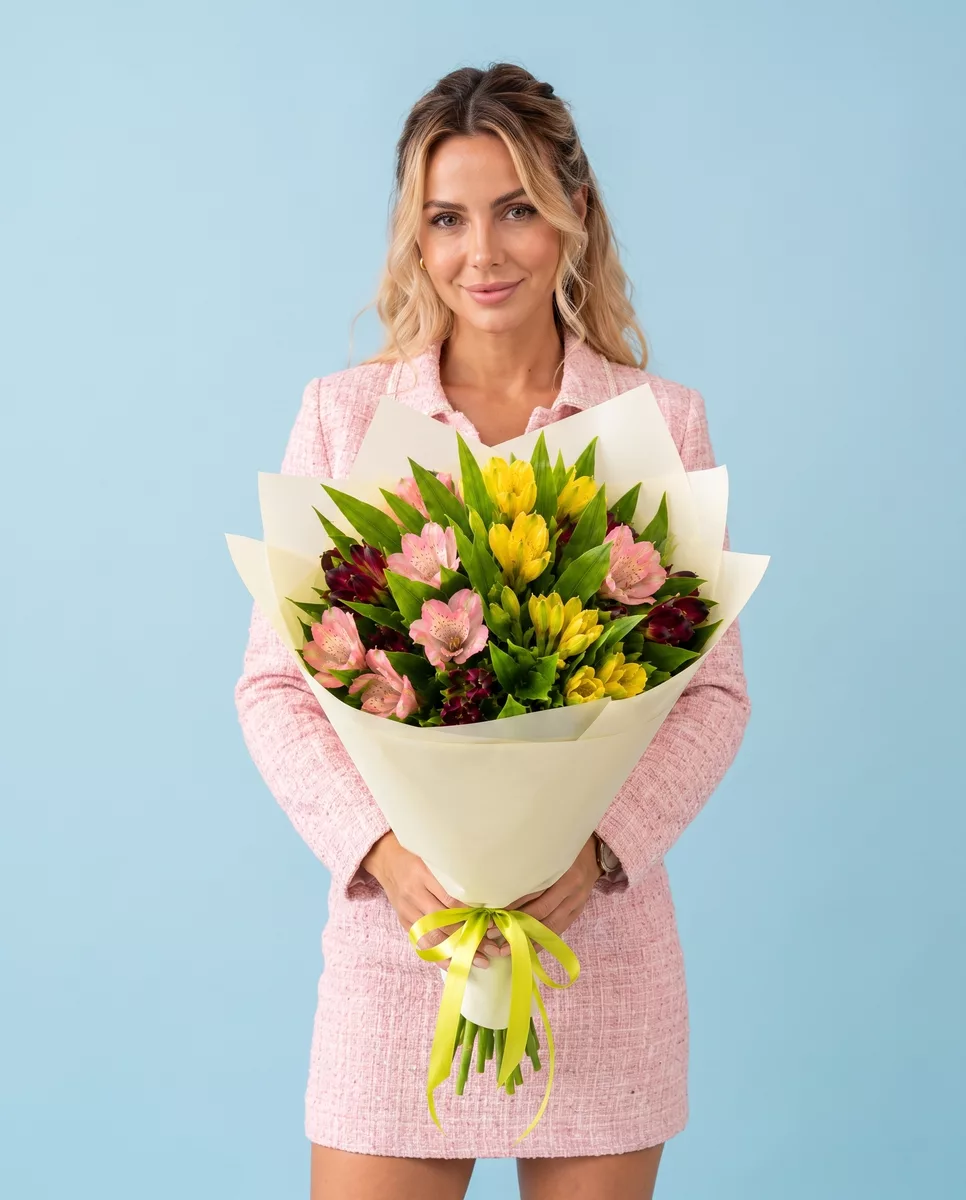
Not every variety that looks stunning in our Saint Petersburg cold room will arrive in Vuktyl looking the same way, and a good florist will tell you that plainly rather than sell you whatever is most expensive. The strongest travellers for long cold-climate routes are roses with tight, firm buds — varieties such as Explorer, Mondial and Avalanche hold well in transit because their petals are dense and they do not bruise easily. Spray chrysanthemums are another reliable choice: they are structurally robust, their stems take up water efficiently once recut on arrival, and they are not sensitive to the brief temperature fluctuations that happen when a box moves between a cold van and a warm sorting facility. Alstroemeria travels well for the same reasons and offers a wide colour range, which matters when the customer wants something beyond white and red. Carnations, particularly the large-headed standard varieties, are underrated for long-haul orders and hold their shape for ten to fourteen days after cutting when handled correctly. What travels poorly: open garden roses with many petals, such as David Austin varieties, are vulnerable to petal bruising and botrytis in humid transit conditions. Tropical flowers like bird of paradise and anthuriums are sensitive to cold and should not be sent to Vuktyl in winter. Tulips are seasonal and fragile; they open fast and can arrive fully open or damaged if the transit temperature rises even briefly above ten Celsius. We will tell you if a variety you have requested is not suitable for the route and suggest a comparable alternative rather than just process the order and hope for the best.
Packaging for the Komi Climate
The packaging we use for Vuktyl orders is noticeably heavier than what goes into a standard city delivery, and that extra investment in materials is what protects the flowers across several hundred kilometres of variable conditions. Every long-haul bouquet is built around a water source for the stems: either a sealed aqua pack attached directly to the cut ends or floral foam that has been fully saturated before packing. Without a continuous water source, stems begin to dehydrate within hours, and by the time the box reaches Vuktyl the flowers are already stressed even if they look intact from the outside. The outer box is a double-walled corrugated cardboard carton, and inside it we add an insulating liner — a foil-backed foam sleeve — that buffers the contents against both cold and heat. In winter, when Vuktyl temperatures can sit at minus twenty or below, we also include a small heat pack calibrated to keep the interior of the box above two Celsius without generating enough warmth to cause condensation on the petals, which would accelerate decay. In summer, the approach reverses: a gel cool pack keeps the interior below fifteen Celsius during the warmest part of the transit day. The bouquet itself is wrapped in tissue and then in a protective sleeve before it goes into the box, so stems and blooms do not shift during road vibration. When the recipient opens the box, the first thing they should do is recut the stems at an angle and place them in fresh water immediately. We include a small care card with every Vuktyl order explaining exactly that step, because it extends vase life by several days.
What to Check When You Place the Order
Several small details at the ordering stage have a large effect on how smoothly a Vuktyl delivery goes, and customers who get them right almost never have problems. The most important is the delivery address: Vuktyl has a central urban area and several outlying settlements connected by local roads, and an incomplete address — missing a building number, apartment number or entrance code — can delay the final delivery leg significantly because the courier cannot reach the recipient. Write the address in full, including any door code, and add a phone number that will be answered during the day. If the recipient is at work during standard hours, note the workplace address in the comments field rather than the home address, or specify a time window when they will be home. The second thing to check is the bouquet composition. If you have requested a variety that we flag as unsuitable for the Vuktyl route, do not override that advice to get exactly what you pictured — the florist making that call is looking at transit time, current temperatures and stem condition, not trying to upsell you. Trust the substitution. Third, confirm the dispatch date in your order confirmation and count forward from there to estimate arrival. If the date you need falls on a public holiday, order earlier than you think necessary: carrier schedules thin out around Russian national holidays, including New Year, International Women's Day on the eighth of March, and Victory Day on the ninth of May, all of which are peak periods for flower orders nationally. Finally, save the order number. If you need to contact us about the delivery status, that number is the fastest way for us to locate your shipment.
The Eighth of March and Peak Season Orders to Vuktyl
International Women's Day on the eighth of March is the single largest flower holiday in Russia, and for a city like Vuktyl, which is far from the main supply corridors, it creates a specific logistical pressure that customers need to understand before they order. Demand for roses, tulips and mixed bouquets spikes nationally in the week leading up to the eighth, which means carrier capacity fills quickly and dispatch slots for long-haul destinations are claimed days earlier than usual. If you want flowers to arrive in Vuktyl on or before the eighth of March, the order should be placed no later than the second or third of March, and even that is cutting it close in a heavy-demand year. We increase our stock of transit-reliable varieties in the weeks before the eighth — primarily roses, spray chrysanthemums and alstroemeria — precisely because those are what we can confidently pack for a five-day route without quality loss. Tulips are hugely popular around the eighth of March in Russia, and we understand why customers request them, but for Vuktyl we advise against them at that time of year. The combination of high ambient temperatures in sorting facilities during the peak rush and the natural fragility of tulip stems makes the risk of arrival damage too high. A bouquet of firm-budded red or cream roses, well-packed and dispatched four days before the holiday, will arrive in better condition than tulips dispatched two days before. Other peak periods that require early ordering include Valentine's Day on the fourteenth of February and the first of September, which is the start of the school year and a traditional time for giving flowers to teachers across Russia.
What Happens After the Bouquet Arrives
The moment the bouquet is delivered in Vuktyl is not the end of the story, and a little care from the recipient extends vase life significantly. The first step is always to recut the stems: take a sharp knife or clean scissors and cut one to two centimetres from the bottom of each stem at a diagonal angle. The diagonal cut increases the surface area available for water uptake and prevents the stem from sitting flat against the bottom of the vase, which would block the flow. Do this under running water or while the stems are submerged if possible, because even a few seconds of air exposure to a freshly cut stem can introduce an air bubble that slows hydration. Roses, chrysanthemums and alstroemeria should then go into a clean vase with cool water — not cold, not warm — filled to about two-thirds of the stem height. Remove any leaves that would sit below the waterline, because submerged foliage rots quickly and contaminates the water with bacteria that shorten vase life for the whole bouquet. Change the water every two days and recut the stems each time you do. Keep the bouquet away from direct sunlight, radiators and fruit bowls: ripening fruit releases ethylene gas, which accelerates petal drop in roses and causes premature yellowing in chrysanthemums. A cool room — between fifteen and eighteen Celsius overnight — will add several days to the display life. If the flowers arrive looking slightly wilted from transit, do not discard them immediately. Recut the stems, place them in water, and leave them in a cool spot for two to four hours. In most cases, roses and chrysanthemums recover fully from transit stress once they have access to fresh water.
Vuktyl is one of the more demanding destinations we deliver to, and we say that not to discourage orders but to make sure every order placed for that city is set up correctly from the start. The customers who have the best experience are the ones who order early, choose varieties suited to the route, provide a complete delivery address and follow the care instructions when the box arrives. We have sent flowers to the Komi Republic through winter temperatures and summer heat, and the system works when the details are right. If you are unsure about any part of the order — timing, variety choice, packaging for a specific date — contact us before you confirm, and a florist will give you a straight answer.
Frequently asked questions
How many days in advance should I order flowers for delivery to Vuktyl?
Plan for at least four to five days before the date you need. Vuktyl is a long-haul destination and transit alone takes one to three days after dispatch. For major holidays like the eighth of March or Valentine's Day, order six to seven days ahead because carrier capacity fills quickly and dispatch slots for remote destinations are limited.
Can I send roses to Vuktyl in January when temperatures are very low?
Yes, roses travel well to Vuktyl in winter when packed correctly. We use insulated liners and calibrated heat packs to keep the interior of the box above two Celsius throughout transit. Tight-budded varieties like Avalanche and Mondial are our first choice for cold-climate routes because their dense petals resist both physical damage and frost stress.
Will the bouquet look the same as the photo on the website?
The composition and colour palette will match, but for Vuktyl orders we may substitute a fragile variety with a transit-reliable equivalent if conditions require it. We notify you before making any substitution. The overall size and visual style of the bouquet remain consistent with what you ordered.
What should the recipient do immediately when the flowers arrive?
Recut the stems diagonally by one to two centimetres, remove leaves that would sit below the waterline, and place the bouquet in a clean vase with cool water. If the flowers look slightly wilted after transit, this process usually restores them within two to four hours. Avoid placing the vase near radiators, sunny windows or fruit bowls.
Is it possible to send tulips to Vuktyl for the eighth of March?
We advise against it. Tulips are fragile in transit and open quickly when temperatures rise even slightly, which is likely during the peak-season rush when sorting facilities are busy. Roses and spray chrysanthemums are a much safer choice for a five-day route and will arrive in better condition for a holiday that matters.
Ready to send a bouquet?
Pick a city, choose the flowers, and we will hand them over with a photo confirmation.
Choose a city →