
Flower Delivery to Zheleznogorsk-Ilimsky: What Senders Abroad Must Know
Most calls we get from senders outside Russia follow the same pattern: someone in Berlin or Toronto wants flowers in Zheleznogorsk-Ilimsky by Saturday afternoon, they have no idea what the town's geography means for delivery logistics, and they are working with a three-hour time difference at minimum. Zheleznogorsk-Ilimsky is a small industrial city in Irkutsk Oblast, sitting at roughly 56 degrees north latitude and subject to serious Siberian winters. That combination of remoteness, climate and time zone shapes every decision about which flowers to send, when to order and how to phrase the recipient's address. This article covers the practical side — no guesswork, just the specifics a sender abroad needs to get right.
Where Zheleznogorsk-Ilimsky Is and Why It Matters for Your Order
Zheleznogorsk-Ilimsky sits in the north of Irkutsk Oblast, roughly 530 kilometres from Irkutsk city itself. The town has a population of around 25,000 and is primarily known for its aluminium industry. For a sender abroad, this geography has direct consequences: the city operates on UTC+8, which is Moscow time plus five hours. When you place an order at 9 a.m. in London, it is already 2 p.m. in Moscow and 7 p.m. in Zheleznogorsk-Ilimsky. That means same-day delivery windows close much earlier than you might expect when you look at your own clock. The delivery radius and road conditions also matter. The town is connected by regional roads rather than major federal highways, and in winter those roads can be affected by heavy snowfall and temperatures that regularly drop below minus 25 degrees Celsius from November through March. This is not a detail to ignore when choosing flowers: varieties that tolerate cold transit perform very differently from those that do not. Planning your order at least 24 hours ahead is strongly recommended for senders in European or American time zones, simply because the coordination window between your morning and the recipient's evening is narrow. Giving a full street address including the apartment number, building block if applicable, and a working Russian mobile number for the recipient is essential — delivery staff cannot call international numbers to confirm arrival.
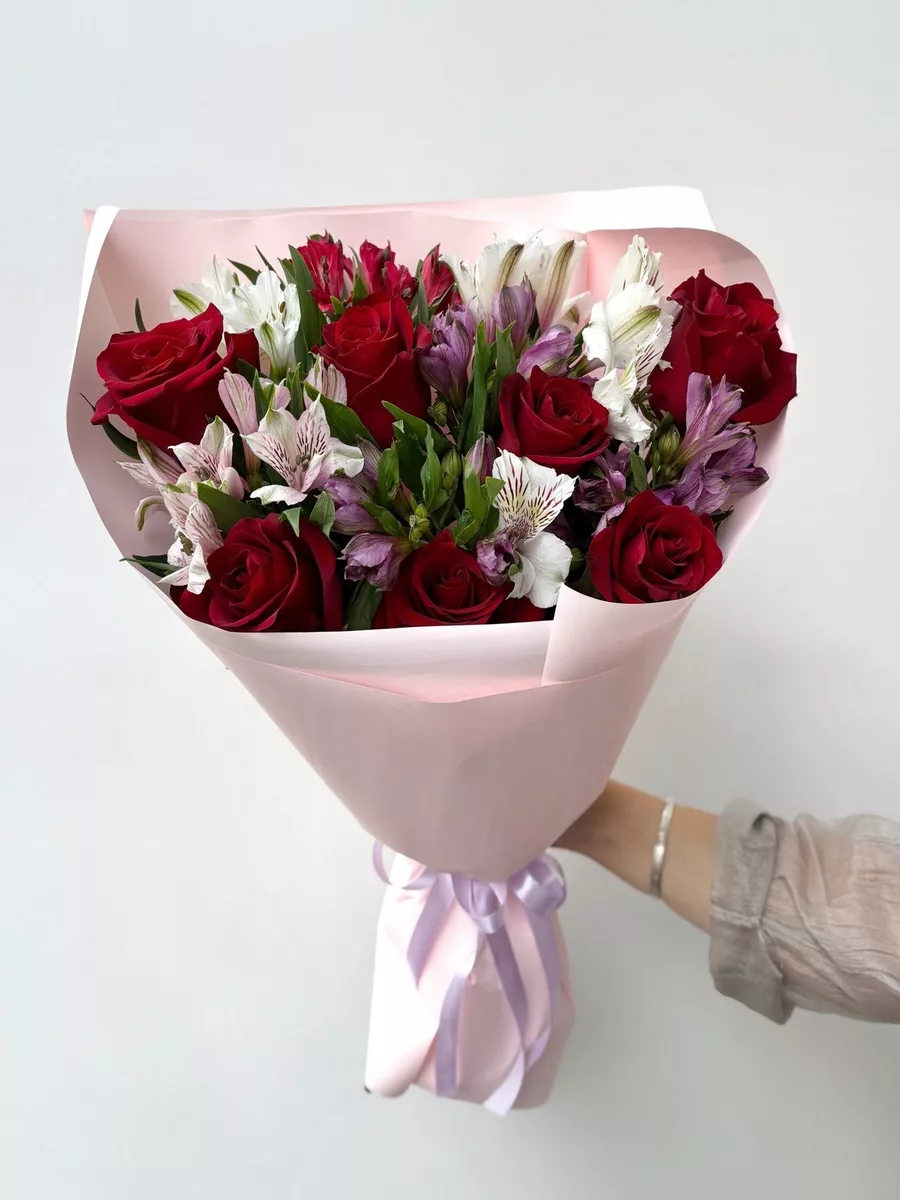
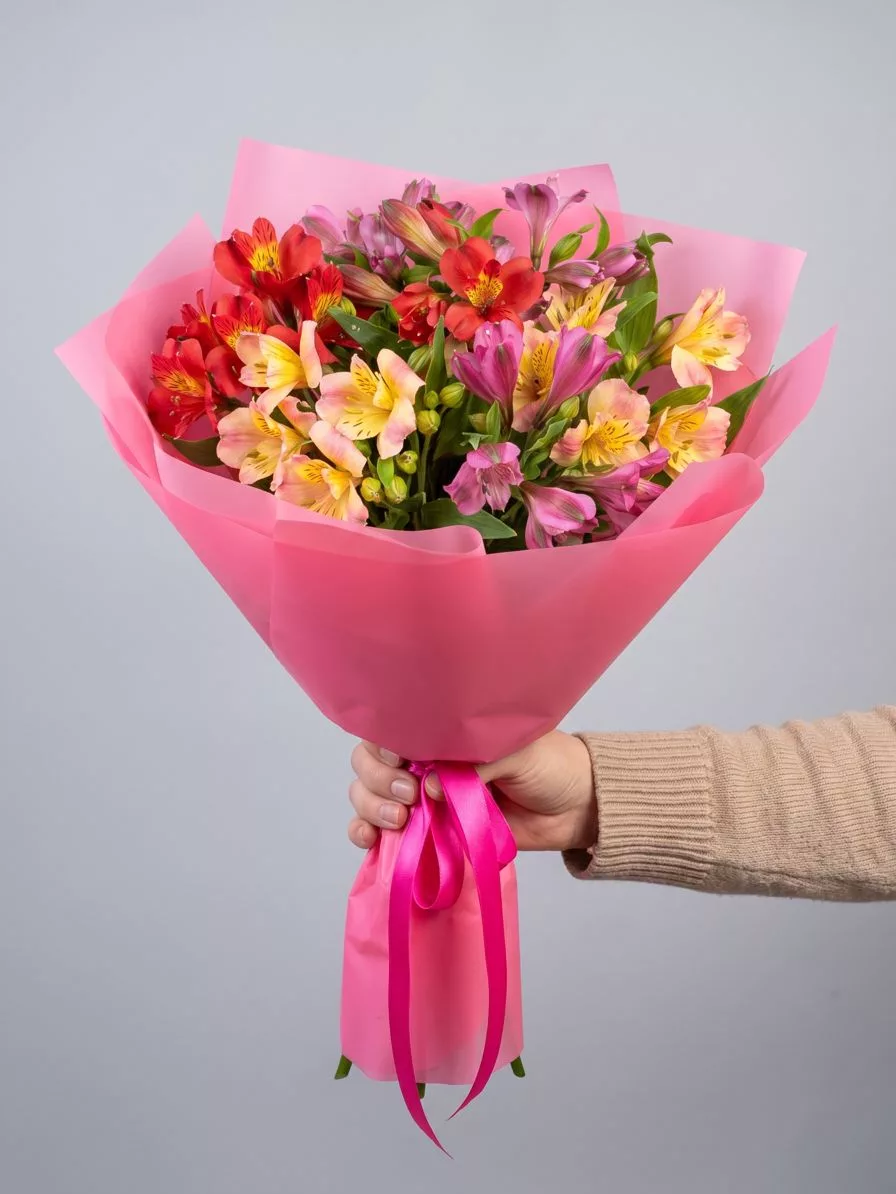
Bouquets we can deliver


Time Zones and the Ordering Window You Actually Have
The UTC+8 time zone in Zheleznogorsk-Ilimsky is one of the first things a sender from Europe or the Americas gets wrong. A customer in New York ordering at noon Eastern Time is ordering at 8 p.m. local time in Zheleznogorsk-Ilimsky, which means same-day delivery is not possible regardless of how fast the florist works. From Western Europe the window is slightly better but still tight: noon in Paris is 7 p.m. locally. The practical advice is to treat the recipient's local time as the reference clock, not your own. If you want flowers delivered before 6 p.m. on a given day, work backwards from that and add the time difference to find your personal deadline. For senders in Australia or East Asia the situation is more forgiving because their mornings align with Siberian mornings, but the majority of our international customers come from Europe and North America. Placing orders for the following day, rather than same-day, removes almost all timing stress. It also gives you the option to include a handwritten note card, which requires a small amount of additional preparation time. Russian recipients generally appreciate a physical card rather than a digital message, so if you are sending flowers for a birthday or anniversary, it is worth requesting one. The note can be written in Russian or in English — most recipients in a city of this size will have someone nearby who can translate, and florists who handle international orders routinely manage bilingual card text.
Which Flowers Survive Siberian Winter Transit
Temperature is the deciding factor for flower selection in Zheleznogorsk-Ilimsky between October and April. Roses are the most commonly requested flower from international senders, and they are a reasonable choice — but the variety matters. Large-headed garden roses with thin petals, such as David Austin-style varieties, are far more vulnerable to cold shock than standard hybrid tea roses with tighter, waxy petals. If you want roses, stick to classic varieties: Red Naomi, Avalanche, or Explorer roses hold up well in cold transit when properly wrapped. Chrysanthemums are exceptionally cold-tolerant and are widely available in Russia in both spray and single-stem forms. Alstroemeria is another reliable option: it ships well, lasts up to two weeks in a vase, and is not sensitive to brief exposure to sub-zero temperatures during the final metres of a delivery. Tulips, which are enormously popular in Russia especially around March 8th (International Women's Day), are surprisingly robust in cold weather — they actually prefer cool conditions and will not wilt the way they do in warm transit. Gerbera daisies, on the other hand, are fragile in frost and should be avoided for winter orders. Orchid stems, while beautiful, are cold-sensitive and not recommended for outdoor delivery in temperatures below minus 10 degrees. In summer, from June through August, the temperature constraint largely disappears and you can order more delicate varieties including peonies, which are in season from late May, and lisianthus, which holds well in the warmer months.
Russian Flower Customs a Foreign Sender Should Know
Russia has specific floral customs that are not widely known outside the country, and getting them wrong can create an awkward moment for the recipient. The most important rule is that bouquets given as gifts must contain an odd number of stems. Even numbers — two roses, four tulips, six gerberas — are associated with mourning and are placed on graves. This is a firmly held convention across all generations and regions, including Siberia. When you specify a quantity, always use odd numbers: 3, 5, 7, 11, 15, 25. Most florists assembling for Russian recipients will follow this automatically, but if you are customising an order, state it explicitly. The second custom worth knowing is that yellow flowers carry a complicated reputation in Russia. Yellow roses in particular are associated by many people with separation, infidelity or bad luck in a relationship. This is not a universal belief and younger Russians often dismiss it, but if you are sending to an older recipient or are unsure, it is safer to choose white, red, pink or mixed-colour arrangements. White flowers are entirely positive in Russian culture — they are given at graduations, birthdays and celebrations without any negative connotation, unlike in some East Asian traditions. Wrapping style matters too. Russian bouquets are typically presented in decorative paper or a sleeve, often with a ribbon, rather than in a box. Box arrangements exist but are seen as a more modern or corporate style. A classic wrapped bouquet feels more personal and traditional to most recipients in smaller Russian cities.
What Address Information You Must Provide
Delivery in Russian cities, including smaller ones like Zheleznogorsk-Ilimsky, requires a precise address format that differs from what senders in Western countries are used to. Russian addresses are written in a specific order: country, region, city, street, building number, apartment number. The building number is not always a single digit — many Soviet-era residential blocks have a main number and a corpus (building section) number, written as something like 'dom 14, korpus 2'. If you know the recipient's address, confirm whether there is a corpus number, because without it the delivery can end up at the wrong entrance of a large residential complex. The apartment number is essential for any multi-storey building, which covers the majority of housing in Russian cities. Single-family houses are less common in Zheleznogorsk-Ilimsky than in rural areas, so assume an apartment number is needed unless you know otherwise. The recipient's mobile phone number is equally critical. Russian delivery staff will call ahead to confirm they are at the right building and that someone is home. They cannot call international numbers, so the number you provide must be a Russian mobile number starting with +7. If the recipient does not have a Russian number, ask a relative or neighbour who does to be listed as the contact. Finally, provide the recipient's full name as it would appear on their door buzzer or intercom — in Russian cities, intercoms are often labelled by apartment number only, but in some buildings the resident's surname is listed.
Payment from Outside Russia and What to Expect
Paying for a flower delivery in Russia from abroad has become more complicated since 2022 due to international banking restrictions. Many standard card payment systems have limited connectivity with Russian merchants, and senders using Visa or Mastercard cards issued outside Russia may find transactions declined. The most reliable approach for international senders is to check in advance which payment methods the florist accepts from foreign cards. Some shops accept payment through international systems that still operate in Russia, such as UnionPay, or through cryptocurrency. Others can arrange payment via a Russian bank transfer if you have a contact in Russia who can make the payment on your behalf. Wire transfers are possible but typically involve fees and processing delays that do not suit same-day or next-day orders. When you contact the shop to place an order, ask about payment options before you build out the full order — this avoids spending time on variety selection and note text only to find the payment step is blocked. Keep confirmation of your payment in whatever form it comes, because international transactions occasionally trigger fraud alerts on the shop's end and having a receipt or screenshot speeds up the resolution. The order confirmation you receive should include the recipient's address as you provided it, the delivery time window, the bouquet description and the total amount paid. If any of these are missing from the confirmation, ask for them before the delivery date.
How to Handle Missed Deliveries and Follow-Up from Abroad
A missed delivery is more stressful to resolve when you are in a different country and time zone, so it is worth understanding how the process works before it happens. If the recipient does not answer the door or their phone, the delivery driver will typically attempt contact up to two or three times and then return the bouquet to the shop. The shop will contact you using the email or phone number you provided at checkout. Because of the time difference, this notification may arrive while you are asleep, and by the time you respond, several hours will have passed. The bouquet will be held at the shop for a period that varies by arrangement — fresh-cut flowers cannot be held indefinitely, and most shops will attempt redelivery the same day or the following morning if the flowers are still in good condition. To minimise this risk, confirm with the recipient in advance that they will be home or available during the delivery window. You do not need to reveal that flowers are coming — you can simply ask them to be reachable between, say, 2 p.m. and 6 p.m. on a given day. If the recipient lives in a building with a concierge or building manager (called a konsyerzh in Russian), some deliveries can be left with that person if the recipient is briefly unavailable. Mention this possibility when placing the order if you know the building has one. For corporate addresses or workplaces, confirm the working hours match the delivery window, as offices in smaller Russian cities sometimes close for lunch between 1 p.m. and 2 p.m.
Sending flowers to Zheleznogorsk-Ilimsky from abroad is entirely manageable once you account for the time zone gap, the Siberian climate and the address format that Russian delivery requires. The most common mistakes — ordering too late in your own time zone, choosing cold-sensitive varieties in winter, providing an incomplete address, or selecting an even number of stems — are all avoidable with a little preparation. Order at least a day ahead, choose hardy varieties like chrysanthemums, alstroemeria or hybrid tea roses for winter months, confirm the recipient's Russian mobile number, and double-check the building and apartment details. A well-planned order arrives on time and in full bloom regardless of the distance between you and the person receiving it. We deliver bouquets across Russia in 1–2 hours.
Frequently asked questions
Can I order flowers for Zheleznogorsk-Ilimsky if I do not speak Russian?
Yes. You can place the order in English through the website or by email. Provide the recipient's address in Russian if you have it, or in transliterated Latin letters and the team will convert it. The note card text can also be written in English and the recipient can have it translated locally — this is common and not unusual for international orders.
What is the latest I can order for same-day delivery to Zheleznogorsk-Ilimsky?
Zheleznogorsk-Ilimsky operates on UTC+8, five hours ahead of Moscow and eight hours ahead of Western Europe. Same-day delivery cutoffs are based on local time in the city, not your time zone. In practice, senders from Europe or the Americas should plan for next-day delivery to avoid the cutoff window closing before they have finished placing the order.
Are there flowers I should avoid sending in January or February?
Yes. Gerbera daisies and orchid stems are sensitive to frost and are not recommended for outdoor delivery when temperatures drop below minus 10 degrees Celsius. Thin-petalled garden roses are also risky. Chrysanthemums, alstroemeria, standard hybrid tea roses and tulips all handle cold transit well and are better choices for winter months in Siberia.
Why does the number of stems in a bouquet matter in Russia?
In Russian tradition, even numbers of flowers are reserved for funerals and grave offerings. Giving an even-numbered bouquet as a celebration gift is considered a serious social mistake. Always specify an odd number of stems — 3, 5, 7, 11, 15 or 25 are all standard gift quantities. Most florists follow this automatically for Russian recipients, but stating it explicitly in your order removes any doubt.
What if the recipient is not home when the flowers arrive?
The driver will attempt to call the Russian mobile number you provided. If there is no answer after two or three attempts, the bouquet returns to the shop and you will be notified by email or phone. Redelivery is arranged once you respond, subject to the flowers still being in suitable condition. To avoid this, confirm with the recipient that they will be available during the delivery window without necessarily revealing the surprise.
Ready to send a bouquet?
Pick a city, choose the flowers, and we will hand them over with a photo confirmation.
Choose a city →