
Flower Etiquette for Russian Grandmothers: Varieties, Numbers and Card Messages
Every week someone calls the shop and asks the same question: my grandmother is turning eighty in Russia and I am ordering from abroad — will she actually like what I send? The honest answer is that older Russian women have very specific tastes formed over decades, and a bouquet that looks stunning on Instagram can land completely flat on a kitchen table in Saint Petersburg. This article covers the varieties that genuinely resonate, the numbers that matter, the colours to avoid, and exactly what to write on a card when Russian is not your first language.
Why Classic Varieties Matter More Than Trendy Ones
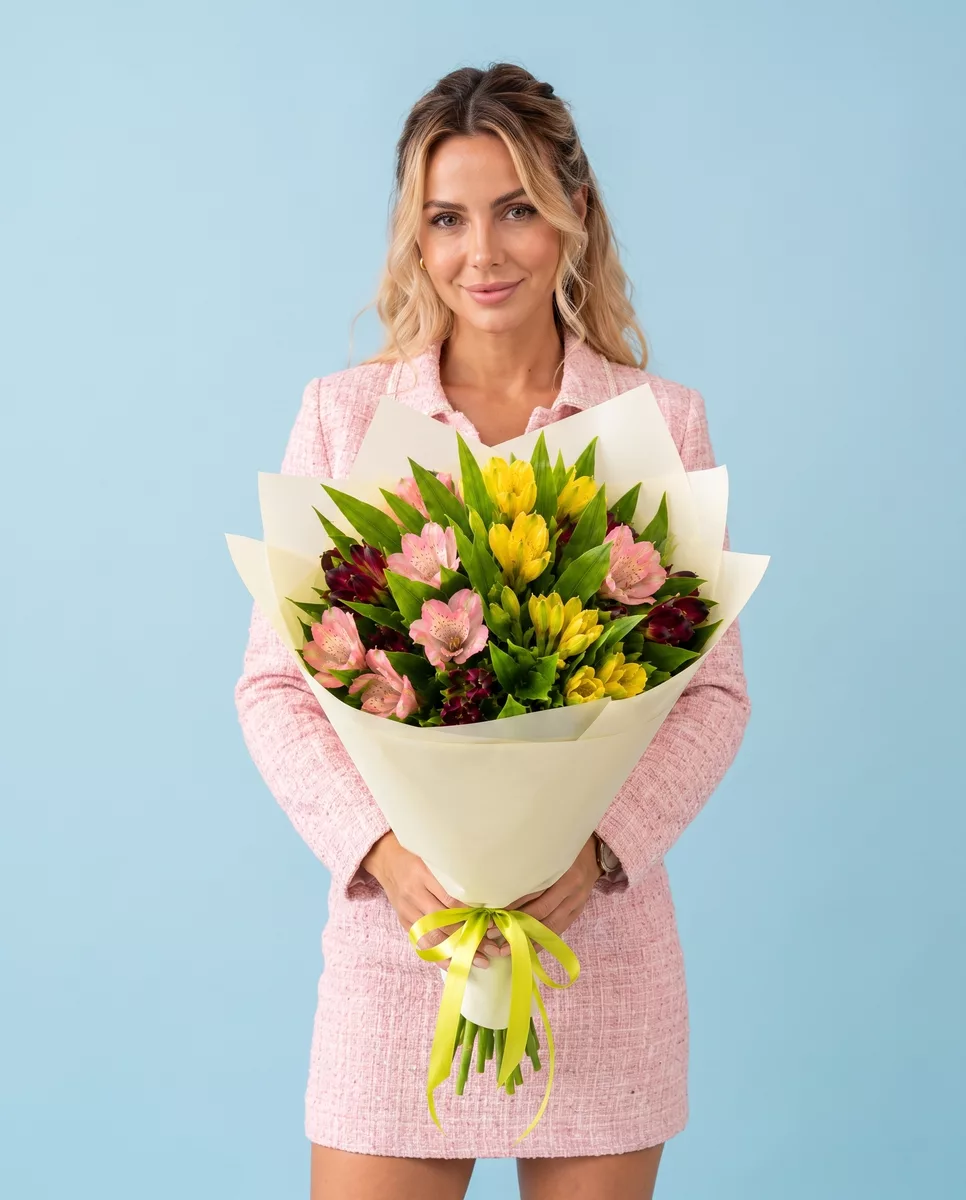
Older Russian women grew up in an era when flowers meant roses, carnations, gladioli, chrysanthemums and dahlias. These were the flowers sold at every market kiosk and brought to teachers on the first day of school. When a bouquet of proteas or anthuriums arrives at the door, the reaction is often genuine confusion rather than delight — not because the recipient lacks taste, but because those varieties carry no emotional memory for her. A working florist hears this feedback regularly: the grandmother kept the carnations for two weeks and put the tropical stems in the bin after three days because she did not know what they were. Sticking to garden roses, spray roses, alstroemeria, lisianthus and standard chrysanthemums is not a failure of imagination — it is respect for the recipient's actual preferences. Lisianthus in particular bridges the gap well: it looks delicate and slightly old-fashioned, it lasts ten to fourteen days in cool indoor temperatures around eighteen degrees Celsius, and it is familiar enough not to cause alarm. Alstroemeria is another reliable choice because it was widely available in Soviet-era flower stalls and has strong positive associations for women over sixty-five. If you want something slightly more generous in scale, gladioli remain genuinely beloved by this generation — a single stem makes a statement, and a bunch of seven or nine is considered a proper gift. Avoid exotic fillers like leucadendron or banksia; they read as strange rather than sophisticated to this audience.
Bouquets we can deliver



Roses: Which Types and Colours Work Best
Roses are the safest and most universally appreciated choice for older Russian women, but the variety and colour both carry meaning that younger buyers often overlook. Long-stemmed roses in red, deep pink or white are the gold standard. A bouquet of eleven or twenty-one red roses is read immediately as a serious, respectful gesture. Cream and ivory roses are equally well received because they feel formal without being cold. Pale yellow roses are acceptable, though bright yellow alone can feel slightly ambiguous in Russian gift culture — it is not the catastrophe some people claim, but pairing yellow with white or pink removes any doubt. Orange roses have become more common in the last decade and are generally liked by women who enjoy colour, though they are safer combined with red or pink than presented alone. What to avoid: very pale lavender or blue-tinted roses tend to look artificial to older eyes, and a grandmother who grew up with vivid garden roses may simply find them unconvincing. Garden roses with a cupped, many-petalled head — varieties like Keira, Miranda or David Austin types — are increasingly popular and work very well because they look abundant and old-fashioned in the best sense. Standard hybrid tea roses in a forty-to-fifty centimetre stem length travel well and hold their shape for seven to ten days if kept away from direct sunlight and heat sources above twenty-two degrees. Order odd numbers: seven, nine, eleven, fifteen, twenty-one. Even numbers are reserved for mourning in Russian tradition, and a florist will always flag this if you try to order ten or twelve.
Carnations, Chrysanthemums and Gladioli: The Underrated Classics
Carnations have an image problem in Western flower culture — they are often dismissed as cheap or impersonal — but in Russia, and especially among older women, they are genuinely loved. A tight bunch of double carnations in red, pink or white signals warmth and sincerity. Spray carnations in mixed pink and white are particularly charming for a grandmother's birthday because they look full without being heavy. Do not let anyone talk you out of carnations for this demographic. Standard chrysanthemums — the large, globe-headed variety, not the small button type — are another staple that older Russian women associate with serious, respectful bouquets. White and yellow chrysanthemums are the most common, and they last extraordinarily well: twelve to sixteen days at room temperature is typical, which matters when the recipient lives alone and wants to enjoy the flowers for as long as possible. Gladioli are perhaps the most distinctly Russian choice on this list. They are tall, architectural and unmistakably celebratory. A bunch of seven gladioli in pink or white, wrapped in kraft paper and tied with a satin ribbon, is the kind of gift a grandmother will put in her tallest vase and show every visitor for the next week. They are also practical: gladioli open progressively from the bottom up, meaning the bouquet looks fresh for ten days or more if the stem is trimmed every two days and the water changed. The one technical note is that gladioli need a tall container — at least forty centimetres of water depth — so if you are sending them, include a note suggesting the recipient use a bucket or a tall jug rather than a standard vase.
Colours and Combinations That Land Well
Russian grandmother aesthetics lean toward clear, saturated colours rather than the dusty, muted palettes popular in contemporary European floristry. Burgundy, deep red, bright pink, white and rich purple all read as festive and respectful. A combination of white roses and deep pink spray carnations is a reliable crowd-pleaser. Red roses with white alstroemeria is another pairing that photographs well and feels generous in person. If the occasion is a birthday or name day, adding a few stems of purple or violet lisianthus to a white-and-pink base gives the bouquet depth without veering into anything unfamiliar. What tends not to work: all-white bouquets can feel too formal or too close to ceremonial arrangements used at official events, so it is worth adding at least one colour. Pale green fillers like ruscus or pittosporum are fine as supporting elements but should not dominate. Avoid dark, near-black varieties of roses or dahlias — they are striking in editorial floristry but can feel gloomy to an older recipient who associates dark flowers with solemnity. The overall impression should be full and generous rather than sparse and architectural. Russian gift culture values abundance: a bouquet that looks like it cost something, with a clear focal flower and visible volume, is always better received than a minimal three-stem arrangement however beautifully constructed. Fifteen mixed stems in a hand-tied round bouquet wrapped in paper will consistently outperform a more expensive but spare sculptural design for this audience.
Numbers, Wrapping and Presentation Details
The odd-number rule is the single most important practical detail when ordering flowers for a Russian recipient of any age, and it is non-negotiable for older women who grew up with it as an absolute. One, three, five, seven, nine, eleven, fifteen, twenty-one, twenty-five — these are all correct. Two, four, six, eight, ten, twelve — these are associated with funeral wreaths and mourning tributes, and any Russian grandmother will notice immediately. A reputable florist will catch this before the order goes out, but it is worth specifying the number yourself when placing the order to avoid any confusion. Wrapping matters almost as much as the flowers themselves. Kraft paper with a satin or grosgrain ribbon in a complementary colour is the standard for a respectful gift. Cellophane wrapping is considered slightly old-fashioned and downmarket by current standards, though an older recipient may not mind it. Avoid excessive decorative elements like feathers, glitter spray or oversized bows — they read as frivolous rather than celebratory to this generation. A clean, full bouquet in good paper with a proper ribbon is the correct presentation. If the delivery includes a small box of chocolates or a soft toy, keep it tasteful and proportionate — a grandmother who receives a giant stuffed bear alongside her flowers may find the combination more confusing than charming. The flowers should always be the main event, supported by simple, dignified packaging.
Writing a Warm Card Message When Russian Is Not Your Language
This is the question the shop's customer service team handles most often from international customers: what do I write on the card? The first piece of advice is to write something, even if it is short — a blank card feels like an afterthought, and older Russian women place real value on a handwritten or printed personal message. If you are writing in English and the grandmother reads some English, a simple sincere sentence in English is perfectly fine. If she does not read English at all, the florist can help you transliterate a message or you can use a short Russian phrase. The most reliable phrases for a birthday are: S dnyom rozhdeniya — Happy Birthday. Zhelayu zdorovya i schastya — Wishing you health and happiness. Lyublyu tebya — I love you. These transliterations are close enough to be readable by a Russian speaker even if the spelling is approximate. Avoid overly formal or flowery language in the card — older Russian women tend to respond better to direct warmth than to elaborate poetic declarations. Something like: Dear Grandma, thinking of you on your birthday, wishing you health and many more years — is exactly the right register. If the relationship is close, add a specific memory or detail: the name of a shared dish, a place you visited together, a year that mattered. That specificity is what makes a card message feel genuine rather than generic, and it matters more than whether the language is perfect.
Timing, Delivery and What to Check Before You Order
Delivery timing is worth planning carefully because older women often keep a fixed daily schedule — morning appointments at the polyclinic, afternoon visits from neighbours, an early evening meal. A delivery that arrives at nine in the morning on a birthday is almost always better received than one that comes at seven in the evening, when the recipient may already be tired or expecting to be in bed soon. When ordering for a Saint Petersburg address, confirm the exact street, building number, apartment number and entrance code — older apartment buildings in the city frequently have coded entry panels and intercom systems that do not always work reliably, and a delivery driver who cannot get into the building will have to leave the flowers with a neighbour or attempt a second delivery. Ask whether the recipient is at home during the planned delivery window, or whether a neighbour or family member can accept the order if she is out. Check the temperature at the time of year you are ordering: in January and February, Saint Petersburg can drop to minus fifteen or colder, and flowers left outside for more than a few minutes will suffer frost damage, particularly roses and lisianthus. A good florist wraps cold-weather deliveries with insulating paper and moves quickly, but it helps to know the conditions. Finally, confirm the card message text carefully before submitting — once the card is printed and the bouquet is dispatched, changes are not possible, and a misspelled name on a grandmother's birthday card is the kind of detail that stays in the family memory for years.
Ordering flowers for an older Russian woman from outside Russia is not complicated once you know the rules: odd numbers, classic varieties, clear colours, generous volume and a card with at least one sentence that is genuinely personal. The flowers that work best are the ones she already knows and loves — roses, carnations, chrysanthemums, gladioli, alstroemeria — not the varieties that look striking in a florist's window display. Get the number right, get the delivery timing right, write something on the card, and the bouquet will do exactly what it is supposed to do. We deliver bouquets across Russia in 1–2 hours.
Frequently asked questions
Is it really true that even numbers of flowers are bad luck in Russia?
Yes, and it applies across all ages but is felt most strongly by older women. Even numbers of stems — two, four, six, ten — are associated with funeral tributes in Russian tradition. Always order an odd number. A florist processing your order should catch this automatically, but specifying the number yourself when ordering removes any risk of error.
Can I send a bouquet to a Russian grandmother if I don't know her exact apartment number?
Not reliably. Saint Petersburg apartment buildings require a specific apartment number and often a building entrance code for the intercom. Without these details, the driver cannot complete delivery. Contact a family member in Russia to confirm the full address — street, building number, apartment number, entrance number and intercom code — before placing the order.
What is the best flower for a grandmother who is not particularly fond of roses?
Gladioli are the strongest alternative for older Russian women. They are tall, celebratory and carry strong positive associations for anyone over sixty-five. A bunch of seven or nine gladioli in pink or white is a completely appropriate and well-received gift. Chrysanthemums are a close second — they last exceptionally well and feel familiar and respectful.
Should the card message be in Russian or is English acceptable?
If the grandmother reads some English, a sincere English message is perfectly fine. If she does not, a short transliterated Russian phrase works well — S dnyom rozhdeniya means Happy Birthday, Zhelayu zdorovya means Wishing you health. The most important thing is that the card says something personal and is not left blank.
How far in advance should I order flowers for delivery in Saint Petersburg?
Same-day delivery within one to two hours is standard for orders placed before early evening. For a specific morning delivery time on a birthday, placing the order the evening before gives the shop time to prepare the bouquet and schedule the driver for your preferred window. During major holidays like March 8th, ordering two to three days ahead is strongly advisable.
Ready to send a bouquet?
Pick a city, choose the flowers, and we will hand them over with a photo confirmation.
Choose a city →