
Russian Flower Etiquette for Men: Occasions, Varieties and What to Order
One of the most common questions we get at the shop is whether it is acceptable to send flowers to a man in Russia — a boss, a colleague turning fifty, a business partner closing a deal. The short answer is yes, it is done regularly and nobody raises an eyebrow, but the occasion, the composition and the presentation matter more than they do for a bouquet sent to a woman. Get those details wrong and what should feel like a respectful gesture can land awkwardly. This article covers the situations where flowers for men are genuinely expected in Russian professional and personal life, which varieties work, and what to specify when you place the order.
When Sending Flowers to a Man Is Genuinely Expected in Russia
Russia has a handful of occasions where flowers for a man are not just acceptable but almost obligatory, and knowing them saves you from second-guessing yourself. A significant birthday — typically a round number like fifty, sixty or seventy — is the clearest one. At these milestones, colleagues, subordinates and business partners routinely send bouquets to a male recipient, and arriving without one would be more conspicuous than bringing one. Professional anniversaries follow the same logic: if a director has led a department for twenty-five years and the team is marking it, flowers are part of the package alongside a speech and a gift. Retirement is another accepted moment, though the tone of the bouquet shifts toward something substantial and formal rather than cheerful. Outside the workplace, name days still carry meaning in Russia for older generations — the day of the saint whose name a man bears — and flowers are appropriate there too. International Men's Day on the twenty-third of February, known as Defender of the Fatherland Day, is the single biggest occasion for male-directed flower orders across the year. On that date florists across Saint Petersburg work through the night, and delivery windows fill up fast. If you are ordering for that date, placing the order two to three days ahead is not excessive caution, it is the only way to guarantee a morning slot. Graduations, promotions and significant public awards round out the list. The common thread is that the occasion carries public weight — these are not casual Tuesday gestures.
Bouquets we can deliver
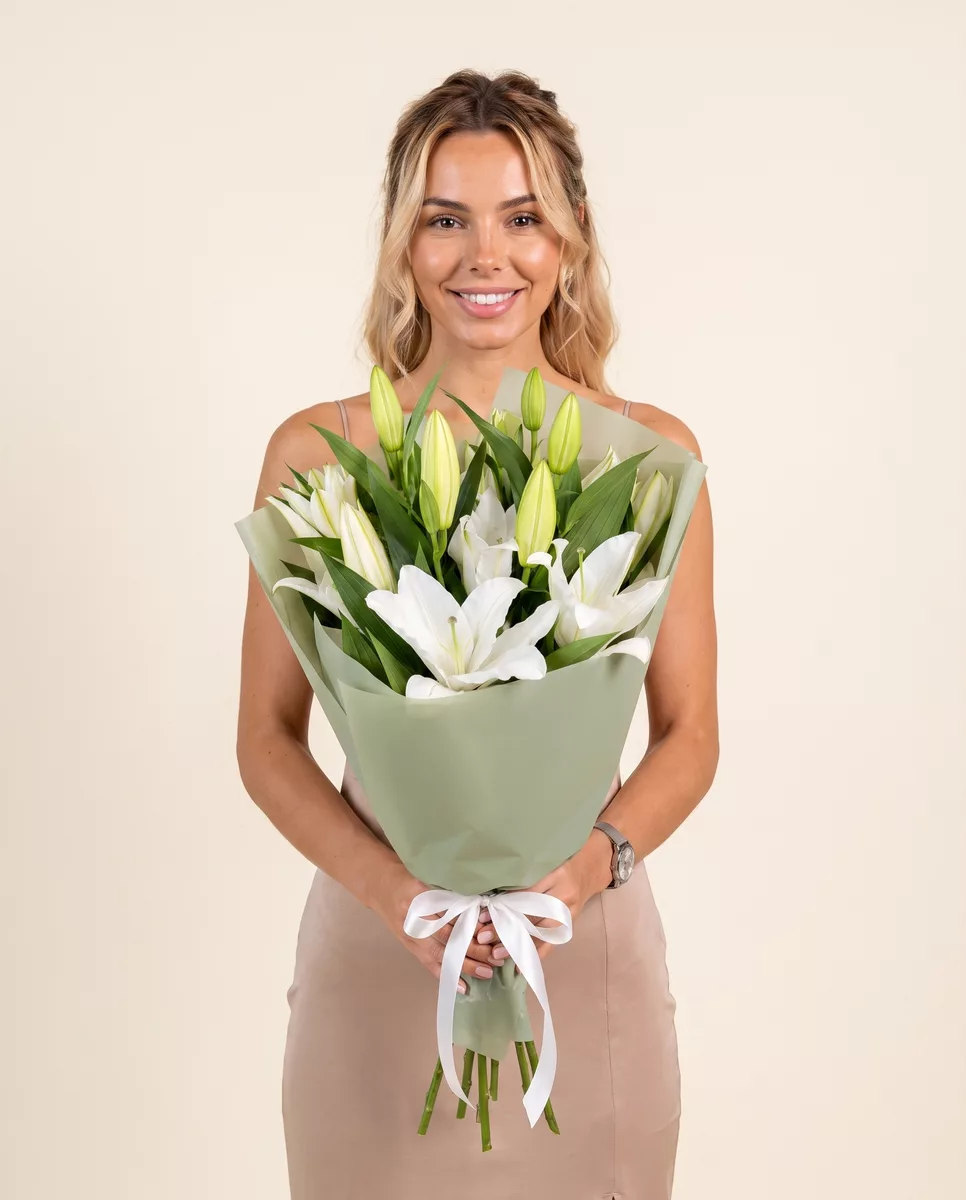
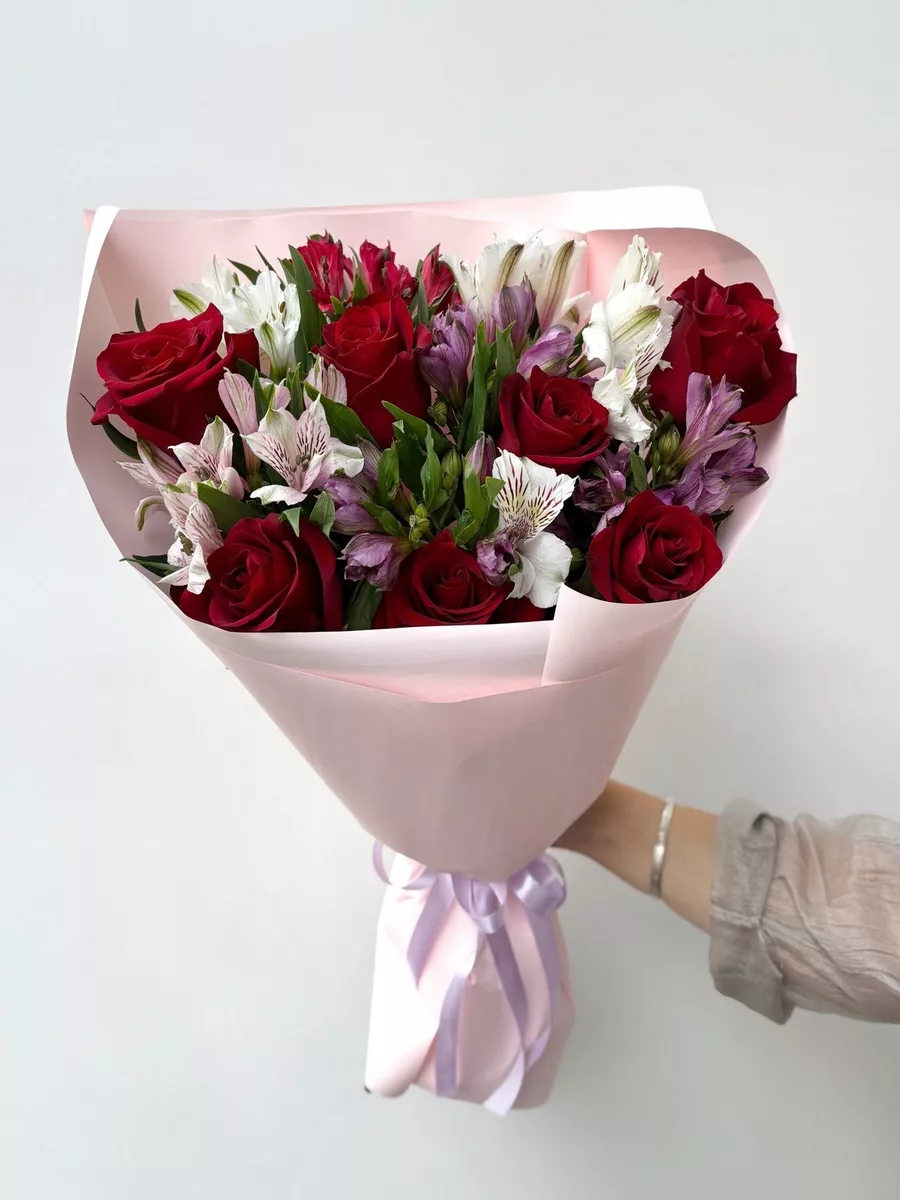
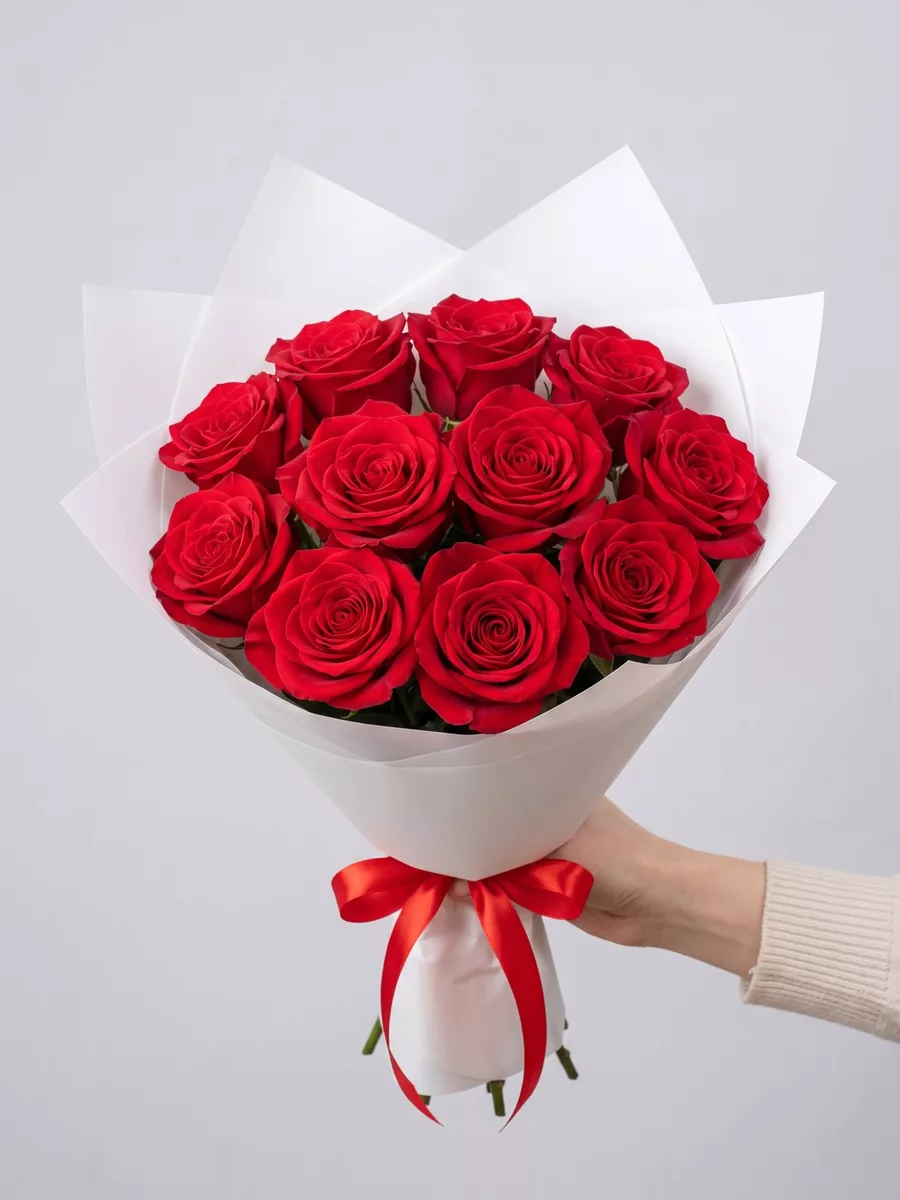

Which Flowers Are Considered Appropriate for Men in Russia
The variety question is where most people outside Russia get uncertain. The cultural preference for men's bouquets leans toward flowers that read as structured and substantial rather than delicate or overtly romantic. Anthuriums are a reliable anchor — the waxy, architectural spathe holds its shape for ten to fourteen days in a cool room and reads as confident rather than sentimental. Proteas, particularly Protea cynaroides and the smaller Protea compacta, have become increasingly common in men's arrangements in recent years precisely because their texture and scale feel deliberate. Bird of paradise, Strelitzia reginae, is another strong choice for a formal bouquet: the silhouette is dramatic without being fussy. For more traditional tastes, large-headed chrysanthemums — the disbud varieties rather than spray types — are genuinely well-regarded in Russian corporate culture and carry no negative association when sent to a man. Roses are perfectly acceptable but the selection matters: deep burgundy, dark orange or bi-color varieties in a tight, monochromatic bunch read as serious, whereas mixed pastel assortments feel mismatched to the occasion. Gladioli remain a classic choice for older recipients, particularly at round birthdays, and in Russia they carry a sense of formality rather than the old-fashioned connotation they have in some other markets. What to avoid: anything that arrives looking sparse or insubstantial. A five-stem tulip bunch, however pretty, does not communicate respect in a professional context. Quantity and density of the arrangement signal the seriousness of the gesture.
Color and Composition: What the Combination Communicates
Color is the fastest shortcut to getting a men's bouquet right or wrong. In Russian professional settings, white, deep red, burgundy, dark purple, orange and green-toned arrangements all read as appropriate for men. Bright yellow can work if it is used as an accent within a composed arrangement rather than as the dominant tone — a bunch of all-yellow flowers is more commonly associated with female recipients in everyday Russian perception, though this is softening in younger urban environments. Pink in any shade is almost universally avoided for men's professional bouquets, and light lavender sits in the same category. Mixing white and green — white anthuriums with eucalyptus, white chrysanthemum disbuds with ruscus or aspidistra — produces arrangements that are consistently well-received across age groups and industries. For composition, monobouquets work particularly well for men: a single variety in large quantity is easier to read as intentional and respectful than a mixed arrangement that requires explanation. If you want variety, keep it to two or three species maximum and make sure one of them is clearly dominant. Foliage matters more in men's arrangements than people expect — it is what gives the bouquet visual weight without making it look fussy. Aspidistra leaves, monstera cuts and large eucalyptus branches all add mass in a way that reads as deliberate. Avoid small filler flowers like waxflower or gypsophila as primary elements; they are fine as minor accents but should not define the arrangement. The overall silhouette should be clear and clean when the bouquet is viewed from two meters away.
Workplace Dynamics: Sending from a Team Versus Sending Individually
In a Russian office context, how the bouquet is attributed matters almost as much as the bouquet itself. A collective gift from a department or team is the most common format for a male colleague's birthday or professional anniversary, and in that case the bouquet can be larger and more expensive because the cost is shared. The card should name the team or department clearly — 'From the marketing team' or 'From your colleagues in logistics' — rather than leaving it ambiguous. An anonymous bouquet sent to a male colleague in a Russian workplace is almost always interpreted as a romantic gesture, which is not the association you want in a professional setting. If you are sending individually as a peer or subordinate, a smaller but well-composed bouquet with a clearly professional card message is correct. Something like 'Congratulations on your anniversary with the company' is enough — the message does not need to be elaborate. If you are a manager sending to a subordinate to mark a significant birthday, the gesture is appreciated and common, but the card tone should be warm rather than formal. Timing the delivery matters too. For office deliveries in Saint Petersburg, a morning arrival — between nine and eleven — means the recipient is present, colleagues see the gesture, and the flowers have the whole working day in a room-temperature environment. Delivering to an office in the afternoon risks the recipient having left early or the flowers sitting in a warm reception for hours before anyone claims them. Specify the delivery window when you order and include a desk or floor number if the building is large.
Temperature, Freshness and What to Check Before the Bouquet Leaves
Flowers for a male recipient in a professional context often travel further than a standard delivery — they may go to a business address in a part of the city that is not near a residential cluster, or they may need to arrive at a specific time because the recipient has a schedule. That means freshness at the point of departure is not optional. At Five Flowers, we cut stems and condition flowers in water at four to six degrees Celsius before assembly, which is the standard cold-chain practice for maintaining cell turgor in the stem. Anthuriums are cold-sensitive below eight degrees, so they are handled separately and not stored with roses or chrysanthemums during conditioning. When you receive a bouquet as a sender or a recipient, the first check is the stem ends: they should look freshly cut, not brown or slimy. The second check is the foliage — it should be firm, not wilted or yellowing at the edges. For proteas specifically, the outer petals should be fully open or just beginning to open; a protea that arrives with petals curling inward was stored too cold or cut too early. Gladioli arrive in bud and open over two to four days at room temperature, which is actually an advantage for office environments — the recipient gets a changing arrangement rather than one that peaks immediately and then declines. If the bouquet is going to sit in a car for more than twenty minutes in summer, the vehicle should be air-conditioned. In Saint Petersburg, summer temperatures regularly reach twenty-five to twenty-eight degrees, and an unrefrigerated car at those temperatures will visibly stress roses and tulips within thirty minutes.
Common Mistakes When Ordering Flowers for Men in Russia
The most frequent mistake we see is under-ordering relative to the occasion. Someone wants to send a respectful birthday bouquet to a sixty-year-old director and orders a seven-stem mixed bunch because they are not sure how much is appropriate. In Russian professional culture, that reads as an afterthought. A meaningful bouquet for a senior male recipient should have visible mass — fifteen to twenty-five stems of a primary variety, or a smaller number of large-headed flowers like proteas or anthuriums where each stem carries significant visual weight. The second mistake is choosing varieties based on what the sender personally likes rather than what is appropriate for the recipient's context. Delicate garden roses and sweet peas are beautiful flowers, but they belong in a different register than a corporate birthday. The third mistake is leaving the card message blank or writing something vague like 'Best wishes.' In Russia, an unsigned or vague card on a bouquet sent to a man creates confusion about intent. Write the occasion, write who it is from, and keep the tone matched to the relationship. The fourth mistake is ordering same-day for February twenty-third without checking slot availability. That date functions like a national flower holiday and delivery slots in Saint Petersburg fill by the evening of the twenty-first. Finally, people sometimes ask us to deliver to a home address for a male recipient without confirming he will be there. Men in Russian cities are statistically more likely to be out of the house during working hours than women, so a morning home delivery on a weekday has a real chance of missing the recipient. Confirm the address type and the recipient's schedule before you finalize the order.
Sending flowers to a man in Russia is a well-established gesture when the occasion is right and the bouquet is composed with some thought. The occasions are specific — round birthdays, professional milestones, Defender of the Fatherland Day — and the varieties that work best are the ones that read as substantial and deliberate: anthuriums, proteas, disbud chrysanthemums, gladioli, deep-toned roses. The card needs to be clear about who is sending and why. The delivery window needs to match the recipient's actual location during the day. Get those details right and the gesture lands exactly as intended: as a mark of respect from one professional to another, which is what it is. We deliver bouquets across Russia in 1–2 hours.
Frequently asked questions
Is it considered strange to send flowers to a male colleague in Russia?
Not at all, provided the occasion is clear. Round birthdays, professional anniversaries and Defender of the Fatherland Day on February twenty-third are all standard moments for flower deliveries to men. The key is that the card makes the occasion explicit — an unsigned bouquet to a male colleague is typically read as a romantic gesture, which is a different thing entirely.
What is the single best flower variety to send to a Russian man for a formal occasion?
Anthuriums are the most consistently well-received choice across age groups and industries. They hold for ten to fourteen days, the waxy spathe reads as structured and deliberate rather than delicate, and a mono-bouquet of ten to fifteen anthurium stems in white or deep red has the visual mass that a formal occasion requires. Proteas are a strong alternative for recipients with more contemporary tastes.
Can I send flowers to a man's office address, or is that awkward?
An office delivery is actually preferable for a professional occasion because colleagues witness the gesture, which reinforces its meaning in a Russian workplace context. Specify the floor and desk number if possible, and aim for a morning delivery between nine and eleven so the recipient is present and the flowers are not sitting unattended at reception for hours in a warm building.
How far in advance should I order for February twenty-third deliveries?
At least two to three days ahead. Defender of the Fatherland Day is the largest single occasion for men's flower deliveries across Russia, and morning delivery slots in Saint Petersburg fill by the evening of February twenty-first. If you are ordering for a specific time window — say, nine to ten in the morning — place the order no later than the evening of the twenty-first to guarantee availability.
Are there any flowers I should definitely avoid when sending to a man in Russia?
Pink flowers in any shade are almost universally avoided for men's professional bouquets in Russian culture, and light lavender sits in the same category. Sparse arrangements — fewer than seven stems of a small-scale variety — signal insufficient thought for a formal occasion. Small filler flowers like gypsophila should not be the dominant element; they read as insubstantial when used as the main component.
Ready to send a bouquet?
Pick a city, choose the flowers, and we will hand them over with a photo confirmation.
Choose a city →