
Flowers for a Russian Aunt: Occasions and Bouquet Ideas
Aunts occupy a specific place in Russian family life — closer than a neighbour, often more candid than a mother, and absolutely expected to receive flowers on the right day. Customers call us regularly asking what that right day actually is, and whether a mixed bouquet is appropriate or an insult. This article answers both questions with the detail a working florist can offer: which occasions genuinely require flowers, which varieties hold up in transit, and what a bouquet for an aunt should look like versus one for a grandmother or a colleague.
Why Aunts Get Flowers Differently Than Other Relatives
In Russian family culture, the aunt — tetya — sits in an interesting social position. She is family, so the gift carries emotional weight, but she is not the immediate parent, so there is slightly more room to be playful or bold with a bouquet. Customers often underestimate this and send something generic: a round spray of chrysanthemums that would suit a school teacher just as well. That is a missed opportunity. An aunt typically has her own strong aesthetic preferences, and if you have visited her apartment even once, you have clues: the colour of her curtains, whether she keeps dried flowers, whether her kitchen is modern or Soviet-era cosy. These details matter more than any abstract rule about what women over fifty prefer. The other thing customers get wrong is timing. Russian family gatherings for birthdays and name days often happen in the evening, sometimes starting at six or seven. A bouquet ordered at four in the afternoon for a six o'clock arrival needs to be cut and conditioned that morning, not assembled from refrigerator stock that has been sitting since Tuesday. At Five Flowers we cut to order, which is why we ask for the delivery window rather than just the date. Roses, for instance, need at least two hours out of cold storage before they open enough to look intentional rather than tight and defensive. Plan accordingly and specify the arrival time precisely when you place the order.
Bouquets we can deliver
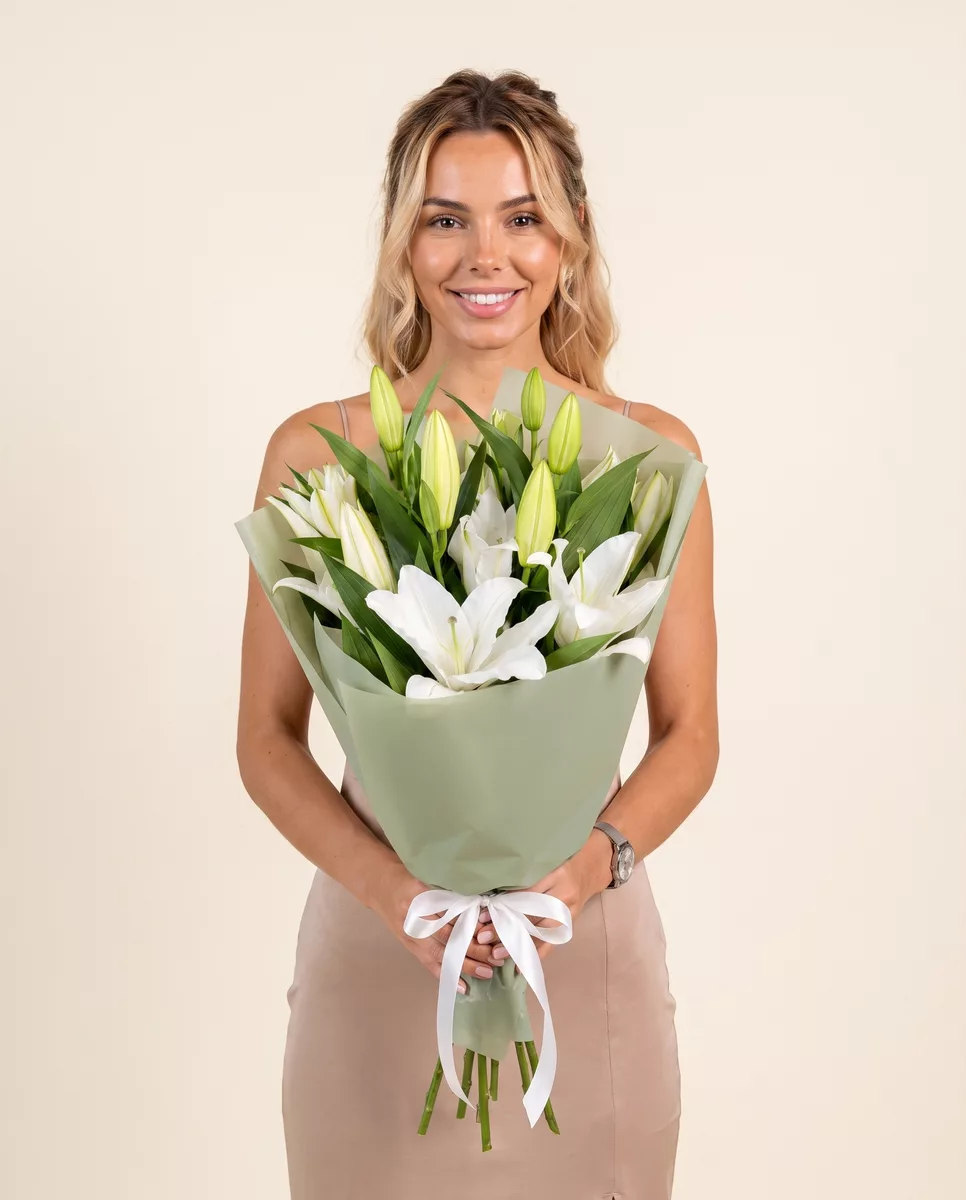
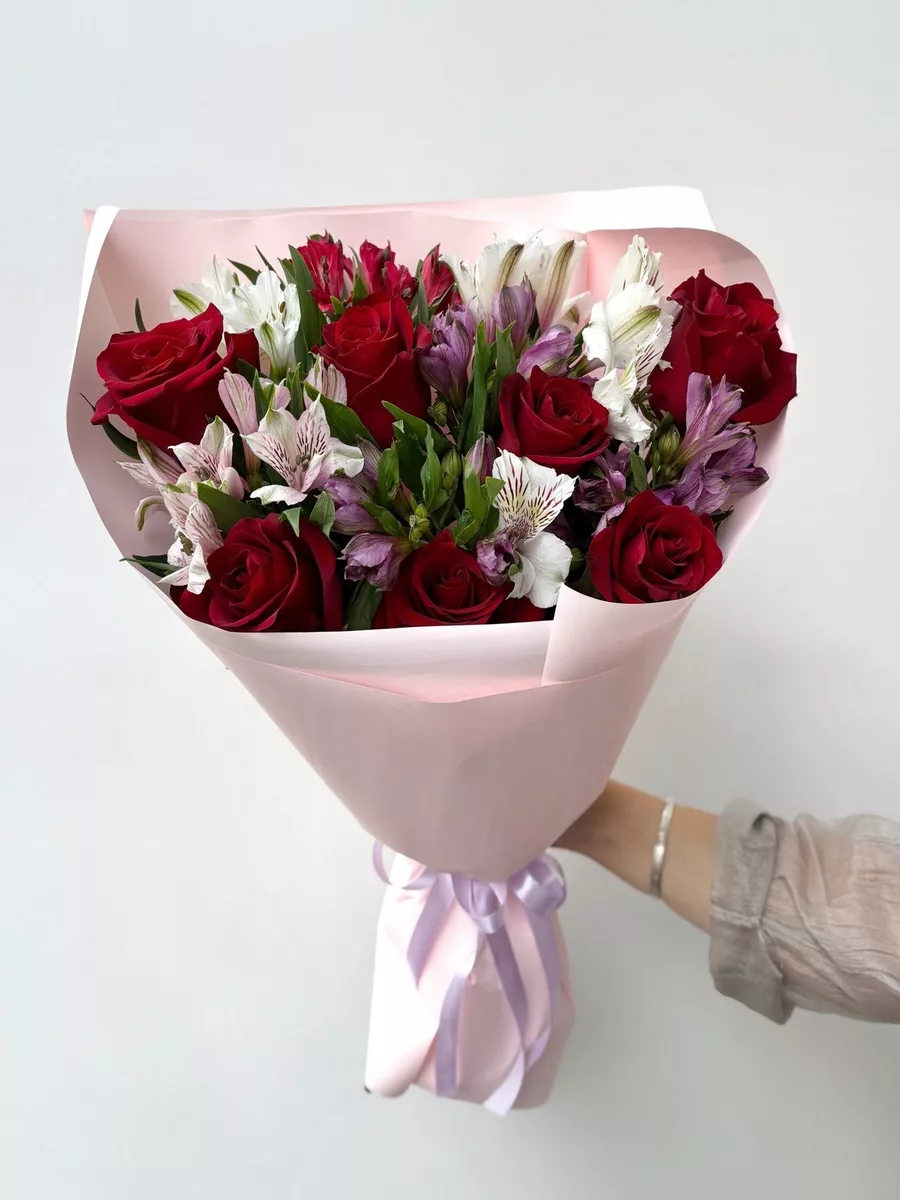
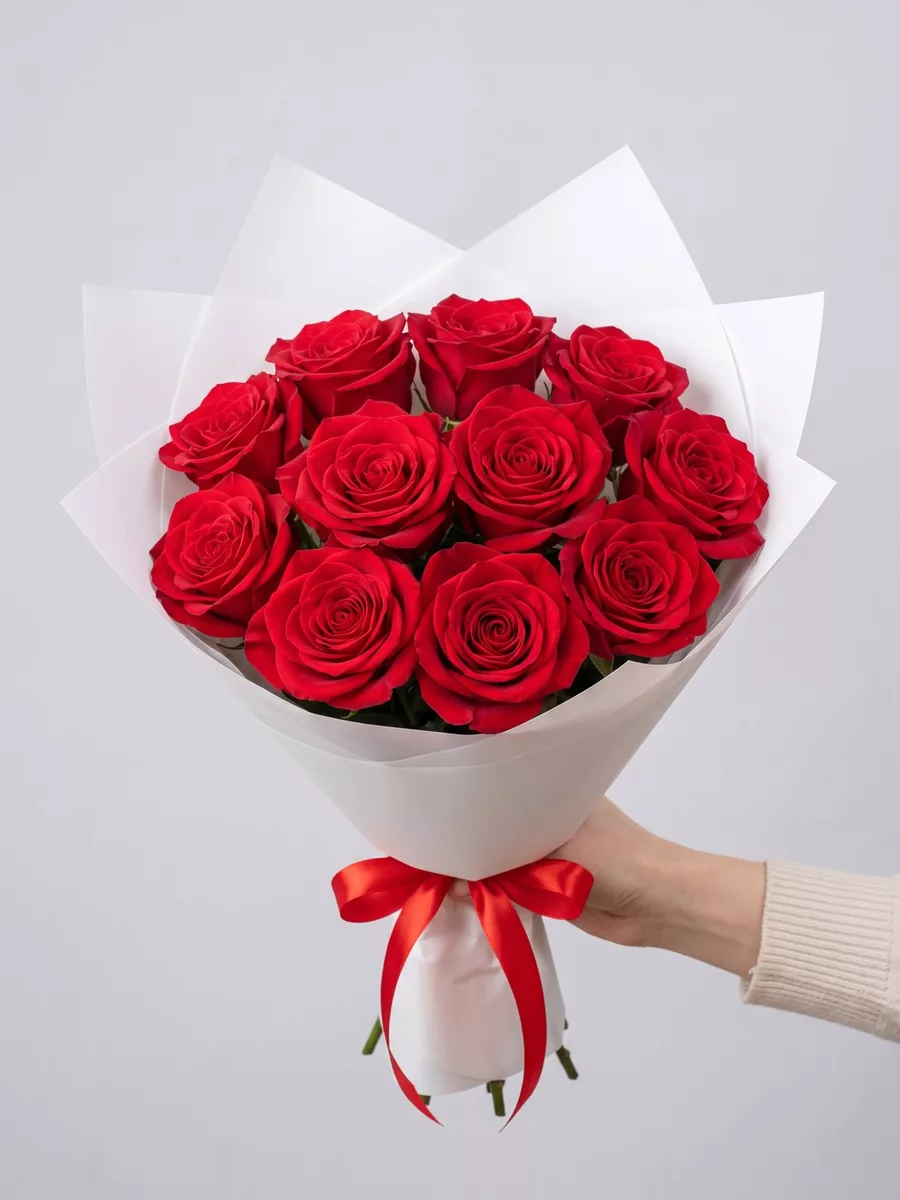
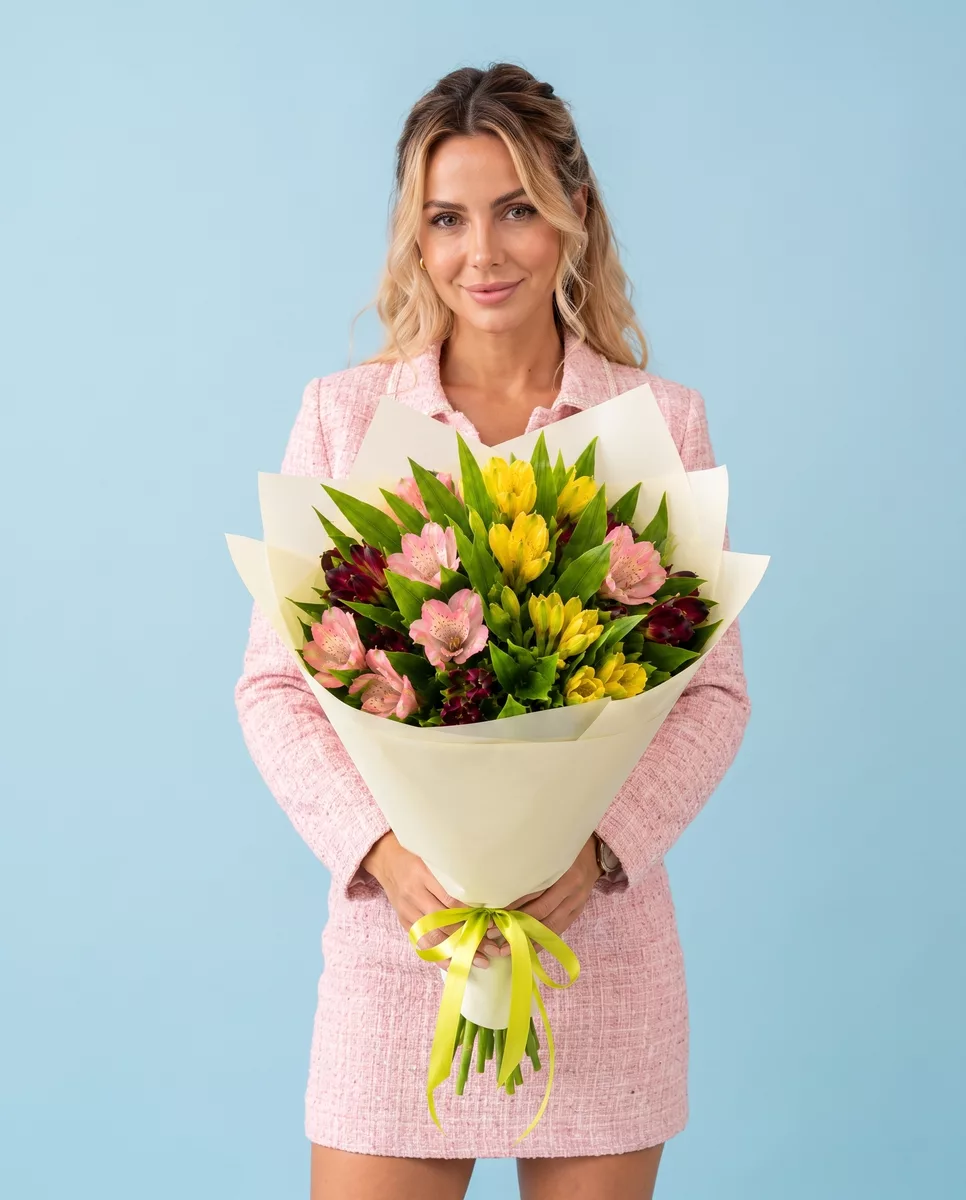
Birthday: The Occasion That Demands the Most Thought
A birthday is the single most common reason customers order flowers for an aunt, and it is also where the most mistakes happen. The classic error is ordering by stem count alone — twelve roses sounds generous, but twelve identical red hybrid tea roses in a tight bunch reads as impersonal, the kind of bouquet you hand to a business partner. For an aunt's birthday, variety matters more than quantity. A combination of garden roses such as David Austin varieties with ranunculus and eucalyptus branches creates texture and a sense of considered selection. Lisianthus is particularly useful here: it is long-lasting, available year-round, and its ruffled petals give a bouquet visual depth without inflating the price significantly. In terms of colour, Russian family culture does not carry the same strict colour codes that some customers assume. White flowers are perfectly acceptable for a birthday — the association of white with mourning is weaker than in some other cultures, and a white-and-blush palette of peonies in season or white spray roses out of season looks genuinely elegant. What to avoid is an odd number obsession taken too far: Russian tradition does favour odd numbers for celebratory bouquets, and even numbers are associated with funerals, so stick to five, seven, nine or eleven stems if you are counting individually. If the bouquet is arranged rather than hand-tied, stem count becomes less visible and less relevant. Confirm the aunt's home temperature when ordering in summer — apartments above 25 degrees Celsius shorten vase life dramatically.
March 8th: International Women's Day and What It Means in Russia
International Women's Day on March 8th is, in practical terms, the busiest single day in the Russian flower calendar. Every woman in a man's life receives flowers — wife, mother, grandmother, colleague, and absolutely the aunt. The expectation is not subtle. If you skip an aunt on March 8th, it is noticed and remembered. The challenge for customers ordering that day is that demand peaks sharply and many varieties are pre-sold by the morning of the 7th. Tulips are the traditional March 8th flower in Russia, and for good reason: they are in natural season, they travel well when cut at the bud stage, and they open beautifully in a warm room over twenty-four to forty-eight hours. A bunch of fifteen to twenty-five tulips in a single colour — deep purple, coral, or cream — is an entirely appropriate gift for an aunt and requires no further explanation or decoration. Mimosa is the other classic: small yellow pompom clusters that are strongly associated with the holiday. However, mimosa is highly perishable and sensitive to temperature swings, so it works well for same-day delivery but is a poor choice if there is any uncertainty about when the aunt will be home. For customers who want something beyond the standard tulip bundle, a mixed spring arrangement combining hyacinths, muscari, and ranunculus signals more effort and still fits the seasonal palette. Order no later than March 6th for guaranteed morning delivery on the 8th — afternoon slots fill by the evening of the 7th without exception.
Name Days and Church Calendar Occasions
Name days — imeniny — are less universally observed in modern Russia than they were in the Soviet and pre-Soviet periods, but in families where the aunt is religious or traditionally minded, the name day can matter as much as or more than the birthday. The date corresponds to the feast day of the saint whose name the person bears, and it is listed in Orthodox church calendars. If you are not sure whether your aunt observes her name day, ask a parent or cousin — it is not a sensitive question. When name days are celebrated, the flower choice tends toward the more classical and restrained. Large, showy tropical flowers like strelitzia or anthuriums feel out of register. What works well is a hand-tied bouquet of garden-style flowers: freesia, which has genuine fragrance and holds for five to seven days in water, combined with alstroemeria for volume, and perhaps a few stems of white or pale pink carnations. Carnations have an undeservedly bad reputation among younger customers who associate them with Soviet-era minimalism, but a modern carnation — particularly the spray varieties with multiple small blooms per stem — is a very different product from the stiff single-stem versions of forty years ago. For church-going aunts, white flowers are especially appropriate on name days. Delivery timing matters: name day celebrations in religious families often include a midday meal after the morning service, so a ten or eleven o'clock arrival is more meaningful than an evening drop-off.
New Year and Winter Holidays: Flowers That Survive the Cold
New Year — Novy God — is celebrated on January 1st in Russia and is the largest holiday of the year, larger in practical terms than Christmas, which falls on January 7th in the Orthodox calendar. Visiting relatives during the first two weeks of January is standard, and bringing flowers when you arrive is common practice, though not as obligatory as on March 8th or a birthday. The logistical problem in winter is temperature: flowers transported in outdoor conditions below minus ten degrees Celsius can freeze in transit even inside packaging. At Five Flowers, couriers use insulated carriers and minimize outdoor exposure time, but customers should still choose cold-tolerant varieties for January deliveries. Roses are more robust than many people expect if they are kept wrapped until indoors. Chrysanthemums in their spray form handle cold very well and last exceptionally long in a vase — two weeks is realistic. Gerberas, by contrast, are cold-sensitive and wilt quickly if exposed to freezing air even briefly, so they are a poor choice for January deliveries to addresses requiring outdoor walking time. For a New Year bouquet to an aunt, a combination of red and white spray chrysanthemums with pine or fir branches gives a seasonal feel without relying on fragile materials. Amaryllis is another strong winter option: the large trumpet-shaped blooms open over several days and have structural presence that suits a holiday table. Specify a delivery window between noon and four in the afternoon when possible — morning deliveries in January often catch apartments before heating systems have fully warmed the entrance halls.
Housewarming and Moving: Flowers as a Practical Gift
When an aunt moves into a new apartment — a common event in Russian cities where housing transactions happen across all age groups — flowers are a standard housewarming gift, often combined with something practical like a kitchen item or a bottle of wine. The flower choice for a housewarming should account for the fact that the recipient is surrounded by boxes and may not have located her vases yet. This is the one occasion where a potted plant arguably outperforms a cut bouquet, but if you are ordering cut flowers, go for a bouquet that comes in its own water-holding packaging or a vase included in the order. At Five Flowers, we can include a simple glass vase with the delivery — worth requesting when the destination is a new or recently moved-into address. In terms of varieties, housewarming bouquets benefit from longevity above all else. Alstroemeria lasts ten to fourteen days with regular water changes and is available in a wide colour range. Statice — the small dried-looking purple or white filler flower — actually holds indefinitely and adds texture without competing with fresher elements. A combination of alstroemeria, statice, and three or five stems of solidago creates a cheerful, low-maintenance arrangement that survives the chaos of moving week. Avoid anything with heavy pollen — lilies in particular — in a new apartment where the aunt may not yet have curtains or protective surfaces in place. Lily pollen stains fabric and is notoriously difficult to remove. Ask about the delivery address access situation: new buildings in Russian cities sometimes have complicated entry systems that delay couriers.
What to Check Before You Place the Order
Several practical details make the difference between a bouquet that lands well and one that creates a small family drama. First, confirm the aunt's address precisely, including the apartment number, floor, and entry code if the building has a coded door panel — a significant proportion of Saint Petersburg apartment buildings do, and a courier waiting outside with flowers in January is not a charming situation. Second, check whether the aunt is actually home during the delivery window. Russian aunts are often active and out of the house, and a missed delivery means the flowers sit in an unheated entrance hall. Third, consider allergies: some people have reactions to strongly scented flowers, and lilies and freesia are the most common culprits. If you are not certain, ask, or default to low-fragrance varieties like roses, lisianthus, or chrysanthemums. Fourth, think about the vase situation as mentioned above — new apartments, summer dachas, and hospital recovery situations all mean the recipient may not have a suitable container. Fifth, do not leave the order until the day of the occasion for any holiday that falls on a Russian calendar date of significance. March 8th, February 23rd, New Year, and major birthdays all see delivery slots fill well in advance. Ordering forty-eight hours ahead for a standard delivery and seventy-two hours ahead for a large or complex arrangement is a reliable habit. Finally, include a card with a message in Russian if you can — even a brief handwritten note in Russian carries more warmth than a printed English message for an aunt who does not read English.
Buying flowers for a Russian aunt is not complicated once you understand the occasions that genuinely call for them and the practical details that determine whether a bouquet arrives in good condition at the right moment. The key variables are always the same: the right variety for the season and the transit conditions, the right delivery window for the family schedule, and enough lead time to avoid the last-minute scramble that produces generic results. An aunt who receives a thoughtfully chosen bouquet of fresh-cut ranunculus or a proper spring arrangement of hyacinths and tulips on her birthday or name day will remember it — and she will tell you what she thought of it, which is very much in the spirit of the relationship. We deliver bouquets across Russia in 1–2 hours.
Frequently asked questions
Is it acceptable to send an even number of flowers to a Russian aunt for her birthday?
In Russian tradition, even numbers of flowers are associated with funerals, so for a birthday stick to odd numbers: five, seven, nine, eleven stems. This applies mainly to individually counted stems. If the bouquet is arranged with mixed varieties and fillers, the total stem count becomes less visible and the convention matters less in practice.
Which flowers last longest if the aunt is not immediately home to receive them?
Spray chrysanthemums and alstroemeria are the most resilient cut flowers for delayed reception — both tolerate a few hours at room temperature without significant wilting. Avoid freesia, tulips, and gerberas if there is any chance the bouquet will wait in an entrance hall. Including a water-holding wrap in the packaging extends safe waiting time considerably.
Do Russian aunts expect flowers on February 23rd, which is Defender of the Fatherland Day?
February 23rd is traditionally a men's holiday in Russia, so aunts do not expect flowers on that date. However, the holiday creates a social dynamic where women who give gifts to the men in the family sometimes receive a small thank-you gesture in return. It is not an obligatory flower occasion for aunts the way March 8th is.
What is a reasonable bouquet size for an aunt versus a mother or grandmother?
There is no strict rule, but culturally a mother or grandmother often receives the largest and most elaborate arrangement, while an aunt receives something slightly smaller but still clearly considered — seven to eleven stems of quality flowers rather than a single-variety bunch. The key is variety and freshness over sheer stem count, which signals genuine thought rather than a last-minute purchase.
Can I order flowers for delivery to a dacha outside the city in summer?
Five Flowers delivers across Russia, so dacha addresses are possible depending on the location. Summer heat above 25 degrees Celsius shortens vase life for all cut flowers, so specify the delivery time carefully and choose hardy varieties like spray chrysanthemums or alstroemeria rather than heat-sensitive options like tulips or garden roses. Confirm the exact address and access route when ordering.
Ready to send a bouquet?
Pick a city, choose the flowers, and we will hand them over with a photo confirmation.
Choose a city →