
What Flowers to Send a Russian Bride Before the Wedding
Customers call us the night before a wedding asking the same question: is it too late, and does it even matter what kind of flowers they send? It matters more than most people realize. In Russia, gifting the bride before the ceremony is a distinct tradition with its own timing, its own flower logic, and its own way of going wrong if you order carelessly. Here is what a working florist in Saint Petersburg sees every wedding season.
The Russian Pre-Wedding Gift: What the Tradition Actually Involves
In Russian wedding culture, the bride receives flowers twice: once before the ceremony and once at the ceremony itself. The pre-ceremony gift arrives either the evening before — typically between 18:00 and 21:00 — or the morning of the wedding, usually before 10:00, well ahead of the stylist and photographer. This is not a casual gesture. It comes from close family or the groom's side and signals that the household is thinking of her before the public celebration begins. The bouquet is brought to her home or the apartment where she is getting ready, not to the venue. Many customers outside Russia assume the bride only receives flowers from the groom at the altar, so they skip this step entirely. That is a visible omission in a Russian family setting. The pre-wedding bouquet does not replace the ceremony bouquet the bride carries; it sits on the dressing table or is photographed separately. It should therefore look composed and intentional, not like a last-minute addition. Florists in Saint Petersburg handle a sharp spike in pre-wedding orders on Friday and Saturday mornings, and delivery windows fill up fast. If you are ordering for a Saturday morning ceremony, placing the order by Thursday evening gives you the best chance of getting the time slot you need and the specific varieties you want rather than substitutes.
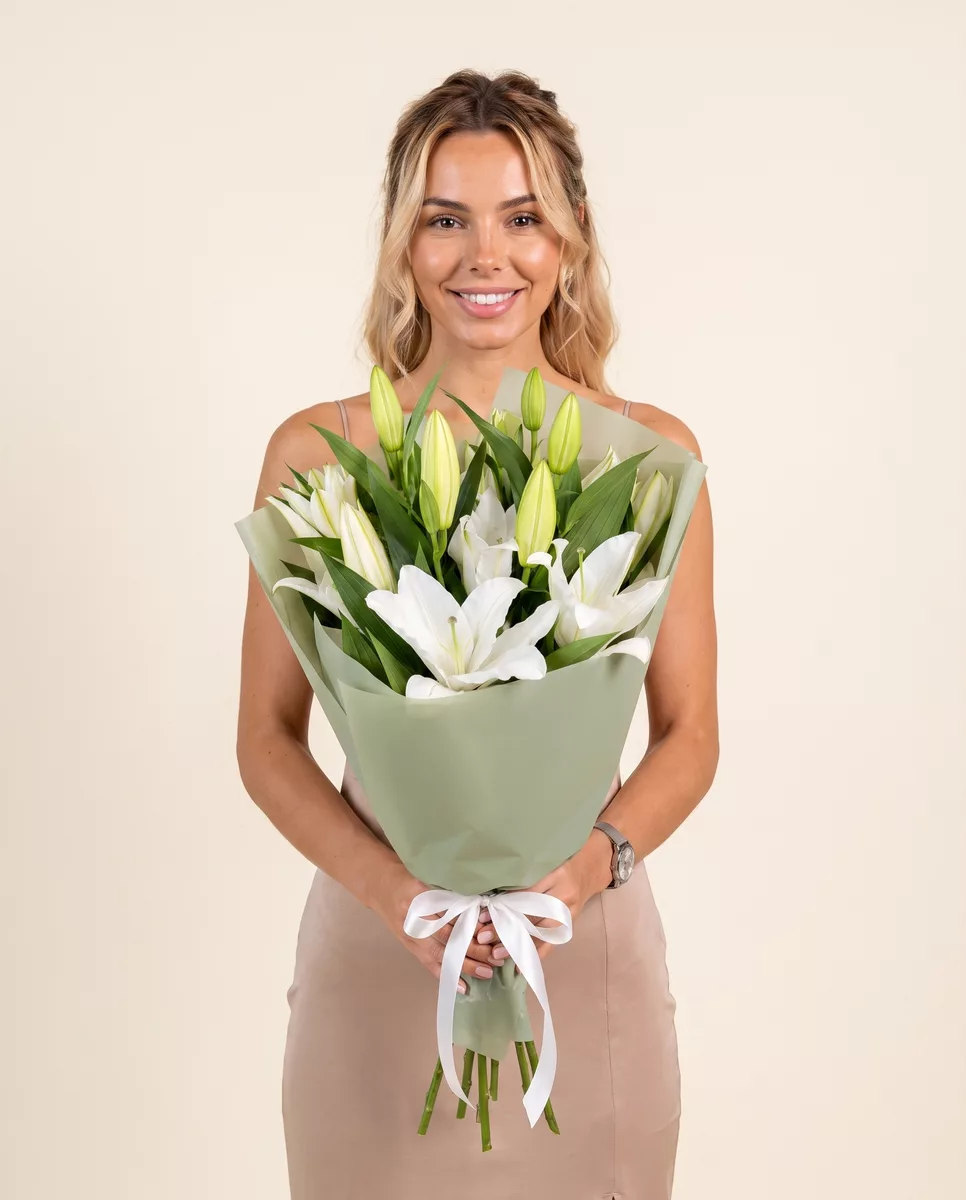
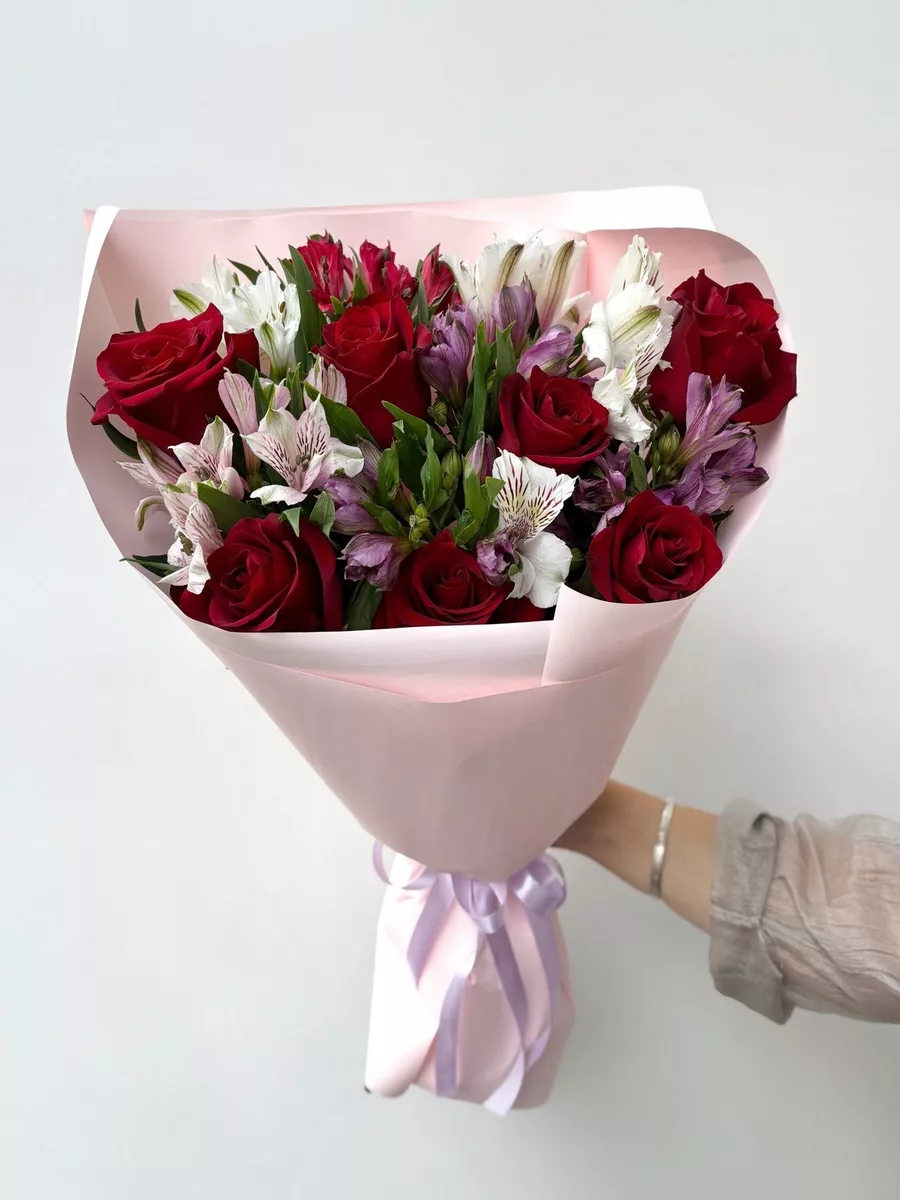
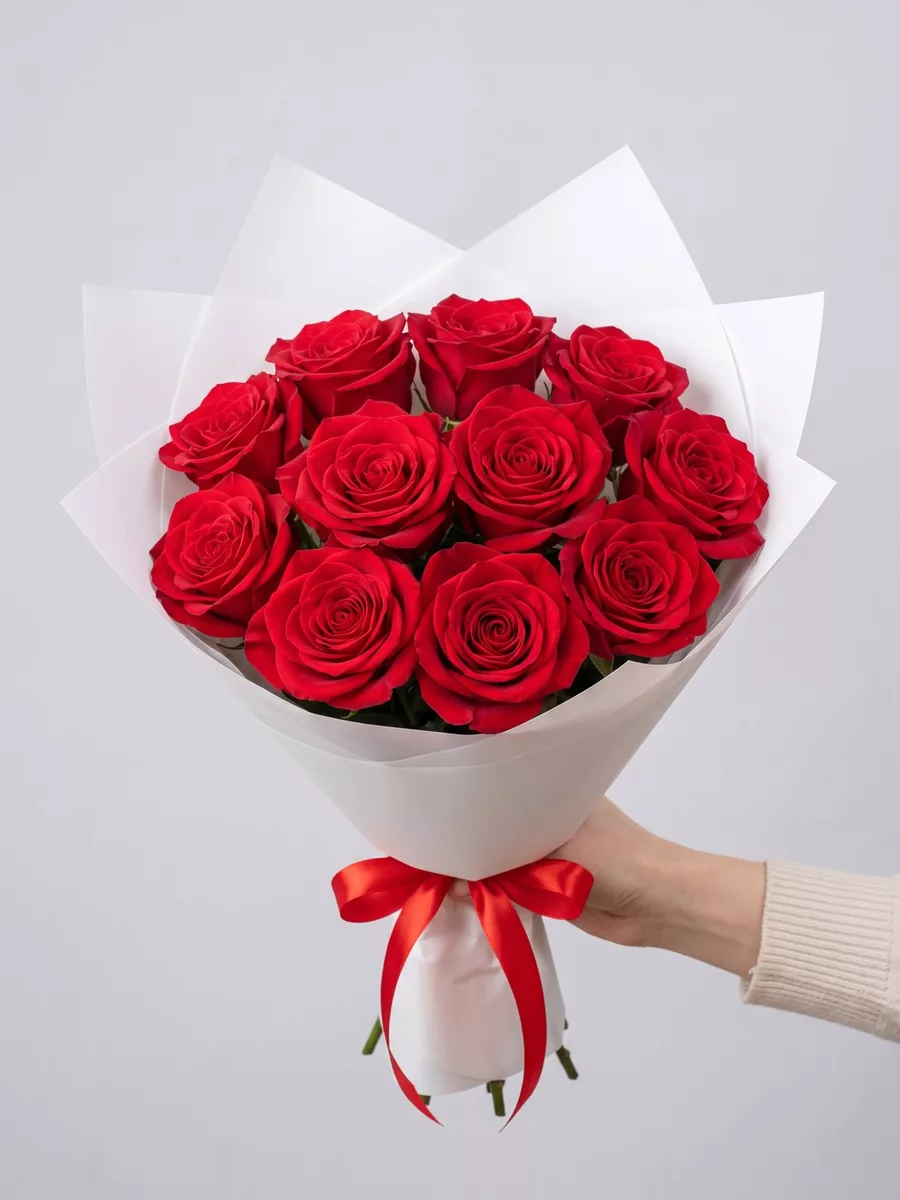
Bouquets we can deliver

Which Flowers Are Considered Lucky for a Russian Bride
White and cream flowers dominate pre-wedding gifting in Russia, and the reasoning is straightforward: they photograph cleanly, they do not clash with any dress color, and they carry a long association with new beginnings rather than with any specific emotion. White garden roses — varieties like Mondial, Avalanche, and White O'Hara — are the most requested. Peonies in white or blush are considered particularly auspicious and are heavily associated with Russian weddings from May through July when they are in season. Outside peony season, customers often substitute ranunculus, which holds a similar full, layered shape and is available from late winter through spring. Lily of the valley is another flower with strong traditional standing in Russian bridal culture. It is small, scented, and seasonal — available roughly from late April through early June — and a bunch added to a white rose arrangement reads as a deliberate cultural reference rather than a filler choice. Soft pink flowers are equally acceptable: blush spray roses, light pink lisianthus, and pink astilbe all appear regularly in pre-wedding arrangements. What florists advise against for this occasion are red flowers, which in Russian tradition carry a more passionate or romantic charge suited to the groom's ceremony bouquet rather than a morning gift from family. Bright orange or purple flowers are not considered unlucky, but they are unusual choices for this specific moment and can look out of place in wedding morning photographs.
Roses: Varieties That Hold Up on a Wedding Morning
Roses are the safest choice for a pre-wedding delivery because good varieties stay fresh for five to seven days under normal conditions, which means they will look perfect both when they arrive and hours later during the ceremony photographs. Not all rose varieties perform equally well under the stress of a Russian apartment in spring or summer, where indoor temperatures can reach 24 to 26 degrees Celsius. Avalanche is the standard workhorse: large cream-white heads, tight petals, and strong stems that do not droop even when left in a vase without water for a couple of hours. Mondial is slightly warmer in tone, leaning ivory, and opens more slowly, which is useful if the delivery happens the evening before and the bouquet needs to look fresh the next morning. White O'Hara is a garden rose variety with a cupped, dense head and a faint scent; it is more delicate than Avalanche and needs to go straight into water, so it is better suited to morning delivery than evening. For a pink option, Keira and Juliet garden roses are popular for bridal arrangements in Saint Petersburg, though supply varies by season. Spray roses — small multi-headed stems — are often added as texture rather than as the main flower, and they last extremely well. When ordering, specify that the roses should arrive at bud stage rather than fully open, especially for evening delivery, so they reach full bloom by ceremony time the following day.
Peonies, Ranunculus and Seasonal Alternatives
Peonies are the most requested flower for Russian bridal gifting from May through early July, and for good reason. Sarah Bernhardt, a classic pale pink variety, and Kansas, which is a deeper pink, are the most common in Saint Petersburg wholesale supply. White peonies are rarer and more expensive but are considered the most traditionally appropriate for the pre-wedding gift. The key issue with peonies is temperature sensitivity. They open rapidly above 20 degrees Celsius and can go from tight bud to fully blown in twelve hours in a warm apartment. For a morning delivery, buds should be firm but showing color; for an evening delivery, they can be slightly more open. Always ask the florist to confirm bud stage at packing. Outside peony season, ranunculus is the most effective substitute. Cloni varieties — particularly Cloni Success Bianco and Cloni Success Hanoi, a pale blush — have large, layered heads that photograph similarly to peonies and are available from February through May. Ranunculus is more cold-tolerant than peonies and handles transit well. Lisianthus, sometimes called eustoma, is another strong alternative: the double-flowered varieties in white and pale pink have a rose-like appearance, last well over a week in water, and are available year-round from Dutch auctions. Anemones in white with their dark centers are occasionally used for winter or early spring weddings and add a graphic quality that suits modern bouquet styles. None of these are second-best choices — they are simply the right flower for the right month.
Greenery, Texture and What Holds the Arrangement Together
A bouquet of only roses or only peonies can look flat in photographs, and experienced florists always add structure through foliage and texture flowers. For Russian bridal arrangements, the most common greenery choices are eucalyptus, ruscus, and pittosporum. Eucalyptus — particularly the seeded variety and baby blue — adds a soft grey-green tone and a faint scent that works well alongside roses. Ruscus provides darker, glossy leaves and gives the arrangement a more formal, structured edge. Pittosporum is softer and slightly irregular, which suits garden-style bouquets. Texture flowers are the small blooms added between the main focal flowers. Gypsophila — commonly called baby's breath — is a traditional Russian wedding flower and still appears frequently in pre-wedding arrangements, though younger customers sometimes find it dated. A more current choice is white or cream waxflower, which has a similar airy effect with smaller, more refined florets. Astilbe in white or blush adds feathery plumes that photograph beautifully. Muscari, the small grape hyacinth, appears in spring arrangements and adds a deep blue-purple note that can anchor an otherwise all-white bouquet. When ordering, it is worth asking the florist specifically not to use dyed or tinted flowers — blue roses, rainbow roses, or spray-painted stems — in a pre-wedding arrangement. These are available in the Russian market but are considered inappropriate for this occasion by most families, and they do not age well.
Delivery Timing: Evening Before or Morning of the Ceremony
The question florists get most often is whether to deliver the evening before or the morning of. Both are correct within Russian tradition, but they have different practical implications for the flowers themselves. Evening delivery — between 18:00 and 21:00 the night before — gives the bride time to enjoy the arrangement, photograph it in natural light the next morning, and feel prepared. The risk is that flowers sit overnight in a warm apartment. Roses in bud stage handle this well; peonies need to be at a firm bud to avoid opening overnight. The florist should include a care card asking the recipient to cut stems and place them in cool water immediately. Morning delivery is more logistically demanding because wedding mornings are chaotic. The window between 07:00 and 09:30 works best — after the bride is awake but before the makeup artist and photographer arrive. Deliveries after 10:00 risk arriving in the middle of getting-ready photographs, which disrupts the household. For Saint Petersburg deliveries, our experience is that morning slots on Saturdays fill up by Thursday, so ordering early in the week is not overcaution — it is necessary. If you are ordering from outside Russia for a bride in Saint Petersburg, account for the time zone: Moscow time is UTC+3, Saint Petersburg uses the same zone. A 09:00 delivery in Saint Petersburg means placing a confirmed order no later than the previous evening, with the delivery address, contact phone number, and a note about whether the building has a doorman or coded entry.
Common Mistakes and What to Check Before You Confirm the Order
The most frequent mistake is ordering without specifying the delivery window precisely. Saying 'morning' is not enough — a four-hour window on a wedding Saturday means the flowers could arrive at 07:00 or at 11:00, and those are completely different situations. Give a one-hour window and confirm it. The second mistake is choosing flowers based on appearance in photographs rather than on their suitability for the conditions. Large tropical flowers — anthuriums, birds of paradise, protea — look dramatic online but are rarely appropriate for a Russian pre-wedding gift and can read as mismatched against the ceremony aesthetic. The third mistake is ordering a bouquet that duplicates the bride's ceremony bouquet. If the groom has already ordered a large white rose bouquet for the ceremony, the pre-wedding gift should be different in scale or composition — perhaps a smaller garden-style arrangement with lily of the valley and ranunculus rather than another formal rose dome. Ask the groom or a family member what the ceremony bouquet looks like before finalizing. Check that the delivery address is complete: apartment number, floor, intercom code, and a working phone number for the recipient. In Saint Petersburg, many residential buildings have coded entry systems, and a delivery driver without the code will call the recipient — which on a wedding morning is the last thing anyone needs. Finally, confirm that the shop can reach someone at the delivery address, not just the bride herself, since she may be unavailable during preparation.
Pre-wedding flower delivery in Russia is a precise exercise: the right varieties for the season, the right bud stage for the timing, and a delivery window narrow enough to fit around a wedding morning schedule. White and cream roses, seasonal peonies or ranunculus, and considered greenery are the choices that work consistently. Order early in the week for a weekend wedding, be specific about the time window and the building access details, and let the florist know what stage of bloom you need at arrival. Everything else follows from those three decisions. We deliver bouquets across Russia in 1–2 hours.
Frequently asked questions
Is it appropriate to send flowers to a Russian bride if I am not a family member?
Yes. Close friends, godparents, and colleagues of the family all send pre-wedding flowers in Russia. The gift is not restricted to relatives. A smaller, well-composed arrangement — rather than a large formal bouquet — is the right scale for someone outside the immediate family circle, and it is always well received.
Are red roses ever sent to a Russian bride before the wedding?
Red roses are associated with the groom's romantic gesture and are more common at the ceremony itself. Sending red roses as a pre-wedding gift from family or friends can feel tonally mismatched in a Russian context. White, cream, or blush flowers are the conventional and safer choice for the morning or evening before.
How many flowers should be in the bouquet — does the odd-number rule apply here?
The odd-number rule in Russia applies to flowers given at funerals and mourning occasions. For celebrations including weddings, even numbers are perfectly correct and are actually common in formal bridal arrangements. A bouquet of twelve or twenty-four roses is entirely appropriate and raises no concern.
What if peonies are out of season for the wedding date?
Ranunculus, particularly the Cloni varieties in white or blush, is the closest substitute in terms of head size and layered petal structure. Lisianthus double varieties are another strong option available year-round. Both hold well in transit and look appropriate in a Russian bridal context without appearing like a compromise.
Can I include a note or card with the pre-wedding delivery?
Yes, and it is considered a thoughtful addition. Keep the message brief — a sentence or two of warm wishes is more fitting than a long note on a busy morning. The florist can attach a card to the bouquet. If you are ordering remotely, type the message exactly as you want it written so nothing is paraphrased.
Ready to send a bouquet?
Pick a city, choose the flowers, and we will hand them over with a photo confirmation.
Choose a city →