Russian Wedding Anniversary Names: Which Milestone Gets Flowers?
Customers call us the day before a big anniversary and say something like: 'It's their wooden wedding — do we even send flowers for that?' The answer is yes, almost always, but the choice of bouquet changes completely depending on the milestone. Russia has a detailed system of anniversary names stretching from one year to seventy-five, and each name carries its own symbolism that shapes what people expect to receive. This article lists the main milestones, explains what the names actually mean, and tells you which ones have a real tradition of flower delivery attached to them — and what to order when they do.
The Russian Anniversary Naming System: A Plain Explanation
In Russia, as in many European countries, each wedding anniversary year carries a material name — cotton, paper, wood, crystal, silver, gold and so on. The logic is that the material grows more precious and durable as the marriage ages. These names are not government-issued; they come from folk and literary tradition, and different sources occasionally disagree on a year or two. The most widely recognised milestones in everyday Russian culture are the first year (cotton or calico), fifth (wooden), tenth (tin or rose), fifteenth (crystal or glass), twentieth (porcelain), twenty-fifth (silver), thirtieth (pearl), thirty-fifth (coral or linen), fortieth (ruby), forty-fifth (sapphire), fiftieth (golden), fifty-fifth (emerald), and sixtieth (diamond). Years beyond sixty exist — the sixty-fifth is sometimes called an iron wedding, and the seventy-fifth a crown wedding — but they are rarely celebrated in practice simply because reaching them requires a marriage that started in a couple's teens or early twenties. Understanding which name applies is step one; knowing whether flowers belong to that celebration is step two, and that depends on the customs that have grown around each milestone rather than the material name alone.
Bouquets we can deliver

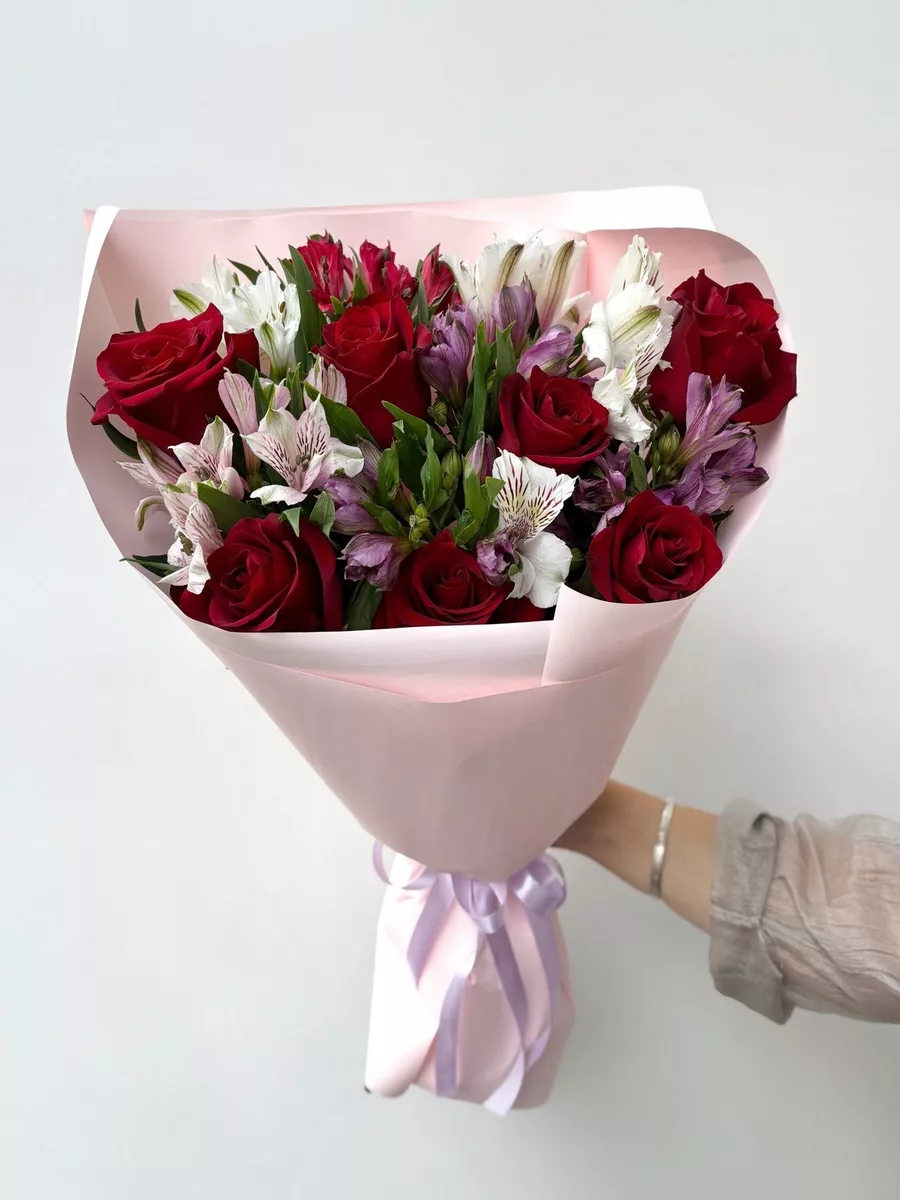

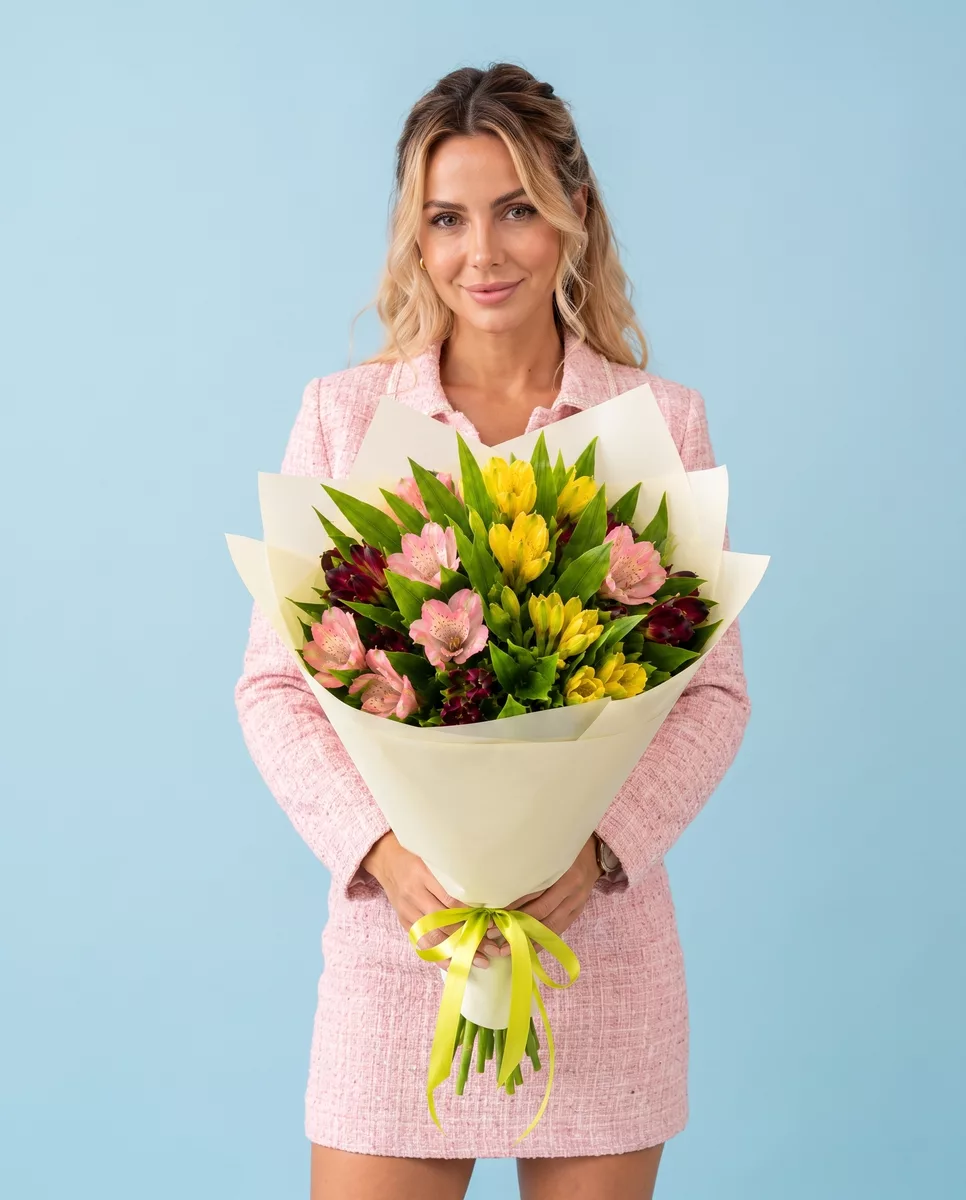
First to Fifth Year: Cotton, Paper and Wooden Weddings
The first anniversary is called the cotton or calico wedding in Russian tradition, referencing fabric that is soft but still fragile — the marriage is new and still finding its shape. Flowers absolutely belong here: a bouquet of garden roses, ranunculus or peonies (in season, May through July) is the most common choice. The fifth anniversary is the wooden wedding, and this is where customers get confused. They assume 'wooden' means no flowers — it does not. Wood symbolises something that has taken root and grown solid. A lush, structured bouquet suits this milestone well: think garden roses combined with eucalyptus branches, or a large arrangement of spray roses and seasonal greenery. The third anniversary is sometimes called the leather wedding, and the fourth the linen or wax wedding, though these middle years are celebrated more quietly. For the cotton, wooden and leather milestones, the typical bouquet size runs from fifteen to twenty-five stems for roses, or a mixed arrangement of similar volume. One practical point: if the delivery address is a restaurant or event hall rather than a home, tell us when you order — flowers going into a warm banquet room need to leave our cooler at around four degrees Celsius and should arrive no more than ninety minutes before the celebration starts, otherwise they open too fast under the heat and spotlighting.
Tenth Anniversary: The Rose Wedding
The tenth anniversary has two names in Russian tradition: the tin wedding and the rose wedding. In practice, the rose name has almost entirely taken over, and it is one of the clearest cases where the anniversary name directly dictates the flower. Customers ordering for a tenth anniversary almost universally ask for roses, and that instinct is exactly right. The question is which roses and how many. Garden roses — varieties such as David Austin's Juliet, Keira or Olivia — give a romantic, layered look that suits a decade milestone. Standard Dutch roses in a single colour, say cream or deep red, read as more formal. A classic choice is twenty-five or fifty-one roses, since odd numbers are the Russian gifting convention for living recipients. Spray roses mixed with single-stem varieties add texture without raising the price significantly. Timing matters here more than people expect: roses cut more than three days before delivery will not hold their form through a party evening. We cut to order and keep stems in water at three to five degrees until the courier picks them up. If you are ordering for an evening event, placing the order before noon gives us the best window to prepare stems that arrive firm and tight — roses that have been out of water for even two hours in a warm car will droop noticeably by dessert.
Crystal, Porcelain and Silver: The Middle Milestones
The fifteenth anniversary is the crystal wedding. Crystal is clear, cool and precise, and the flower choices that echo this are white or pale arrangements: white lisianthus, white tulips in season (October through April), white garden roses or white spray roses with silver-leaved eucalyptus. This is one of the milestones where a monochrome white bouquet feels entirely intentional rather than generic. The twentieth anniversary is the porcelain wedding — delicate, refined, finished. Customers often want something sculptural here: phalaenopsis orchid arrangements, or a tight dome of white and blush garden roses. The twenty-fifth anniversary is the silver wedding, and it is a genuinely major celebration in Russian families. Silver as a colour translates into flowers with silver-grey foliage — dusty miller, eucalyptus, brunia — paired with white or very pale pink blooms. A bouquet of fifty-one roses is common; so is a large arrangement in a vase, since silver weddings frequently involve a family gathering at home rather than a restaurant. For home deliveries, we recommend specifying whether the recipient has a tall vase available: arriving with a long-stemmed arrangement and no vessel to put it in is a common and avoidable problem. A note on porcelain and crystal milestones: these are celebrated more modestly than silver, so bouquet sizes of fifteen to twenty-five stems are typical rather than the larger counts seen at silver and golden anniversaries.
Ruby, Sapphire and Pearl: Forty to Forty-Five Years
The thirtieth anniversary is the pearl wedding. Pearl is warm, lustrous and slightly iridescent, and the flower palette that matches it runs toward cream, champagne and blush: garden roses in peachy tones, ranunculus in cream, white lisianthus. The thirty-fifth anniversary is the coral or linen wedding, and coral gives a clear colour direction — orange-toned roses, coral-coloured ranunculus, or a mixed bouquet with warm peach and orange shades. The fortieth anniversary is the ruby wedding, and ruby means deep red. Red roses are the obvious choice and customers are right to go there. Forty or fifty-one red roses is a frequent order for this milestone. Varieties worth requesting specifically include Explorer, Red Naomi or Grand Prix for their deep, saturated colour and long vase life. The forty-fifth anniversary is the sapphire wedding. Here customers sometimes struggle because there are very few naturally blue flowers, and blue roses do not exist in nature — dyed versions are available but look artificial up close. The practical solution is deep purple or violet tones: lisianthus in violet, purple roses such as Ocean Song, or a mixed arrangement with dark purple anemones in season (autumn through spring). These read as blue-adjacent in photographs, which matters because anniversary celebrations are always photographed. One timing note for ruby and sapphire orders: if the couple is older, deliveries to apartment buildings should be placed with a ground-floor or lobby-delivery instruction, since not all buildings have working lifts and our couriers carry large arrangements.
Golden Anniversary: Fifty Years and What to Order
The fiftieth anniversary — the golden wedding — is the milestone Russians celebrate most publicly and with the most ceremony after the silver wedding. It is a landmark in a way the intervening years are not, and flower orders for golden weddings are consistently the largest we handle in the anniversary category. Gold as a colour in flowers means yellow: yellow roses, yellow ranunculus, yellow tulips in season, yellow freesia for fragrance. Mimosa is sometimes requested for golden weddings in late winter and early spring when it is available, because the colour is exactly right and the texture is distinctive. A bouquet of fifty-one or one hundred and one roses is not unusual for this milestone — these are orders where the quantity itself is part of the statement. Mixed arrangements combining yellow roses with white lisianthus and golden-toned foliage are also popular, particularly for home deliveries where a large arrangement in a vase becomes a centrepiece for the party table. One thing to check when ordering for a golden wedding: confirm the delivery window carefully. Celebrations often start at midday with a family lunch, not in the evening. If flowers arrive two hours after guests have sat down, the moment is lost. We offer morning delivery slots from eight in the morning, and for significant milestones it is worth using them. Also confirm the address type: golden wedding couples are often in their seventies, and deliveries to dachas outside the city require advance notice because distance affects our timing guarantee.
Diamond, Emerald and Beyond: The Rarest Milestones
The fifty-fifth anniversary is the emerald wedding. Green-toned flowers are less common but not impossible: green trick dianthus, green chrysanthemum, white flowers with heavy eucalyptus and ruscus, or — in season — green hellebores. A mixed bouquet leaning on foliage and white blooms with green accents is a more reliable choice than trying to find flowers that are literally emerald-coloured. The sixtieth anniversary is the diamond wedding, and diamond traditionally calls for white — pure, brilliant, without colour. An all-white arrangement of garden roses, lisianthus and white ranunculus is the standard interpretation. This milestone is rare enough that customers sometimes call us unsure whether to order at all, worrying that a large bouquet is too much for an elderly couple. It is not: a diamond wedding is a major family event, and flowers are expected. Keep the arrangement manageable in size — a medium vase arrangement rather than an enormous standing display — and choose flowers with a strong fragrance if the recipients enjoy it, since freesia, garden roses and hyacinths (in winter and spring) all perform well here. Beyond sixty, the sixty-fifth iron wedding and the seventy-fifth crown wedding exist in name, but we handle very few orders for these simply because reaching them is statistically uncommon. When we do, the approach is the same: use the material name as a colour guide, choose sturdy long-lasting varieties, and confirm the delivery window with whoever is organising the celebration rather than assuming the couple will be home at a particular time.
Russian anniversary names give you a clear framework for choosing flowers — the material name points toward a colour, and the size of the milestone tells you how large to go. Cotton and wooden weddings call for fresh seasonal bouquets; the rose wedding at ten years almost demands roses by name; silver and golden weddings are the occasions for large, formal arrangements. The milestones in between — crystal, porcelain, ruby, sapphire — each have a colour logic that translates directly into variety choices. The most common mistake is leaving the order too late: anniversary celebrations have fixed start times, and flowers that arrive after the first toast have missed their moment. Order the morning of, specify whether the delivery goes to a home or venue, and tell us if there are any access considerations. The rest is straightforward. We deliver bouquets across Russia in 1–2 hours.
Frequently asked questions
Do Russians actually give flowers for every anniversary year, or only the big ones?
In practice, flowers are most common at the first, fifth, tenth, twenty-fifth, and fiftieth anniversaries. The intermediate years — leather, linen, porcelain — are celebrated more quietly, often without a formal bouquet. That said, there is no rule against sending flowers for any anniversary; the named milestones simply have stronger social expectations attached to them.
What is the correct number of roses to give for a Russian anniversary?
Russian gifting convention calls for an odd number of stems for living recipients — fifteen, twenty-five, fifty-one, one hundred and one. Even numbers are associated with mourning. For major milestones like silver or golden weddings, fifty-one roses is the most common choice. For smaller celebrations, fifteen or twenty-five is appropriate and avoids the arrangement becoming unwieldy.
Can I order flowers for a golden wedding if the couple lives outside Saint Petersburg?
Yes. We deliver across Russia, but delivery time and the advance notice required depend on distance. For addresses outside Saint Petersburg, place your order at least one day ahead and confirm the exact delivery address and time window with us directly. Dacha addresses and rural locations need more lead time than city apartments.
What flowers work for a crystal or diamond wedding if I want to stay on theme?
Both crystal and diamond point toward white and pale tones. White lisianthus, white garden roses, white ranunculus and white tulips in season are all reliable choices. For diamond weddings, adding white freesia or hyacinth in winter gives fragrance, which suits an intimate home celebration well. Avoid dyed or glittered flowers — they look artificial and detract from the occasion.
How far in advance should I order anniversary flowers to guarantee morning delivery?
For morning delivery slots starting at eight, place your order by nine the previous evening at the latest. For same-day delivery, orders placed before noon give us the best preparation window. Anniversary flowers should arrive before guests, not during the celebration, so earlier is always better — especially for golden and diamond weddings where the event often starts at midday.
Ready to send a bouquet?
Pick a city, choose the flowers, and we will hand them over with a photo confirmation.
Choose a city →