
Flowers for a Russian Daughter: Milestones from Childhood to Adulthood
Customers ordering for a daughter in Russia often ask the same thing: is a bouquet too much, too little, or the wrong kind entirely? The short answer is that Russia takes flowers for daughters seriously at every age, and the occasion shapes the bouquet far more than personal taste does. A first-grade girl receiving her teacher's gift on September 1st needs something entirely different from a twenty-five-year-old getting flowers at her university graduation. Knowing which varieties hold up in a hot assembly hall, which stems last through a long celebration dinner, and which colours carry meaning in Russian culture will get you much further than simply picking something pretty.
September 1st: The Knowledge Day Bouquet for a School-Age Daughter
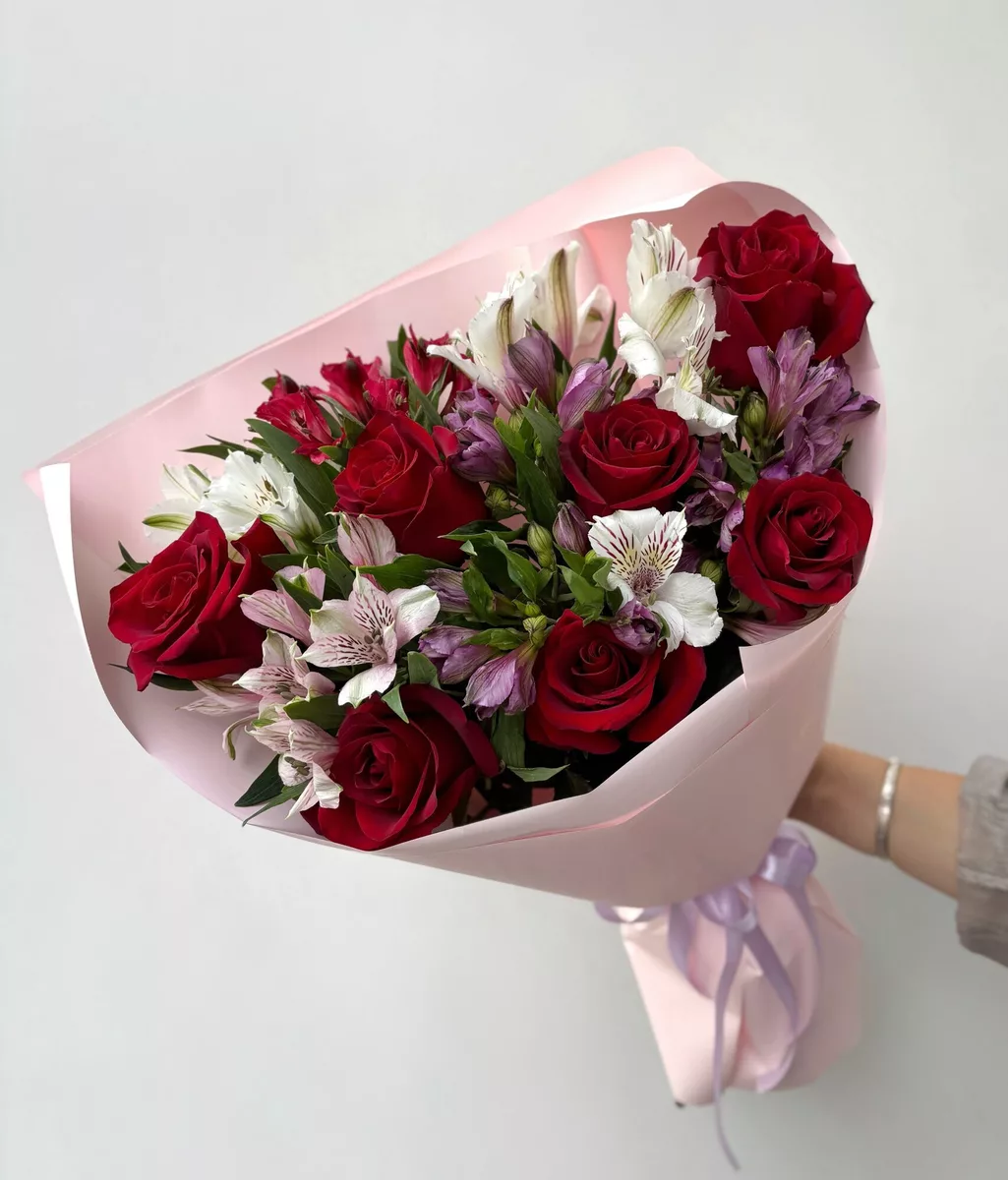
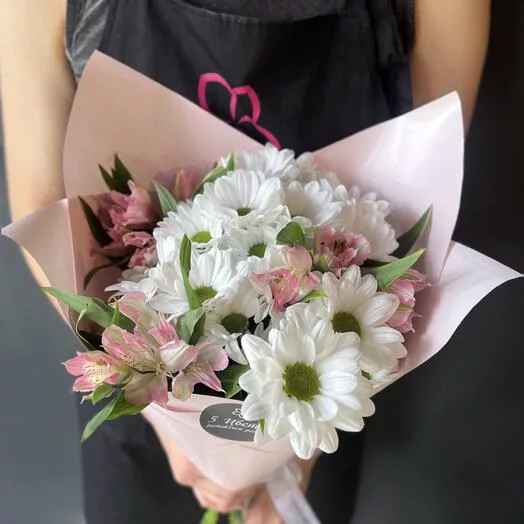
September 1st, called Den Znaniy or Knowledge Day, is the single biggest flower-buying day in Russia outside of March 8th. Every child going to school carries a bouquet — not to keep, but to present to the class teacher as a gesture of respect at the start of the school year. For daughters in grades one through four, the standard is a compact, single-variety bouquet of seven to eleven stems: white or yellow chrysanthemums, alstroemeria, or spray roses work well because they are sturdy and do not wilt quickly in the warm September morning air, which in Saint Petersburg can reach eighteen to twenty degrees Celsius outdoors. Avoid open garden roses on this day — they drop petals within two hours of being carried by a child. For daughters in middle and senior school, parents often upgrade to a mixed bouquet with lisianthus or gerbera in school colours, or add a few stems of solidago for texture. The bouquet should be wrapped tightly enough that a child can grip it without stems sliding, and cellophane alone is not enough — ask for a fabric or kraft outer wrap. Order the night before or by 8 a.m. on September 1st itself; delivery windows fill by mid-morning. Bouquets going into a school building should be kept in cool water until the ceremony starts, typically at 9 a.m.
Bouquets we can deliver


Birthday Flowers for a Daughter Under Ten: Size and Variety Matter
Parents outside Russia sometimes order adult-scale bouquets for small children, and this is the most common mistake we see. A bouquet of twenty-five long-stemmed roses is physically too large for a seven-year-old to hold and psychologically overwhelming — she will not know what to do with it. For daughters aged three to nine, the right approach is a small, round, colourful arrangement of five to nine stems in a low vase or a hand-tied bunch that fits in both arms. Gerbera daisies in orange, pink and yellow are the most practical choice: the stems are short enough, the heads are bold and cheerful, and the variety is reliably available year-round. Ranunculus in spring and tulips in March through May are excellent seasonal additions. Avoid lilies entirely for young children — the pollen stains clothing and is difficult to remove, and the scent is too heavy for small rooms. If the birthday falls in summer, sunflowers in a group of three or five make an immediate impression and last four to six days in water at room temperature. For a girl turning five or seven — ages that carry mild significance in Russian family culture as early milestones — parents often add a single plush toy or balloon to the delivery rather than scaling up the bouquet size. Keep the colour palette bright and avoid white-only arrangements, which carry formal or ceremonial associations in Russia.
Teenage Daughters: Moving Away from Childhood Styles
Around age twelve or thirteen, daughters in Russia start forming opinions about flowers, and a bouquet of gerberas that delighted a nine-year-old will feel babyish to a fourteen-year-old. This is the age group where customers most often call us after the fact saying the recipient looked politely disappointed. The shift to make is toward more sophisticated single-variety bouquets or restrained mixed arrangements. Spray roses in dusty pink or terracotta, garden-style lisianthus, and freesia are varieties that read as grown-up without being stiff or formal. Freesia in particular has a light fragrance that teenagers tend to enjoy without finding it overpowering. For a daughter turning sixteen — a birthday that Russian families often mark with a larger celebration — a bouquet of fifteen or twenty-one stems of a single premium variety, such as David Austin-style garden roses or large-headed peonies in season from May through June, makes a stronger impression than a mixed arrangement of the same budget. Odd numbers are standard in Russia for celebratory occasions; even numbers are reserved for mourning and should be avoided. Colour choices matter more now: ask the parent or partner ordering whether the daughter has a favourite palette, because a teenager receiving flowers in colours she dislikes will remember it. Pastels and whites work broadly; avoid mixing too many colours in one bouquet, as it reads as less considered at this age.
Graduation and University Milestones: The Formal Occasion Bouquet
Russian university graduation ceremonies, called vypusknoj, are formal events that typically take place in June or early July. The daughter receives her diploma on stage, and a bouquet is handed to her immediately after — either by family waiting at the edge of the hall or delivered to the venue beforehand. This is an occasion where scale and structure matter. A bouquet of twenty-five to thirty-one stems in a structured hand-tied format, with a clear focal flower and supporting foliage, is appropriate. Peonies are the ideal June graduation flower: they are in peak Russian season, they photograph beautifully, and a full peony head reads as generous without being ostentatious. If the graduation falls in July when peonies are finishing, large garden roses or hydrangea heads provide similar visual weight. White and ivory arrangements are popular for graduation in Russia because they photograph well and signal achievement without competing with the academic gown or dress. However, if the daughter has a strong colour preference, a monochromatic bouquet in blush pink or deep burgundy is equally accepted. Timing for venue delivery is critical: ceremonies run on strict schedules, and a bouquet arriving thirty minutes late misses the photograph entirely. Order with a specific delivery window and include the venue address and the hall name, not just the street. Keep the bouquet in water in a cool room until the moment of presentation — hydrangea in particular wilts within forty minutes in a warm, crowded hall without water.
Adult Birthdays and Significant Years: What Russian Families Expect
In Russia, round-number birthdays carry extra weight. A daughter turning twenty, twenty-five, thirty, or thirty-five will typically have a larger gathering, and the flowers given at these events are noticed by everyone present. This is not the moment for a small hand-tied bunch. The standard expectation from Russian families for a round birthday is a bouquet of at least twenty-five stems for a close relative, and fifty-one or more for a significant gesture from parents. These numbers are not arbitrary — they reflect the Russian convention that more stems signal more regard. For a daughter turning thirty, a structured arrangement of fifty-one spray roses or a mixed bouquet anchored by garden roses with eucalyptus and wax flower is a reliable choice. Roses remain the dominant flower for adult women's birthdays in Russia, but the variety and grade matter: short-stemmed supermarket-grade roses read as an afterthought, while long-stemmed Ecuadorian roses with full heads make the intended impression. For daughters who are known to prefer something less traditional, a large seasonal arrangement built around ranunculus, anemones, or ornamental branches can work — but confirm this preference before ordering, because arriving with an unconventional bouquet at a traditional Russian family gathering can create an awkward moment. Delivery timing for adult birthday parties is usually the evening before or early morning on the day, so the flowers are in place before guests arrive.
What to Check Before You Order: Temperature, Timing and Common Errors
The three most common ordering mistakes we handle are wrong delivery timing, underestimating stem count for Russian occasions, and choosing varieties that cannot survive the conditions at the destination. On timing: if the event starts at noon, a delivery window of eleven to eleven-thirty is tight but workable — a window of two to three in the afternoon is useless. Always specify the earliest acceptable arrival time and the hard deadline, not just a date. On stem count: customers ordering from outside Russia frequently choose quantities that feel generous by their home country's standards but read as minimal in a Russian context. An odd number of eleven or thirteen stems is a thoughtful personal gift; it is not a celebration bouquet for a significant birthday. On varieties and temperature: in summer, avoid open garden roses, open peonies, and sweet peas for deliveries to venues without air conditioning — these varieties lose structural integrity above twenty-two degrees Celsius within a few hours. Ask the florist taking your order what is in peak condition that week, because seasonal availability shifts quickly and a variety listed on a website may have been replaced by a close substitute. For winter deliveries, the opposite problem applies: flowers coming from a cold van into a warm apartment need thirty minutes to acclimate before being placed in water. Include this note in your delivery instructions. Finally, confirm the recipient's address carefully — in Saint Petersburg, building numbers with letter suffixes and korpus numbers are common, and a wrong suffix can mean a different building entirely.
Ordering flowers for a daughter in Russia is straightforward once you understand that occasion, scale and variety selection do most of the work. A first-grade girl needs a sturdy, compact bouquet she can carry; a thirty-year-old needs something that holds its own in a room full of guests. Seasonal varieties in peak condition will always outperform out-of-season stems forced to look presentable. Get the timing right, confirm the address down to the korpus number, and choose a stem count that fits the occasion — the rest follows from there. We deliver bouquets across Russia in 1–2 hours. We deliver bouquets across Russia in 1–2 hours.
Frequently asked questions
What flowers are traditional for a daughter's birthday in Russia?
Roses are the default for adult daughters, with stem count and variety grade signalling the occasion's importance. For younger daughters, gerberas, tulips and spray roses are more appropriate. Peonies are widely given in May and June. The key Russian rule is odd stem numbers for celebrations — never even numbers, which are reserved for mourning.
How far in advance should I order flowers for a Russian school graduation?
Order at least twenty-four hours before the ceremony and specify the delivery window precisely. June graduation season in Russia is one of the busiest periods for florists. If you are delivering to a venue rather than a home address, include the full venue name, hall number and the name of the recipient — front desk staff handle many bouquets on graduation days.
Are there flowers I should avoid giving a daughter in Russia?
Avoid even-numbered bouquets for any celebratory occasion. Yellow flowers are sometimes associated with separation or bad luck in older Russian tradition, though younger generations largely ignore this. Heavy-scented lilies are poorly suited to children's events and small apartments. White-only arrangements can feel ceremonial rather than celebratory in a family context.
What stem count is appropriate for a daughter's significant birthday, such as her thirtieth?
For a round birthday like thirty, Russian family expectations typically start at twenty-five stems from a close relative and reach fifty-one or more for a parent making a significant gesture. Single-digit or low-teen bouquets read as casual gifts rather than milestone celebrations. Odd numbers are standard — twenty-five, thirty-one, fifty-one are all conventional choices.
How do I make sure the bouquet survives delivery in summer heat?
Choose varieties known for heat tolerance: chrysanthemums, alstroemeria, spray roses and gerberas hold up better than open peonies or garden roses above twenty-two degrees Celsius. Request a delivery window that avoids midday heat where possible, and ask the recipient to place the bouquet in cool water immediately on arrival. Hydrangea and open tulips are the most vulnerable in warm conditions.
Ready to send a bouquet?
Pick a city, choose the flowers, and we will hand them over with a photo confirmation.
Choose a city →