
Flowers for a Russian Neighbor: Timing, Varieties and What to Order
Neighbors in Russia exchange flowers more often than outsiders expect — not just for major holidays but for move-ins, name days, small apologies and spontaneous goodwill. The tricky part is scale: too grand a bouquet feels like a declaration, too thin a bunch reads as an afterthought. At Five Flowers we handle dozens of these neighbor orders every month, and the questions are always the same — what occasion counts, which flowers are appropriate, how many stems, and can it arrive before the person leaves for work. This article answers all of that plainly.
When Russians Actually Give Flowers to Neighbors
The occasions that genuinely prompt a neighbor bouquet in Russia fall into a handful of clear categories. Moving into a new flat is the most common: a new resident will often bring a small arrangement to the nearest neighbors as a way of introducing themselves and signaling they intend to be decent people to live beside. The second category is reciprocal gifting around public holidays — on March 8th (International Women's Day) it is entirely normal for a male neighbor to leave flowers at the door of an elderly woman living alone on the same floor. Name days, called imeniny, are a third trigger: if you know a neighbor celebrates their saint's day on a particular date, a small bunch acknowledges that you paid attention. A fourth situation is the apology gift — a late-night noise complaint resolved the next morning with five tulips goes a long way in Russian apartment culture. Finally, there is the congratulatory category: a neighbor who just had a baby, passed a university exam, or returned from hospital will receive flowers from considerate neighbors without any formal invitation to do so. None of these occasions require an elaborate arrangement. What they share is that the gesture should feel spontaneous and warm rather than ceremonial. Knowing which category your situation falls into tells you immediately how many stems to order and how the bouquet should be wrapped.
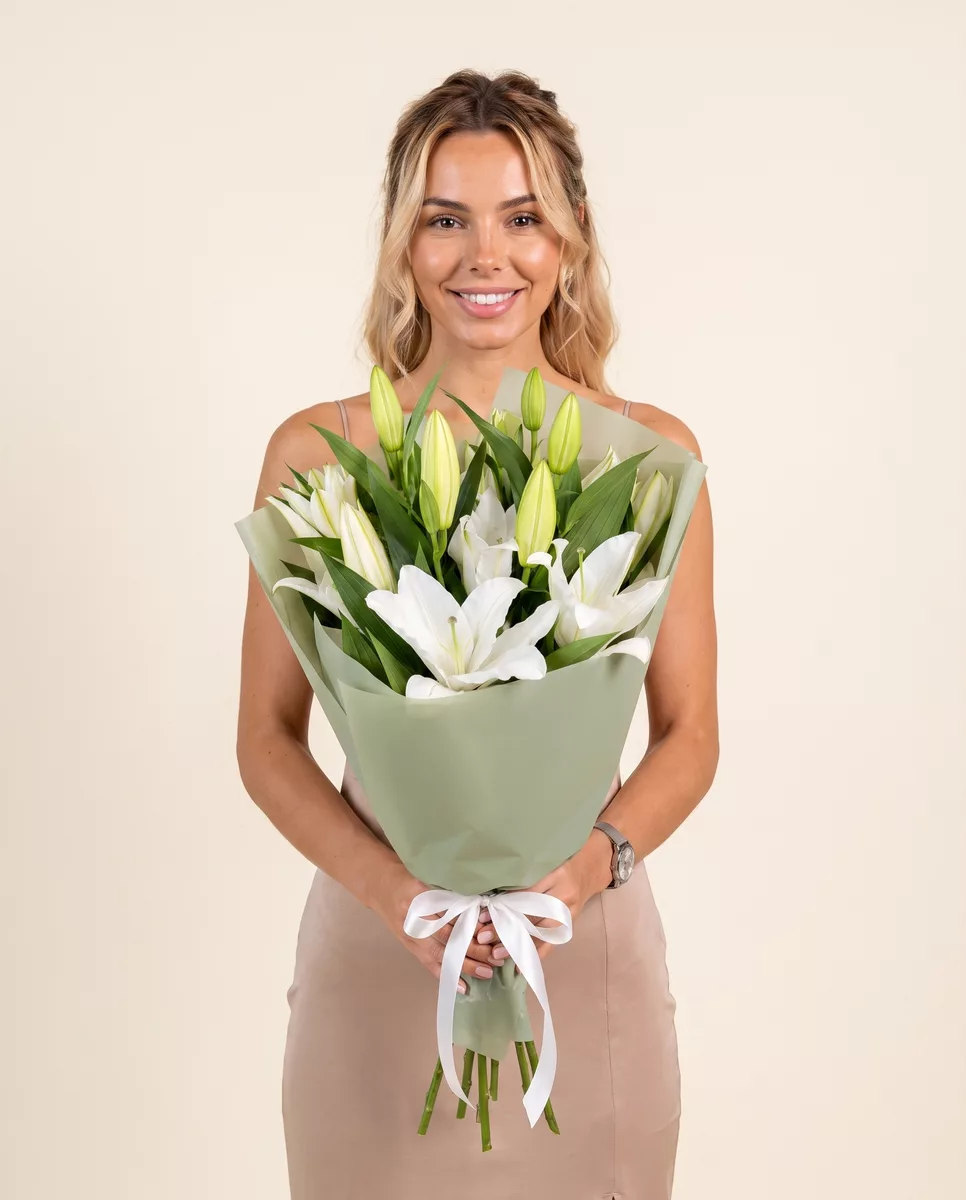
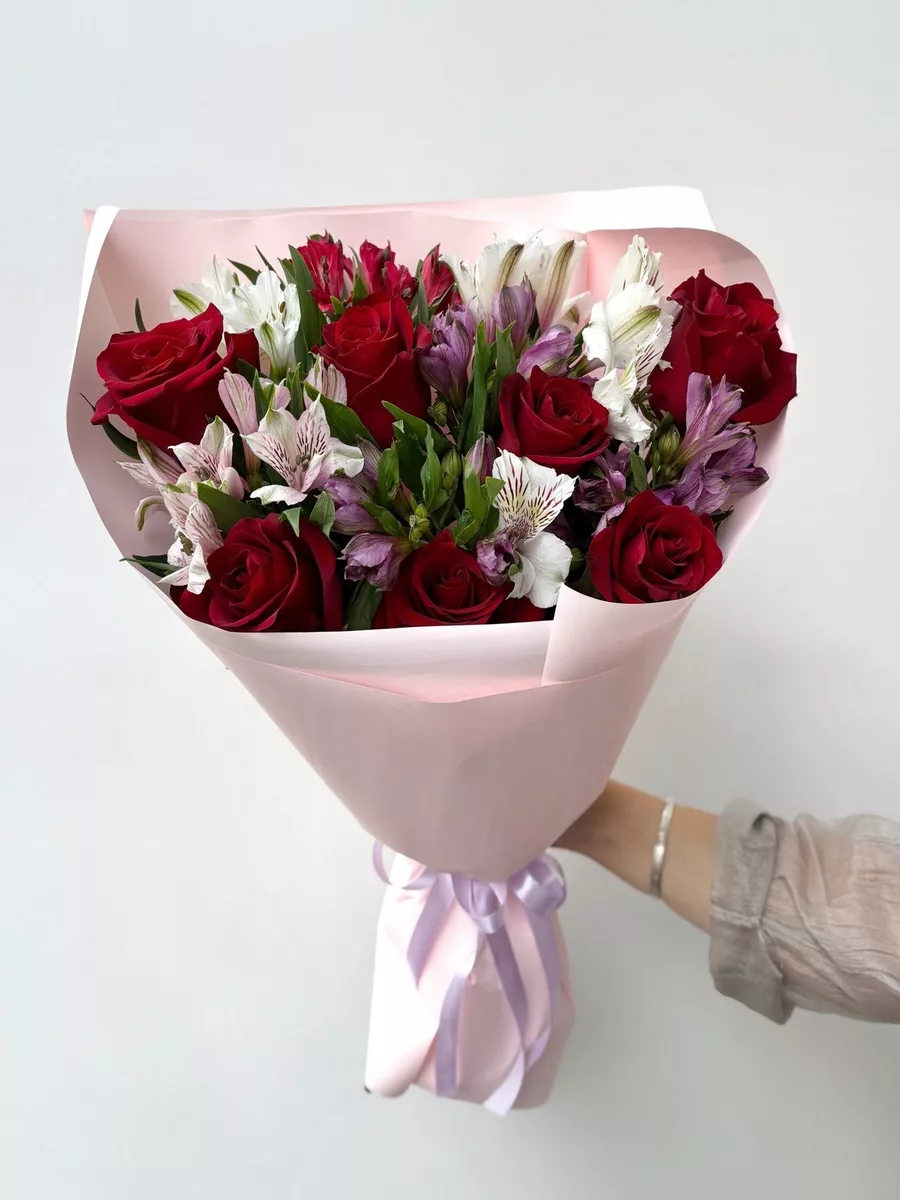
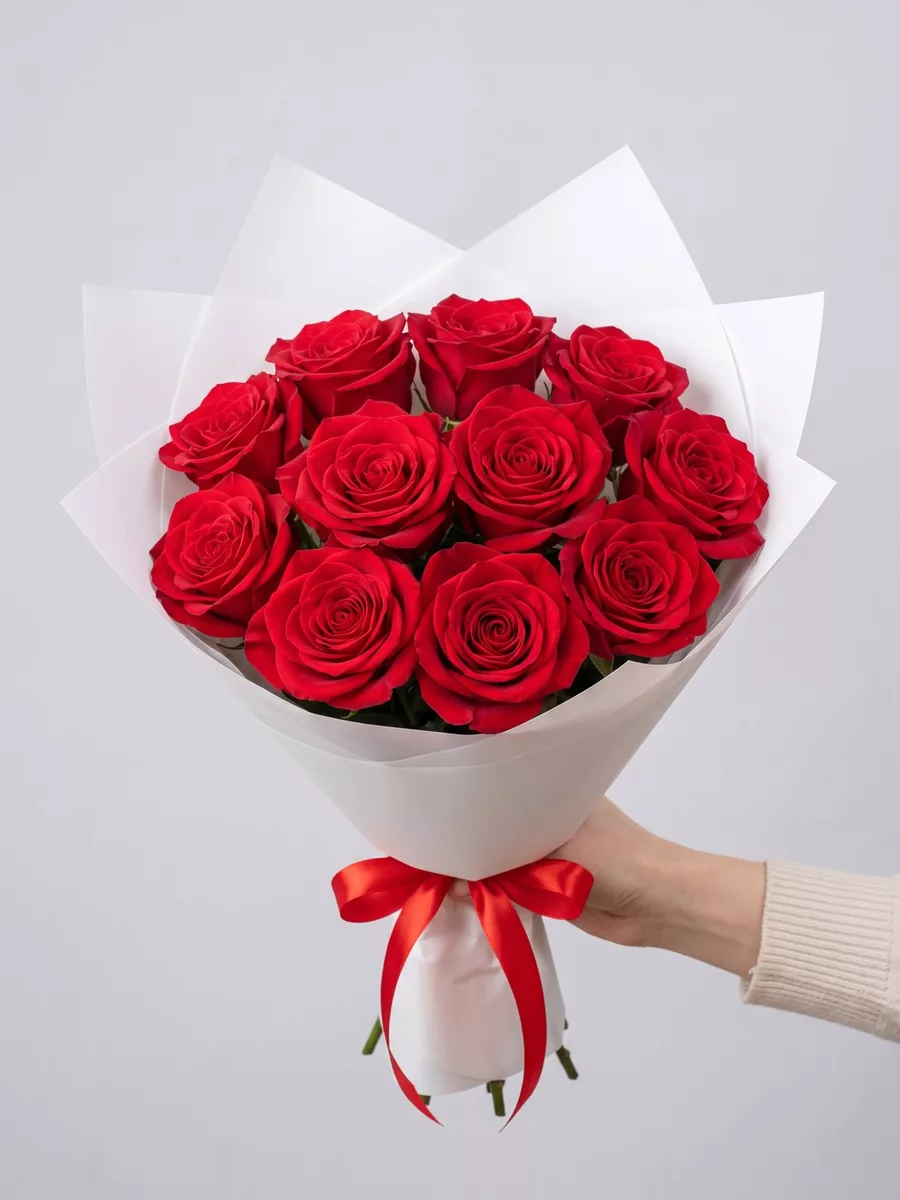
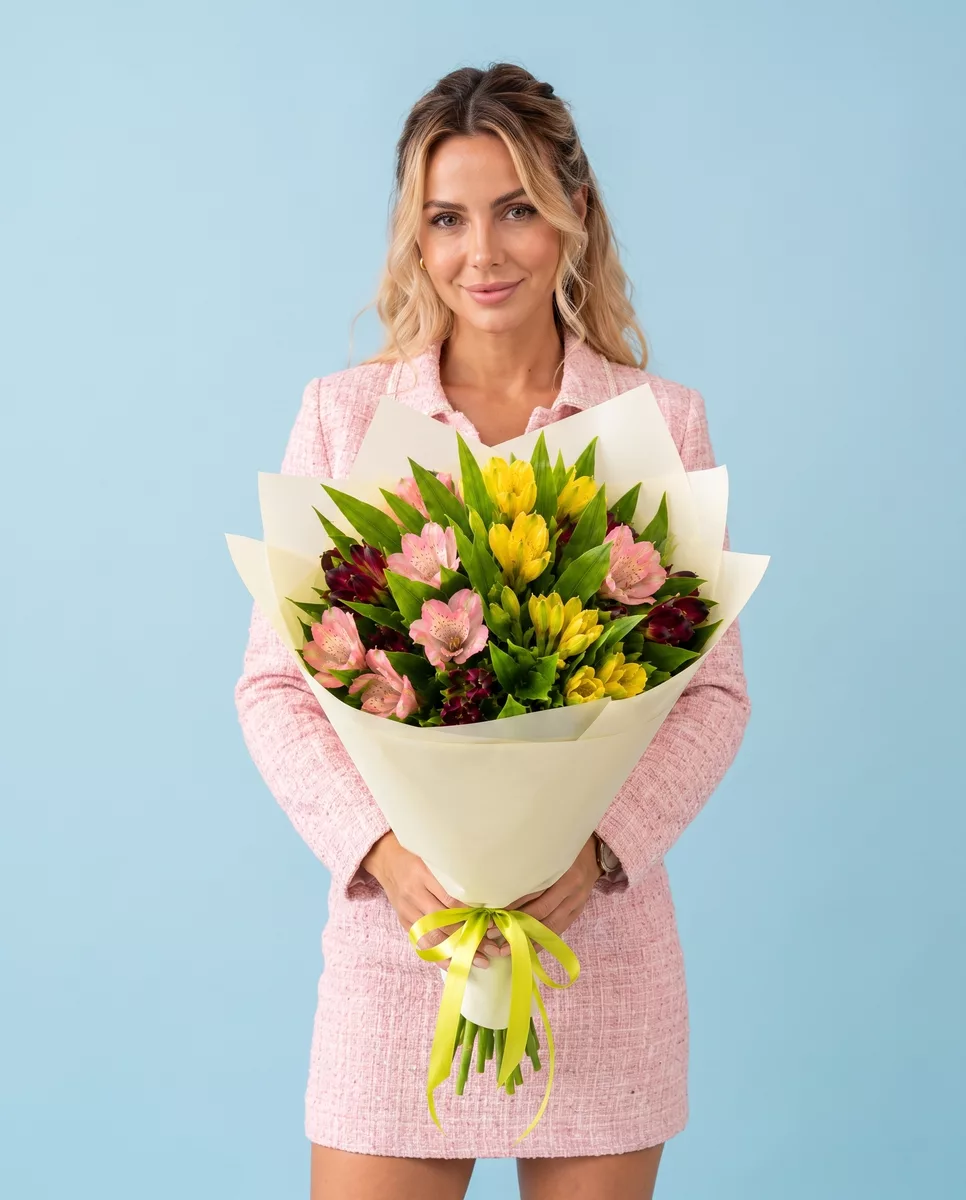
Bouquets we can deliver
Scale and Stem Count: Getting the Proportion Right
The single most common mistake in neighbor bouquets is ordering something the size of a birthday centerpiece. A neighbor gift sits in the range of five to nine stems for almost every informal occasion. Five stems is the floor — fewer than that reads as a leftover rather than a gift. Nine stems is a comfortable ceiling before the arrangement starts feeling like a romantic gesture or a formal congratulation. Seven is the number we suggest most often because it photographs well in a kraft wrap and does not overwhelm a standard kitchen vase. Russians count flowers for superstition reasons: even numbers are traditionally reserved for funeral contexts, so always order an odd number. This is not a rigid rule that every Russian follows consciously, but florists and recipients notice it, and there is no reason to get it wrong when odd numbers are equally available. For a move-in gift, five spray roses or seven alstroemeria stems is entirely sufficient. For a March 8th door delivery to an elderly neighbor, seven mixed tulips or five freesias with a few eucalyptus sprigs covers the occasion with warmth. For a baby congratulation, nine stems of white or pale-yellow chrysanthemum spray is generous without being excessive. The wrapping matters as much as the count: kraft paper with a simple ribbon, no cellophane cone, signals informality and sincerity. Avoid elaborate box arrangements for neighbor gifts — they imply a level of occasion that most neighbor moments do not carry.
Varieties That Work for Neighbor Bouquets in Russia
Certain flowers land consistently well in the neighbor context because they are legible, non-allergenic in small quantities, and available year-round in Saint Petersburg. Tulips are the most universally accepted: a single-variety bunch of seven tulips in cream, coral or pale pink is impossible to misread. Freesias are excellent because their scent is gentle rather than overpowering and they hold for five to seven days in a cool flat. Spray roses — the smaller-headed variety rather than full garden roses — signal friendliness rather than romance, which matters when the recipient is a couple or an older neighbor. Alstroemeria is underrated for this purpose: it lasts ten days in water, comes in a wide color range, and costs less per stem than roses, which means a seven-stem bunch looks generous without implying expense. Eustoma, also called lisianthus, adds texture and a slightly formal edge — useful if the neighbor occasion is a congratulation on something significant like a job promotion. Avoid strongly scented flowers like lilies in large quantities if you are uncertain about allergies; a single oriental lily stem in a mixed bunch is fine, but an all-lily bouquet sent to someone you do not know well is a risk. Chrysanthemum spray varieties are safe and long-lasting but carry mild associations with autumn and solemnity in Russian culture, so pair them with something lighter — a few ranunculus or a stem of waxflower — to keep the tone warm.
Color Logic for Neighbor Gifts in Russian Context
Color in Russian gifting is not as codified as some guides suggest, but there are patterns worth knowing. White flowers are associated with purity and are perfectly appropriate for congratulations, move-ins and Women's Day — the concern about white being funerary applies mainly to all-white wreaths and arrangements of twenty or more stems, not to a small mixed bunch. Yellow flowers had a historical association with separation and jealousy in Soviet-era popular culture, but that reading has faded significantly among people under fifty. If your neighbor is elderly and traditional, avoid an all-yellow bouquet to be safe; mixed yellow and white is always fine. Red flowers signal passion and are better reserved for romantic contexts — a single red rose in a mixed bunch is harmless, but seven red roses to a neighbor is a different message entirely. Coral, peach, lilac and pale pink are the safest universal choices for neighbor bouquets because they read as warm and friendly across all age groups and occasions. Green-tinted flowers like green trick dianthus or green chrysanthemum add texture and a modern feel that younger neighbors tend to appreciate. If you are ordering for a male neighbor — which is less common but does happen, particularly for a congratulation — blue or purple tones in iris or delphinium work well and sidestep any ambiguity about the gesture's intent. When in doubt, ask the florist to build a mixed seasonal bunch in warm neutrals: cream, peach and soft pink together never cause confusion.
Timing Your Delivery Around Russian Daily Rhythms
Apartment buildings in Saint Petersburg have predictable occupancy patterns that directly affect when a neighbor delivery will succeed. Most working residents leave between 8:00 and 9:30 in the morning and return between 18:00 and 20:00. Ordering for an 11:00 or 12:00 delivery almost guarantees the recipient is out, which means the flowers sit in a building entrance or with a building manager in summer heat or winter cold — neither is good for cut flowers. The optimal delivery windows for neighbor bouquets are 7:30 to 8:30 (catching people before they leave) or 18:30 to 20:00 (catching them as they return). Weekend timing is more flexible: Saturday deliveries between 10:00 and 13:00 work well because most people are home. Temperature is a practical concern that affects variety choice: in winter, tulips and ranunculus suffer in unheated entryways and should be wrapped in extra paper if the recipient might not be home to receive immediately. In summer above 25°C, alstroemeria and spray chrysanthemums hold better in transit than open-faced roses. If you are ordering a surprise delivery to a neighbor's door rather than a hand delivery, choose varieties with closed or semi-closed buds — they tolerate waiting for two to three hours without visible damage. Always specify in the order notes whether the bouquet should be handed directly or can be left at the door, because this changes how the delivery team handles the handoff.
What to Write on the Card for a Neighbor Bouquet
The card text on a neighbor bouquet does more social work than people realize, because it establishes the register of the relationship going forward. A card that is too effusive — full of exclamation points and declarations of warmth — can make a casual neighbor feel they owe a reciprocal gesture they were not planning for. A card that is too brief reads as cold. The right length is two to four sentences. For a move-in gift, something like: 'Welcome to the building. We are in flat twelve if you ever need anything.' That is enough. For a Women's Day delivery, a simple 'Happy March 8th — your neighbors from flat seven' covers it without pressure. For a baby congratulation, name the event specifically: 'Congratulations on the new arrival. Wishing you all good rest and health.' Russians appreciate directness and dislike elaborate sentiment from people they do not know well — the flowers carry the warmth, the card just identifies the sender and the occasion. If you are ordering through us and writing the card in Russian for a Russian-speaking neighbor, keep the same principle: two to four sentences, specific occasion, clear sender identification. Avoid signing just with a first name if the neighbor might not immediately place you — add the flat number. Do not write anything that requires a response, such as an invitation or a question, because that shifts the bouquet from a gift into a social obligation.
What to Check Before You Place the Order
Before confirming a neighbor bouquet order, run through four practical checks that prevent the most common problems we see. First, confirm the exact flat number and floor — delivery teams in large residential complexes lose significant time when the address says only the building number. In Saint Petersburg many buildings have multiple entrances, so specify the entrance number if you know it. Second, check whether the building has an intercom code or a building manager who can accept deliveries: a bouquet that cannot get past the front door is useless. Third, decide in advance whether you want the bouquet delivered to your door so you can hand it yourself, or delivered directly to the neighbor's door — these are different instructions and produce different results. Handing it yourself is warmer and more personal; direct delivery works when you want the gesture to feel spontaneous rather than planned. Fourth, consider the recipient's schedule if you know it: a neighbor who works night shifts sleeps until noon, and a 9:00 delivery will wake them. If you are uncertain about the recipient's schedule, a late-afternoon delivery between 17:00 and 18:00 is the safest default. When ordering with us, you can specify a one-hour delivery window and add notes about building access in the order comments field — use both. A correctly specified order with a realistic delivery window reaches the recipient fresh and on time, which is the whole point of the gesture.
A neighbor bouquet is one of the smallest orders a florist takes and one of the most socially precise. Five stems of freesia with a kraft wrap and a two-sentence card, delivered at the right hour to the right door, does exactly what a large formal arrangement cannot: it signals that you noticed the person without asking anything of them in return. Get the stem count odd, the color neutral-warm, the timing matched to when they are actually home, and the card short and specific. Everything else — variety, wrap style, bud stage — we handle on our end so the flowers arrive looking the way you intended them to. We deliver bouquets across Russia in 1–2 hours.
Frequently asked questions
Is it appropriate to give flowers to a male neighbor in Russia?
Yes, though it is less common than gifting to women. For a male neighbor, choose a structured bunch with minimal wrapping — no ribbon bows — and lean toward blue, purple or white tones using iris, delphinium or white spray chrysanthemum. The occasion should be clear: a congratulation on a promotion or a new baby is a straightforward context that removes any ambiguity from the gesture.
How far in advance should I order a neighbor bouquet for March 8th delivery?
Place your order at least 48 hours before March 8th. Demand spikes sharply on March 6th and 7th, and same-day slots for that date fill by midday on March 7th most years. If you want a specific morning delivery window on the 8th itself, order by the evening of the 6th to guarantee the variety and timing you want rather than accepting whatever remains available.
Can I order a bouquet delivered directly to a neighbor's door without them knowing it is from me?
Yes. Specify in the order notes that the bouquet should be left at the door rather than requiring a signature. Include a card with your flat number so the recipient knows who sent it — an anonymous neighbor bouquet tends to cause more confusion than warmth. Our delivery team will follow the door-drop instruction and photograph the placement for your confirmation.
What is the minimum bouquet size that does not look cheap for a neighbor gift?
Five stems is the practical minimum. Below that the bunch looks like a leftover from another arrangement. Five tulips or five spray roses in a neat kraft wrap with no filler is clean and intentional. Adding two or three stems of eucalyptus or waxflower to a five-stem bunch adds visual volume without changing the informal register of the gift.
Are there flowers I should avoid sending to an older Russian neighbor?
Avoid an all-yellow bouquet for neighbors over approximately 65, as the association with bad luck persists in that generation. Large oriental lily arrangements risk overwhelming a small flat with scent. An all-white arrangement of more than seven stems can feel funerary to traditional recipients. Stick to mixed warm tones — cream, peach, coral, soft pink — and you avoid all three concerns simultaneously.
Ready to send a bouquet?
Pick a city, choose the flowers, and we will hand them over with a photo confirmation.
Choose a city →