
Flowers for a Russian Sister: Sibling Gestures That Land Well
Sisters in Russia get flowers more often than most people outside the country expect — not just on birthdays, but on February 23rd the day before, on March 8th, on name days, and sometimes on a random Tuesday because someone felt like it. The question we hear at the counter is almost always the same: what do I actually send, and will it look like I thought about it? The answer depends on three things — the occasion, the season, and whether your sister lives in a flat with a south-facing windowsill or keeps cut flowers alive for exactly two days before forgetting about them.
What Russian Sisters Actually Receive and What They Remember
Walk into any flower shop in Saint Petersburg the week before March 8th and you will see the same pattern: roses in every price bracket, wrapped chrysanthemums, and a lot of alstroemeria doing quiet background work in mixed bouquets. Sisters, specifically, tend to receive what brothers or parents default to rather than what a partner would choose — which means the bouquet is often safer, smaller, and less considered than it could be. That is not a criticism; it is just a gap worth closing. What sisters actually remember, when you ask them, are the times someone sent something specific: a mono-bouquet of ranunculus in the right colour, a bunch of garden-cut sweet peas in summer, or tulips in an unusual variety rather than the standard red Darwin hybrids. The distinction is variety and intentionality, not price. A thirty-stem bouquet of generic spray roses reads as filler. Fifteen stems of Café Latte roses or a tight cluster of double-flowering eustomia reads as a choice. Russian customers are also more likely than they admit to look up what they received — variety name, origin, meaning — so sending something with a name worth looking up is quietly appreciated. The other thing worth knowing: Russian women generally do not find it strange to receive flowers from a sibling. There is no awkwardness to navigate. The gesture lands as warmth, not as something that needs explaining.
Bouquets we can deliver
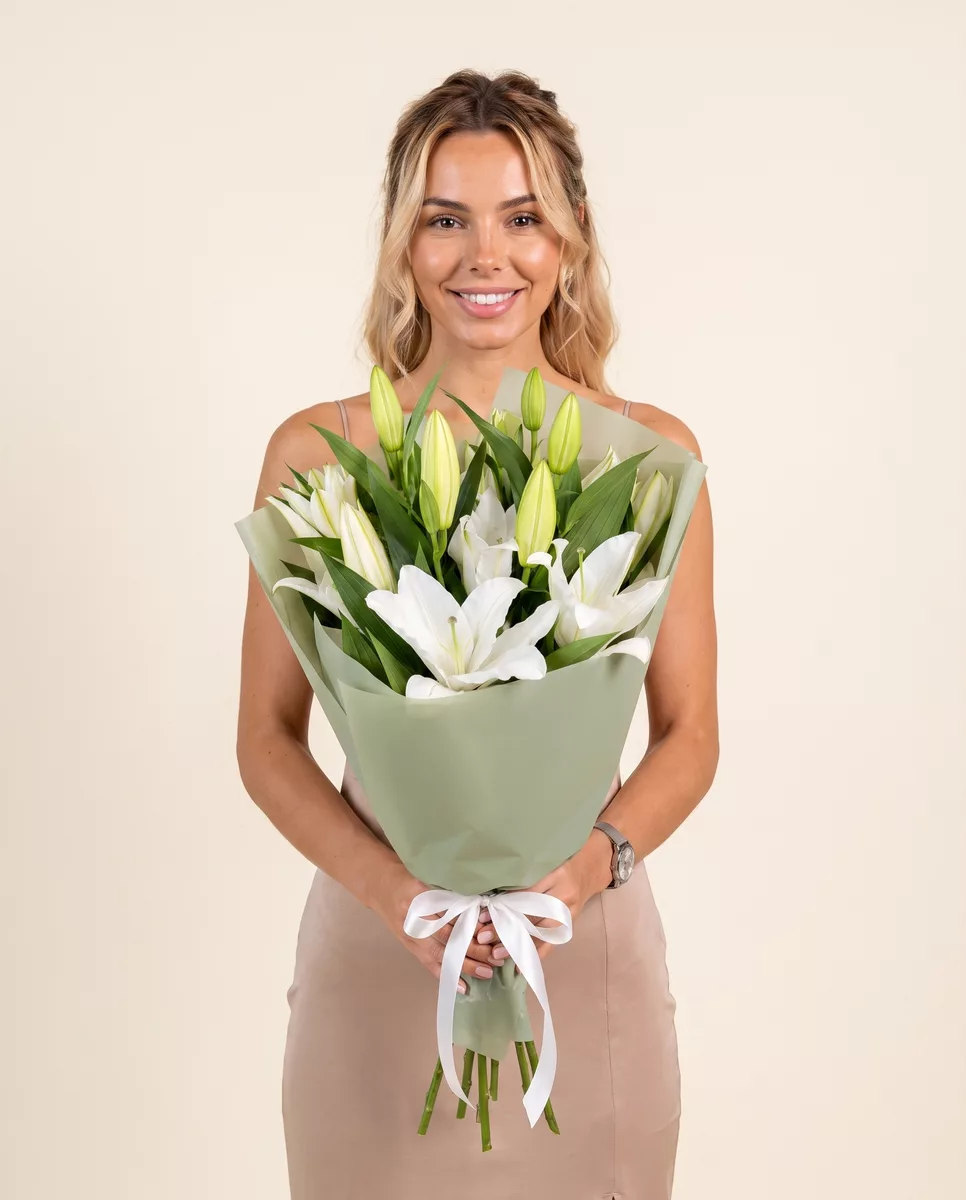
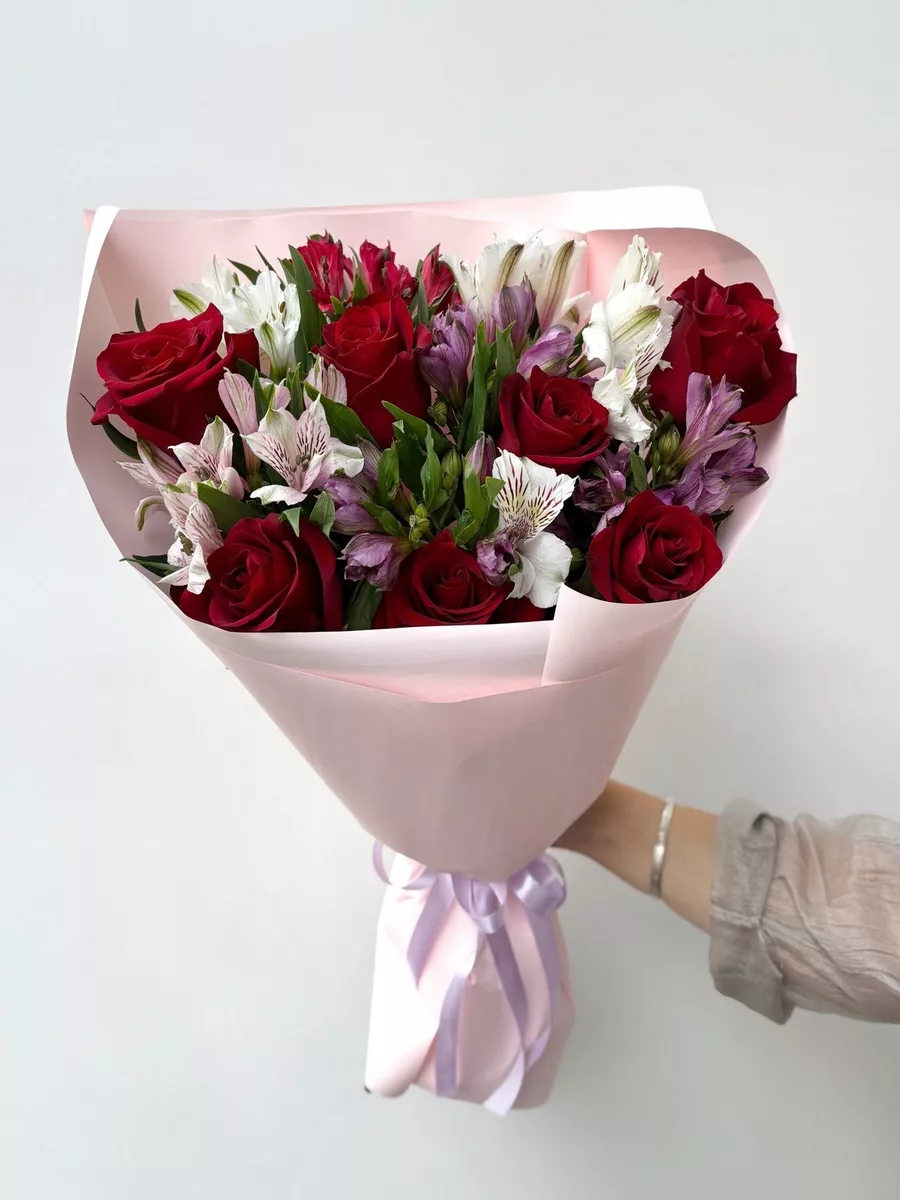
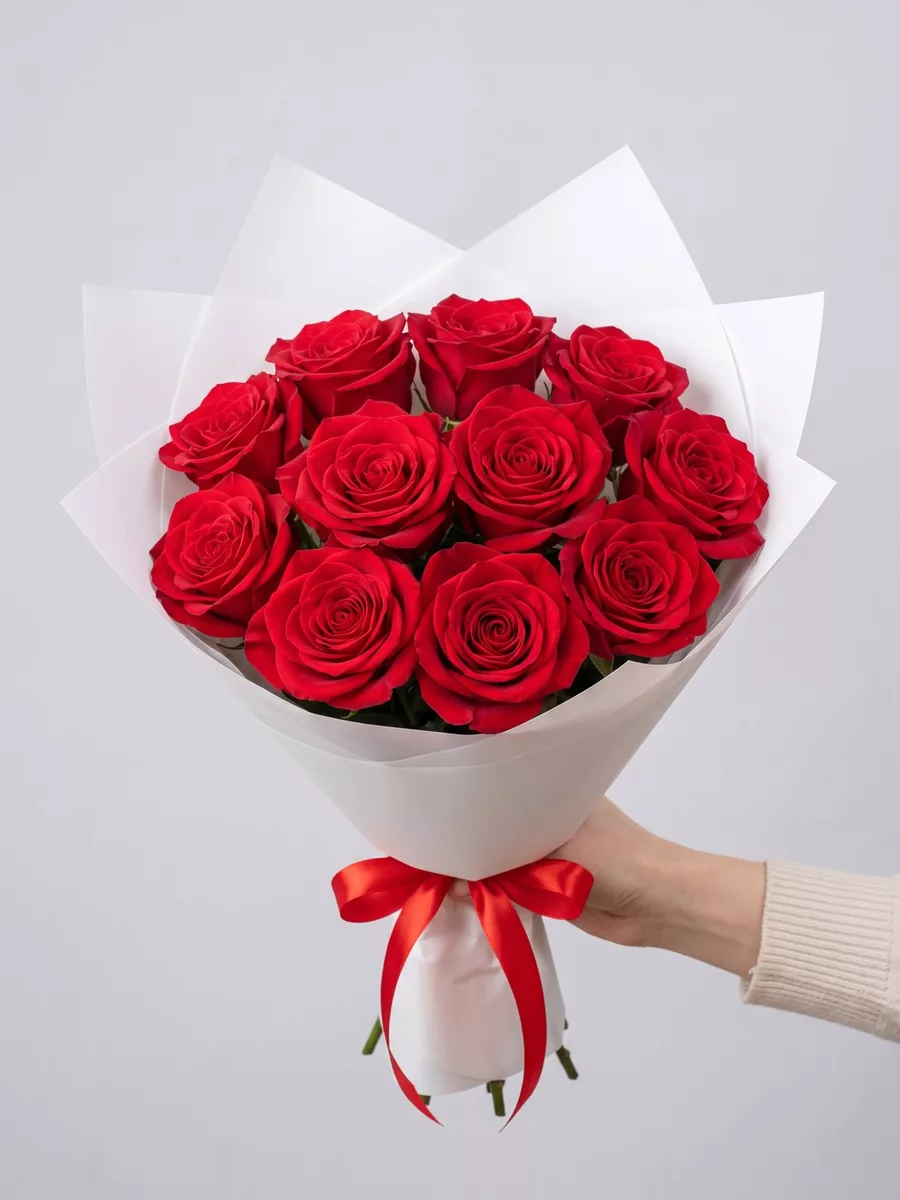

Spontaneous Deliveries: The Just-Because Bouquet Done Right
The spontaneous bouquet is the hardest to get right because it has no occasion to lean on — it has to stand on its own. The mistake most people make is ordering something too safe: a small mixed bouquet assembled from whatever is available that day. It arrives looking like a default. The better approach is to pick one flower and commit to it. Anemones in late autumn and winter, ranunculus from February through April, peonies in May and June, lisianthus almost year-round — these are flowers that look deliberate even in a modest quantity. Ten stems of anemones in deep burgundy or purple, stems cut to a uniform length and wrapped simply, costs less than a large mixed arrangement and reads as more considered. Timing matters for spontaneous orders more than for planned ones. Five Flowers delivers within one to two hours across Saint Petersburg, which means you can place an order at noon and have it arrive before your sister leaves work. The practical detail to check: is she home, or will she be? A bouquet left with a neighbour or a building concierge is fine in most Russian apartment buildings — this is common practice and not considered rude — but flowers left in a warm hallway for more than two hours will arrive wilted. In summer, when temperatures inside unventilated entryways can exceed 25 degrees Celsius, that window is shorter. Order with delivery timed to when she will actually be there, or ask the recipient directly. Spontaneous does not have to mean uncoordinated.
Birthday Bouquets: Varieties and Quantities That Work
Birthdays are the occasion where quantity starts to matter alongside variety. In Russian tradition, odd numbers of flowers are for the living and even numbers are associated with mourning — this is a real and widely observed custom, and it is worth knowing if you are ordering from outside Russia. Always confirm your bouquet has an odd stem count: seven, nine, eleven, fifteen, nineteen, twenty-five. Most reputable shops count automatically, but it is worth checking when you place the order. For a sister's birthday, the flowers that consistently work well are garden roses in full-cupped varieties — David Austin-type roses or their equivalents — because they open dramatically over two to three days and photograph well, which matters. Spray roses in a single colour, tightly packed, are another strong choice: they last longer than large-headed roses, often eight to ten days in a cool room, and they look generous without requiring a large budget. If your sister is the type to keep flowers past the first week, lisianthus and chrysanthemums are the practical picks — chrysanthemums especially can hold for two weeks in fresh water. Avoid tropical varieties like strelitzia or anthurium for a sister's birthday unless you know she specifically likes them; they read as impersonal in this context. The safest colour ranges for someone you know well are blush, peach, coral, and cream for a softer look, or deep burgundy and plum for something with more presence. Avoid white as a primary colour for birthdays — in Russian custom, white arrangements skew formal and are more associated with significant anniversaries or solemn occasions.
March 8th and February 23rd: The Sibling Exchange
Russia has two consecutive national holidays in late February and early March that function as a paired exchange: February 23rd is Defender of the Fatherland Day, celebrated broadly as a men's day, and March 8th is International Women's Day, which in Russia is taken seriously as a flower-giving occasion at a scale that surprises most visitors. Sisters give brothers something on February 23rd — usually small, practical, or humorous — and brothers give sisters flowers on March 8th. This dynamic is understood by almost everyone in the country and creates a specific social expectation around the bouquet. The March 8th bouquet from a brother to a sister should be real. Not a single stem, not a gas-station bunch — something with visible effort. The weeks immediately before March 8th are the busiest period for flower shops in Russia, and prices rise noticeably from about March 5th onward. If you are ordering for delivery on March 8th itself, place the order at least two to three days in advance and specify a delivery window. Tulips are the iconic March 8th flower in Russia — they arrive in enormous quantities from Dutch growers in late February, and a large bunch of tulips in a single strong colour is completely appropriate. Mimosa, the bright yellow acacia, is the other traditional choice: it is sold in large branches and has a scent that is immediately associated with the holiday by anyone who grew up in the Soviet period or post-Soviet Russia. If your sister is over forty, mimosa will mean something specific and warm. If she is younger, tulips or ranunculus are the stronger pick.
What to Check Before You Place the Delivery Order
The details that cause problems are almost always logistical rather than floral. The first thing to confirm is the delivery address in full — Russian addresses require the street, building number, corpus number if there is one, apartment number, and often an entry code for the intercom. Buildings in Saint Petersburg frequently have multiple entrances numbered separately, and a driver arriving at entrance one when your sister lives near entrance four will add delay. If you are ordering from abroad, double-check that the phone number you provide for your sister is reachable on a Russian network — a foreign number will not receive a call from the driver. The second point is timing. Five Flowers delivers within one to two hours, but that window assumes the recipient is available. Ask your sister when she will be home, or frame it as a surprise and use a delivery time you know works — after 7 p.m. on a weekday is usually safe for most working adults in the city. The third point is the card message. Russian is not required — a message in English is perfectly fine and will be written out or printed as you provide it. Keep it specific rather than generic: a reference to a shared memory or a specific detail about her lands better than a standard greeting. Finally, check the flower availability for the day you are ordering. Seasonal varieties like peonies, sweet peas, and certain ranunculus colours are not always in stock, and substitutions happen. Call or message the shop to confirm the specific variety before placing a large birthday order.
Seasonal Availability: Matching the Bouquet to the Month
The most common mistake in flower ordering is treating availability as constant across the year. It is not, and the gap between what you see in a stock photo and what is actually on the shelf in a given week can be significant. Here is a practical breakdown by season. January and February are the thinnest months for variety — roses, chrysanthemums, and carnations are reliably available, and Dutch tulips start arriving in volume from late January. Ranunculus and anemones become available from February onward and are excellent choices for this period. March through May is the strongest season: tulips, hyacinths, ranunculus, daffodils, and from mid-May onward, peonies. Peonies are the prestige flower of this window — a full bouquet of Coral Charm or Sarah Bernhardt peonies is the best thing you can send a sister in late May or early June. June through August brings sweet peas when available, sunflowers, and a wider range of garden roses. Lisianthus peaks in summer and is consistently beautiful in blush and purple tones. September and October see the return of dahlias, which are underused and genuinely striking — café au lait dahlias in particular are worth asking about. November and December narrow back to roses, chrysanthemums, and lisianthus as the reliable core, with amaryllis appearing in December as a seasonal option that is bold and long-lasting. Knowing the month you are ordering for lets you ask specifically rather than accepting whatever is assembled as a default.
Sending flowers to a sister in Russia is one of the more straightforward gestures in the country's gift culture — it is expected, it is welcomed, and it does not require a special occasion to make sense. What separates a bouquet that gets photographed and kept in a vase for ten days from one that is forgotten by Thursday is specificity: the right variety for the season, an odd stem count, a delivery time that actually works, and a card message that sounds like you rather than a template. The logistics of delivery across Russia are manageable when you know what to check. The flower choices are manageable when you know what is actually growing and available in a given month. Put those two things together and the gesture lands the way you intended it to. We deliver bouquets across Russia in 1–2 hours. We deliver bouquets across Russia in 1–2 hours.
Frequently asked questions
Is it appropriate to send flowers to a sister in Russia without a specific occasion?
Completely appropriate. Spontaneous flower deliveries between family members are common in Russia and carry no awkward social weight. A just-because bouquet of anemones or ranunculus reads as warmth rather than obligation. The main practical consideration is confirming she will be home to receive the delivery, since flowers left in a warm hallway deteriorate quickly.
Why does stem count matter when sending flowers in Russia?
Even numbers of flowers are associated with mourning in Russian tradition and are used at funerals. For any living recipient, the bouquet should have an odd number of stems — seven, nine, eleven, fifteen, and so on. This custom is widely observed across generations and regions. Reputable shops count automatically, but it is worth confirming when you place a large or custom order.
What is the best flower to send a Russian sister on March 8th?
Tulips are the most traditional and widely recognised choice for March 8th in Russia — a large bunch in a single strong colour is completely fitting. Mimosa, the yellow acacia, is the other classic option and carries strong nostalgic associations for women who grew up in the Soviet or early post-Soviet period. Ranunculus are a good contemporary alternative if you want something less expected.
How far in advance should I order for a March 8th delivery?
At least two to three days before March 8th. The period from March 5th onward is the busiest of the year for flower shops in Russia, and both availability and delivery slots become constrained. Ordering early also lets you confirm specific varieties — tulip colours and ranunculus shades sell out faster during this period than at any other time of year.
What details do I need to provide for a delivery address in Saint Petersburg?
You need the full street name, building number, corpus or block number if applicable, apartment number, and the intercom entry code if the building has one. Saint Petersburg buildings often have multiple separately numbered entrances, so specifying the correct entrance saves significant time. Also provide a Russian-network phone number for the recipient so the driver can reach her on arrival.
Ready to send a bouquet?
Pick a city, choose the flowers, and we will hand them over with a photo confirmation.
Choose a city →