
Congratulating a Russian Business Partner on a Company Birthday
Every week someone calls us from Moscow, Kazan or Novosibirsk asking the same thing: we have a Russian partner celebrating a company anniversary next Thursday, what do we send and how formal does it need to be? The answer depends on the firm's size, the relationship, and whether you want the arrangement to sit in a lobby or on a director's desk. Get those three variables right and the delivery lands well; get them wrong and you send a small mixed bouquet to a company that expected a floor-standing composition. This article walks through what actually works, variety by variety and format by format.
Why a Company Anniversary Is Treated Differently in Russia
In Russian corporate culture a firm's anniversary, called a юбилей when it falls on a round number like five, ten, twenty-five or fifty years, carries considerably more weight than a standard birthday. Employees and partners are expected to acknowledge it with something tangible, and flowers are the default formal gift alongside a card or a short speech. A bouquet that might suit a personal celebration looks underdressed for a company event; the scale and formality of the arrangement signals how seriously you take the relationship. Foreign partners sometimes underestimate this and send a modest hand-tied bouquet that disappears on a large reception desk. The practical consequence is that compositions for corporate anniversaries tend to be larger, architecturally structured, and built around flowers that hold their shape well under office lighting and heating. Roses, anthuriums, and orchids dominate this category precisely because they stay presentable for five to seven days without special care from office staff. Informal wildflower arrangements and dried botanicals read as personal and casual, which is the wrong register for a formal B2B congratulation. If the anniversary falls on a round number, it is worth upgrading the arrangement one size larger than you would normally choose, because Russian guests and colleagues will see it and the impression reflects on your company as much as theirs. Timing matters too: delivery on the morning of the anniversary date itself is strongly preferred over the day before or after.
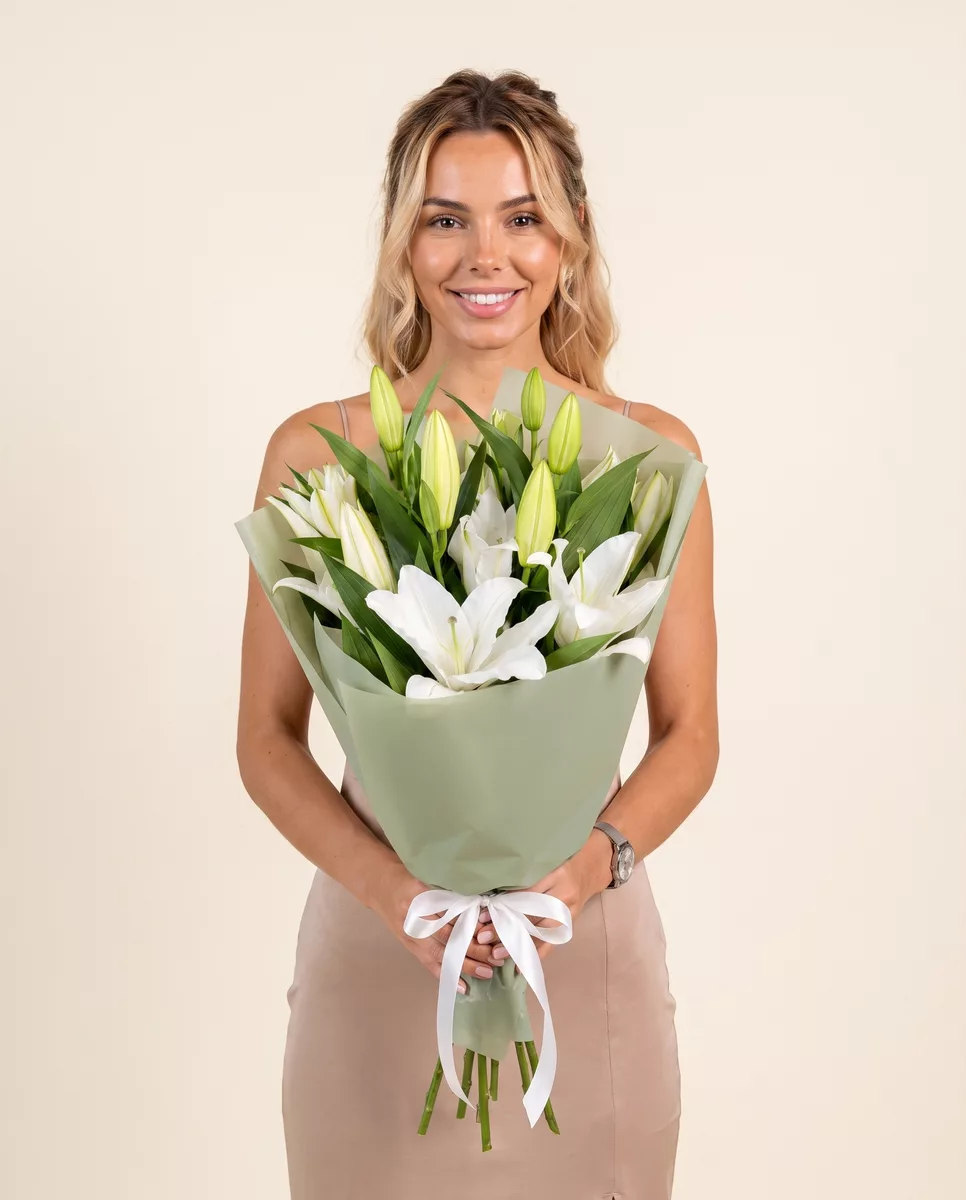
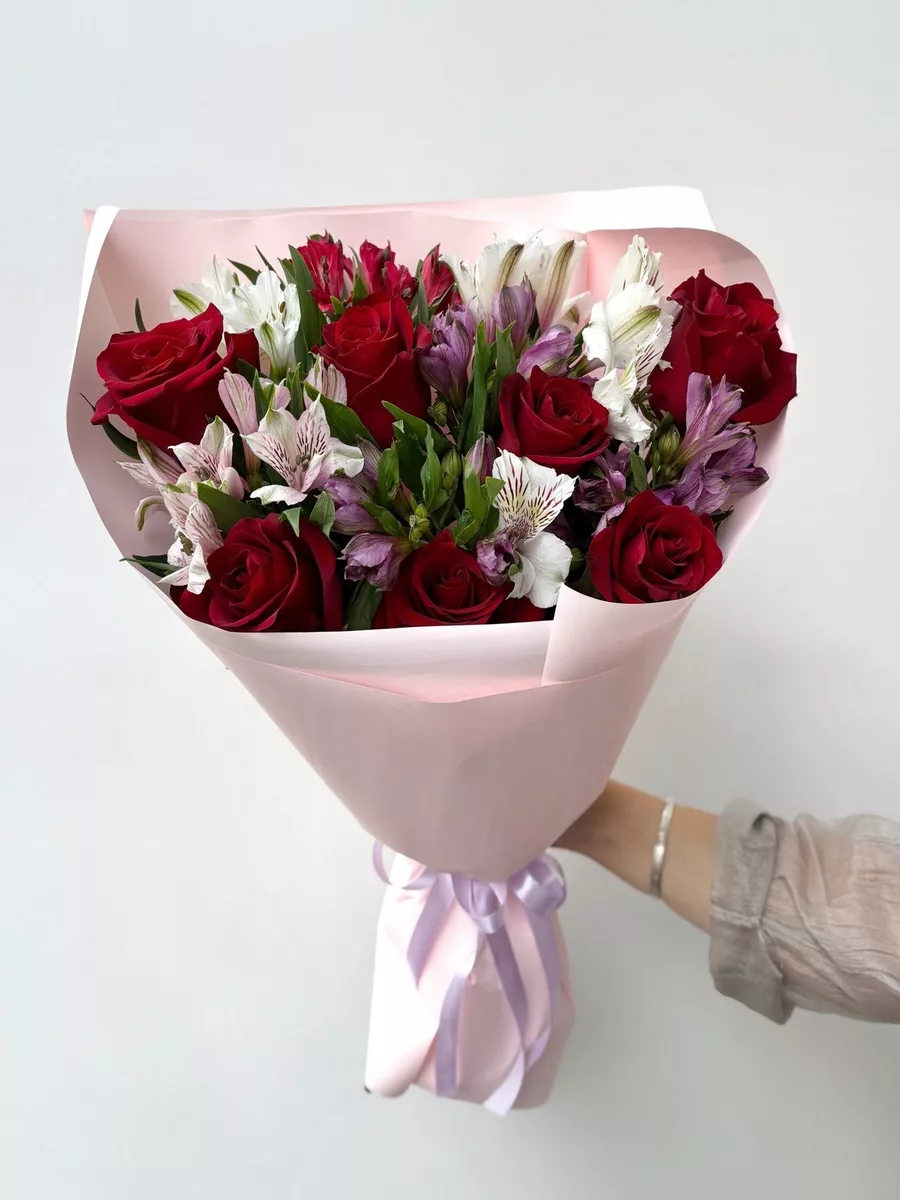
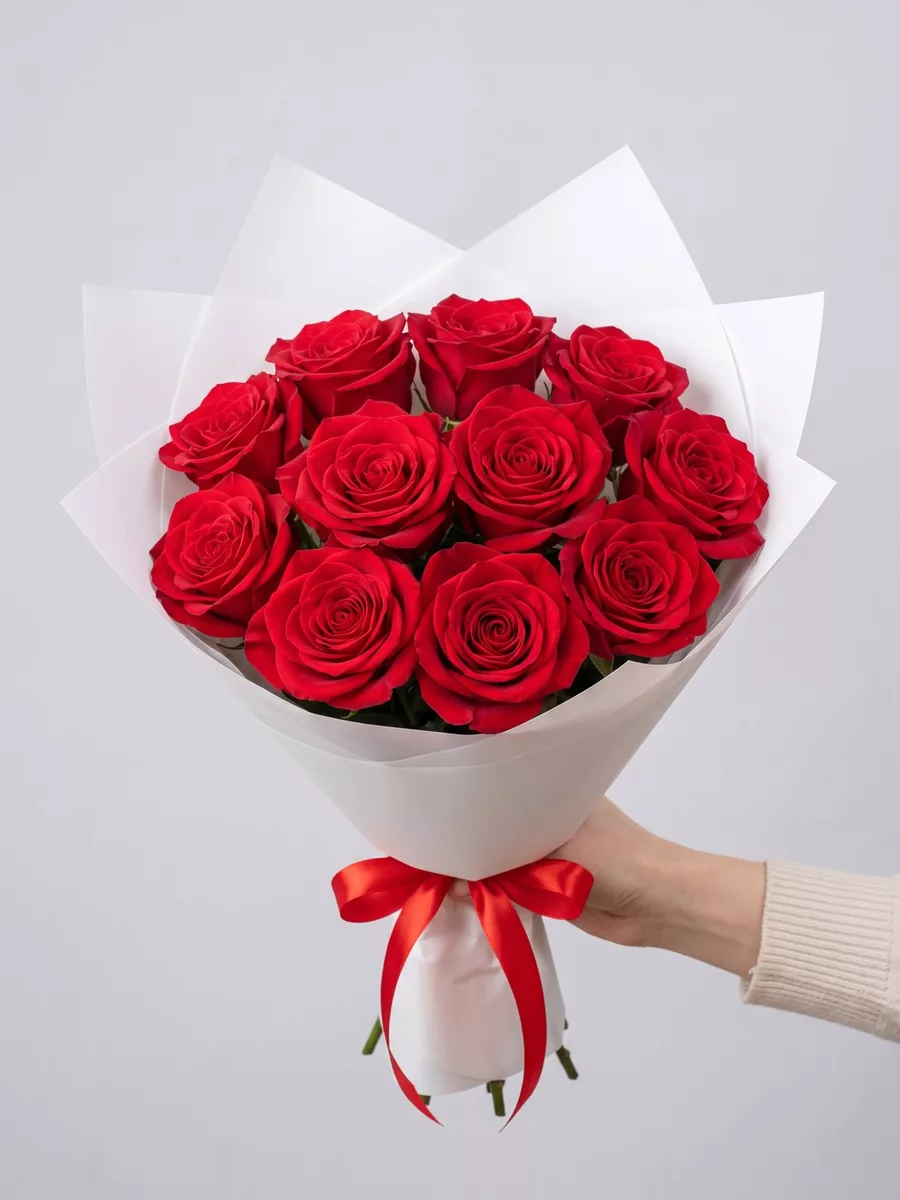
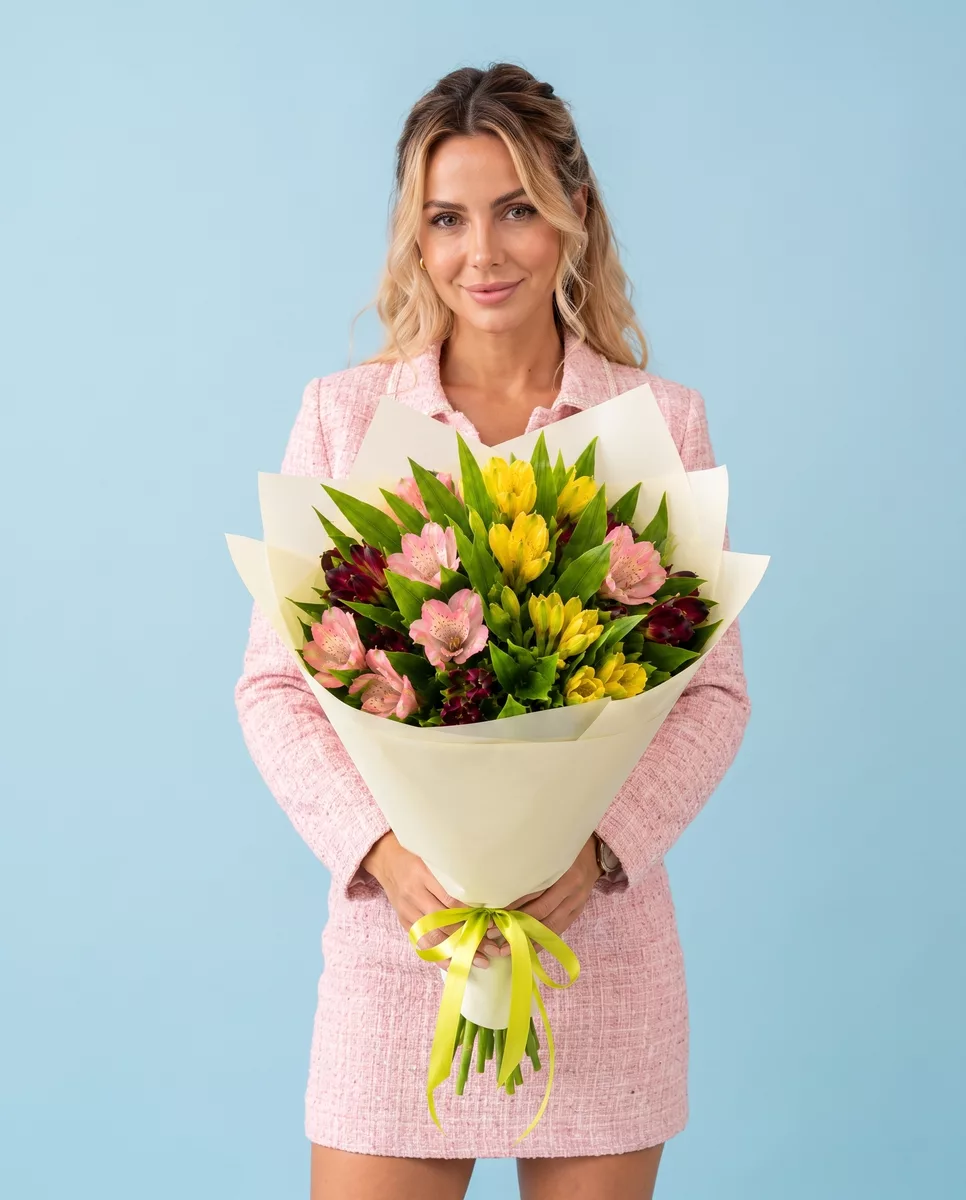
Bouquets we can deliver
Arrangements That Signal Prestige in a Russian Office Context
The most reliable format for a corporate congratulation is a structured arrangement in a box or a low ceramic vessel rather than a wrapped bouquet, because it stands independently on a desk or side table without needing a vase. Premium red or white roses in a monochrome palette are the safest choice for a director's office; a composition of fifty or one hundred stems of the same variety reads as deliberate and generous rather than random. Ecuadorian large-headed roses, particularly varieties in the forty-to-sixty-centimetre stem length range, hold their form well in heated interiors and are widely understood in Russia as a marker of quality. For a lobby installation, a tall arrangement using anthurium, white phalaenopsis orchid stems, and bear grass or monstera leaves creates the vertical presence that fills a reception space. Anthuriums are especially practical for offices because they last two to three weeks with minimal attention, which matters when no one has been assigned to care for the flowers. Calla lilies in white or cream are another strong choice for formal contexts; they are associated with elegance rather than mourning when used in full, healthy arrangements with green foliage. Avoid sunflowers, chamomiles, and garden-style mixed arrangements for a company anniversary: they photograph well on social media but read as informal in a Russian corporate setting. If the company's brand colours are known, incorporating one accent flower in that colour alongside white or cream is a detail that Russian recipients notice and appreciate, because it shows the sender researched the firm.
Choosing the Right Scale for the Recipient's Position
A single arrangement sent to a large company should be addressed to the general director or chief executive by name, not to the company as a whole, because a nameless delivery creates confusion at the reception desk and sometimes never reaches the right person. If you have relationships with several people at the firm, sending individual smaller arrangements to each of them is more effective than one large shared piece. For a director or senior partner, a composition of between fifty and one hundred premium roses, or an orchid arrangement with five to seven stems of phalaenopsis, is proportionate. For a department head or a mid-level contact, twenty-five to thirty-five roses in a box or a compact mixed arrangement of roses and alstroemeria works well and does not feel excessive. Alstroemeria is useful in corporate arrangements because it adds volume and colour variety at a lower cost per stem, which allows you to fill a larger box without the composition looking sparse. The mistake we see most often from foreign senders is ordering by price bracket rather than by physical size: a small arrangement of rare flowers can cost more than a large arrangement of classic roses, but in an office setting it is the visual scale that makes the impression, not the rarity of the variety. Ask the florist to confirm the finished dimensions of the arrangement before confirming the order. A composition intended for a reception desk should be at least forty centimetres in diameter at the base; one intended for a lobby should be sixty centimetres or taller.
Bilingual Congratulatory Cards: What to Write and How
A bilingual card, with the message written in both English and Russian, is the right format when the sender is a foreign company or when the relationship is conducted in English. Russian recipients respond well to the effort of including Russian text, even if the translation is handled by the florist's team or a professional translator, because it signals respect for the local context. The message structure that works in Russian corporate culture is brief and follows a clear sequence: address the recipient by first name and patronymic if you know it, name the occasion specifically, wish the company continued growth and success, and sign with your full name and company name. An example in English would be: Dear Mikhail Alexandrovich, please accept our sincere congratulations on your company's twenty-fifth anniversary. We wish Firma Name continued prosperity and new achievements. The Russian equivalent should be translated faithfully rather than adapted into a looser congratulatory style, because formal Russian business language is quite specific and recipients notice when a translation sounds unnatural. Avoid generic phrases like wishing you all the best, which translates awkwardly, and instead use concrete wishes tied to the business, such as new contracts, stable growth, or strong partnerships. The card should be printed on card stock, not handwritten on a small florist's tag, for a corporate delivery. Most florists who handle corporate orders can print a bilingual card on request; confirm this when placing the order and send both language versions in writing so there is no risk of mistranslation at the last step.
Timing the Delivery for Maximum Effect
Anniversary events in Russian companies typically begin in the late morning or early afternoon, with a formal gathering, speeches, and sometimes a catered lunch for staff and guests. Flowers should arrive before the event begins, which in practice means delivery between nine and eleven in the morning. A delivery that arrives after the speeches have been made and guests have left misses the moment entirely and creates an awkward situation for the recipient, who must then display or deal with the arrangement after the celebration has wound down. When ordering from Saint Petersburg for delivery to another Russian city, confirm the exact delivery window at the point of order and ask for a confirmation call or message when the arrangement is handed over. Most Russian companies have a security desk or reception that controls access, and the delivery person will need a contact name and phone number to gain entry; without these details, the delivery can be delayed by thirty minutes or more at the building entrance. If the anniversary falls on a Monday, place the order by Friday afternoon to ensure the flowers are cut and conditioned over the weekend and arrive fresh. Roses and orchids are cut with water uptake in mind and need at least twelve hours of conditioning in a cold room before delivery; a same-day order for a Monday morning event is a genuine risk to flower quality. For flowers travelling to warmer cities in summer, ask whether the delivery vehicle is temperature-controlled, because roses deteriorate quickly above twenty degrees Celsius during transit.
What Recipients and Their Staff Actually Check
When a corporate flower delivery arrives at a Russian company, the first thing the recipient or their assistant checks is whether the arrangement looks finished and professional, meaning no bent stems, no visible water stains on wrapping, and no wilted outer petals. Roses are particularly scrutinised at the outer guard petals, which are the outermost petals left on the stem to protect the inner ones during transit; a good florist removes damaged guard petals before delivery so the bloom looks open and clean. The second check is the card, and this is where foreign senders most often create a problem: a card with the wrong name, a misspelled patronymic, or a generic message that could have been sent to anyone reads as careless. Russian business culture places significant weight on personalisation, and a director who receives a card addressed to the company rather than to them personally will notice. The third thing staff check, particularly in larger companies, is whether the arrangement has been placed in water or a vessel, because a bouquet handed over in wrapping paper requires someone to find a vase and trim the stems, which is an imposition in a busy office on an event day. Arrangements in boxes with a floral foam base or in ceramic vessels avoid this problem entirely and are strongly preferred for corporate deliveries. Finally, the packaging itself matters: corporate recipients in Russia expect clean, neutral wrapping in white, black, or kraft, not bright consumer-style cellophane with printed patterns, which reads as a retail purchase rather than a considered gift.
Mistakes Foreign Senders Make and How to Avoid Them
The single most common mistake is ordering too late. Foreign companies often treat a flower order the way they would order from a local shop, assuming same-day or next-morning delivery is always possible for any arrangement. A large corporate composition with premium roses, orchid stems, and a printed bilingual card needs to be ordered at least two to three days in advance to guarantee the right flowers are available, conditioned, and assembled correctly. Ordering forty-eight hours before a major anniversary is manageable; ordering the morning of the event for a midday delivery is not. The second mistake is sending yellow flowers without understanding the association. In Russian culture yellow flowers, particularly yellow roses, are strongly associated with separation and the end of a relationship; sending a yellow rose arrangement to a business partner as a congratulation creates an unintended and negative message. Stick to red, white, cream, burgundy, or pink for corporate congratulations. The third mistake is omitting the recipient's patronymic from the card. Russians use the first name and patronymic together in formal address, and a card that says only Dear Mikhail rather than Dear Mikhail Alexandrovich sounds abrupt and slightly disrespectful in a formal context. If you do not know the patronymic, ask the florist to help you find the correct form or use the full formal name of the company and the title of the position instead. The fourth mistake is choosing an arrangement based on a photograph without confirming the actual stem count and dimensions, which leads to a composition that looks smaller in person than it did online.
A Russian company anniversary is a formal occasion with clear expectations around scale, variety, timing, and the personal details on the card. The florist's job is to handle the flowers; your job is to provide the recipient's full name with patronymic, the correct delivery address and contact number, the exact event time, and the text of the card in both languages. Get those details right and a well-built arrangement of premium roses or orchids will do the rest. If you are uncertain about any element, call and ask before confirming the order, because a corrected order placed a day early is always better than a rushed substitution on the morning of the event. We deliver bouquets across Russia in 1–2 hours.
Frequently asked questions
Is it acceptable to send flowers to a Russian company rather than to a named individual?
It is better to address the arrangement to a specific person, ideally the general director or your main contact, using their first name and patronymic. A delivery addressed only to the company name creates confusion at reception and may not reach anyone in particular. If you know several people at the firm, consider sending individual arrangements to each of them.
Which flower colours should a foreign sender avoid for a Russian corporate congratulation?
Avoid yellow flowers, particularly yellow roses, because in Russian cultural tradition they are associated with separation or the end of a relationship. White, red, cream, burgundy, and soft pink are all appropriate for formal business congratulations. Orange and purple are acceptable accent colours when used alongside a dominant neutral or red tone.
How far in advance should a corporate anniversary order be placed for delivery outside Saint Petersburg?
Place the order at least two to three days before the event. This allows time to source the correct varieties, condition the flowers in a cold room, assemble and quality-check the arrangement, print the bilingual card, and schedule a delivery window that arrives before the anniversary event begins. Same-day orders for large corporate compositions carry a real risk of substitutions.
What does a bilingual card for a Russian business partner actually need to include?
Address the recipient by first name and patronymic, name the specific occasion, include a concrete business wish such as continued growth or new contracts, and sign with your full name and company name. Both the English and Russian versions should be printed on card stock rather than handwritten on a small tag. Send both language versions in writing when placing the order to prevent translation errors.
Why is an arrangement in a box or vessel better than a wrapped bouquet for an office delivery?
A box or ceramic vessel arrangement stands independently without requiring a vase, which means no one on the recipient's team needs to find a container, trim stems, or add water during a busy event day. It also arrives looking finished and structured rather than requiring unwrapping and arranging on site, which is an imposition when staff are preparing for anniversary guests.
Ready to send a bouquet?
Pick a city, choose the flowers, and we will hand them over with a photo confirmation.
Choose a city →