
What Flowers Russian Women Actually Want on March 8
Every year in late February our phones start ringing with the same questions: tulips or roses, how many, what color, will they survive the cold. March 8 is International Women's Day, and in Russia it is the single largest flower-buying moment of the year — bigger than Valentine's Day, bigger than any wedding season weekend. The demand is not vague. Women here grow up with specific associations: certain flowers belong to this holiday the way a Christmas tree belongs to New Year. This article maps those associations to real varieties, explains why each flower dominates the day, and tells you what to check before you place an order.
Why March 8 Is Russia's Biggest Flower Day
International Women's Day has been a public holiday in Russia since the Soviet era, and the tradition of giving flowers on March 8 is so deeply embedded that it functions almost like a rule rather than a custom. Men give flowers to mothers, wives, colleagues, teachers, and daughters. Offices across the country hold small celebrations, and it is entirely normal for a male employee to arrive with bouquets for every woman on his team. The volume this creates is staggering: a shop that sells two hundred bouquets on a normal Saturday can move two thousand in the three days surrounding March 8. Because the holiday falls on a fixed calendar date rather than a floating Sunday, the logistics are predictable but unforgiving. If March 8 lands on a Tuesday, the rush starts Saturday and peaks Monday evening. Flowers ordered Tuesday morning for same-day delivery compete with every other order placed that day, which is why early ordering is not just advice — it is the difference between getting Dutch tulips at peak freshness and getting whatever is left. The cold also matters. Saint Petersburg in early March averages temperatures between minus three and plus four degrees Celsius, which affects how flowers are transported and how long they last once delivered. A bouquet left in an unheated hallway for twenty minutes in those conditions will arrive looking better than the same bouquet left in a warm car for the same time. Understanding the holiday's scale helps you plan rather than react.
Bouquets we can deliver
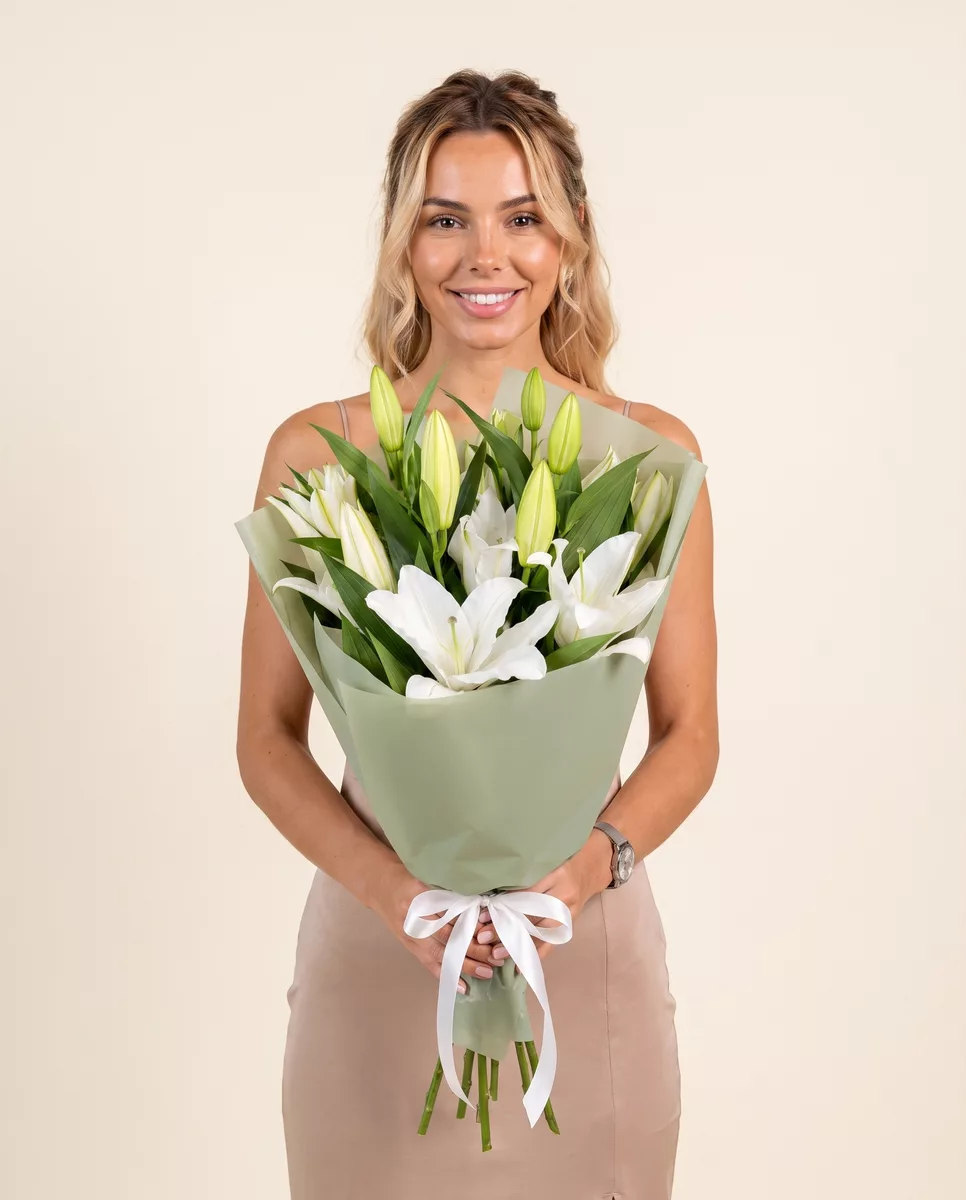
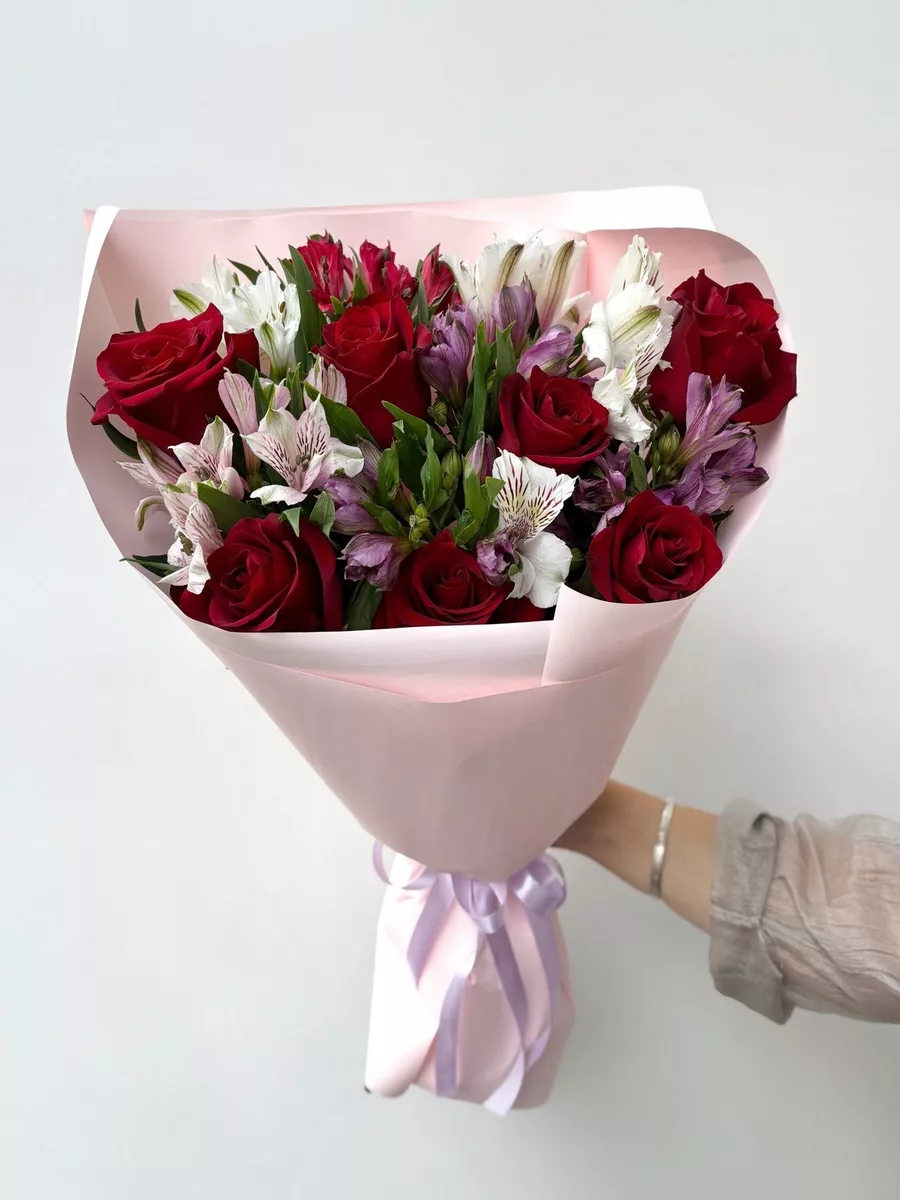
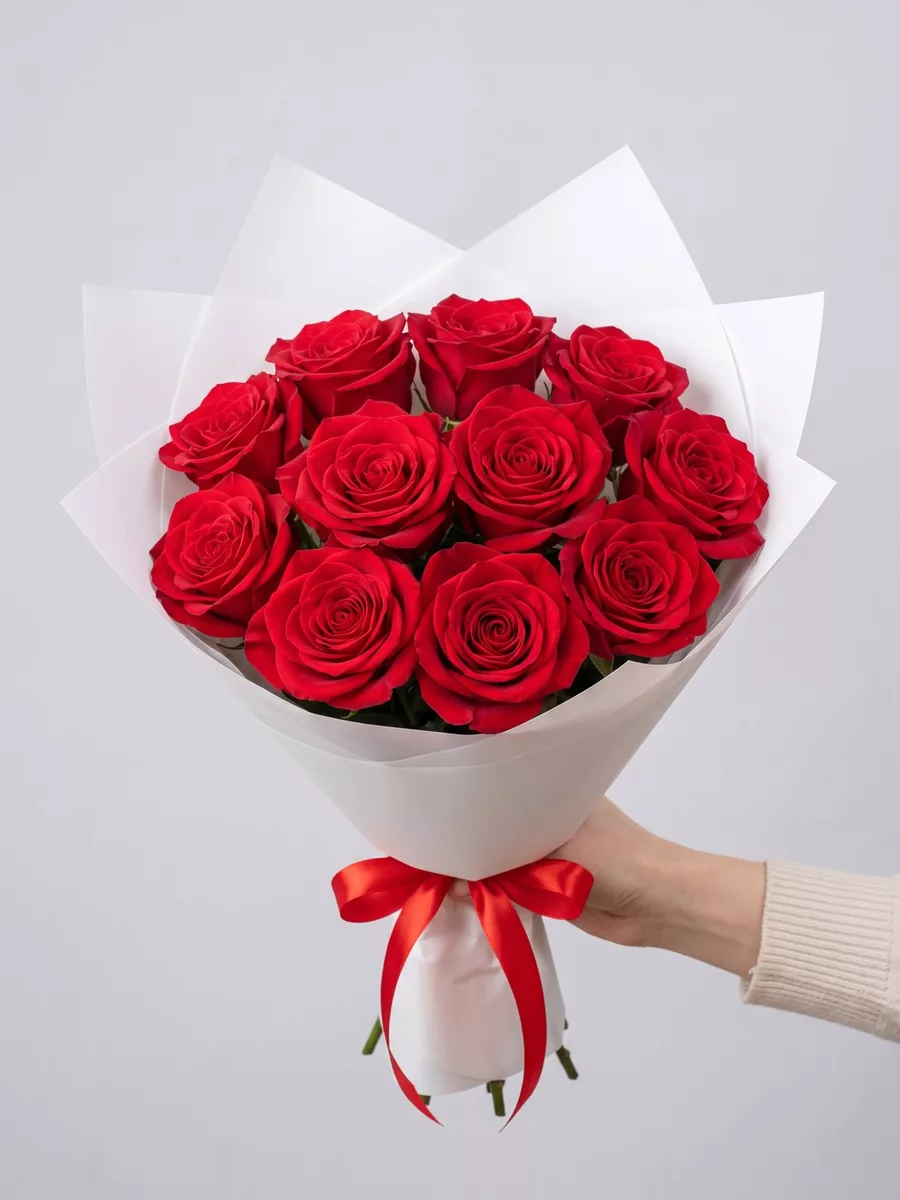
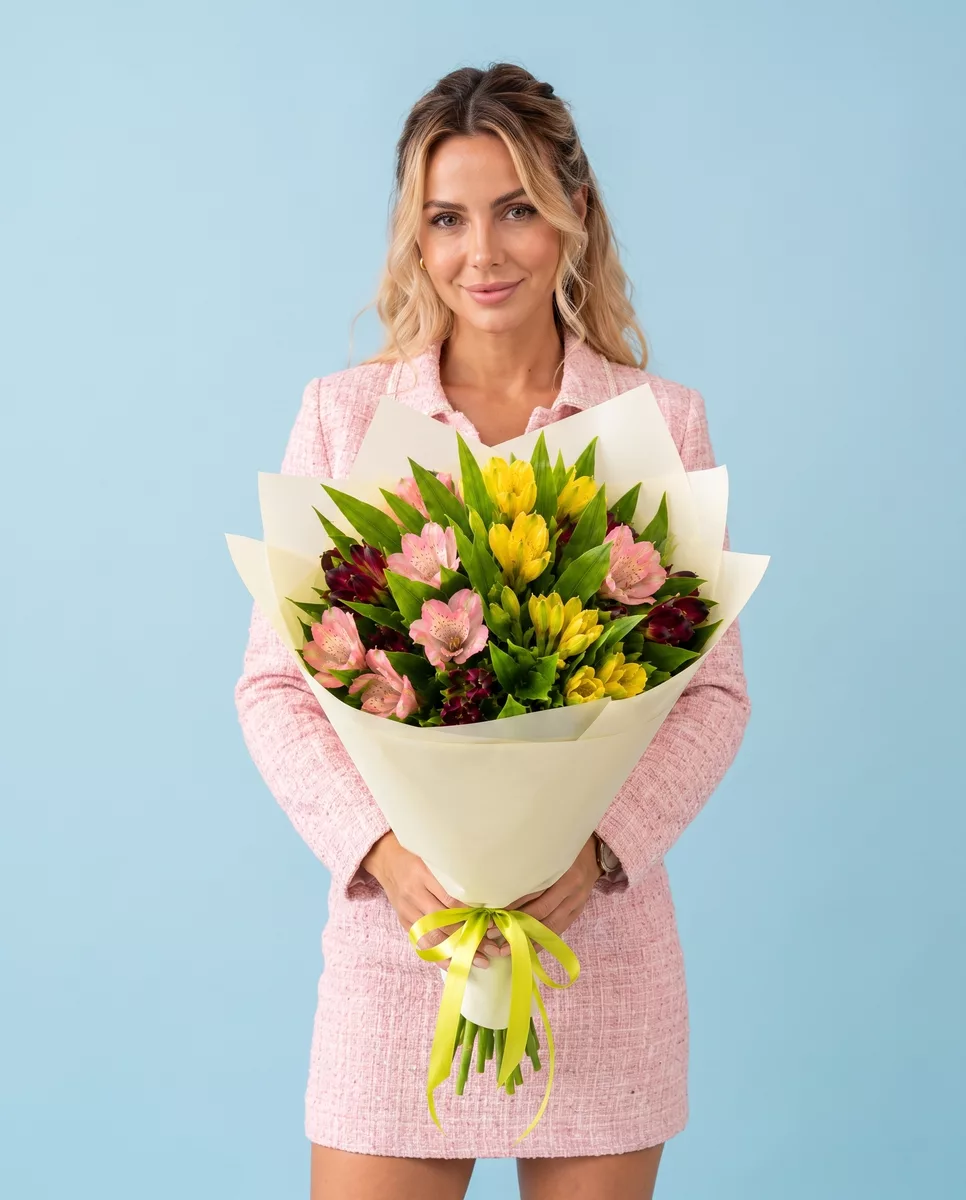
Tulips: The Flower Most Closely Associated with March 8
If you ask a Russian woman which flower she pictures on March 8, the answer is almost always tulips. This is not sentiment — it is supply chain history. During the Soviet period, tulips were among the few cut flowers available in early spring, and the association between the holiday and the bloom became fixed across generations. Today the preference holds even though the market offers far more variety. The most requested colors are red, yellow, and white, in roughly that order, though pink has gained ground steadily over the past decade. Varieties matter more than most buyers realize. Triumph tulips — the broad class that includes varieties like Ile de France and Strong Gold — hold their shape well after cutting and open gradually over four to five days, making them practical for delivery. Parrot tulips, with their fringed petals, photograph beautifully but are more fragile in transit. Peony-flowered tulips such as Angelique are popular for large bouquets because their double petals create volume without requiring many stems. A standard March 8 tulip bouquet runs between fifteen and fifty-one stems, with odd numbers being the Russian convention for living recipients. Even numbers are reserved for funerals, so florists count carefully. Tulips are also cold-tolerant relative to many other cuts, which makes them well-suited to early March delivery conditions. They should be stored at two to four degrees Celsius and cut stems should be trimmed at an angle before placing in cool water — not warm, which accelerates opening too quickly.
Mimosa: The Soviet-Era Symbol That Never Left
Mimosa — specifically Acacia dealbata, the silver wattle — is the other flower that Russians immediately connect with March 8. Its small yellow pompom clusters and feathery silver-green foliage are so tied to the holiday that many Russians simply call March 8 'mimosa day.' The tree blooms naturally in late winter in warmer climates, and during the Soviet period branches were shipped from Georgia and the Black Sea coast to cities across the USSR, arriving in time for the holiday and carrying with them the smell of early spring. That smell — sweet, slightly powdery, distinctly warm — is a strong sensory trigger for anyone who grew up with the tradition. Mimosa is not a delicate flower in the way roses are, but it has its own handling requirements. The branches drop their small florets quickly if kept too warm or in direct sunlight. Ideal storage is between four and eight degrees Celsius. Once in a vase, the branches last four to seven days if the water is changed daily and the room is not overheated. The pollen can cause allergic reactions in sensitive individuals, which is worth noting when ordering for someone you are not certain about. Mimosa is rarely the centerpiece of a large structured bouquet — it works best as a loose arrangement or combined with tulips, where the yellow clusters fill the gaps between the broader petals. Bunches are typically sold by branch count rather than stem count. The scent fades within two to three days even when the flowers still look intact, so freshness at the point of cutting matters significantly.
Roses: Year-Round but Still Dominant on March 8
Roses are the most purchased cut flower in Russia across all occasions, and March 8 is no exception. What changes on the holiday is the volume and the color preferences. Red roses remain the top seller, but on March 8 specifically there is a noticeable spike in requests for white, cream, and pale pink varieties — colors that read as festive rather than romantic in the Russian context. Ecuadorian roses dominate the premium market because of their large heads and long stems, typically sixty to seventy centimeters, and their ability to stay fresh for ten to fourteen days when handled correctly. The most requested varieties from our customers include Explorer and Avalanche for white, Red Naomi for red, and Sweet Akito for blush pink. Garden roses — varieties with more petals and a rounder, more cabbage-like shape — have grown in popularity among younger buyers who want something that looks less formal. David Austin varieties like Keira and Miranda come up regularly in orders placed online. The practical challenge with roses on March 8 is that demand outpaces supply in the days immediately before the holiday, which means the freshest stock arrives at the shop two to three days before March 8 and sells fast. Roses ordered on March 7 evening or March 8 morning are often from the second delivery wave, which is still fresh but gives the recipient less time to enjoy them at their peak. Bud stage at delivery is preferable to open blooms — a tight bud will open beautifully over two to three days in a warm room, while an already-open rose has already used most of its vase life.
Narcissus, Hyacinths and Other Spring Flowers That Sell Well
Beyond the top three, a cluster of spring bulb flowers sells strongly in the week around March 8 and deserves attention from anyone who wants to give something less expected but still seasonally appropriate. Narcissus — daffodils in common English — are the fourth most requested flower at our shop for this holiday. They are hardy, fragrant, and unmistakably spring. The variety Tête-à-Tête, a small multi-headed narcissus, works well in mixed bouquets. Standard large-cupped varieties like Carlton or Ice Follies are more common in single-variety bunches. One important note: narcissus stems secrete a sap that is toxic to other cut flowers, particularly tulips. They should never be mixed in the same vase without a twenty-four-hour conditioning period in separate water first. Hyacinths are the most fragrant option available in early March and are popular as potted plants as well as cut stems. The scent is intense — a single stem can fill a room — which makes them a strong choice but also means they are not right for recipients with fragrance sensitivities. Ranunculus, with their layered tissue-paper petals, have grown in popularity over the past five years as social media has made visually complex flowers more desirable. Varieties in coral, peach, and burgundy sell particularly well. Freesia, anemones, and muscari appear frequently in mixed spring bouquets as filler and accent flowers. All of these bulb-based flowers prefer cool conditions — between four and ten degrees Celsius — and should not be placed near radiators or in direct sun.
Colors That Sell and Colors That Sit on March 8
Color preference on March 8 follows patterns clear enough that experienced florists order inventory accordingly. Yellow is the most requested single color across all flower types — yellow tulips, yellow mimosa, yellow narcissus — and this is specifically a March 8 phenomenon. The color reads as spring and warmth in the Russian cultural context, without any of the negative associations it carries in some Western European traditions where yellow flowers are linked to jealousy or infidelity. Red is a strong second, primarily in roses and tulips. White and cream perform well in roses and narcissus. Purple and violet — hyacinths, anemones, lavender-toned tulips like Purple Prince — have grown steadily and now represent a meaningful share of orders. Pink in all its shades sells consistently without being the dominant choice. Colors that underperform on March 8 relative to other holidays are orange and burgundy, which are more associated with autumn arrangements, and bi-color or striped tulips, which appeal to buyers who are choosing for themselves but are less often selected as gifts. Blue flowers are rare in nature and the dyed varieties — blue chrysanthemums, artificially colored roses — are requested occasionally but not frequently. Green flowers, particularly green trick dianthus and green chrysanthemums, appear in contemporary mixed bouquets as texture elements rather than feature flowers. When ordering for someone whose preferences you do not know, a yellow-and-white combination in any spring flower is the statistically safest choice for March 8 and will read as appropriate by any Russian recipient regardless of age or background.
What to Check Before You Place a March 8 Order
Ordering flowers for March 8 has a short list of practical checkpoints that prevent the most common problems we hear about after the fact. First, confirm the delivery address is accessible. In large Russian cities, many apartment buildings require a door code or intercom that the recipient must answer. If the recipient is at work, confirm the workplace address accepts deliveries and that someone will be present to receive them — a front desk, a colleague, or the recipient herself. Second, specify the delivery window rather than just the date. March 8 orders that say only 'deliver on March 8' are harder to schedule precisely than orders that say 'deliver between 10:00 and 13:00.' The more specific you are, the more reliably we can meet your timing. Third, check the flower type against the temperature forecast. If the delivery route involves significant outdoor time — a long walk from a car park, an unheated lobby — cold-sensitive flowers like open roses or tropical varieties will suffer. Tulips and narcissus handle brief cold exposure better than most. Fourth, place the order at least forty-eight hours before the intended delivery time during the March 8 period. Orders placed on March 7 after 18:00 or on March 8 itself are subject to availability constraints that earlier orders are not. Fifth, include a note with care instructions or ask the shop to include one. Many recipients, particularly older women who receive flowers rarely, do not know to trim stems or change water. A simple card with three lines of instructions extends vase life by several days and makes the gift last longer.
March 8 flower preferences in Russia are not random — they are the product of decades of tradition layered over genuine seasonal availability. Tulips lead because they always have and because they are genuinely well-suited to early March conditions. Mimosa leads because its scent and color are inseparable from the holiday in the memory of anyone who grew up here. Roses lead because they are roses and the demand for them never fully recedes. If you are ordering from outside Russia or for the first time, the simplest reliable choice is a bunch of yellow or red tulips with a spray of mimosa, ordered two days early with a specific delivery window. If you want to go further, a mixed spring bouquet combining tulips, narcissus, and ranunculus in yellow and white will be recognized immediately as a March 8 arrangement by any Russian recipient and appreciated for the thought behind it. The flowers are specific. The timing is specific. Get both right and the rest takes care of itself. We deliver bouquets across Russia in 1–2 hours.
Frequently asked questions
Is it true that flowers for living recipients must come in odd numbers in Russia?
Yes, this convention is widely observed. Even numbers of flowers are associated with mourning and are brought to funerals or placed on graves. For a March 8 gift, always choose an odd stem count — eleven, fifteen, twenty-five, fifty-one. Most Russian florists count automatically, but it is worth confirming when you order, especially for round numbers like ten or twenty.
Can I order mimosa if the recipient has hay fever or pollen allergies?
Mimosa pollen is a known allergen and can trigger reactions in people sensitive to tree pollens, particularly in early spring when overall pollen load is rising. If you are unsure about the recipient's sensitivities, tulips or roses are safer choices. Narcissus also produce pollen but are generally less problematic than mimosa for most allergy sufferers.
How far in advance should I order flowers for March 8 delivery?
Two to three days before the intended delivery date is the practical minimum during the March 8 period. Orders placed forty-eight hours or more in advance allow us to source the specific varieties and colors you want at peak freshness. Orders placed on March 7 evening or March 8 morning are fulfilled from available stock, which may not include every variety or color.
What is the best way to make March 8 flowers last longer after delivery?
Trim one to two centimeters from each stem at a diagonal angle immediately after receiving. Place in clean, cool water — not warm. Keep away from direct sunlight, radiators, and fruit bowls, as ripening fruit releases ethylene gas that accelerates petal drop. Change the water every two days. Tulips in particular benefit from being kept in a cool room overnight.
Do Russian women have a preference for potted plants over cut flowers on March 8?
Cut flowers remain the dominant gift format for March 8 by a wide margin. Potted plants — particularly hyacinths, primulas, and cyclamen — are a recognized alternative and are often given by colleagues or as secondary gifts alongside cut flowers. They have the advantage of lasting longer, but in Russian tradition a fresh bouquet carries more weight as a March 8 gesture.
Ready to send a bouquet?
Pick a city, choose the flowers, and we will hand them over with a photo confirmation.
Choose a city →