
Flowers withering: what to do and when recovery is possible
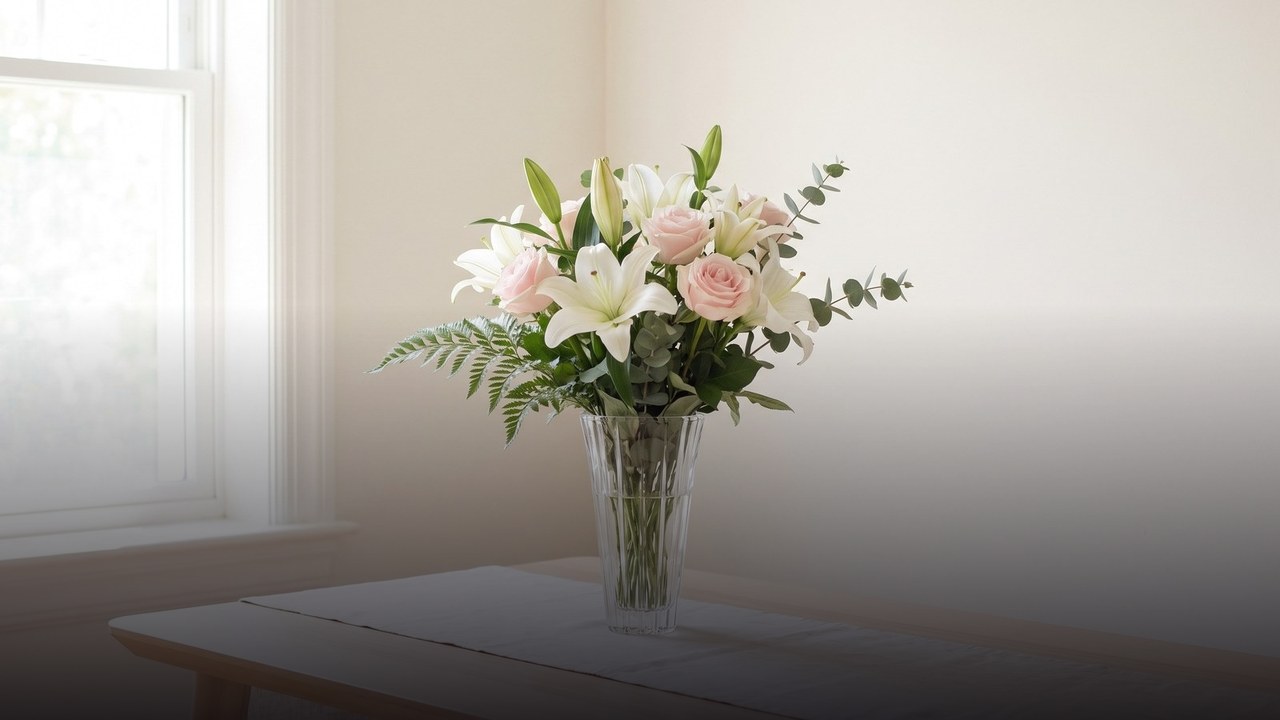
Flowers withering in a vase usually means they are losing water faster than their stems can take it up, or they are reaching the end of their vase life. Start by washing the vase, trimming the stem ends and putting the bouquet in fresh water away from heat and direct sunlight. Some drooping flowers may recover, but brown, papery or rotting tissue will not become fresh again.
A useful starting point is the distinction between a flower that is thirsty and one that is deteriorating. A soft stem in a nearly empty vase needs different attention from a stem with a slimy base and collapsing petals. At Pyat Tsvetov (5 Flowers), with flower shops in Saint Petersburg since 2011, we approach bouquet care through those visible signs: check the water, inspect the stems and adjust the conditions before trying a remedy.
Read the signs before trying to revive the bouquet
Look at the whole arrangement before deciding that every flower is finished. If several stems droop together, check whether the water has run low or the vase is standing beside a radiator or sunny window. If only one flower is failing, lift it out and inspect its stem and petals separately. Mixed bouquets contain flowers that can age at different rates, so one tired stem does not mean the others need discarding.
Water loss often shows as limp leaves, soft petals or a flower head that no longer holds its position. Cloudy water, an unpleasant smell and slippery stem surfaces point to a hygiene problem that needs immediate attention. Dry brown edges, translucent damaged petals and a mushy stem are signs of deterioration rather than simple thirst. These observations help you choose a sensible next step, although appearance alone cannot establish the exact cause.
Movement is not always withering: tulips can continue growing and bending after cutting. A curved stem with firm leaves and healthy petals may simply need room or better support in the vase. Likewise, a few marked outer petals on a rose do not necessarily describe the condition of the whole flower. Judge firmness, water condition and the progress of any damage together instead of relying on the flower's angle.
Give thirsty cut flowers a clean restart
Take the bouquet out of its vase and empty the old water completely. Wash the vase with detergent, rinse it thoroughly and use clean scissors or secateurs to remove a short section from each stem end. Make a clean cut without crushing the stem, then return the flowers promptly to fresh water. Remove any leaves that would sit below the waterline, where decaying material can foul the water.
Use flower food if a sachet is available, following its stated dilution rather than estimating a stronger dose. Extra powder is not an extra rescue treatment, and adding sugar alone does not provide the balanced contents of a prepared product. If you have no flower food, use clean water and pay close attention to vase hygiene. Avoid mixing household chemicals or adding improvised treatments that could damage the flowers.
Let the bouquet stand somewhere cool in the home, away from direct sun and hot appliances, while you assess the response. Improvement may take several hours, and a flower that remains limp is not necessarily helped by repeated trimming. Keep the stems in water and minimise handling during this period. If a stem turns soft or starts to rot, remove it rather than leaving it among healthy flowers.
Bouquets we can deliver




Make daily care match the flowers and the vase
Check the water level every day, especially in a narrow vase where a small change can leave stem ends exposed. Replace the water when it becomes cloudy or develops an odour, washing the container rather than merely topping it up. Follow any flower food instructions about changing the solution. Keep checking beneath dense foliage, because a full-looking bouquet can hide a surprisingly low water level.
Choose a vase that supports the stems without forcing them into a tightly packed bundle. Crowding can damage petals and make it harder to remove fallen leaves or inspect individual stems. Remove decorative wrapping that prevents a vase bouquet from sitting properly in water, while keeping any binding needed to hold its shape. If the flowers arrive in floral foam or another arrangement base, care differs: keep that base supplied with water instead of pulling everything apart.
Place the flowers away from radiators, heating vents and direct sunlight, and avoid a position where people repeatedly brush against the petals. Keep them apart from ripening fruit, which can release ethylene that accelerates ageing in sensitive flowers. A household fridge is not a universal solution because food, unsuitable cold and cramped shelves can create other problems. A cooler suitable spot in the room is usually the more practical choice.
Separate recoverable wilting from permanent damage
A rose with a bent neck may respond to clean water and a fresh stem cut, but recovery is uncertain. Check whether the stem below the head is still sound and whether the petals feel supple rather than dry or mushy. Remove only loose or badly damaged outer petals, taking care not to strip the flower unnecessarily. Repeated handling can bruise delicate tissue and make the head look worse.
Resist advice to plunge every bouquet into boiling water, crush the stems or submerge all the flower heads. Different flowers respond differently, and soaking delicate petals can leave marks or encourage decay. A general clean-water reset is a more cautious first step for an unidentified mixed bouquet. Where a flower needs a special treatment, identify it before attempting that treatment rather than applying it to every stem.
Remove flowers with visible mould, rotting tissue or an unpleasant smell, and clean away fallen petals from the vase opening. Healthy remaining stems can go into a smaller clean vase that suits their reduced number. Recut them only as needed and keep the water fresh. Saving part of an arrangement is a useful outcome; there is no care method that restores tissue already damaged by age or decay.
Handle a fading gift with tact and practical timing
Withering is a biological change, not a reliable message about the sender's feelings or the significance of the gift. Flowers have different vase lives, and home conditions affect how they look after arrival. If a bouquet is fading, you can thank the sender for the gesture while caring for the flowers. There is no need to attach a symbolic meaning to a drooping head or a fallen petal.
If flowers look damaged on arrival, take clear photographs of the whole bouquet and the affected areas before making substantial changes. Note when they arrived and what you observed, such as broken stems or soft petals. For questions about a Pyat Tsvetov order, call 8 (812) 507-67-05 and describe the condition clearly. Photographs and specific observations can help explain the issue without assuming its cause or a particular resolution.
For future gifts, choose delivery around a time when the recipient can receive the flowers and put them in water. A free card with a short personal message can explain the occasion without relying on flower symbolism, which varies between people and cultures. If you are sending from another country, check the recipient's availability in their local time. Practical timing gives them a better opportunity to unpack and care for the bouquet promptly.
Arrange flower delivery to Russia from abroad
Pyat Tsvetov delivers flowers across Russia; you can start with the bouquets catalogue. City delivery costs 500 RUB, while the operator confirms the price for remote districts and suburbs when confirming the order. In large cities, express delivery is available within 1–2 hours after order confirmation. Delivery around the clock is available in Saint Petersburg.
You can also arrange delivery at an exact time with a tolerance of 30 minutes either way, or choose a window of 09–12, 12–15, 15–18 or 18–21. Orders can be placed 1–30 days ahead, which helps when coordinating a gift across time zones. The courier calls the recipient about 15 minutes before arrival. If they are absent, we agree a second delivery that day or, with the sender's consent, hand the flowers to a neighbour or concierge.
Delivery is anonymous by default: the courier does not name the sender, so sign the free card if you want the recipient to know who sent the flowers. Review delivery and payment information when planning the order. Online checkout uses CloudPayments; check the payment options displayed there, as acceptance of every foreign card cannot be guaranteed. For questions about timing or delivery details, call 8 (812) 507-67-05.
Frequently asked questions
Can withering flowers become fresh again?
Flowers drooping from insufficient water may regain firmness after a fresh stem cut and time in clean water. Dry, brown or rotting tissue cannot recover, so improvement depends on the cause and extent of the damage.
Should I add sugar to revive cut flowers?
Use prepared flower food according to its instructions if you have it. Sugar alone does not replace that formulation; without flower food, focus on clean water, a clean vase and removing submerged leaves.
Why is one flower wilting while the others look healthy?
Individual stems can differ in maturity, condition and ability to take up water. Inspect the failing stem separately, and remove it if it has soft, rotting tissue or visible mould.
Can I order flowers to Russia while living abroad?
Pyat Tsvetov delivers flowers across Russia, with city delivery costing 500 RUB and remote-area pricing confirmed by the operator. Checkout uses CloudPayments; check the options displayed there rather than assuming your foreign card will be accepted.
Ready to send a bouquet?
Pick a city, choose the flowers, and we will hand them over with a photo confirmation.
Choose a city →