
Keeping Cut Flowers Hydrated in a Shallow Vase
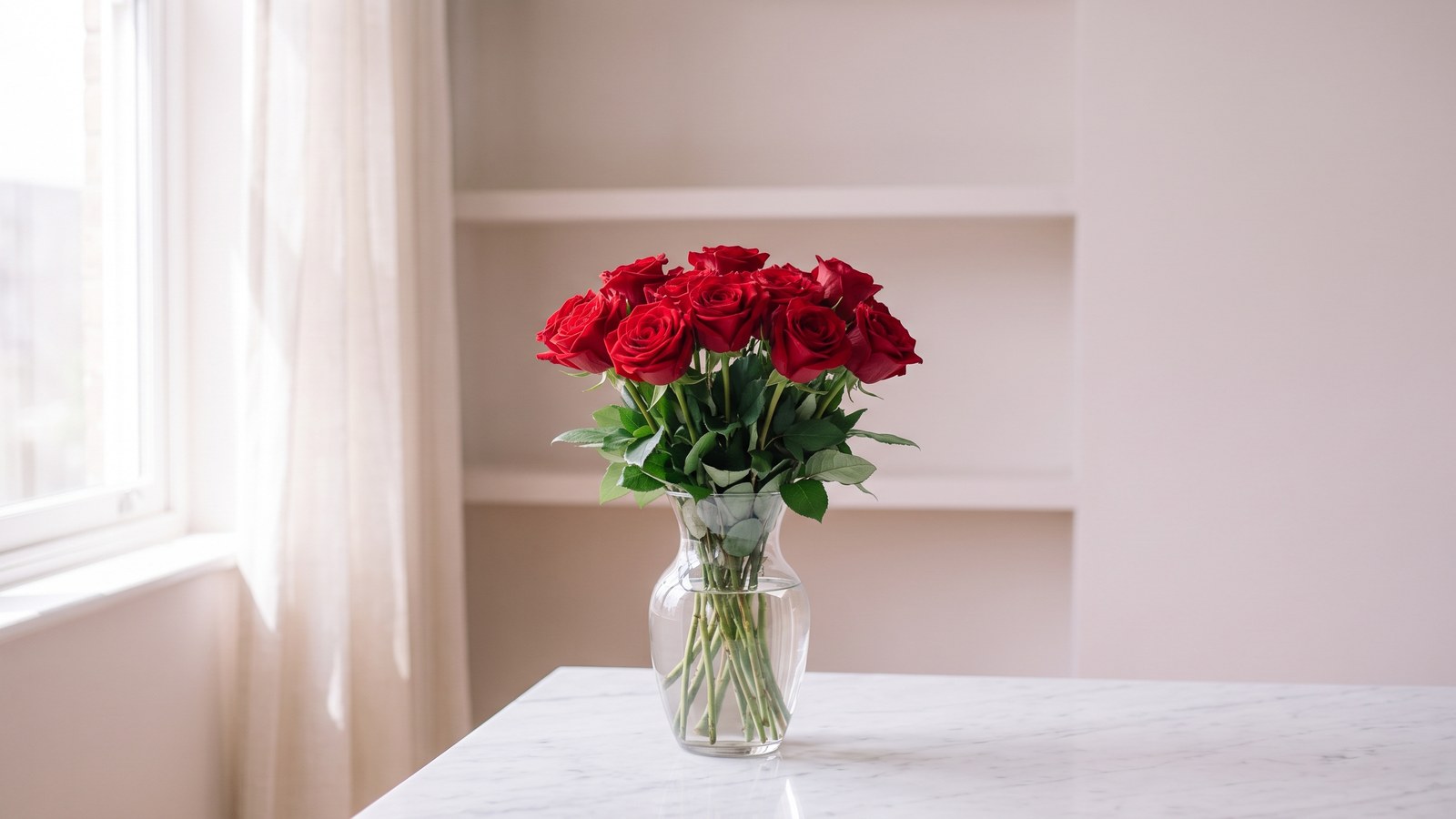
To keep cut flowers hydrated in a shallow vase, recut the stems, remove leaves below the waterline and make sure every cut end stays submerged. Check the water morning and evening, topping it up before any stem end becomes exposed. Keep the arrangement cool and away from direct sun, and replace dirty water promptly.
In our Pyat Tsvetov shops, customers often ask whether a favourite low bowl can hold flowers from a taller bouquet. The useful starting point is the space available for water and the position of the cut ends: a wide bowl can hold plenty of water yet leave some stems barely touching it. A shallow arrangement needs careful preparation, secure placement and a water level you can inspect without dismantling the display.
Check the vessel before shortening the flowers
Fill the empty vase and check that it holds water without leaking, especially if it is decorative pottery. Set it on a level surface, then look at its usable depth rather than its outside height. A thick base or an internal shelf can leave surprisingly little room for submerged stems. Choose another container if you cannot maintain water around all the cut ends.
Test the position of one stem before cutting the whole bunch. Hold the flower at the height you want, allowing its cut end to sit comfortably below the intended waterline. Leave a margin for the level to fall between checks. A stem resting just at the surface can lose contact with water after only a small drop.
A low vessel usually works best with a compact arrangement whose weight sits close to the bowl. Long stems leaning far beyond the rim can slide, lift their cut ends or overturn the display. If the flowers need substantial height, use a deeper vase instead of forcing the bouquet into the bowl. Our guide to vase shape for your bouquet explains how the container affects support.
Prepare clean stems and restore water access
Wash the vase with detergent, rinse it thoroughly and clean any reusable supports before arranging. Remove foliage that would sit in the water, including small leaves near branching points. Keep healthy leaves above the rim where possible, rather than stripping every stem bare. Loose foliage trapped at the bottom makes a shallow vessel harder to keep clean.
Use a clean, sharp cutting tool to make a fresh cut without crushing the stem. Shorten stems gradually, checking their position in the vessel as you work. A slightly angled cut can help prevent the end from sitting flush against a flat base, but a clean cut matters more than achieving a particular angle. Place the prepared stems into water promptly.
If flowers have arrived after time out of water, give them an opportunity to drink in a clean, deeper container before making the final low arrangement. Remove any leaves that would be submerged there, too. Check whether the stems and heads regain firmness before trimming them further. A shallow display is easier to manage when you begin with flowers that are already hydrated.
Bouquets we can deliver




Keep every cut end under water and within reach
Arrange the stems so their ends remain together in the water rather than spreading onto dry parts of the rim. Inspect the bowl from several angles, because a flower can look correctly placed from above while its stem ends outside the water. Pay particular attention to short side shoots and stems leaning outward. Each separate cut stem needs its own continuous contact with water.
If you use a flower frog or another reusable support, check that it holds the stems securely without obstructing the cut ends. Add water to cover the ends themselves; covering the support alone may be insufficient. Avoid packing the bowl so tightly that you cannot see or reach the water. Leave a small opening for topping up with a narrow-spouted jug.
Do not rely on misting the petals to make up for an exposed stem end. The practical priority is restoring contact between the cut base and clean water. If a stem repeatedly slips above the surface, reposition it or move that flower to a separate small vase. Splitting an arrangement is often more effective than repeatedly correcting an unstable display.
Measure flower food and watch the water level
Use fresh water and, if you have commercial cut-flower food, follow its dilution instructions exactly. A shallow bowl may hold much less than the volume specified on a sachet. Prepare the stated dilution in a separate clean jug, then pour in the amount the vase needs. Do not empty a full sachet into a small quantity of water or estimate a concentrated mixture.
Check the level in the morning and evening, and more often if it falls noticeably between those checks. Look at the actual stem ends rather than assuming the bowl still contains enough water because its bottom is wet. Top up with correctly diluted solution when using flower food, unless the product instructions say otherwise. Plain fresh water is preferable to guessing at homemade mixtures.
Replace the water if it becomes cloudy, smells unpleasant or contains fallen leaves and petals. A top-up restores volume but leaves existing debris behind. When changing it, lift the flowers out together if practical, wash and rinse the vessel, then refill and replace them promptly. For a fuller cleaning routine, see how often to change vase water.
Choose the position carefully and respond to wilting
Place the vase away from radiators, heating vents, direct sunlight and strong draughts. These locations can make a small water reserve harder to maintain. A stable table away from busy edges also reduces accidental movement of the stems. Check the bowl again after moving it, because the arrangement may shift even when no water spills.
If one flower starts to droop, check its water contact before adding more products or cutting every stem again. Look for an exposed end, a sharp bend, a crushed section or a stem caught against the rim. Move the affected flower into a clean, deeper container, making a fresh cut if needed. Recovery is not certain, particularly if the stem has been damaged or the flower is ageing.
Remove spent flowers and any fallen material so the remaining stems are easier to inspect and maintain. If several flowers wilt despite clean water and submerged ends, transfer the arrangement to a deeper vase while you assess it. This gives you more room for water and easier access to the stems. Our daily routine for keeping cut flowers fresh covers the wider care checks.
Make a flower gift easy to care for after delivery
When sending flowers to someone in Russia, avoid assuming they have a particular vase or time for detailed arranging. A short care note can suggest using a clean container first and making a shallow display later. If they plan to use a low bowl, remind them to check the water morning and evening. This gives the recipient a useful first step without requiring special equipment.
Pyat Tsvetov (5 Flowers) has operated in Saint Petersburg since 2011, and we deliver flowers across Russia. City delivery costs 500 RUB; the operator confirms the price for remote districts and suburbs when confirming the order. In large cities, express delivery is available in 1–2 hours after order confirmation, and orders can be placed 1–30 days ahead. Around-the-clock delivery is available in Saint Petersburg.
You can browse the bouquets catalogue and include a free card with your own text. Delivery is anonymous by default: the courier does not name the sender, so sign the card if you want the recipient to know who sent it. Online checkout uses CloudPayments; check the payment options displayed there. For questions before ordering, call 8 (812) 507-67-05. Check our delivery information; confirm the timing for your order.
Frequently asked questions
How deep should the water be in a shallow vase?
It should cover every cut stem end with enough margin for the level to fall between checks, while keeping leaves out of the water. If the bowl cannot provide that margin, use a deeper container.
Can I keep long-stemmed flowers in a shallow bowl?
Only if the arrangement is stable and all cut ends remain submerged. Shorten the stems gradually or choose a deeper vase if the flowers lean heavily beyond the rim.
Should I add extra flower food because there is less water?
No; follow the product's stated dilution. Mix the specified quantity in a separate clean jug, then use only enough solution to fill the bowl.
Will spraying the flowers keep them hydrated?
Misting does not replace keeping the cut stem ends in water. Check the water level and stem positions first if a flower begins to droop.
What should I do if the shallow vase dries out overnight?
Refill a clean container, recut the stems and place them in water promptly. Move to a deeper vase if you cannot reliably maintain the shallow bowl's water level; flowers that dried out may not recover.
Ready to send a bouquet?
Pick a city, choose the flowers, and we will hand them over with a photo confirmation.
Choose a city →