
Flower Delivery Lead Times in Russia: Same-Day, Next-Day and Scheduled Orders
The single question we hear most from senders outside Russia is some version of this: I want flowers to arrive at 7 p.m. on her birthday — when do I actually place the order? The answer changes depending on where in Russia the recipient lives, what flowers are in the bouquet, and whether you are ordering from a different time zone. This article breaks down exactly what lead times apply to each delivery type, which varieties hold up under tight timelines, and what to double-check before you confirm.
Why Time Zones Change Everything for Russian Flower Delivery
Russia spans eleven time zones, and that gap is the most common source of missed deliveries. Saint Petersburg runs on UTC+3. Vladivostok is UTC+10, meaning a sender in London ordering at 9 a.m. their time is already looking at mid-afternoon in Moscow and late evening on the Pacific coast. If you are ordering from Western Europe, North America or Asia, the first thing to establish is the local time at the delivery address, not your own. We work from Saint Petersburg time internally, so every cutoff we quote refers to that clock. A sender in New York placing an order at 11 p.m. EST is placing it at 6 a.m. Saint Petersburg time the following morning, which is actually early enough for same-day delivery to most Russian cities — but only if the recipient is in a western region. For Novosibirsk, Yekaterinburg or Kazan, that same order still has a reasonable window. For cities east of the Urals, you are already working with a compressed afternoon slot. The practical fix is simple: always convert the desired delivery time to Saint Petersburg time first, then count backward from our stated cutoffs. Doing it the other way around — converting your local time and assuming it lines up — is where most planning errors happen. We can help you work out the conversion if you contact us directly, but having the recipient's city and the target delivery hour ready before you call saves everyone time.
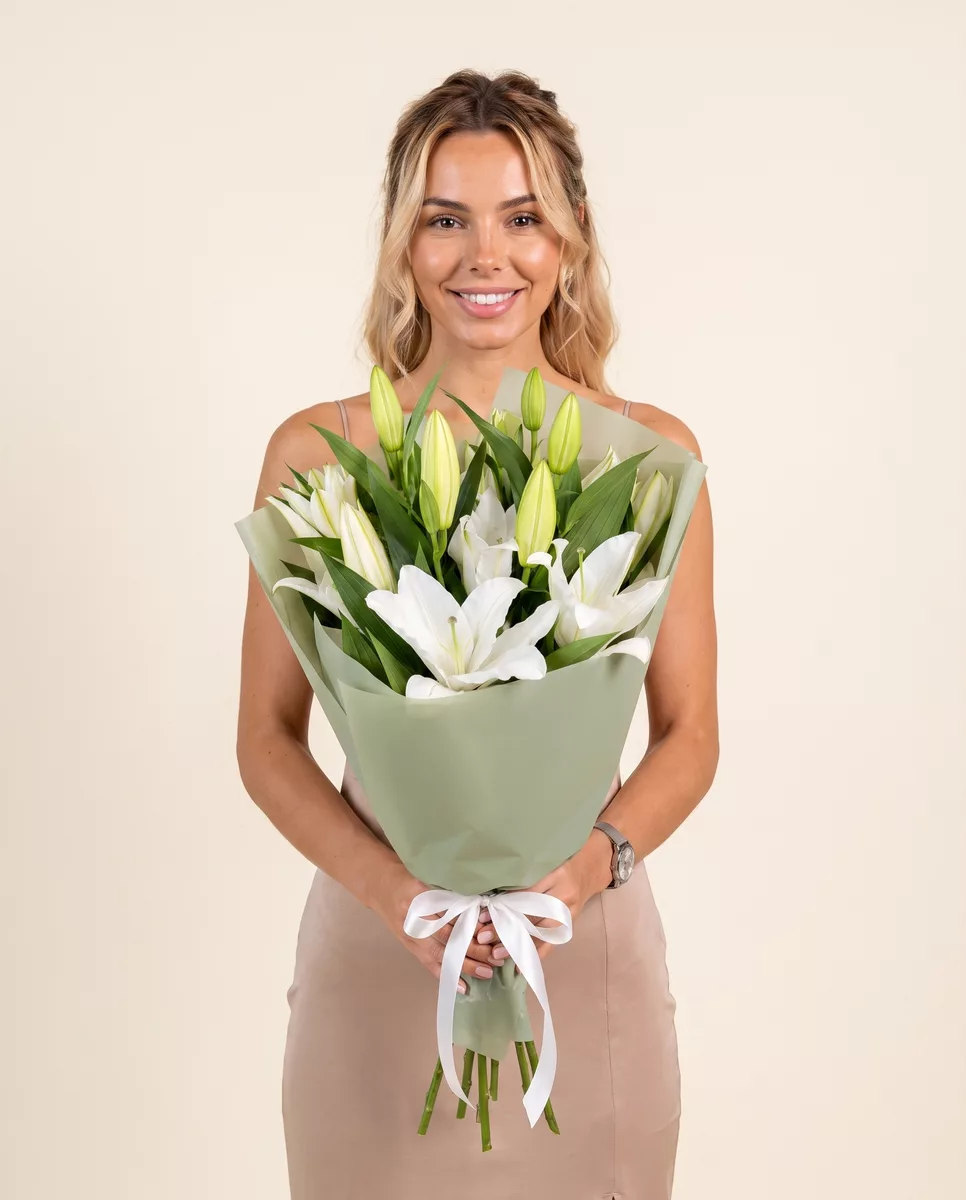
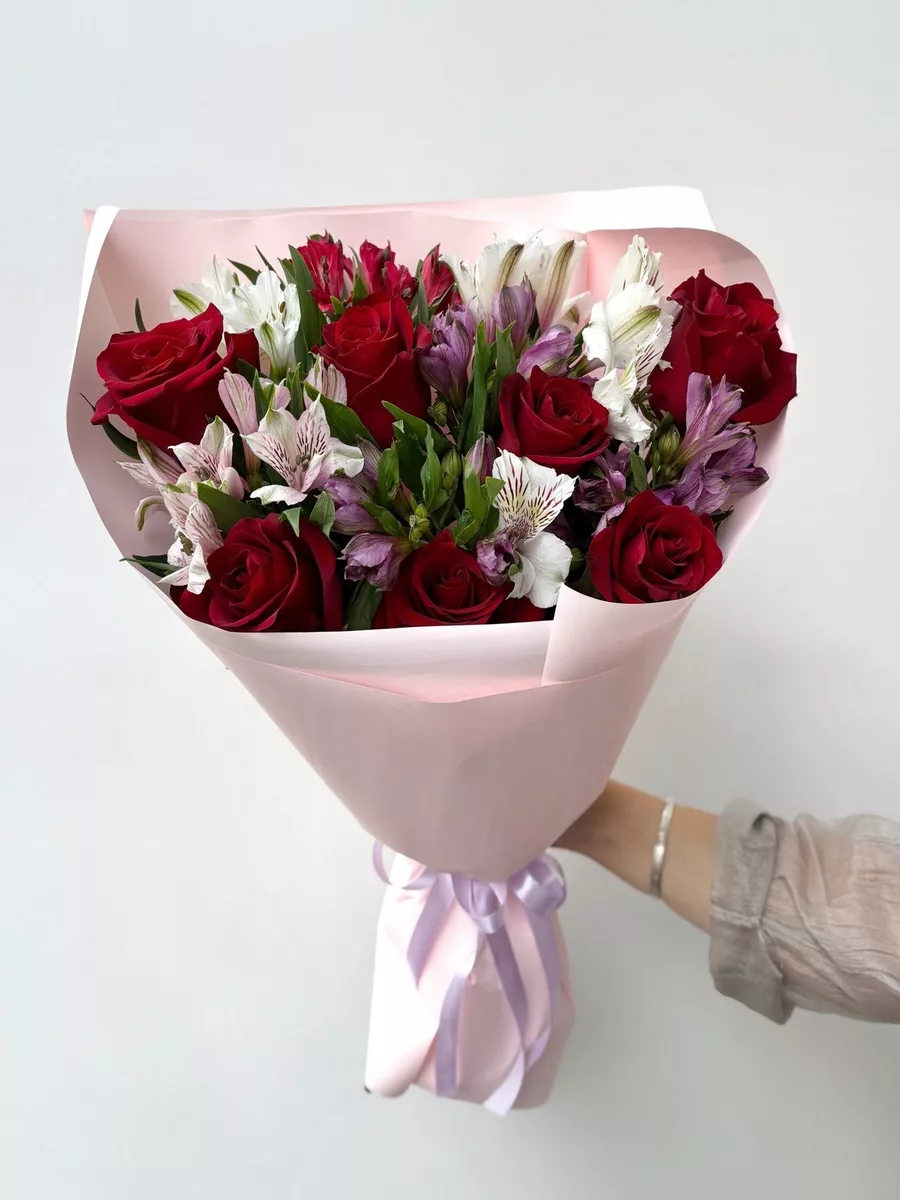
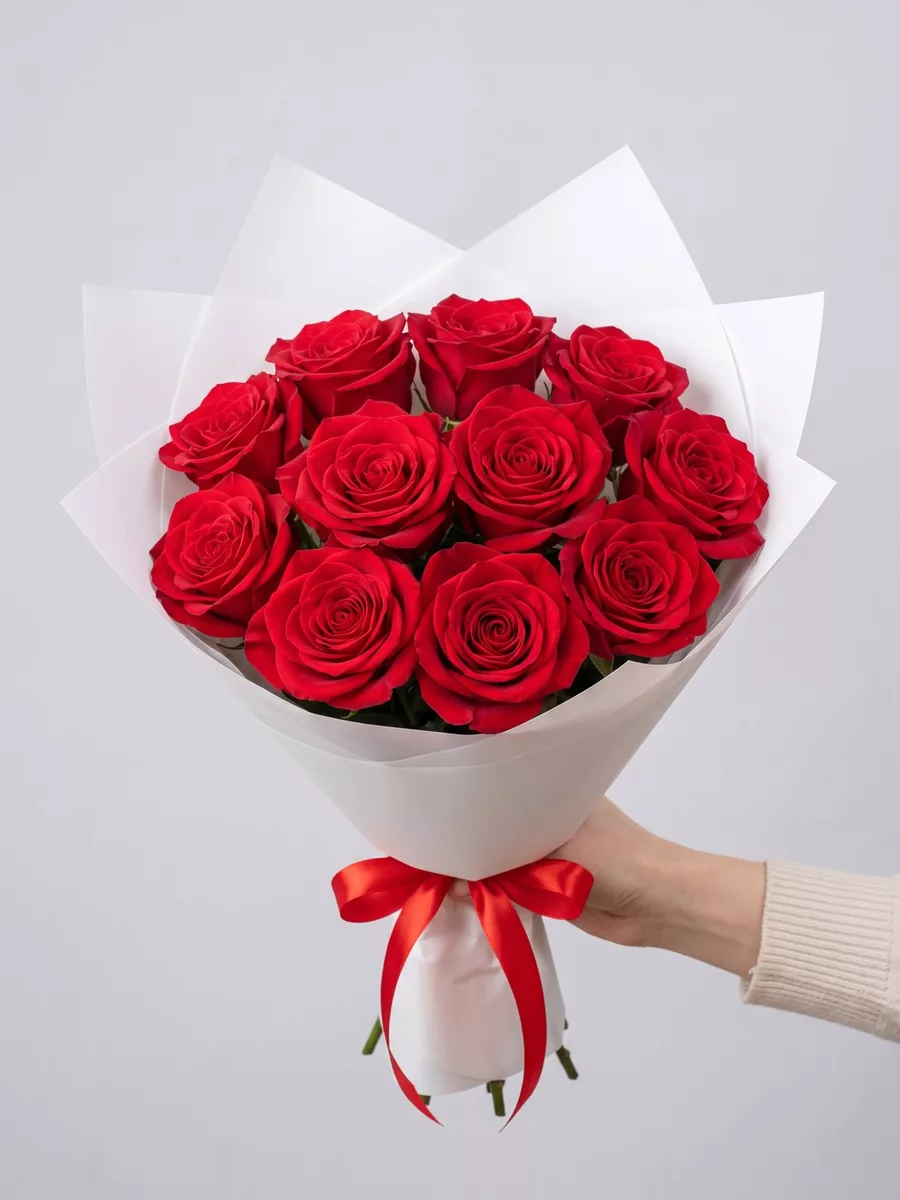
Bouquets we can deliver

Same-Day Delivery: What the Cutoff Actually Means
Same-day delivery across Russia is possible, but the cutoff is not midnight — it is mid-afternoon Saint Petersburg time, and it moves earlier for cities farther east. For Saint Petersburg itself and nearby regions, orders placed before 16:00 SPb time can generally reach recipients the same evening. For Moscow, the window is similar. For cities like Kazan, Nizhny Novgorod or Voronezh, we recommend placing same-day orders before 14:00 SPb time to give the bouquet a realistic chance of arriving before 20:00 local. The flowers used in same-day bouquets are chosen for their travel resilience. Spray roses, standard roses in bud form, chrysanthemums and alstroemeria all handle same-day transit well because they are already conditioned in our coolers and do not need extra hydration time after cutting. Lisianthus and peonies are trickier on a tight timeline — lisianthus needs a few hours to fully open after cold storage, and peonies in bud can look underwhelming if they arrive without time to bloom. For same-day orders we tend to steer customers toward varieties that look their best immediately out of the box. One thing senders often get wrong: they assume same-day means within two hours regardless of distance. That applies within Saint Petersburg and a handful of nearby cities. For intercity delivery, same-day means delivery before midnight local time at the destination, not within two hours of ordering. If you need a two-hour window in a distant city, that requires a next-day scheduled order placed the evening before.
Scheduled Delivery: Booking a Specific Hour Across Russia
Scheduled delivery — choosing a one- or two-hour arrival window — is the most reliable option and the one we recommend for birthdays, anniversaries and any occasion where timing is part of the gift. The minimum lead time for a scheduled delivery outside Saint Petersburg is 24 hours. For cities more than 1,000 kilometres from Saint Petersburg, we recommend 36 to 48 hours to account for logistics and to ensure the flowers travel in optimal condition. Roses, tulips, ranunculus and hydrangeas are all well-suited to scheduled orders because they can be cut and conditioned the day before, held at 4–6 degrees Celsius overnight, and arrive at peak freshness. Delicate varieties like garden roses and sweet peas benefit most from this approach — they are cut at a precise stage of opening, held cold, and delivered into a window you have already confirmed with us. The most common mistake with scheduled delivery is treating the time window as a suggestion. If you book 18:00–20:00 and the recipient will not be home until 20:30, tell us. We can adjust. What we cannot do is reroute a courier already en route because the recipient stepped out. In Russia it is common for recipients to arrange for a neighbour or building concierge to accept flowers if they expect to be away — this is worth mentioning to the recipient in advance. Scheduled orders also allow us to include specific add-ons: a handwritten card in Russian or English, a particular wrapping colour, or a specific ribbon. These details take preparation time, which is another reason the 24-hour minimum exists.
Next-Day Orders: The Sweet Spot for Most Senders
Next-day delivery is the option that balances flexibility with reliability, and it is what most experienced senders default to when they are not working under a hard deadline. Placing an order before 20:00 Saint Petersburg time today means we can prepare the bouquet overnight, condition the flowers through the early morning, and dispatch for delivery the following day across most of Russia. This lead time is enough to source specific varieties that may not be in the shop at the moment of ordering — certain garden rose varieties, double tulips during peak season, or large-headed peonies in spring. It also gives us time to build structured bouquets that need wiring or layered wrapping, which same-day orders rarely allow. For recipients in cities like Krasnodar, Rostov-on-Don or Samara, next-day is almost always the right default. These cities are reachable within the same day in theory, but the margin for error shrinks considerably, and a next-day order gives the flowers a much better travel experience. Temperature is a real factor here. Flowers dispatched in summer heat from Saint Petersburg to southern Russian cities need to travel in insulated packaging with cold packs — preparation that requires the overnight window to execute properly. In winter, the concern reverses: bouquets going to Siberian cities in January need wrapping that protects against temperatures that can drop to minus 30 Celsius. Next-day orders give us time to pack accordingly. Same-day orders in extreme weather are possible but carry more risk to the flowers.
Seasonal Timing: When to Add Extra Lead Time
Three periods in the Russian calendar consistently compress our available slots and require senders to plan further ahead than usual. The first is the week surrounding February 14, which has grown significantly in popularity in Russia over the past decade. Roses — red, white and spray — are the dominant request, and demand for standard 50-centimetre and 60-centimetre roses can outpace supply if orders come in late. We recommend placing Valentine's-adjacent orders at least 72 hours in advance, and five to seven days ahead if you want a specific colour combination or a large format bouquet. The second peak is March 8, International Women's Day, which is the single largest flower-giving occasion in Russia. It is genuinely comparable to Mother's Day in the UK or the US but concentrated into one date. Tulips, mimosa and narcissus are the traditional choices, and they sell out quickly. Orders placed fewer than 48 hours before March 8 are difficult to fulfil with premium varieties. The third period is the New Year window, roughly December 28 through January 2, when many Russians exchange flowers as part of holiday celebrations. During this period, delivery logistics across Russia slow down because of reduced staffing at transit points, and we add 24 hours to our standard lead time estimates for all intercity orders. Outside these three windows, our standard lead times apply. But if your occasion falls within two weeks of any of these dates, treat it as peak season and order early. A tulip bouquet ordered on March 6 for a March 8 delivery is a gamble. Ordered on March 3, it is a certainty.
What to Check Before You Confirm Any Order
Four details determine whether a delivery arrives on time and in good condition, and senders who provide all four upfront avoid the majority of problems we see. The first is the full delivery address including the apartment or office number and the building entrance number — in Russian cities, large residential blocks often have multiple entrances numbered separately, and a courier sent to entrance one when the recipient is in entrance four loses significant time. The second is the recipient's mobile number. Russian couriers call ahead as a standard practice, usually 15 to 30 minutes before arrival, to confirm the recipient is available. Without a working number, the delivery can stall at the building door. If the recipient does not speak Russian, let us know — we can brief the courier on the language situation. The third detail is the preferred delivery window stated in local time at the destination, not your time. We will convert it, but starting with the local time eliminates one layer of potential error. The fourth is any access restriction at the delivery address. Many Russian apartment buildings, office complexes and gated residential communities require a door code, an intercom number, or a call to a security desk before entry. Senders ordering from abroad rarely know these details, which means asking the recipient in advance — framed as a logistical question rather than a spoiler — is often necessary. Telling us the building has a security checkpoint takes thirty seconds. A courier waiting outside an access-controlled building for twenty minutes costs everyone the delivery window.
Ordering from Abroad: Practical Steps for International Senders
Sending flowers to Russia from outside the country involves a few additional steps that domestic senders do not face, and working through them in order makes the process straightforward. Start with payment: we accept international cards and a range of online payment methods, and the transaction processes in roubles with conversion handled automatically. There is no need to have a Russian bank account or a Russian phone number to place an order. The order itself can be placed in English through our site or by contacting us directly — our team handles English-language orders daily. The card message is where international senders sometimes hesitate. If you want the card written in Russian, provide us with the text in English and we will transliterate or translate it appropriately. If you want it in English, we write it in English — many Russian recipients, particularly in larger cities, read English comfortably. For the bouquet itself, senders from countries where flower culture differs from Russia should know that large, structured bouquets with an odd number of stems are the Russian standard for celebratory occasions. Even numbers are traditionally associated with mourning, so we always build celebratory bouquets in odd numbers automatically — you do not need to specify this. Wrapping style in Russia tends toward full coverage of the stems with paper or fabric, rather than the open-stem presentation common in some Western markets. If you have a preference, mention it. Otherwise we follow Russian convention, which recipients here expect and appreciate. Lead time from an international order perspective is the same as domestic — what matters is when the order reaches us, not where you are placing it from.
The clearest way to summarise lead times for flower delivery across Russia: same-day orders need to be placed by early to mid-afternoon Saint Petersburg time and work best for western Russian cities; next-day orders placed before 20:00 SPb time cover the full country reliably and allow for better variety selection and weather-appropriate packaging; scheduled orders with a 24-to-48-hour lead time are the right choice for any occasion where the arrival hour matters. Add 24 to 72 hours during the three seasonal peaks — February 14, March 8 and New Year — and always confirm the recipient's local time, full address including entrance number, and a working mobile number before you submit. Those four inputs are what separate a smooth delivery from a frustrated courier standing outside a locked building entrance. We deliver bouquets across Russia in 1–2 hours.
Frequently asked questions
Can I order flowers for delivery in Vladivostok from abroad on the same day?
It depends on when your order reaches us. Vladivostok is seven hours ahead of Saint Petersburg, so same-day delivery there requires the order to be placed very early in the Saint Petersburg morning. In practice, orders for Vladivostok placed before 10:00 SPb time have a realistic same-day window. Later than that, next-day delivery is the safer choice.
Why do Russian bouquets always have an odd number of flowers?
Odd numbers are the established convention for celebratory bouquets in Russia. Even numbers are associated with mourning occasions. This applies across all flower types and price points. We follow this convention automatically for every celebratory order, so you do not need to count stems or specify — if you are sending flowers for a birthday or anniversary, the bouquet will arrive with an odd number.
What happens if the recipient is not home when the courier arrives?
The courier calls ahead using the mobile number provided with the order. If there is no answer, a second attempt is made. If the recipient remains unreachable, we contact the sender to arrange a revised delivery window. In Russia it is common to arrange for a neighbour or building concierge to accept the flowers — telling the recipient to expect a delivery and naming a backup contact prevents most missed-delivery situations.
Which flowers travel best for long-distance delivery across Russia?
Spray roses, standard roses in tight bud, chrysanthemums, alstroemeria and carnations handle long transit times well because they are sturdy and respond predictably to cold storage. Peonies, ranunculus and sweet peas are more delicate and are better suited to next-day or scheduled orders where we have time to condition them properly and pack them for the specific temperature conditions along the route.
Is it possible to write the card message in English for a Russian recipient?
Yes, and it is more common than senders expect. Many Russian recipients in larger cities read English well, and an English-language card from a sender abroad often feels more personal than a translated version. If you prefer the message in Russian, provide the text in English and we will handle the translation. Either way, specify your preference when placing the order so we can prepare the card correctly.
Ready to send a bouquet?
Pick a city, choose the flowers, and we will hand them over with a photo confirmation.
Choose a city →