
How long do Ecuadorian roses last at home?
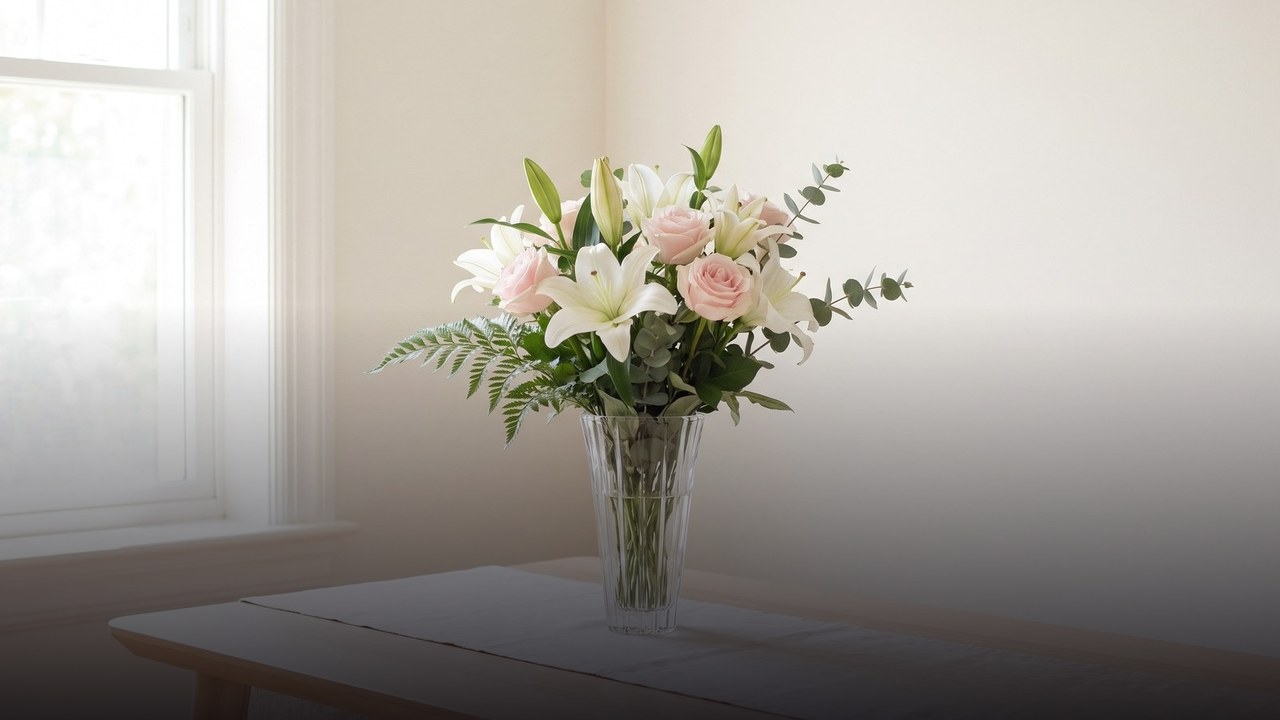
Fresh cut Ecuadorian roses usually last about 7–10 days in a vase with good care, although individual stems may fade sooner or stay attractive longer. This is a practical guide, not a guaranteed lifespan: their condition on arrival, access to water and the room where they stand all affect the result. Count from when the recipient receives the flowers, while remembering that care before arrival also matters.
Customers at Pyat Tsvetov (5 Flowers) often ask whether a large rose head means a longer-lasting flower. Size alone cannot tell you how many days a rose has left; firm stems, sound petals and good hydration are more useful clues. From our Saint Petersburg flower shops, operating since 2011, our advice starts with what the recipient can do immediately: prepare a clean vase, refresh the stem ends and choose a suitable place.
What determines an Ecuadorian rose’s vase life?
Ecuadorian describes the rose’s origin, not a single variety with one fixed lifespan. Different varieties open at different rates, and a bouquet may change gradually rather than have every bloom fade together. A rose that opens wider over several days can still be in good condition; opening is part of its development, not automatically a sign that it is dying.
Look at the flower as a whole instead of judging freshness by a tightly closed bud. Healthy-looking foliage, petals without spreading brown patches and a stem that supports the head are useful signs. A very tight bud is not a promise of longevity, because some buds fail to open properly if they cannot take up enough water.
Large heads and long stems are visual qualities, not a countdown to a particular vase life. Long-stemmed roses also need a vase that supports them without crowding the stems together. Our guide to why Ecuadorian roses are so large and long explains their appearance, while daily care determines how well they settle into the recipient’s home.
The first hour: clean water and a fresh cut
Prepare the vase before leaving the bouquet on a table to admire it. Wash the container thoroughly, rinse away detergent and fill it with clean water so the cut stem ends will be submerged. A vase with residue from an earlier bouquet can contaminate fresh water, even if it looks reasonably clear from the outside.
Remove wrapping that would sit in the water or prevent the stems from spreading naturally. Strip off leaves below the waterline, keeping healthy leaves higher on the stems. Use a clean, sharp tool to cut roughly 1–2 cm from each stem at an angle, then put the roses into water promptly so the newly cut ends do not dry out.
If flower food is supplied, follow its instructions and measure it for the amount of water in the vase. A stronger mixture is not necessarily better, and a sachet should not be divided by guesswork. Without flower food, use clean water and pay close attention to vase hygiene rather than adding improvised mixtures of sugar, coins or household chemicals.
Bouquets we can deliver




Daily care that helps roses stay attractive
Check the water level every day, especially during the first few days, and top it up before the stem ends become exposed. Change the water every day or two, sooner if it turns cloudy or develops an unpleasant smell. When changing it, rinse the vase and remove any fallen leaves or petals instead of simply pouring fresh water over the debris.
Refresh the stem ends with a small clean cut when changing the water, particularly if uptake appears to have slowed. Keep the flowers out of water only as long as needed to clean the vase and trim them. For a fuller care routine, see how to make roses last longer, and give the recipient these instructions while the bouquet is still fresh.
Remove a deteriorating stem when its petals become soft or brown, or its foliage starts breaking down. One fading rose does not mean the entire bouquet has finished, so assess each stem separately. As the arrangement becomes smaller, move the remaining roses to a clean, narrower vase if that helps keep them upright and their cut ends submerged.
Where to put the vase, and what to do about drooping
Choose a cool part of the room away from direct sunlight, radiators and other heat sources. Avoid a windowsill that becomes hot during the day or a position directly in the path of a heater or air conditioner. Keep the vase away from ripening fruit, which releases ethylene that can speed ageing in sensitive cut flowers.
A bent neck or drooping head can indicate difficulty taking up water, but it does not identify the cause on its own. Start with the practical checks: confirm the water level, wash the vase, replace the water and recut the affected stem with a clean blade. Let it stand in a cool place and observe whether it regains firmness; recovery is possible but cannot be promised.
Avoid trying to rescue a rose with boiling water, a hot radiator or prolonged soaking of the entire flower head. Wet petals can develop marks and decay, while heat can damage delicate tissue. Our guide to reviving wilted roses after delivery gives a more focused approach when a stem needs attention.
Choose delivery timing around the occasion
For a birthday or anniversary, arrange delivery for the day you want the bouquet to be enjoyed rather than assuming it will look identical several days later. Roses continue opening after arrival, so their appearance changes throughout their vase life. If the recipient will be travelling or away from home, choose a time when they can put the stems into water promptly.
When sending roses to Russia, the colour and message can make the intention clearer than the bouquet alone. Red roses commonly suggest romance, while pink can express affection or thanks, although personal preferences matter more than a rigid colour code. For a celebratory bouquet in Russia, an odd number of stems is customary when the roses are readily countable; even numbers are traditionally associated with mourning.
A short card is particularly useful when you are sending flowers from abroad and cannot explain the gesture in person. Our delivery is anonymous by default: the courier does not name the sender, so include your name in the card text if you want the recipient to know who sent it. A card with your text is free, and a simple personal message can also explain an unfamiliar choice of flowers.
Ordering roses for someone in Russia
You can choose flowers through our bouquets catalogue, and we deliver across Russia. City delivery costs 500 RUB; for remote districts and suburbs, the operator confirms the price when confirming the order. When selecting the date, consider the recipient’s availability as well as the occasion, because a prompt move into water helps the bouquet settle after its journey.
Express delivery in large cities is available in 1–2 hours after the order is confirmed. Other timing options include an exact time within a margin of plus or minus 30 minutes, windows of 09–12, 12–15, 15–18 or 18–21, and pre-ordering 1–30 days ahead. In Saint Petersburg, delivery operates around the clock; this availability should not be assumed for other cities.
The courier calls the recipient about 15 minutes before arrival. If the recipient is absent, we agree a second delivery the same day or, with the sender’s consent, hand the flowers to a neighbour or concierge. Online checkout uses CloudPayments; check the payment options displayed there rather than assuming every foreign card will be accepted, and call 8 (812) 507-67-05 with questions. We deliver bouquets across Russia in 1–2 hours.
Frequently asked questions
Can Ecuadorian roses last two weeks?
Some stems may remain attractive for around two weeks, but that is not a reliable expectation for every bouquet. Plan around roughly 7–10 days with good care, allowing for differences in variety, condition and room environment.
Do longer stems mean Ecuadorian roses last longer?
Stem length alone does not establish vase life. Choose a vase that supports the flowers, keep the cut ends submerged and judge their condition by the stems, foliage and petals together.
How often should I change the water for roses?
Change it every day or two, and sooner if it becomes cloudy or smells unpleasant. Check the level daily, clean the vase during water changes and keep leaves below the waterline removed.
Should I remove the outer petals from Ecuadorian roses?
Remove an outer petal if it is damaged or deteriorating, easing it away carefully without pulling at the rest of the bloom. Slightly different-looking outer petals do not by themselves mean the rose is old, so avoid stripping healthy petals unnecessarily.
Can I send roses to Russia without the courier revealing my name?
Yes, delivery is anonymous by default, and the courier does not name the sender. If you want to identify yourself, include your name in the text for the free card.
Ready to send a bouquet?
Pick a city, choose the flowers, and we will hand them over with a photo confirmation.
Choose a city →