
How to revive lilies in a vase, and when to stop trying
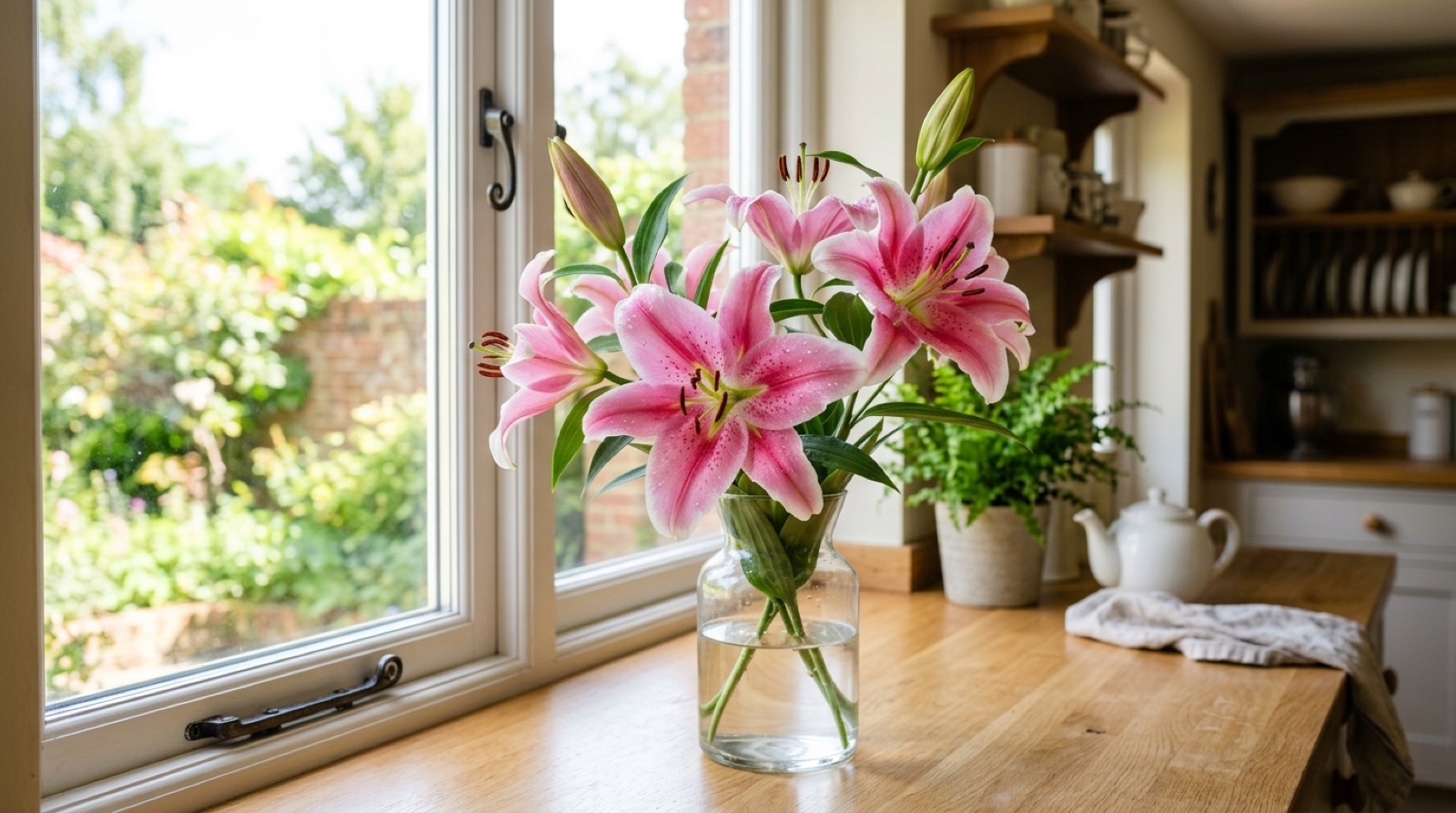
To revive lilies in a vase, wash the vase, replace the water and cut about 2–3 cm from each stem with a clean, sharp tool before returning the flowers to water. Remove submerged leaves and move the vase away from sunlight, heaters and draughts. Give the lilies several hours to take up water, remembering that dry, translucent or browning petals will not become fresh again.
At Pyat Tsvetov (5 Flowers), customers often ask whether a drooping lily needs more water or has simply finished flowering. Our Saint Petersburg flower shops have been open since 2011, and the useful starting point is to examine each bloom separately. One spent flower can sit beside healthy buds on the same stem, so removing the whole stem too soon may waste flowers that still have time to open.
Check whether the lily is thirsty, damaged or naturally fading
Look first at the water level, the submerged part of the stem and the condition of the petals. A vase that has run low, combined with limp leaves and otherwise intact flowers, suggests that poor water uptake may be involved. Cloudy water, an unpleasant smell or slippery stems are reasons to clean the arrangement immediately. These signs help you choose a sensible first step, but they do not prove that every bloom can recover.
An ageing lily often develops curled edges, papery patches or petals that become thin and translucent before falling. A crease or break in the stem can also leave a flower drooping even when there is plenty of water below it. Check the unopened buds as well: firm buds are more promising than shrivelled ones, although opening is never certain. Our guide to lily varieties, scent and vase life explains why different lilies can behave differently in an arrangement.
Clean the vase and recut the stems properly
Lift the lilies out and empty the vase completely, rather than adding fresh water to an old, cloudy supply. Wash the inside with washing-up liquid, paying attention to residue around the base and waterline, then rinse thoroughly. Remove any leaves that would sit below the new water level, leaving healthy foliage above it. Refill with fresh, room-temperature water deep enough to cover the cut ends comfortably without immersing leaves.
Use a clean, sharp knife or secateurs to remove about 2–3 cm from the base of each stem with a neat diagonal cut. If the lowest section is soft or discoloured, trim back to firm tissue where possible and use a shorter vase if needed. Return each stem to water promptly after cutting, and avoid crushing or splitting the base. If you have cut-flower food, mix it exactly as the packet directs; guessing a stronger dose does not improve the treatment.
Bouquets we can deliver




Give the flowers a calm place to rehydrate
Set the vase in a cool room with indirect light, away from radiators, sunny windows, cooking heat and strong airflow. Avoid placing the flowers directly beneath an air-conditioning outlet, where the moving air can dry petals. Make sure the stems have room rather than being packed tightly into the neck of the vase. A stable container that supports the arrangement helps prevent heavy flower heads from pulling weakened stems sideways.
Leave the lilies undisturbed for several hours, then compare their posture and leaf firmness with their earlier condition. Flowers affected mainly by a short interruption in water supply may improve, but there is no reliable recovery deadline for every stem. Check again the following morning before deciding that an intact stem is beyond help. Avoid hot-water treatments, ice baths or putting the bouquet in a domestic fridge, where unsuitable conditions can introduce further damage.
Treat open flowers and unopened buds differently
Remove a spent individual flower carefully while keeping healthy buds and leaves on its stem. Support the stem with one hand and use clean scissors to cut the faded flower's short stalk without damaging neighbouring growth. This makes the arrangement tidier and removes petals that might otherwise fall into the water. If a flower is still firm but hangs low, reposition the stem for support before assuming that the bloom has failed.
Closed buds do not necessarily mean that the lilies need reviving, because buds on one stem can open at different times. Keep them in clean water with indirect light and give them time, without peeling the petals apart or putting the vase in strong sun. Very immature or damaged buds may never open, and no home treatment can guarantee that they will. For the routine care that follows a rescue attempt, see how to keep lilies alive in a vase.
Avoid remedies that create another problem
Plain clean water is a better fallback than an improvised mixture of sugar, aspirin, coins or household cleaners. Sugar without a properly balanced preservative can encourage microbial growth, while guessed doses of cleaning products can injure plant tissue. Do not spray open flowers repeatedly or submerge the whole bouquet as a routine rescue treatment. Wetting delicate petals does not address a blocked or damaged stem and can leave marks on the flowers.
Keep true lilies and daylilies out of homes with cats: their leaves, flowers, pollen and vase water can cause severe poisoning. If a cat may have chewed a lily, licked pollen or drunk the water, seek urgent veterinary advice rather than waiting for symptoms. Removing the pollen-bearing anthers may reduce stains, but it does not make a lily safe for cats. To remove anthers for tidiness, lift them gently with a tissue before the pollen becomes loose, taking care not to rub it onto petals or clothing.
Know when to remove a stem or arrange a fresh gift
After cleaning, recutting and allowing time for water uptake, remove stems that remain collapsed or continue to soften and smell unpleasant. Keep any firm, healthy stems in a suitable smaller vase, and check the water level daily because lilies can use water quickly. Replace cloudy water immediately and wash the vase whenever residue develops. A smaller arrangement of sound flowers will usually be easier to maintain than one crowded with decaying material.
When sending a fresh bouquet to someone in Russia, check the bouquets catalogue and consider whether the recipient has cats or is sensitive to fragrance. We deliver across Russia; city delivery costs 500 RUB, while the operator confirms the price for remote districts and suburbs when confirming the order. In large cities, express delivery is available 1–2 hours after order confirmation, and orders can also be placed 1–30 days ahead. Saint Petersburg delivery operates around the clock; the delivery and payment information covers the available arrangements.
For a gift, add a free card with your text so the recipient can identify the sender if you wish, since delivery is anonymous by default and the courier does not name the sender. The courier calls the recipient about 15 minutes before arrival, so choose a time when they are likely to be available to receive the flowers. Online checkout uses CloudPayments; check the payment options displayed there rather than assuming that a particular foreign card will work. For questions about an order, call 8 (812) 507-67-05.
Frequently asked questions
How long should I wait for drooping lilies to recover?
Give freshly recut stems several hours in clean water, then reassess them the following morning. Improvement depends on the cause of the drooping; aged petals, broken stems and decaying tissue will not recover through hydration.
Should I use warm or cold water to revive lilies?
Fresh, room-temperature water is a sensible starting point for routine lily care. Avoid extreme temperatures, and follow the packet instructions if you are using a commercial cut-flower treatment.
Can I revive brown lily petals?
Brown, dry or translucent areas will not turn fresh again. Remove a badly faded individual flower while retaining healthy buds on the same stem.
Why are my lily buds still closed after changing the water?
Buds may need more time, and they do not all open together. Keep the stems in clean water with indirect light, but do not force the petals apart; immature or damaged buds may fail to open.
Does removing lily pollen help the flowers recover?
Removing the anthers helps prevent pollen stains but does not correct dehydration or reverse ageing. It also does not remove the danger lilies pose to cats, so choose other flowers for a home with cats.
Ready to send a bouquet?
Pick a city, choose the flowers, and we will hand them over with a photo confirmation.
Choose a city →