
How to Keep Lilies Alive in a Vase
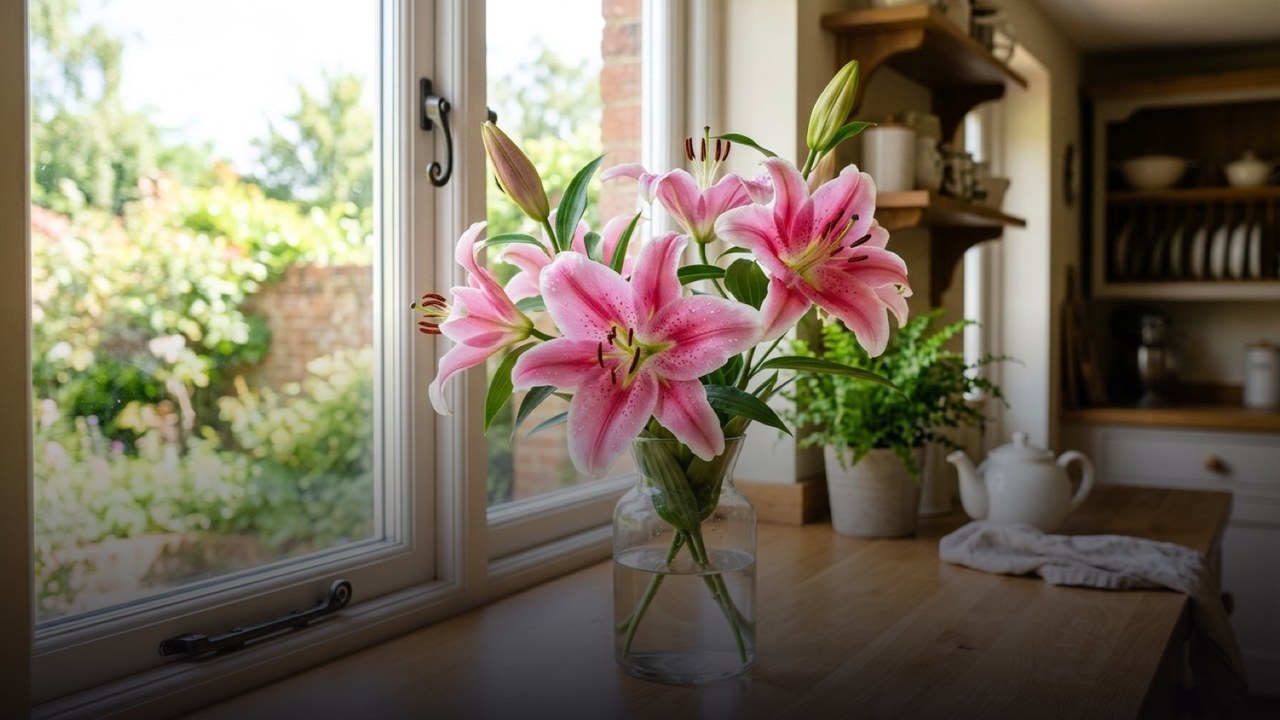
To keep lilies alive in a vase, trim the stems with a clean, sharp blade, remove any leaves that would sit underwater, and place them in a clean vase with fresh water and correctly diluted cut-flower food. Check the water daily, replace it whenever it becomes cloudy, and keep the flowers away from direct sun, heaters and ripening fruit. Remove fading flowers as the remaining buds develop.
Customers at Pyat Tsvetov (5 Flowers) often ask how to care for a bouquet that has both open lilies and tightly closed buds. Those stems need steady access to clean water, enough room for the flowers to unfold, and a position where heat will not speed up ageing. Our Saint Petersburg flower shops have been serving customers since 2011, and the most useful care advice starts with what you can check at home: the vase, the water and the condition of each stem.
1. Prepare the vase and stems before arranging
Wash the vase with washing-up liquid, rinse it thoroughly, and remove any slippery residue left by an earlier bouquet. Choose a vessel tall and stable enough to support the stems without squeezing them together at the neck. Lily flowers become broad as they open, so leave space between the buds and keep them clear of walls or shelves. Our guide to choosing a vase for your bouquet explains how support and spacing affect the arrangement.
Unwrap the bouquet and remove leaves from the part of each stem that will be submerged. With clean, sharp secateurs or a knife, cut roughly 1–2 cm from the stem ends, making a slight angle, then put the stems into water promptly. Avoid crushing the ends with blunt scissors or stripping off healthy leaves higher up the stem. If transport has left a stem end visibly damaged, cut above that damage while preserving enough length for the vase.
2. Keep the water clean and use flower food correctly
Fill the vase with fresh tap water at a comfortable room temperature, deep enough to cover the cut ends generously while keeping foliage above the surface. If you have cut-flower food, measure the water and follow the packet's dilution instructions. A whole sachet in a small amount of water can make the solution too concentrated, so do not guess the dose. Plain clean water is a sensible option when suitable flower food is unavailable; avoid improvised mixtures of sugar, coins, aspirin or household chemicals.
Check the water level every day because a full vase can drop surprisingly quickly, especially with several leafy stems. Replace the water every one to two days, and sooner if it turns cloudy, develops an odour or contains fallen plant material. At each change, rinse the vase, inspect the stem ends and remove a small fresh slice if they have become soft or discoloured. Adding water restores the level but does not remove accumulated debris; see our guide to how often to change vase water for a practical routine.
Bouquets we can deliver




3. Choose a position that slows ageing
Place lilies in a cool part of the room with indirect light, away from a sunny windowsill, radiator, fireplace or warm appliance. Direct sunlight can heat both the petals and the water, even when the rest of the room feels comfortable. Avoid the path of an air-conditioning vent or a strong draught, which can dry exposed petals. A stable side table with room above the bouquet usually gives the flowers better conditions than a narrow, sunlit shelf.
Keep the vase away from ripening fruit, which can release ethylene and accelerate ageing in susceptible cut flowers. If the room becomes hot during the day, move the arrangement to a cooler indoor position rather than trying to compensate with ice. Do not put lilies in a domestic freezer or assume that a refrigerator containing food is a suitable flower-storage space. For a dinner or celebration, keep the bouquet in its cooler position until shortly before it needs to be displayed.
4. Let buds open naturally and manage pollen carefully
A lily stem can carry flowers at different stages, so one bloom may fade while another bud is only beginning to open. Firm buds showing some colour are generally more promising than very small, hard green buds, although opening still depends on their maturity and condition. Give them clean water, indirect light and space; do not peel petals apart or use hot water to force a quick result. If the bouquet is for an event, allow for this uncertainty rather than relying on every bud opening on a particular day.
Once a flower opens, you can gently remove its pollen-bearing anthers with a tissue before they release much loose pollen. Hold the anther itself and avoid pulling on the petals or rubbing pollen across them. This mainly helps prevent stains; it does not guarantee a longer vase life or remove the flower's fragrance. If dry pollen lands on fabric, avoid rubbing or wetting it immediately: lift loose particles carefully with adhesive tape, then follow the fabric's care instructions.
As individual flowers fade, snip them off with clean scissors while protecting neighbouring buds and healthy foliage. Remove any fallen petals or leaves from the water at once. A stem with several buds can still contribute to the arrangement after its first flower has finished, so assess each stem before discarding it. If a stem becomes slimy or develops a persistent unpleasant smell, remove it and wash the vase before arranging the remaining healthy stems in fresh water.
5. Set realistic expectations and check household suitability
Cut lilies often remain decorative for around one to two weeks, but that is an approximate range rather than a promise for every bouquet. Variety, maturity at cutting, transport conditions and care at home all affect the result. Judge progress by the whole stem: fading in an early flower does not mean that later buds have finished. Our guide to lily varieties, scent and vase life helps explain why two lily bouquets may behave differently.
True lilies, including Asiatic and Oriental lilies, are highly toxic to cats; pollen, leaves, flowers and vase water can all present a danger. Removing the anthers does not make the bouquet safe, and placing it on a high shelf is not a reliable precaution. Choose a bouquet without lilies for a home with cats, and seek urgent veterinary advice if exposure is suspected, even before symptoms appear. If the recipient's household is unfamiliar, checking for cats before selecting lilies is an essential part of choosing the gift.
Fragrance is another practical consideration, especially for a bedroom, small office or shared dining table. Scent varies by lily type, and removing pollen will not turn a fragrant variety into an unscented one. White lilies can carry associations with both celebration and remembrance, so the recipient's preferences and the occasion matter more than a single universal meaning. A personal card can make your intention clear without asking the flowers alone to convey the message.
6. Arrange a flower delivery in Russia with care in mind
If you are ordering from abroad for someone in Russia, start with the bouquets catalogue and choose with the recipient's space, pets and scent preferences in mind. Pyat Tsvetov delivers flowers across Russia; city delivery costs 500 RUB, while the operator confirms the price for remote districts and suburbs when confirming the order. Online checkout uses CloudPayments, and you should check the payment options displayed there for your card. Questions about an order can be discussed by phone on 8 (812) 507-67-05.
In large cities, express delivery is available in 1–2 hours after order confirmation, alongside delivery at an exact time within ±30 minutes or in the windows 09–12, 12–15, 15–18 and 18–21. You can also pre-order 1–30 days ahead, and delivery in Saint Petersburg is available around the clock. Pick a time when the recipient can receive the bouquet and put it into water promptly; the courier calls about 15 minutes before arrival. Delivery is anonymous by default because the courier does not name the sender, and a card with your text is free, so sign the message if you want the recipient to know who sent it. We deliver bouquets across Russia in 1–2 hours.
Frequently asked questions
How long do lilies last in a vase?
Cut lilies often stay decorative for around one to two weeks, depending on their variety, condition and care. Flowers on the same stem can open in succession, so remove faded blooms while allowing healthy buds to develop.
Should I remove pollen to make lilies last longer?
Removing the pollen-bearing anthers mainly helps prevent stains on petals, clothing and furniture. It does not guarantee longer vase life, remove fragrance or make lilies safe for cats.
Why are my lily buds not opening?
Buds may be too immature, dehydrated or damaged, and some will not open despite careful treatment. Recut the stem ends, provide clean water and indirect light, and avoid forcing the petals apart.
Can I keep lilies in a house with a cat?
True lilies are highly toxic to cats, including their pollen and vase water, so choose flowers without lilies for that household. If exposure may have occurred, contact a veterinarian urgently rather than waiting for symptoms.
Should I add sugar to lily vase water?
Use a commercial cut-flower food at the dilution stated on its packet if you have it. Sugar alone can encourage microbial growth, so fresh clean water is preferable to an improvised sugar mixture.
Ready to send a bouquet?
Pick a city, choose the flowers, and we will hand them over with a photo confirmation.
Choose a city →