
How to Check Hydrangeas in a Bouquet for Damage
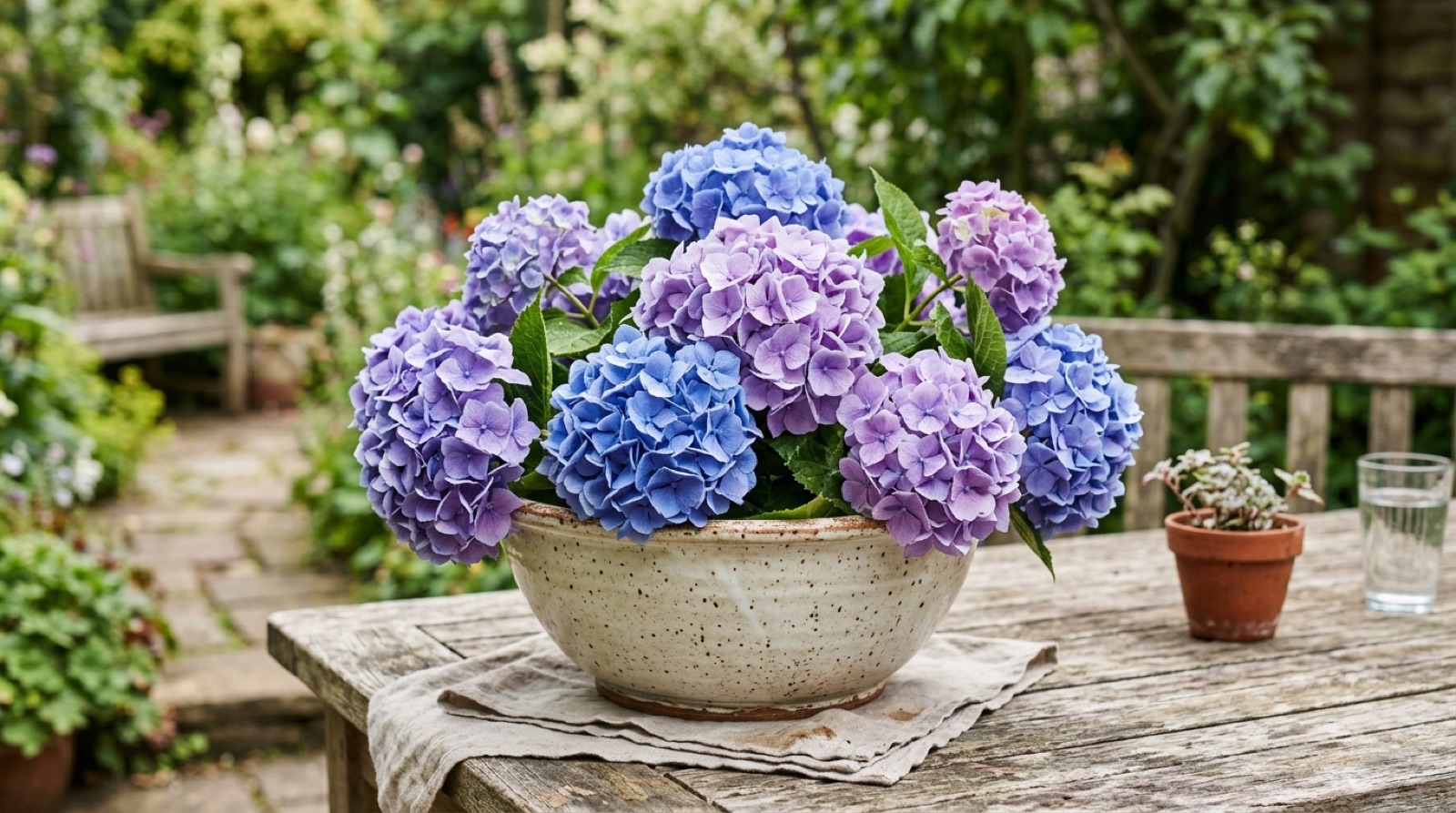
Customers often ask whether a drooping hydrangea is damaged or simply needs water. Check the flower head for crushed, papery or soft brown patches, then inspect the stem for breaks, slime and an unpleasant smell. General limpness can indicate water stress; mould, rotting tissue and snapped stems need a different response.
Look at the whole head before judging one discoloured floret. Hydrangeas can have naturally uneven colouring, so colour alone is less useful than texture, smell and the condition of nearby tissue.
Read the flower head: limp, bruised or decaying
Water stress often makes a head look loosely collapsed, with many florets feeling soft rather than crisp. This does not prove the flower will recover, but it is a reason to provide clean water promptly before deciding that the head is finished.
Handling damage tends to be concentrated where the head was pressed: flattened florets, creases, tears or translucent patches that may later darken. Dry, brittle brown edges are damaged tissue and will not become fresh again after watering.
Soft, wet-looking brown areas, fuzzy growth or a musty smell suggest decay. Inspect between the densely packed florets, where a problem can be less visible. Avoid repeatedly squeezing the head to test it; gentle visual inspection is enough.
Check the stem, leaves and wrapping
Follow the stem from the flower head down to its cut end. A sharp kink, split or crushed section can interrupt water uptake or leave the heavy head unsupported. A stem that bends naturally is different from one with a visible break.
Check for slimy tissue and an unpleasant smell near the stem base. Yellowing or damaged leaves deserve attention, but one imperfect leaf does not establish the condition of the entire flower. Remove any leaves that would sit below the vase waterline.
Loosen the outer wrapping carefully so you can see whether it is holding a damaged head upright. In a tied bouquet, preserve the arrangement's binding while checking accessible stems; do not pull a hydrangea out by its flower head.
Bouquets we can deliver




What to do when the bouquet arrives
If anything looks concerning, photograph the whole bouquet and the affected area before trimming or removing flowers. Record whether the issue is a broken stem, crushed florets, dry edges or soft decay. These details make a conversation with the shop more useful than simply describing the bouquet as tired.
For limp hydrangeas without signs of rot, use a clean vase, refresh the stem ends with a clean, sharp tool and place them promptly in fresh water. Keep the bouquet away from direct sunlight, heaters and draughts, then reassess after several hours. Improvement is possible, but watering cannot repair torn or dead tissue.
Remove clearly decaying stems from the vase, clean the container and replace the water. Avoid soaking the entire flower head as a default remedy, especially if it already has soft brown patches. Our blue hydrangea care guide covers everyday care after the initial check.
Sending hydrangeas to someone in Russia
If you are ordering from abroad, choose a delivery window when the recipient can receive the bouquet and put it in water. Pyat Tsvetov (5 Flowers), with flower shops in Saint Petersburg since 2011, delivers flowers across Russia. City delivery costs 500 RUB; the operator confirms the price for remote districts and suburbs when confirming the order.
The courier calls the recipient about 15 minutes before arrival. Delivery is anonymous by default, and a card with your text is free, so include your name in the message if you want the recipient to know who sent it. See delivery and payment details for planning your order.
If you need to discuss the condition of a delivered bouquet, call 8 (812) 507-67-05 and describe the specific signs you found. For future journeys with flowers, our bouquet transport guide explains how to reduce handling damage.
Frequently asked questions
Do brown patches always mean a hydrangea is rotting?
No. Dry, papery patches can be dried tissue, while flattened or creased areas can be bruises. Soft brown tissue accompanied by mould or an unpleasant smell is more concerning for decay.
Can a drooping hydrangea recover in a vase?
It may recover if water stress is the cause and the stem can still take up water. Refresh the cut end, provide clean water and reassess after several hours; a broken stem or decaying flower head will not be repaired by hydration.
Ready to send a bouquet?
Pick a city, choose the flowers, and we will hand them over with a photo confirmation.
Choose a city →