
Hypericum Fruit: A Florist’s Guide to Bouquet Berries
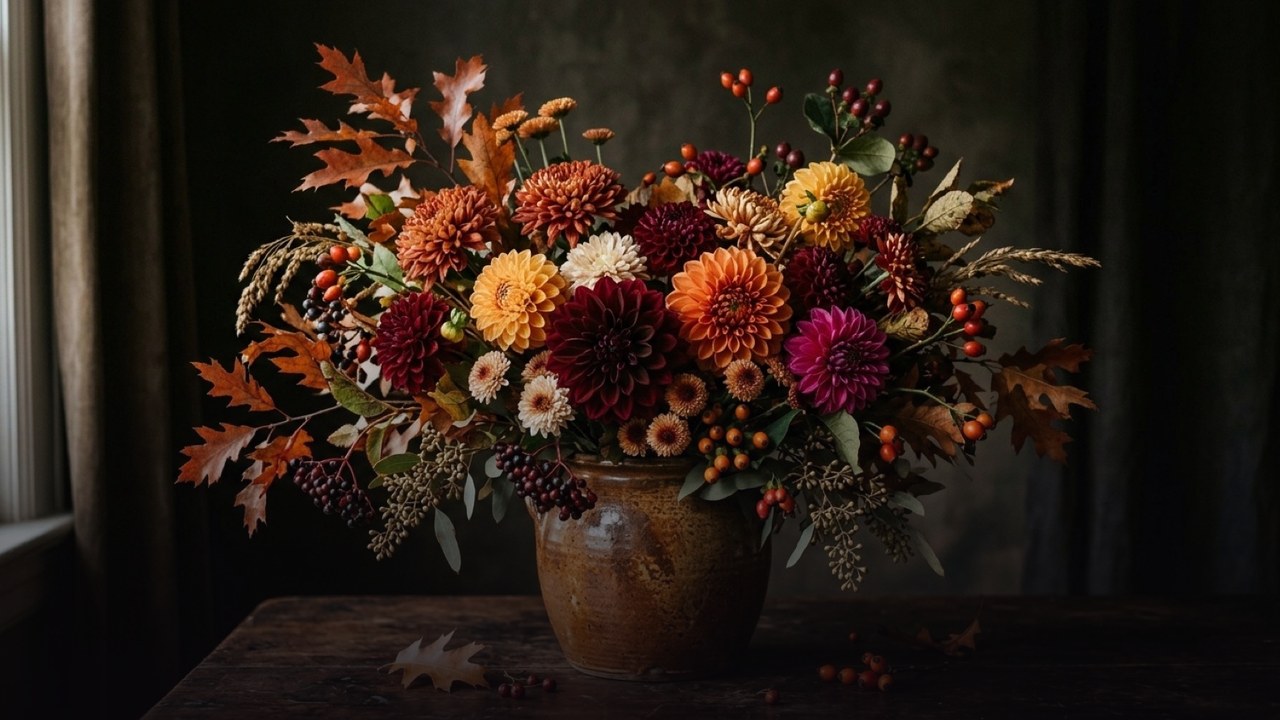
Hypericum fruit is the fruit that develops after a hypericum flower fades; in bouquets, it usually means the rounded, berry-like fruits carried in clusters on cut stems. Florists commonly call these hypericum berries, although fruit structure varies across the genus. The ornamental stems sold for arrangements are decorative material and should never be treated as edible fruit.
At Pyat Tsvetov (5 Flowers), the useful starting point is what customers want to identify: the small, firm-looking coloured dots among the flowers, rather than another flower head. Hypericum adds texture and helps break up broad surfaces such as rose petals or large leaves. Our flower shops have been in Saint Petersburg since 2011, and this guide explains how to recognise those stems, handle them safely and describe the effect you want in a bouquet.
Recognising hypericum fruit on a cut stem
Look for branching stems carrying several rounded or oval fruits, often with small, persistent sepals forming a star beneath each one. Depending on the variety and stage of development, the fruits may appear green, cream, pink, red or very dark. They usually sit in distinct clusters rather than forming one dense flower head. Colour alone cannot identify a species, so a photograph of the whole stem is more useful than a close-up of a single fruit.
Hypericum is a large genus, and the fruit described in a botanical reference may differ from the ornamental material seen in a florist’s vase. Many species produce dry capsules, while some ornamental forms have fleshy, berry-like fruits. A label saying only “hypericum” does not establish the species or cultivar. If you are researching a garden plant rather than a bouquet ingredient, use its full botanical name before applying advice about growing, harvesting or propagation.
Are hypericum berries edible or suitable for home remedies?
Do not eat hypericum fruit from a bouquet, add it to drinks or use it to decorate food that people will consume. Decorative cut stems are not sold as food, and a common plant name does not establish that a particular fruit is safe to ingest. Keep loose fruits and fallen pieces away from children and pets. On a dining table, place the arrangement where stems and fruits cannot drop into serving dishes.
The association with St John’s wort can cause confusion, because that name is used in discussions of herbal preparations. An ornamental hypericum stem is not an interchangeable ingredient for a medicine, tea or supplement. Do not attempt to identify a suitable medicinal plant from the colour of its fruit. If someone or a pet swallows part of an arrangement, seek appropriate medical or veterinary advice and keep a photograph or plant label to help identify it.
Bouquets we can deliver




Choosing colours, proportions and a suitable message
Hypericum works best when its small fruits have a clear role in the arrangement. Green fruits can provide a quiet transition between foliage and pale flowers, while red or pink clusters can repeat a colour already present in the blooms. Dark fruits create a stronger visual accent, particularly against lighter petals. When discussing a design, describe whether you want a few visible clusters or a more textured overall appearance; the same ingredient can produce quite different results.
There is no single universal meaning attached to hypericum fruit, so avoid relying on it to communicate a precise sentiment. For a birthday, thank-you or supportive gesture, the recipient’s taste and your card text are more dependable guides than a claimed symbolic code. If they prefer simple arrangements, ask about a restrained use of berry stems rather than assuming more texture is better. Our guide to a hypericum berry bouquet explores choosing and gifting this style in more detail.
Preparing hypericum stems and keeping the vase clean
Start with a clean vase and fresh water, then remove any leaves that would sit below the waterline. With a clean, sharp cutting tool, trim the stem ends before placing them in water. Avoid crushing or hammering the stems, which damages tissue and leaves debris in the vase. If flower food is supplied, follow its dilution instructions rather than adding an estimated amount or mixing household ingredients.
Check the water daily and refresh it regularly, cleaning the vase when residue develops. Keep the arrangement away from radiators, strong direct sun and ripening fruit, and remove fallen leaves or detached berries promptly. In a mixed bouquet, remove deteriorating flowers without waiting for every stem to fade; useful vase life varies with the material and conditions. For more on the whole arrangement, see Hypericum in Bouquets: Varieties, Longevity and What to Order.
Checking condition and deciding when to remove a stem
When assessing hypericum, look at the fruits, leaves and stems together. Firm, attached fruits and sound stems are more useful signs than a particular colour, because varieties differ naturally. Crushed clusters, visible mould, leaking fruit or a sour smell call for closer attention. A few damaged fruits can be removed carefully, but a stem with spreading decay should come out of the arrangement so that fragments do not remain in the water.
Colour changes do not always mean that a stem has failed, and hypericum can remain decorative after more delicate flowers have faded. Judge whether the remaining stems still look clean and hold their shape before rearranging them in a smaller vase. Do not promise yourself a fixed number of extra days simply because the fruits feel firm. If you want to try drying a stem, keep it separate from the fresh arrangement and expect its colour and shape to change.
Ordering a bouquet with hypericum for someone in Russia
Begin with the recipient’s city, delivery address and local date, then browse the bouquets catalogue for the overall shape and colour palette you want. If hypericum is essential, ask about its availability for that order before choosing a bouquet on the strength of a photograph alone. We deliver flowers across Russia; city delivery costs 500 RUB, and the operator confirms the price for remote districts and suburbs when confirming the order. Questions can be discussed by phone on 8 (812) 507-67-05.
In large cities, express delivery is available in 1–2 hours after order confirmation; other options include an exact time with a tolerance of ±30 minutes, the windows 09–12, 12–15, 15–18 or 18–21, and pre-orders 1–30 days ahead. Saint Petersburg delivery operates around the clock. For an order placed from abroad, check the recipient’s local time when choosing the date and slot, especially if your own calendar has already moved to the next day. Check the delivery and payment information alongside the arrangements for your order.
Delivery is anonymous by default: the courier does not name the sender, and a card with your text is free. Sign the card if you want the recipient to know who sent the flowers; the courier calls them about 15 minutes before arrival. If the recipient is absent, we agree a second delivery that day or a handover to a neighbour or concierge with the sender’s consent. Online checkout uses CloudPayments, so check the payment options displayed there rather than assuming that every foreign-issued card will be accepted.
Frequently asked questions
Is hypericum fruit the same as hypericum berries?
In floristry, “hypericum berries” usually means the ornamental, berry-like fruits on cut hypericum stems. Botanical fruit types vary across the genus, so the common name does not identify a particular species.
Can you eat hypericum fruit from a bouquet?
No: treat bouquet hypericum as decorative plant material, not food or a herbal ingredient. Keep the fruits away from children, pets and food preparation areas.
How long does cut hypericum last?
Its decorative life depends on the starting condition, variety and care, so a fixed duration cannot be assured. Use a clean vase, maintain fresh water and remove any stem showing decay.
Does hypericum fruit have a special meaning as a gift?
There is no universal meaning that every recipient will recognise. Choose colours they enjoy and use the card text to express your intended message clearly.
Can I order flowers to Russia while living abroad?
You can place an order for delivery in Russia using the recipient’s address and local delivery date. Checkout uses CloudPayments; check the options shown there, as acceptance of every foreign-issued card is not guaranteed.
Ready to send a bouquet?
Pick a city, choose the flowers, and we will hand them over with a photo confirmation.
Choose a city →