
Kakoy Meaning: How to Use This Russian Question Word
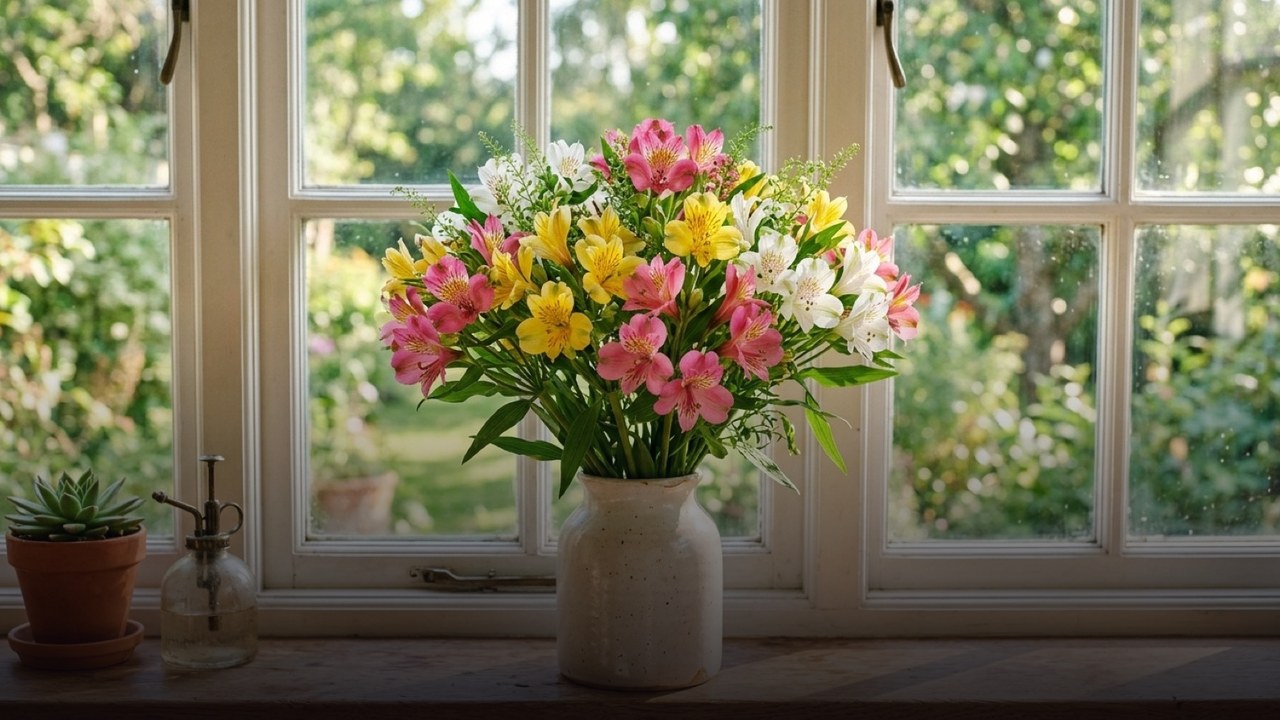
Kakoy means “which” or “what kind of” in Russian, depending on the sentence. It can also mean “what a” in an exclamation, as in Kakoy krasivyy buket! — “What a beautiful bouquet!” Pronounce it roughly kuh-KOY, with the stress on the final syllable.
Choosing a bouquet often starts with a question about colour, size or occasion, and kakoy belongs to that everyday vocabulary. At Pyat Tsvetov (5 Flowers), our Saint Petersburg flower shops have served customers since 2011, so this guide connects the language with practical flower choices. You will learn how the word changes, how to recognise its meaning and how to make a flower request clear when ordering for someone in Russia.
When kakoy means “which” and when it means “what kind of”
Use “which” as the English translation when the conversation involves choosing between identifiable options. Kakoy buket vy khotite? can mean “Which bouquet would you like?” when someone is looking at several bouquets. If no particular selection has been established, the same question can mean “What kind of bouquet would you like?” The situation supplies a distinction that English often makes through the question word itself.
Kakoy asks about a characteristic or a choice, rather than simply asking someone to name an object. Kakoy eto tsvetok? means “What kind of flower is this?”, while Chto eto? means “What is this?” For a person learning Russian, that difference is more useful than memorising a single English equivalent. Translate the whole question according to its purpose: identification, description or selection.
Kakoy, kakaya, kakoye and kakiye: matching the noun
Russian changes this question word to agree with the noun it describes. In the basic dictionary forms, kakoy goes with a masculine singular noun, kakaya with a feminine singular noun, kakoye with a neuter singular noun and kakiye with plural nouns. Buket, meaning “bouquet”, is masculine, so kakoy buket is the matching combination. Roza, meaning “rose”, is feminine, so the corresponding combination is kakaya roza.
For flowers in the plural, use kakiye tsvety: “which flowers” or “what kind of flowers”. Kakoye can appear in kakoye sobytiye, meaning “what event”, which is useful when discussing the occasion for a gift. These are starting forms; Russian grammatical cases produce further changes within sentences. Different English spellings also occur, including kakoi and kakoy, because transliteration does not follow one universal system.
Bouquets we can deliver




Useful flower questions with kakoy
Kakoy buket vy khotite? is a useful polite question for “Which bouquet would you like?” Kakoy razmer? means “What size?”, and works when the object under discussion is already clear. Kakiye tsvety vy lyubite? means “What flowers do you like?” The word vy makes these examples suitable for a polite conversation with someone you do not know well.
Colour questions reveal why a phrase can look different from the dictionary entry. Kakogo tsveta? means “What colour?”, with kakogo taking the form required by that expression. For a practical enquiry, give the colour in English if that communicates your preference more clearly than an unfamiliar Russian phrase. Pair it with the occasion and the bouquet you are considering from the bouquets catalogue, so the request has a concrete reference.
Kakoy in compliments, messages and flower etiquette
Kakoy does not always introduce a question: punctuation, tone and the rest of the sentence matter. Kakoy krasivyy buket! means “What a beautiful bouquet!”, expressing admiration rather than asking the recipient to choose anything. Kakaya krasivaya roza! applies the same pattern to a beautiful rose. If you receive a message containing kakoy after sending flowers, read the complete sentence before assuming that an answer is expected.
For a card, a direct personal sentence usually communicates more than an isolated compliment copied from a phrase list. Say what you are celebrating, thanking the recipient for or wishing them, and add your name if you want them to know who sent the flowers. A card with your text is free, while delivery is anonymous by default: the courier does not name the sender. For a more formal expression of gratitude, our guide to blagodaryu vas explains another useful Russian phrase.
Turn a flower preference into a clear bouquet request
A question such as “what kind of bouquet” becomes easier to answer when you separate the occasion from the recipient's taste. Begin with preferences you actually know: favourite flowers, colours they enjoy and whether they like a compact arrangement or a looser silhouette. Describe those preferences plainly instead of relying on a flower's supposed universal meaning. Cultural associations can help frame a gift, but they cannot establish what one particular person will enjoy.
For a celebratory gift in Russian tradition, an odd number is customary when giving a small, countable number of stems; even numbers are generally associated with mourning. If the stem count is important to the recipient, state that explicitly when discussing the bouquet. Also consider where the flowers will stand, since a crowded desk and a spacious dining table call for different proportions. For a recipient who enjoys keeping flowers after the fresh display, our statice guide explains its use and drying care.
How to arrange flower delivery in Russia
Once you have chosen a bouquet, prepare the recipient's address, telephone number, preferred delivery date and card text before checkout. We deliver flowers across Russia, with city delivery costing 500 RUB; an operator confirms the price for remote districts and suburbs when confirming the order. In large cities, express delivery takes 1–2 hours after order confirmation, and other options include an exact time within plus or minus 30 minutes or the windows 09–12, 12–15, 15–18 and 18–21. You can also pre-order 1–30 days ahead, and delivery in Saint Petersburg is available around the clock.
The courier calls the recipient about 15 minutes before arrival, so plan a surprise with that contact in mind. If the recipient is absent, we agree a second delivery the same day or, with the sender's consent, hand the flowers to a neighbour or concierge. Online checkout uses CloudPayments; customers abroad should check the payment options displayed there, since acceptance of every foreign card is not guaranteed. Read delivery and payment details before ordering, or call 8 (812) 507-67-05 with questions.
Frequently asked questions
What does kakoy mean in English?
Kakoy usually means “which” or “what kind of”, depending on context. In an exclamation, it can also mean “what a”, as in “What a beautiful bouquet!”
How do you pronounce kakoy?
A practical English approximation is kuh-KOY. The stress falls on the second syllable, and the final sound is similar to the ending of “boy”.
What is the difference between kakoy and kakaya?
They are forms of the same Russian word that agree with different nouns. In their basic forms, kakoy accompanies a masculine singular noun, while kakaya accompanies a feminine singular noun.
Does kakoy mean “how”?
Kakoy generally asks “which” or “what kind of”; the usual Russian word for “how” is kak. The similar spelling can cause confusion, but the two words have different grammatical roles.
How do I ask “What colour?” in Russian?
Use Kakogo tsveta? for “What colour?” Kakogo is a changed form of kakoy, which is why the phrase does not use the dictionary form.
Ready to send a bouquet?
Pick a city, choose the flowers, and we will hand them over with a photo confirmation.
Choose a city →