
Keeping Flowers Fresh When You Cannot Receive Them in Person
The delivery window was noon, you are stuck across town until six, and the courier has left a bouquet propped against your front door. This happens more often than most people expect, and the gap between arrival and water is where most flowers are lost. What follows is what we tell customers every week from the shop floor: which varieties survive a wait, which collapse within the hour, and the exact steps that give any bouquet the best chance of arriving on your table in good condition.
Why the First Two Hours Without Water Are Critical
Cut stems begin losing water pressure almost immediately after they leave the bucket. The stem end dries and forms a callus within roughly ninety minutes at room temperature, which blocks water uptake even after you do put the flowers in a vase. In a warm hallway in summer — and Saint Petersburg hallways can reach 24 to 28 degrees Celsius in July — that process accelerates noticeably. Roses and gerberas feel this fastest because they have high water demand relative to stem volume. Chrysanthemums and carnations are more forgiving, largely because their stems transport water more efficiently and their petals lose moisture more slowly. Tropical varieties such as anthuriums and orchid stems are the most tolerant of a dry wait, sometimes holding presentably for four to six hours without wilting. The practical point is that two hours is the threshold most florists use when advising customers. Under two hours in a cool spot, most bouquets survive well with a clean re-cut and fresh water. Over two hours in warmth, you will almost certainly lose the outermost petals on roses and the heads on tulips will droop, sometimes permanently. Knowing this number helps you decide whether to ask a neighbour to take the flowers in or simply accept that some triage will be needed when you arrive home.
Bouquets we can deliver



What the Courier Actually Does When Nobody Answers
At Five Flowers we contact the recipient by phone before leaving a bouquet unattended. If there is no answer, the courier will attempt the neighbour most likely to be home — typically whoever is listed in the delivery notes or whoever opens a door nearby. In Russian apartment buildings it is completely normal to leave flowers with a neighbour on the same landing; recipients expect this and neighbours generally accept it without hesitation. The courier will also leave a paper note on the door explaining where the bouquet is. If no neighbour is available and the building has a concierge desk — called a prokhodyaya or simply a reception point in newer residential complexes — the bouquet is left there. The concierge will almost always keep flowers away from direct sunlight because they understand the value. What the courier cannot do is leave a bouquet outside an entrance door in summer heat or in freezing temperatures below minus five Celsius, because the damage would be immediate and irreversible. In those conditions we hold the order and call again. If you know you will be away, the single most useful thing you can do is add a neighbour's flat number in the delivery notes at the time of ordering. This one detail removes almost every complication and means the bouquet goes straight into someone's hands rather than sitting on a cold floor.
Wrapping and Packaging: What Protects the Stems During a Wait
Every bouquet from Five Flowers leaves the shop with wet cotton wool or a water-soaked pad wrapped around the cut stem ends, sealed inside the packaging. This is standard practice for any delivery that may involve a wait, and it extends the safe window by roughly an hour to an hour and a half compared with dry packaging. The cotton retains moisture and prevents the callus from forming as quickly. When you or your neighbour receive the bouquet, the worst thing to do is remove the packaging immediately and stand the flowers on a table unwrapped. The packaging itself acts as a humidity chamber and keeps the stems slightly cooler than open air. Leave everything intact until you are ready to prepare a vase. If the bouquet has been sitting for more than an hour, check the cotton pad when you open it — if it is completely dry, that is a sign the flowers have been waiting in warmth and you should move quickly to re-cut and hydrate. Cellophane outer wrapping does one additional job: it slows the rate at which petals lose moisture to the surrounding air. Roses in particular benefit from this because their outer guard petals are the first to dehydrate and curl. Do not puncture or unwrap the cellophane early. The packaging is not decorative; it is part of the preservation system, and it keeps working as long as it stays closed.
Varieties That Survive a Wait and Varieties That Do Not
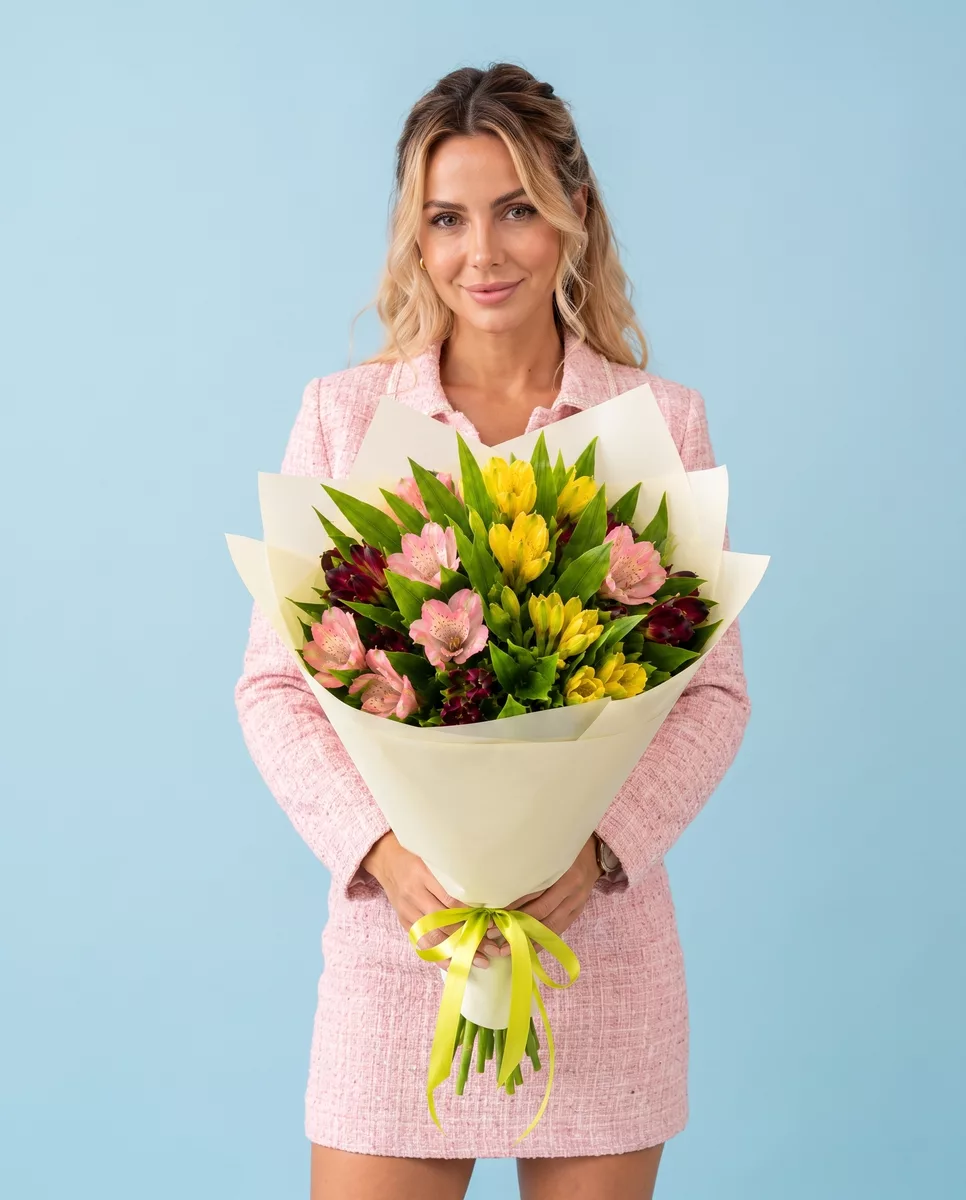
Carnations are the most reliable variety when a wait is unavoidable. Their waxy petals and efficient stems mean they can sit unwrapped for three to four hours in a cool hallway and still open normally. Alstroemeria behaves similarly and is often underestimated for exactly this reason. Chrysanthemums — both spray and single-head types — are also robust, and their stems hold moisture internally better than most. Waxflower and statice, which appear as filler in many arrangements, are essentially unaffected by a two-hour wait. On the other end of the scale, tulips are the most vulnerable variety in this situation. They continue to grow after cutting and their stems are soft, meaning they bend and collapse when the stem pressure drops. A tulip bouquet left for more than ninety minutes in a warm entrance hall will arrive at your vase already drooping, and while re-cutting sometimes helps, the flowers rarely fully recover their upright posture. Peonies in bud form are moderately tolerant — the tight bud protects the inner petals — but open peonies are fragile. Ranunculus and anemones fall into the same category as tulips: beautiful but unforgiving of any dry time. If you are ordering for someone who may not be home, choosing a bouquet built around carnations, alstroemeria or chrysanthemums is a practical decision, not a compromise on quality.
Steps to Take the Moment You Get Home
Speed matters more than anything else once you walk through the door. Fill a clean vase with cool water — not cold, not warm, approximately 16 to 18 degrees Celsius — before you even open the packaging. Remove the bouquet from its wrapping and take it straight to a sink. Using sharp scissors or a knife, cut one to two centimetres from each stem end at a 45-degree angle. The angled cut increases the surface area available for water uptake and prevents the stem from sitting flat against the vase bottom, which would seal it. Make this cut while holding the stem under running water or while the stem end is submerged, so no air enters the fresh cut before it reaches the vase. Strip any leaves that would sit below the waterline — submerged leaves rot within 24 hours and contaminate the water with bacteria that block the stems. Place the bouquet in the vase immediately. If the flowers came with a small sachet of flower food, dissolve it in the water before adding the stems; it contains a mild bactericide and a sugar source that meaningfully extends vase life. Do not add aspirin, coins, lemonade or bleach — these home remedies either do nothing measurable or actively damage the stems. Change the water every two days and re-cut the stems each time. A bouquet that waited two hours but was treated correctly at home will often outlast one that was placed in water immediately but left in a warm, sunny spot.
Temperature and Location While the Bouquet Waits
If the bouquet has been left with a neighbour, ask them to keep it away from three specific things: direct sunlight, radiators, and draughts from open windows. Direct sunlight raises the surface temperature of petals by several degrees above ambient air and accelerates moisture loss dramatically. A south-facing windowsill in summer is one of the worst places a bouquet can sit, even for thirty minutes. Radiators are equally damaging in winter; the dry heat they produce pulls moisture from petals faster than almost any other indoor condition. The ideal holding spot in any apartment is an interior hallway away from windows, or a kitchen counter away from the hob. If the neighbour has a cool room or a spot near an outside wall in winter, that is even better — temperatures between 8 and 14 degrees Celsius are close to what a professional flower cold room maintains. In Russia, many older apartments have a small unheated storage area called a kholodilnik near the balcony door, and this is genuinely useful for short-term flower storage in cold months. What you want to avoid in winter is the opposite problem: if the building entrance is below freezing and the bouquet sits there even briefly, rose petals will develop translucent frost damage that cannot be reversed. Frozen cells collapse and the petal turns brown within hours of thawing. A concierge desk inside a heated lobby is always preferable to any outdoor holding point.
How to Tell Whether the Flowers Are Recoverable
When you open the bouquet after a wait, you are looking for three things: stem condition, petal texture and head position. Stems should feel firm along their length. A stem that feels soft or hollow near the cut end has lost too much turgor pressure to recover fully, though re-cutting and hydrating will still improve it. Petals should feel slightly cool and pliable. Petals that feel papery or have begun to curl at the edges have lost significant moisture; they may stabilise but will not return to full freshness. Head position is the clearest indicator for roses: a rose head that has dropped below a 45-degree angle relative to the stem has lost stem pressure and may or may not recover depending on how long it has been in that position. For tulips, drooping is almost always recoverable if you act within thirty minutes of getting home — wrap the whole bouquet tightly in newspaper so the stems and heads are supported in a straight column, stand it in deep water for two hours, and the stems will often regain enough pressure to stand upright. This newspaper trick works because it prevents the head from bending further while the stem rehydrates. For roses that have dropped their heads, the same deep-water soak sometimes works, but success depends on whether the stem tissue is still intact. If a flower shows brown edges on petals, remove those petals individually rather than discarding the whole stem — the inner petals are often still in good condition and the bouquet remains presentable.
A bouquet left at the door is not automatically a ruined bouquet. The outcome depends on variety, temperature, how long the wait was, and what you do in the first ten minutes after you arrive home. Choosing robust varieties when you know delivery timing is uncertain, leaving a neighbour's details in the order notes, and moving quickly with a clean re-cut and fresh water are the three things that make the most difference. Everything else — the packaging, the flower food, the cool holding spot — supports those three actions. Flowers are perishable in a specific and manageable way, and once you understand the mechanics, you can work with them rather than against them. We deliver bouquets across Russia in 1–2 hours.
Frequently asked questions
How long can a bouquet safely sit without water before it is damaged?
For most bouquets, two hours is the practical limit at normal indoor temperatures. Carnations and alstroemeria tolerate up to three or four hours. Tulips and ranunculus begin to show visible wilting within ninety minutes in a warm hallway. The cooler the holding spot, the longer the safe window extends.
Is it acceptable in Russia to leave flowers with a neighbour?
Yes, entirely normal. In Russian apartment buildings, leaving a delivery with a neighbour on the same landing is a standard and accepted practice. Most neighbours will take the bouquet in without hesitation. Adding the neighbour's flat number to your delivery notes when ordering removes any uncertainty for the courier.
Should I remove the packaging as soon as I get home?
Not immediately. Fill the vase with water first, then open the packaging and re-cut the stems before placing them in the vase. The wrapping maintains humidity around the stems and slows moisture loss from petals. Opening it and leaving the bouquet on a table while you prepare the vase wastes the protection the packaging provides.
Can drooping tulips be saved after a long wait?
Often yes, if you act quickly. Wrap the whole bouquet tightly in newspaper to support the stems and heads in a straight upright position, then stand it in a vase of deep cool water for two hours. The stems frequently regain enough pressure to stand on their own. This works best when the stems still feel firm rather than soft.
What is the single most useful thing I can do when ordering if I know I will be away?
Add a specific neighbour's flat number in the delivery notes at the time of ordering. This gives the courier a named destination rather than a guessing situation at the door. A bouquet that goes directly into a neighbour's hands stays in packaging, stays away from heat and cold, and arrives in far better condition than one left unattended.
Ready to send a bouquet?
Pick a city, choose the flowers, and we will hand them over with a photo confirmation.
Choose a city →