
Moya Dorogaya Meaning: How Russians Say 'My Dear'
'Moya dorogaya' means 'my dear' in Russian and is addressed to a woman or girl. 'Moya' is 'my' and 'dorogaya' is 'dear', and the same word also means 'expensive', so the phrase literally says that someone is precious to you.
Customers who order flowers from abroad often ask us in the shop or on the phone how to write a warm line on the card for a wife, a mother or a grandmother in Saint Petersburg. 'Moya dorogaya' comes up almost every time. Below we explain how it is used, where it can sound different from what you intend, and how to send it with a bouquet.
Grammar and pronunciation
Russian adjectives change with the gender of the person they describe. 'Moya dorogaya' is the feminine form and is used for a woman or a girl. For a man the phrase becomes 'moy dorogoy', and for several people 'moi dorogie'. Mixing them up is the most common mistake on cards written by non-Russian speakers, and a Russian recipient notices it immediately; our article Moy Dorogoy Meaning covers the masculine version.
It is pronounced roughly 'ma-YA da-ra-GA-ya', with the stress on 'ya' in the first word and on 'ga' in the second. The unstressed 'o' sounds in both words become a soft 'a', which is why the phrase sounds lighter than it looks in transliteration. In Russian script it is two short words that a native speaker reads in an instant.
Word order can change without changing the meaning. 'Dorogaya moya' at the end of a sentence sounds even warmer and more conversational, as in 'Spasibo tebe, dorogaya moya' ('thank you, my dear'). On a card, putting the phrase first, followed by the name, is the most natural choice.
Tender, formal or ironic: how it actually sounds
Said by a husband to his wife or by a grown son to his mother, 'moya dorogaya' is warm and sincere. Older people use it freely with daughters, granddaughters and close friends, and it often opens a phone call or a letter. On a birthday card, 'Moya dorogaya mama' is about as classic as Russian gets.
Without 'moya', the word 'dorogaya' is the standard way to start a letter: 'Dorogaya Anna Ivanovna' is the polite equivalent of 'Dear Anna Ivanovna' and is fine even for a teacher or a colleague. Adding 'moya' makes it personal, so keep the possessive for people you are really close to.
The phrase can also be ironic. In an argument, 'moya dorogaya' said slowly and with a raised eyebrow means roughly 'listen here, my dear', and it can sound condescending. On a card with flowers there is no risk of that, because the context makes the intention clear, but it is worth knowing if you hear it in a film or a conversation.
In writing, Russians often add a name after the phrase rather than before it: 'Moya dorogaya Olya' or 'Moya dorogaya babushka' ('my dear grandma'). Using the short, familiar form of the name, such as Olya instead of Olga or Masha instead of Maria, makes the card feel more personal still. If you are unsure which short form the recipient uses, keep the full name; it is never wrong.
Bouquets we can deliver



Close alternatives and when to choose them
'Lyubimaya' means 'beloved' and is clearly romantic, so it suits a wife or girlfriend rather than a mother. 'Rodnaya' is harder to translate: it means 'dear' in the sense of 'my own, my family', and it is one of the warmest words for a mother, a sister or a very old friend. 'Milaya' is 'sweet' or 'lovely' and sounds gentle and slightly old-fashioned.
'Dorogusha' is a diminutive of 'dorogaya'. Some grandmothers use it affectionately, but many people hear it as patronising, so we advise customers not to put it on a card. 'Solnyshko' ('little sun') and 'zaya' ('bunny') are playful pet names between partners and with children, fine for a cheerful bouquet but too light for a formal anniversary.
For a card you can combine two short phrases: 'Moya dorogaya, s dnyom rozhdeniya!' ('Happy birthday, my dear!') or 'Moya dorogaya mama, spasibo za vsyo' ('My dear mum, thank you for everything'). Finish with 'S lyubovyu' ('with love') and your name. Short lines read better on a small card than a long paragraph.
Transliteration is perfectly readable for a Russian recipient, and a card in Latin letters often feels charming precisely because the sender took the trouble to write in her language. Keep the spelling consistent, avoid mixing English and Russian in one sentence, and if you want to check a phrase before ordering, call us at 8 (812) 507-67-05.
Flowers that suit the phrase
'Moya dorogaya' is affectionate rather than passionate, so the bouquet does not need to be a formal arrangement of red roses. For a mother or grandmother, customers in our shops most often choose pink or cream roses, chrysanthemums, or soft mixes with eustoma. Eustoma has delicate rose-like flowers and lasts well in a vase; more about it in Eustoma Flower: Lisianthus Meaning.
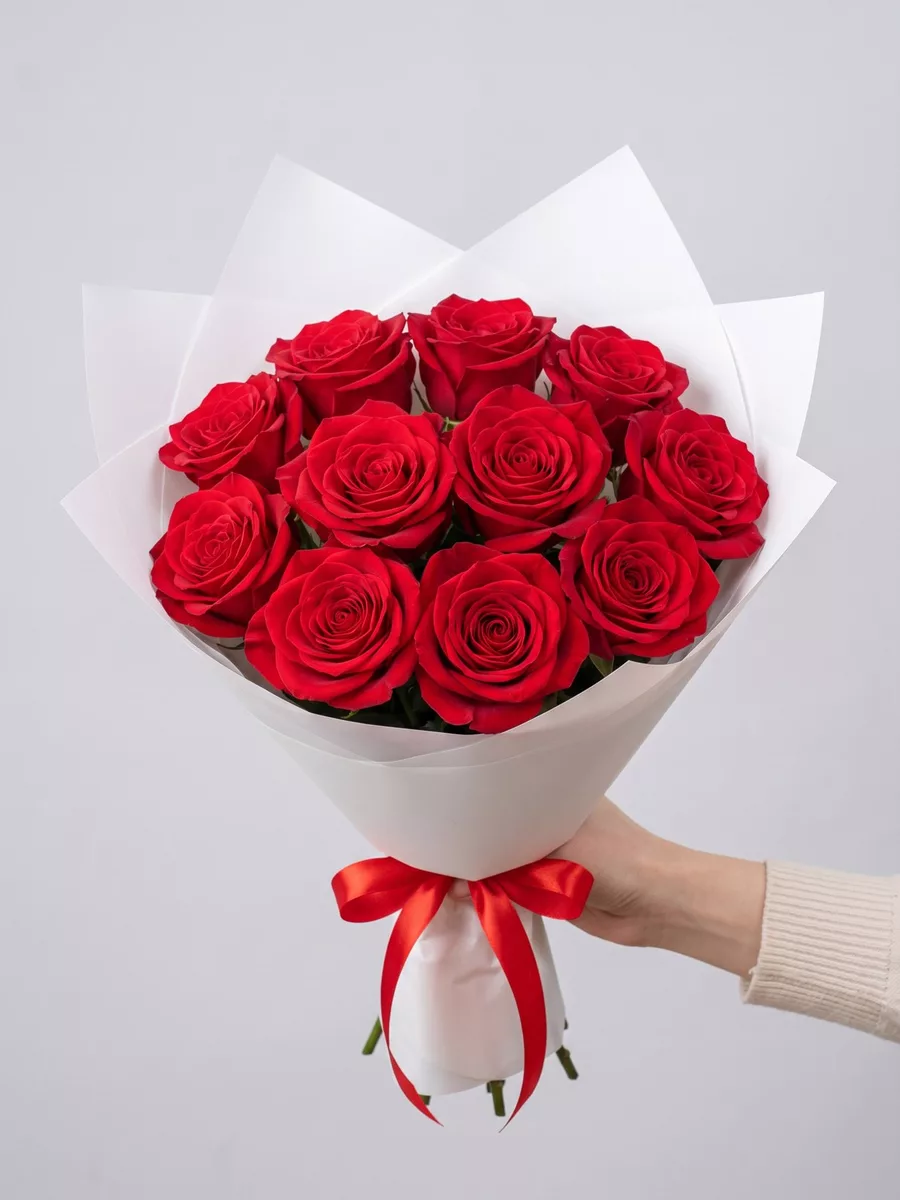
For a wife or partner, red or deep pink roses fit the tone, and in late spring peonies are a favourite. Whatever you choose, remember the Russian rule: a gift bouquet has an odd number of flowers, because even numbers are reserved for funerals and memorials. Colours carry meaning as well, and older people may still read yellow as a sign of separation; see Russian Flower Meanings for the details.
Size matters less than many senders think. A neat bouquet of seven or nine stems with a well-written card often means more to the recipient than an enormous arrangement with no personal message.
Before you order, think about how long the flowers will stand. Roses, chrysanthemums and eustoma hold well for about a week with fresh water and a clean cut every couple of days, while tulips and peonies are lovely but shorter-lived. For an elderly recipient who may not change the water often, a sturdy bouquet is the kinder choice.
How to send 'moya dorogaya' with a bouquet
Pyat Tsvetov has worked since 2011 and has three of its own flower shops in Saint Petersburg, on Ilyushina Street, Obvodny Canal Embankment and Srednerogatskaya Street. We deliver across Russia, and in Saint Petersburg delivery is around the clock. City delivery costs 500 RUB; for remote districts and suburbs the operator confirms the price when confirming the order.
Choose a bouquet in the Bouquets catalogue, enter the address and write your card text; the card is free. You can pay online by bank card, SBP or Yandex Pay, and foreign bank cards are accepted through Robokassa. In large cities the bouquet can arrive within 1-2 hours after the order is confirmed, at an exact time with a margin of plus or minus 30 minutes, within a window of 09-12, 12-15, 15-18 or 18-21, or pre-ordered 1-30 days ahead.
Delivery is anonymous by default and the courier does not name the sender, so sign the card if you want to be recognised. The courier calls the recipient about 15 minutes before arrival; if she is not at home, we agree a second delivery the same day or leave the flowers with a neighbour or concierge, but only with your consent. For questions about the order or the card text, call 8 (812) 507-67-05. We deliver bouquets across Russia in 1–2 hours.
Frequently asked questions
What does 'moya dorogaya' mean?
It means 'my dear' and is addressed to a woman or girl. 'Dorogaya' also means 'expensive', so the phrase literally says that someone is precious to you.
What is the male version of 'moya dorogaya'?
For a man it is 'moy dorogoy', and for several people 'moi dorogie'. Using the right form matters, because Russian speakers notice a mismatch at once.
Is 'moya dorogaya' romantic?
It can be, but not necessarily. It is used with wives and girlfriends, but just as often with mothers, grandmothers, daughters and close friends.
Can 'moya dorogaya' sound rude?
Only in an ironic tone during an argument, where it can sound condescending. On a card with flowers it always reads as warm and affectionate.
How should I write it on a flower card?
Put the phrase first, then the name and a short wish, for example 'Moya dorogaya mama, s dnyom rozhdeniya!'. Sign the card, as delivery is anonymous by default.
Ready to send a bouquet?
Pick a city, choose the flowers, and we will hand them over with a photo confirmation.
Choose a city →