
The Russian Peony: Wild Species, Beloved Varieties and Vase Care
The term Russian peony usually refers to one of two things: the wild peonies native to Russia, above all the fern-leaf peony (Paeonia tenuifolia) of the southern steppes and the Siberian peony (Paeonia anomala), or the large herbaceous garden peonies that fill almost every Russian dacha in June. In Russia the peony stands for wealth, love and a happy marriage, and it is one of the most requested early-summer flowers. Cut peonies are at their best from late May to early July.
Customers in our Saint Petersburg shops ask about peonies more than about almost any other seasonal flower, usually with the same few questions: when they are available, why buds sometimes refuse to open, how long they last and whether they suit a particular occasion. Below we answer each of these, starting with the wild species and ending with practical advice on sending peonies to someone in Russia.
Wild peonies of Russia
The fern-leaf peony, Paeonia tenuifolia, grows on the steppes of southern Russia, the North Caucasus and the Volga region. It is a small plant with finely cut, almost feathery leaves and single deep red flowers that open in May. In Russian it is called voronets, and because its natural habitat has shrunk with ploughing, it is listed as protected in a number of Russian regions. Gardeners grow it from nursery stock, and its double form is a prized rarity at plant fairs.
The Siberian peony, Paeonia anomala, known in Russia as maryin koren, grows in forest clearings from the Urals to Siberia. Its flowers are simple, pink to crimson, with a bright boss of yellow stamens. The roots have a long history in Russian folk medicine, which is why the plant is so well known by name even among people who have never seen it in flower. Other wild species include the narrow-leaved peonies of the Caucasus and the Far Eastern Paeonia lactiflora, the wild ancestor of most garden peonies.
None of these wild peonies is used for bouquets: they are short, flower only briefly and several are protected. When people in Russia talk about peonies as a cut flower, they mean garden varieties of Paeonia lactiflora and its hybrids.
The garden peonies Russians grow and love
The classic Russian garden peony is a lush double flower in white, pale pink or deep raspberry, often with a sweet scent. Old French and British varieties such as Duchesse de Nemours, Sarah Bernhardt and Festiva Maxima have been grown in Russian gardens for well over a century, and many dachas still have clumps planted by grandparents. Peonies are long-lived, and a plant can flower in the same spot for decades with almost no care.
Russian and Soviet breeders also worked with the peony, selecting varieties hardy enough for long, cold winters. Gardeners swap divisions every autumn, and peony exhibitions in botanical gardens draw large crowds in June. For many Russians the scent of peonies is simply the scent of early summer, school graduation and long light evenings.
For bouquets, florists prefer varieties with strong stems and a good vase life. Sarah Bernhardt in soft pink remains the best-known name, while coral types and the lightly scented red varieties are increasingly popular for their colour. Mixed with roses, matthiola or eucalyptus, peonies make a soft, rounded bouquet that looks generous even in a small size.
Bouquets we can deliver


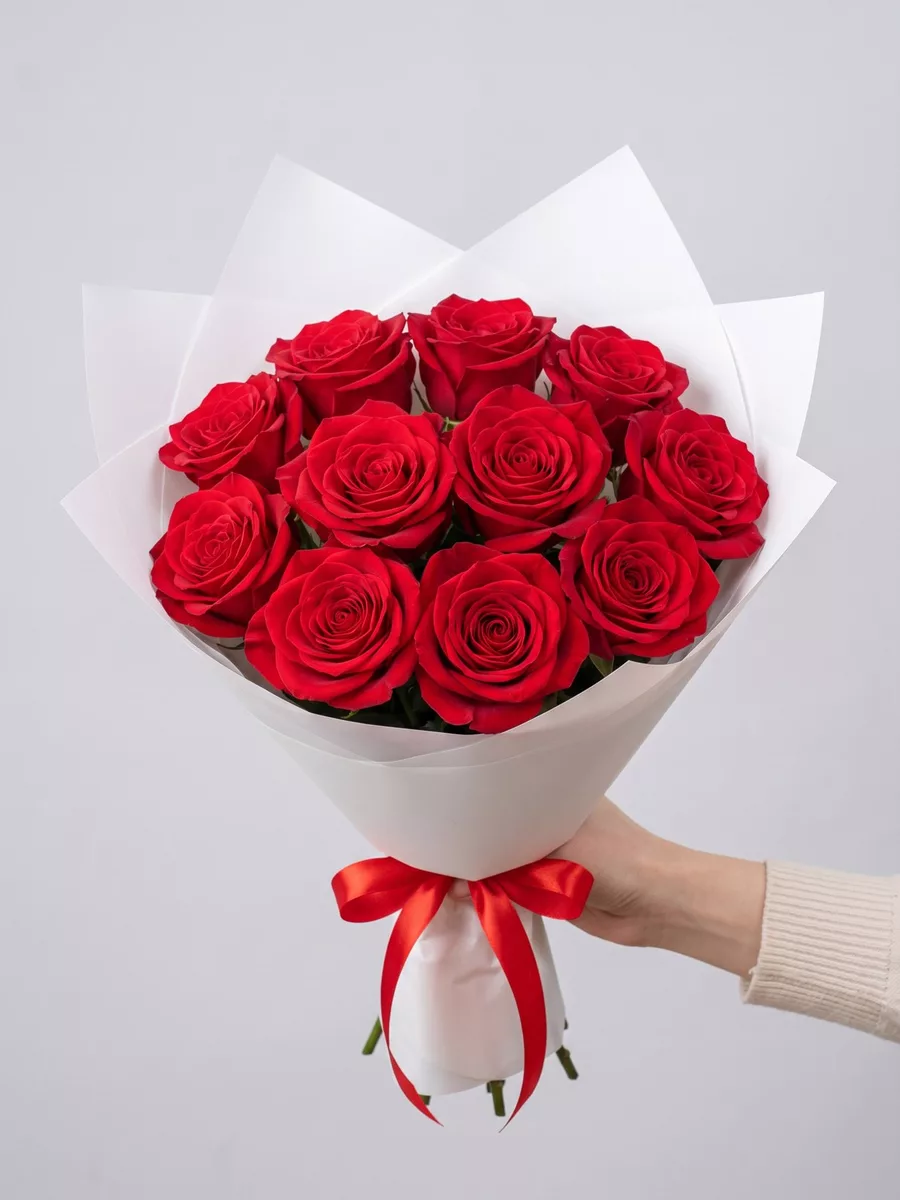

Peony season and what it means for orders
Garden peonies in central Russia and around Saint Petersburg flower from early June to early July, depending on the spring. The cut-flower season is a little wider, since peonies are also grown in warmer regions and in other countries, so the first stems appear in late spring and the last in midsummer. Outside that period peonies are scarce, and many customers choose garden roses or ranunculus, which give a similar full, rounded look.
Peonies are a favourite flower for June birthdays, weddings and the graduation balls that take place across Russia at the end of June. They are also chosen for proposals: their meaning of love and a happy marriage fits the moment well. Our article Proposing With Flowers in Russia: What the Tradition Expects covers that occasion in detail.
If you are planning a gift for a specific date in peony season, it makes sense to order ahead. Pre-ordering 1-30 days in advance lets you fix the date and time while peony bouquets are available in the Bouquets catalogue. Availability depends on the season, so if you are unsure, call us on 8 (812) 507-67-05 and ask before ordering.
Meaning and etiquette of peonies in Russia
In Russia the peony is associated with prosperity, love and family happiness. A peony bouquet is a warm, generous gift for a wife, mother, bride or close friend. It is less formal than long-stemmed roses and more festive than tulips. Pink peonies speak of tenderness, white ones of purity and are popular in wedding work, while deep red and raspberry varieties suggest passion and respect.
The general Russian rule on numbers applies: give an odd number of stems to the living, because even numbers are reserved for funerals. With large peony heads, five or seven stems already make a substantial bouquet, and three is enough for a modest gesture.
Peonies have a strong scent, so think about where they will stand. For a hospital ward or a small office a lightly scented variety or a mixed bouquet is kinder. For a home birthday table, the fragrance of a big bunch of pink peonies is exactly what makes the gift memorable.
How to keep cut peonies fresh
Peonies are delivered in bud or half-open, because that is when they travel best. Trim each stem by two to three centimetres at an angle, remove leaves below the waterline and put the bouquet in a clean vase with plenty of cool water. Change the water every day or two and trim the stems again. Keep the vase away from radiators, direct sun and the fruit bowl, since ethylene from ripening fruit speeds up wilting.
A tight, round bud that feels soft like a marshmallow when gently pressed will open within one to three days. A bud that is hard as a pebble may have been cut too early and sometimes never opens. To help sticky buds, wipe away the sugary film on the sepals with a damp cloth and keep the vase in a warm room. To slow opening, move the vase somewhere cool overnight.
A peony bouquet usually lasts five to seven days in total, from bud to full bloom and the first fallen petals. The fully open stage is short but spectacular. When the petals start to drop, cut the remaining flowers short and float them in a shallow bowl of water, where they stay beautiful for another day or two.
Sending peonies to Russia
Pyat Tsvetov has worked since 2011 and has three own flower shops in Saint Petersburg, on Ilyushina Street, Obvodny Canal Embankment and Srednerogatskaya Street. We deliver flowers across Russia. City delivery costs 500 RUB; for remote districts and suburbs the operator confirms the price when confirming the order. In large cities express delivery takes 1-2 hours after the order is confirmed, or you can choose an exact time (plus or minus 30 minutes) or a window of 09-12, 12-15, 15-18 or 18-21. In Saint Petersburg we deliver around the clock.
Delivery is anonymous by default, and the card with your text is free, so sign it if you want the recipient to know the bouquet is from you. The courier calls the recipient about 15 minutes before arrival; if nobody is home, we agree a second delivery the same day or, with your consent, leave the flowers with a neighbour or concierge. Payment is online by bank card, SBP or Yandex Pay, and foreign bank cards are accepted through Robokassa. Details are on the Delivery and payment page.
Frequently asked questions
What is the Russian peony?
Usually the wild fern-leaf peony (Paeonia tenuifolia) of the southern steppes or the Siberian peony (Paeonia anomala). In everyday speech it also means the lush garden peonies grown at Russian dachas.
When are peonies in season in Russia?
Garden peonies around Saint Petersburg and in central Russia flower from early June to early July. Cut peonies are generally available from late spring to midsummer.
Why won't my peony buds open?
Buds that are hard like a pebble were often cut too early. Soft, marshmallow-like buds open in one to three days in a warm room; wiping the sticky film off the sepals also helps.
How many peonies should I give?
Give an odd number to the living, as even numbers are for funerals in Russia. Three stems is a modest gesture, five or seven make a full bouquet.
Can I pay for delivery to Russia with a foreign card?
Yes. Foreign bank cards are accepted, with payment processed through Robokassa. Bank cards, SBP and Yandex Pay can be used on the site.
Ready to send a bouquet?
Pick a city, choose the flowers, and we will hand them over with a photo confirmation.
Choose a city →