
New Year Flowers in Russia: What to Send and When
New Year is the biggest gift-giving occasion in Russia, bigger than Christmas, and flowers are central to it in a way that surprises many people ordering from abroad. The question we hear most on the shop floor starting around December 20 is simple: what do Russians actually send, and is it already too late to order? It is not too late — but the window closes faster than most people expect, and the wrong flower choice lands badly even when the delivery is perfect.
Why New Year Outranks Christmas for Flowers in Russia
Russia celebrates Christmas on January 7 according to the Orthodox calendar, so December 25 passes quietly for most households. New Year's Eve on December 31 is the main event: families gather, the president speaks on television at midnight, champagne is opened, and gifts are exchanged. Flowers are part of that gift exchange in the same way a bottle of wine might be in other cultures — expected, appreciated, and noticed if they are missing. The holiday season runs from roughly December 28 through January 8, which Russians call the New Year holidays, and flowers ordered for December 31 delivery are meant to be on the table when guests arrive in the evening, not the following morning. This timing matters more than almost anything else about the order. A bouquet that arrives on January 1 is a late New Year gift and reads as an afterthought, regardless of how beautiful it is. Florists in Saint Petersburg see this pattern every year: customers who wait until December 30 to order for December 31 delivery are gambling on slot availability. The city's delivery demand spikes sharply from December 28 onward, and the final 48 hours before midnight are the most congested window of the entire year. Understanding the cultural weight of the date is the first step to placing an order that actually works.
Bouquets we can deliver
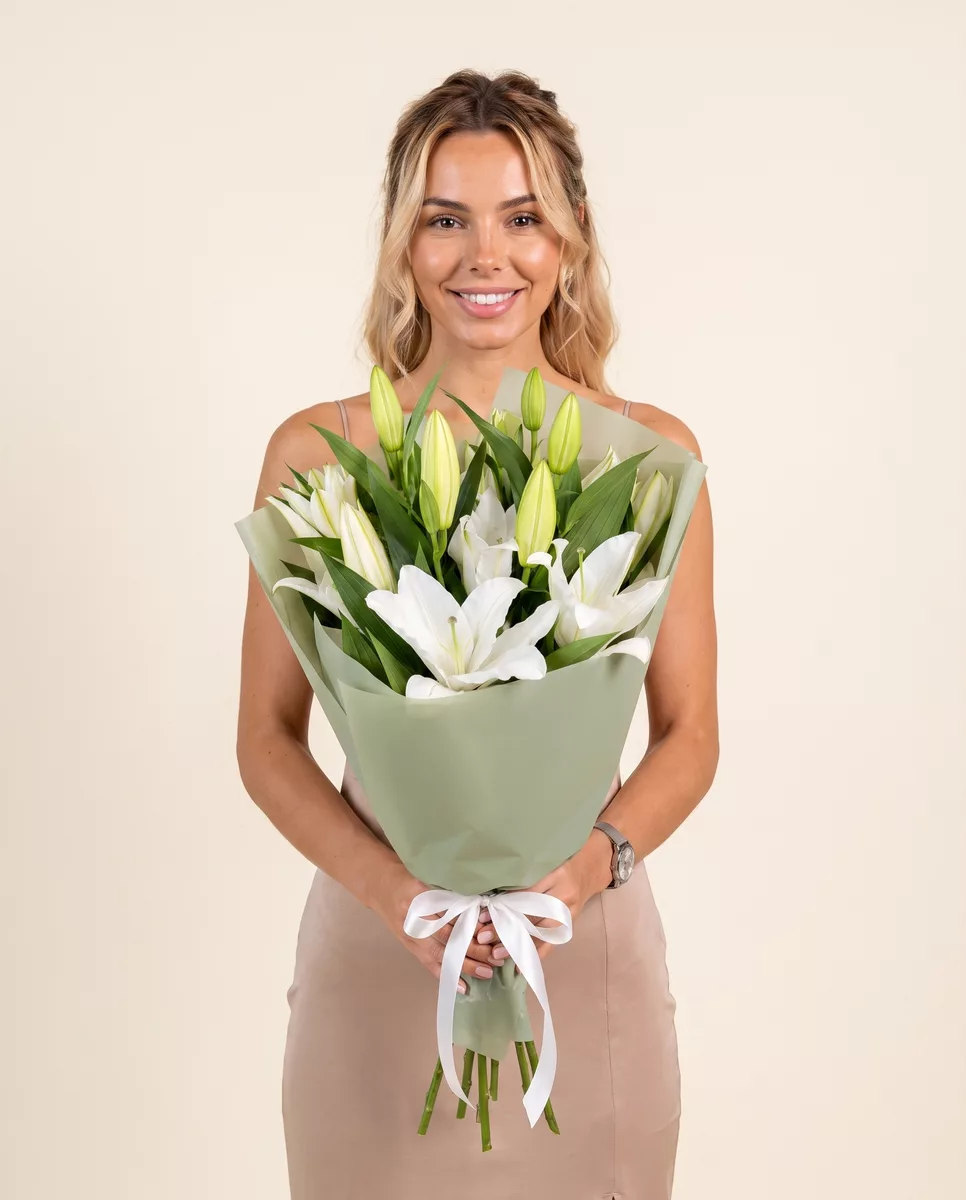
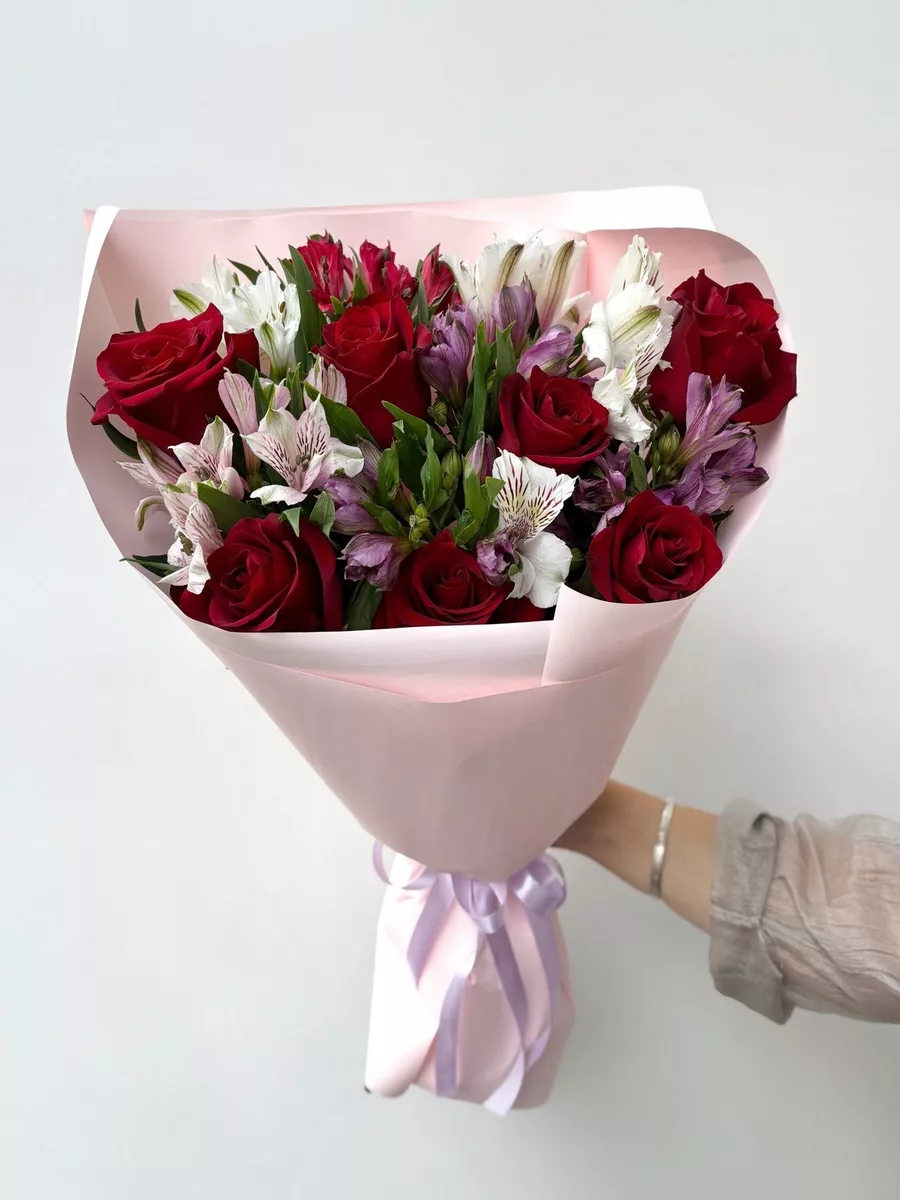
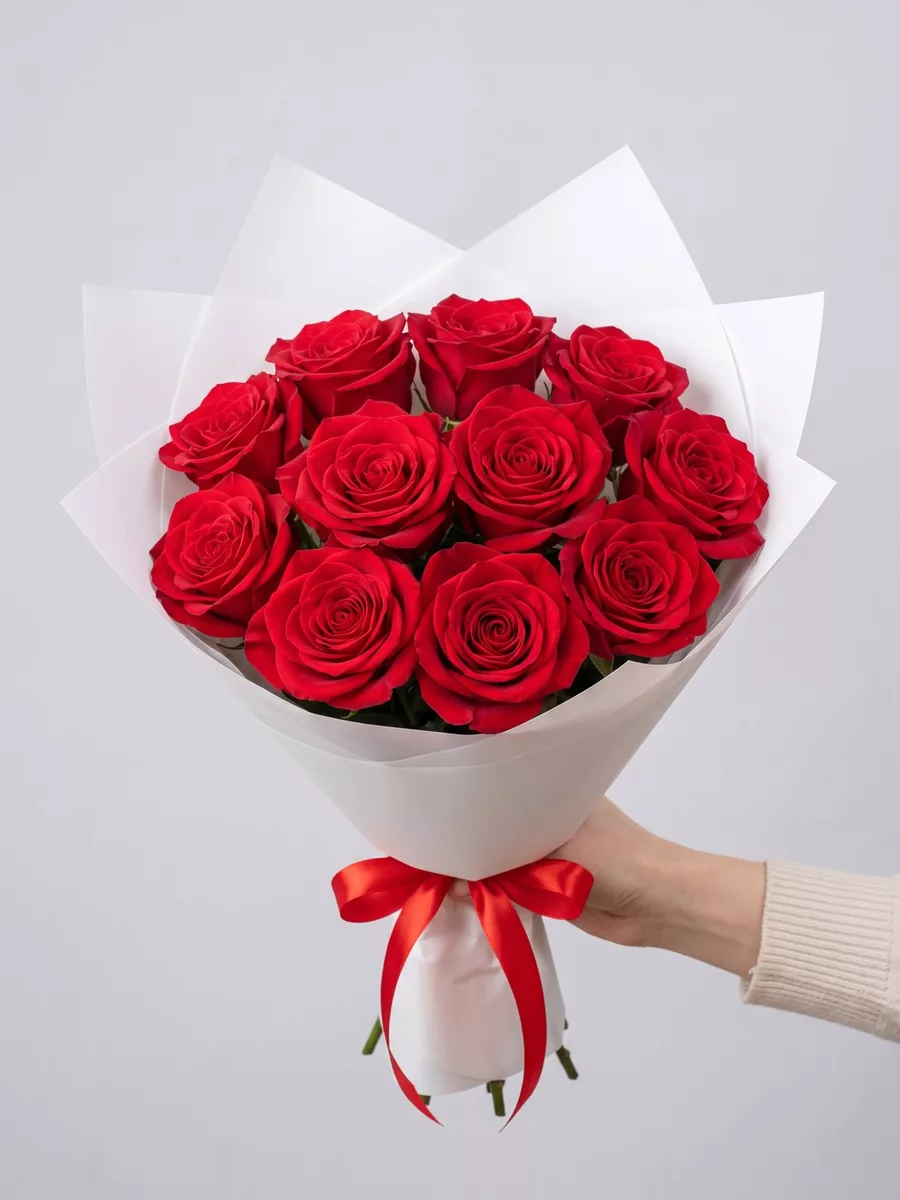

The Traditional Flowers: What Russians Expect to See
The most requested flower for Russian New Year is the chrysanthemum, specifically large-headed spray chrysanthemums and single-stem varieties in white, yellow, and deep burgundy. They are durable, they open gradually over several days, and they suit the cold temperatures of Russian apartments in winter — typically kept at 18 to 21 degrees Celsius, which is on the cooler side compared to many European homes. Roses follow closely, with red roses being the most classic choice for a formal gift and white or cream roses used in mixed bouquets. The varieties that hold up best in winter transit are those with denser petals: Explorer, Avalanche, and similar high-petal-count cultivars keep their shape through the cold outside and the dry heated air inside. Alstroemeria is a practical favourite because it lasts ten to fourteen days in a vase and comes in colours that suit the festive palette — red, orange, white, and bicolour combinations. Tulips appear in January orders more than December ones because Dutch tulip supplies improve after the first week of the new year, but some customers specifically request them for a fresh, spring-like contrast to the winter setting. Lilies, particularly Oriental hybrids such as Stargazer and Casa Blanca, are popular for larger arrangements because their fragrance fills a room. One thing to understand: Russians do not strongly associate poinsettias with New Year the way Western Europeans might, so a bouquet built around that plant will often confuse the recipient rather than delight them.
Colours and Compositions That Work for December 31
Red and gold dominate New Year decoration in Russia, so bouquets in those tones read as intentional and festive rather than generic. A composition of red roses, orange alstroemeria, and golden-yellow chrysanthemums with dark green foliage — eucalyptus or ruscus — is immediately recognisable as a New Year gift and photographs well against the decorated interiors people share on social media. White compositions are equally popular for a cleaner, more elegant look: white Avalanche roses, white spray chrysanthemums, and white lisianthus create a bouquet that works in any interior and ages gracefully over the holiday week. What florists advise against for this occasion is a pastel or monochrome pink arrangement — not because it is wrong, but because it reads as a birthday bouquet and creates a moment of confusion when the recipient tries to understand the occasion. Deep burgundy and violet combinations, using burgundy roses alongside purple lisianthus and dark-tipped chrysanthemums, have grown in popularity over the past few years as an alternative to the classic red-gold palette. These compositions tend to appeal to recipients in their thirties and forties who find the traditional palette too predictable. Box arrangements — flowers packed into a hat box or square box rather than wrapped — are increasingly requested for New Year because they survive the journey better in winter conditions: the box protects the heads from frost during the brief time the courier is outside.
The Order Window: Exact Dates and Why They Matter
The reliable order window for New Year delivery in Saint Petersburg closes on December 29 for most bouquet types. Orders placed on December 30 can still be fulfilled, but the delivery time slots fill from morning onward, and by midday the evening slots for December 31 are typically gone. December 31 itself is the highest-risk day to place a new order: morning slots sometimes remain available until around 10 a.m., but anyone hoping for a 6 p.m. to 8 p.m. delivery — the window most recipients actually want, before the midnight gathering — needs to have ordered at least 36 hours in advance. The reason is not only delivery logistics but also flower preparation time. A large bouquet of Oriental lilies, for example, needs to be sourced with buds at the right stage of opening so they are fully open on December 31 but not already dropping petals. Ordering on December 27 or 28 gives the shop time to select stems at the correct maturity. Flowers ordered on December 30 for same-day or next-day delivery have to come from whatever is already in the cold storage, which limits variety and quality. For anyone sending from outside Russia — relatives abroad ordering for family in Saint Petersburg — the practical deadline is even earlier, around December 26 to 27, because payment processing and address confirmation take additional time. The safest approach is to treat December 27 as the last comfortable day and December 29 as the final hard deadline for a well-executed bouquet.
Winter Delivery Conditions: What Happens to Flowers in the Cold
Saint Petersburg in late December averages temperatures between minus 5 and minus 12 degrees Celsius, with occasional drops to minus 15 or colder. Flowers do not freeze instantly at those temperatures, but exposure of more than five to seven minutes without protection causes cell damage that shows up as translucent, water-soaked patches on petals within 24 hours. This is the most common complaint florists receive after winter deliveries, and in almost every case it traces back to inadequate wrapping rather than a problem with the flowers themselves. Reputable shops wrap winter bouquets in multiple layers of kraft paper with an insulating inner sleeve, and box arrangements have a significant advantage here because the box itself acts as a buffer. When you place an order, it is worth confirming that the shop uses winter packaging — some shops treat packaging as a seasonal upgrade rather than a standard practice, which is a mistake in this climate. Roses are the most cold-sensitive of the common New Year flowers: the outer petals, called guard petals, bruise first and turn brown at the edges. Chrysanthemums and alstroemeria handle brief cold exposure better. Lilies are moderately sensitive — the buds survive better than open blooms, which is another reason to order lilies that are not yet fully open. For the recipient, the advice is to unwrap the bouquet indoors and let it rest at room temperature for 20 to 30 minutes before trimming the stems and placing them in water, rather than putting them immediately into a cold vase.
Practical Checks Before You Confirm the Order
The address is the single most common source of failed deliveries at New Year. Saint Petersburg buildings often have multiple entrances numbered separately, and an address without the entrance number — in Russian, podezd — sends the courier to the wrong door. If you are ordering for someone in an apartment building, confirm the entrance number, floor, and whether there is a door code or intercom. Recipients who are not home when the courier arrives during the holiday rush create a cascade problem: the slot is lost, rescheduling on December 31 is nearly impossible, and the flowers sit in the courier's vehicle in the cold. Confirm with the recipient that they will be home, or arrange for a neighbour to accept the delivery. Check the delivery time slot carefully when ordering: many shops offer a two-hour window, and the slot you see available at the moment of checkout may not be the one you assume. A slot listed as 17:00 to 19:00 means arrival anywhere in that range, not at 17:00 exactly. For New Year specifically, choose the earliest available slot on December 31 rather than the most convenient one — later slots carry higher risk of delays as the city's traffic builds through the afternoon. Finally, confirm the card message before submitting: a card that says Happy Birthday instead of Happy New Year because of an autofill error is a real and recurring problem on the shop floor, and it changes the meaning of the entire gift.
Russian New Year is a deadline-driven occasion in a way that most other flower-sending events are not. The date is fixed, the gathering time is fixed, and the emotional weight of the gift arriving on time is disproportionately large compared to almost any other holiday. The flowers themselves — chrysanthemums, roses, alstroemeria, lilies in red, gold, white, or burgundy — are not complicated choices, but the timing and the winter logistics around them require more planning than a summer birthday bouquet. Order by December 27 if you can, confirm the full address including entrance number, choose winter-appropriate packaging, and pick the earliest delivery slot available on December 31. Those four steps cover the vast majority of what goes wrong, and getting them right means the bouquet is on the table when it needs to be. We deliver bouquets across Russia in 1–2 hours.
Frequently asked questions
Can I order flowers for New Year delivery on December 31 itself?
Morning slots on December 31 sometimes remain open until around 10 a.m., but evening slots — the ones most recipients actually need, before the midnight gathering — fill up on December 29 or 30. Placing your order by December 27 gives you the widest choice of delivery windows and flower varieties. Waiting until December 31 is a significant risk.
Which flowers last longest through the New Year holiday week?
Alstroemeria consistently lasts ten to fourteen days in a vase and handles the dry heated air of Russian apartments well. Spray chrysanthemums are a close second. Roses last five to seven days when stems are trimmed and water is changed every two days. Lilies last well but need to be at the right stage of opening when delivered — buds that open over the holiday week are ideal.
Do Russians give flowers on January 7 for Orthodox Christmas?
Some do, particularly older generations and more religiously observant families, but it is far less common than New Year gifting. Orthodox Christmas is generally a quieter, more intimate occasion. If you want to acknowledge both holidays, a bouquet for December 31 is the culturally stronger gesture, and a small plant or potted arrangement works well for January 7.
How should the recipient care for flowers delivered in winter cold?
Bring the bouquet indoors immediately and leave it wrapped for 20 to 30 minutes to warm gradually — unwrapping too quickly in a warm room can shock cold-stressed petals. Then trim stems at a 45-degree angle under running water, place in a clean vase with cool water, and keep away from radiators and direct heat sources. Change the water every two days.
Is a box arrangement better than a wrapped bouquet for winter delivery?
For December and January deliveries in Saint Petersburg, yes. The box provides an insulating layer that protects flower heads from brief cold exposure during transit. It also travels more securely in a courier bag. Wrapped bouquets are fine when the outdoor exposure is minimal and packaging is thorough, but a box removes most of the cold-damage risk for delicate varieties like roses.
Ready to send a bouquet?
Pick a city, choose the flowers, and we will hand them over with a photo confirmation.
Choose a city →